When cells grow together, they often align with their neighbors, forming liquid crystal-like patterns known as “nematic order.” But that order isn’t perfect, and at certain points, the alignment can break down, creating “topological defects”: small regions where cells swirl or fan out instead of lining up cleanly.
And according to research published in Science, what looks like a defect can be used strategically as built-in instructions for shaping larger structures. Instead of growing upward, cells can store and release stress in certain places along a previously flat sheetlike structure, forming a bowl, a ridge, or a fold.
Learn more: https://t.co/OSMGhNzR6d
Today, only around 1% of the Earth’s surface is urbanized and it wouldn’t take long for what we’ve built to be erased. The further back in time a hypothetical civilization existed, the harder it would be to find direct evidence, like objects. https://t.co/jnathkJnxQ
“If I find in myself a desire which no experience in this world can satisfy, the most probable explanation is that I was made for another world.” - C.S. Lewis
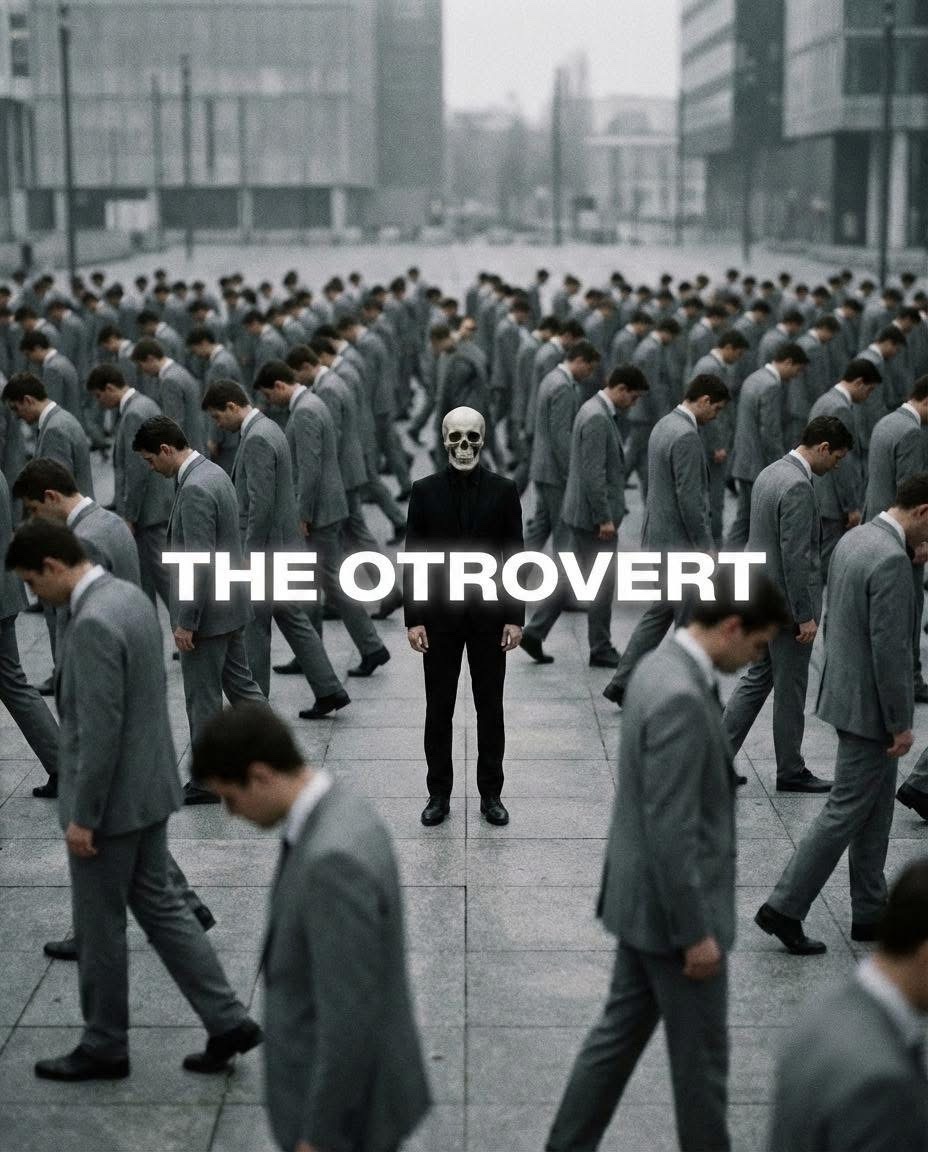
Otroverts? Psychiatrists just discovered a new personality type.
For decades, they told us there were only two boxes.
You are either an Introvert or an Extrovert.
But what if you never fit into either?
What if you are highly social, but you still feel like a perpetual outsider?
Psychiatrist Dr. Rami Kaminski coined a term for the people who defy the binary.
The Otrovert.
Society is built on the "Hive Mind."
You are supposed to crave the tribe.
You are supposed to want to "belong."
But the Otrovert is fundamentally wired differently.
Here is how you know if you are one:
1. You are social, but not communal.
Introverts drain their battery around people.
Extroverts get energy from people.
Otroverts are perfectly fine in a room full of people.
They can be charismatic and popular, but they never actually feel like part of the group.
You thrive in one-on-one connections, but the moment it becomes a "crowd," you feel like an alien observing a different species.
2. You don’t follow the crowd.
Most people naturally auto-sync with the emotional wave of a room.
If the crowd is angry, they get angry.
If the crowd panics, they panic.
The Otrovert does not sync.
Your internal identity remains completely independent of the collective temperature.
You observe the emotion without absorbing it.
3. You are immune to blind loyalty.
You do not care for corporate culture.
You do not care for political cults.
"Because everyone else is doing it" is the fastest way to make you walk in the opposite direction.
For years, people who don't fit the mold have been told something is wrong with them.
They've been called aloof.
They've been told to be a "team player."
But otherness is not a flaw.
It is a superpower.
In a world that is easily manipulated by tribalism, outrage, and group panic, the person who doesn't need the tribe is the most dangerous person in the room.
If you don't crave the validation of the consensus, your mind is free.
You cannot be controlled by the crowd.
If you are this third type of personality, you are not an outcast.
You are a Sovereign Rebel Leader.
Every week, I write a newsletter specifically for people like us.
People who’ve realized that 99% of success comes from unlearning all the bs we’ve been fed.
People who are building a lean business without the copycat marketing or bloated teams.
People who offer an alternate solution than what the mainstream provides.
If you don't belong to the hive, you belong here.
~ Andre G.
✨🙌🏽💫
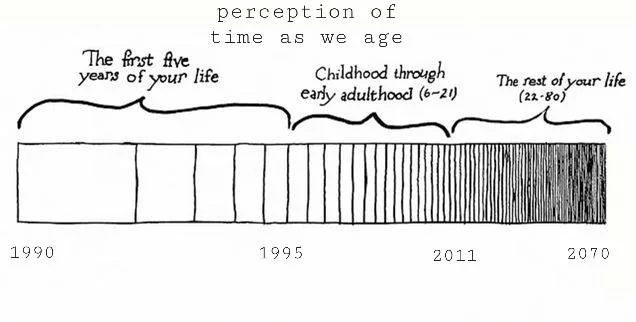
When you’re 5 years old, a year is 20% of your life. And when you’re 50 years old, a year is 2% of your life. This is an explanation given why time speeds up as you age. It's called Janet's law. It states you’ve experienced roughly half of your perceived by life by 20 years old. Or to put it another way: A summer holiday for a 5 year old feels as long as the 10 years from 40 to 50 years old.
But Janet's law can be broken with high agency.
You have agency over the speed time. You're not a passive victim. A better explanation of why time speeds up as you age is because you have fewer new experiences as an adult, so your brain deletes the memories. If you take agency over your life, do new things and create memory dividends, time slows down.
If you live your life on autopilot, you may die at 80, but feel like you died at 20 years old.
If you take agency over your life, you may diet at 80, but feel like you died at 200 years old.
"Words have a magical power. They can bring either the greatest happiness or deepest despair; they can transfer knowledge from teacher to student; words enable the orator to sway his audience and dictate its decisions."