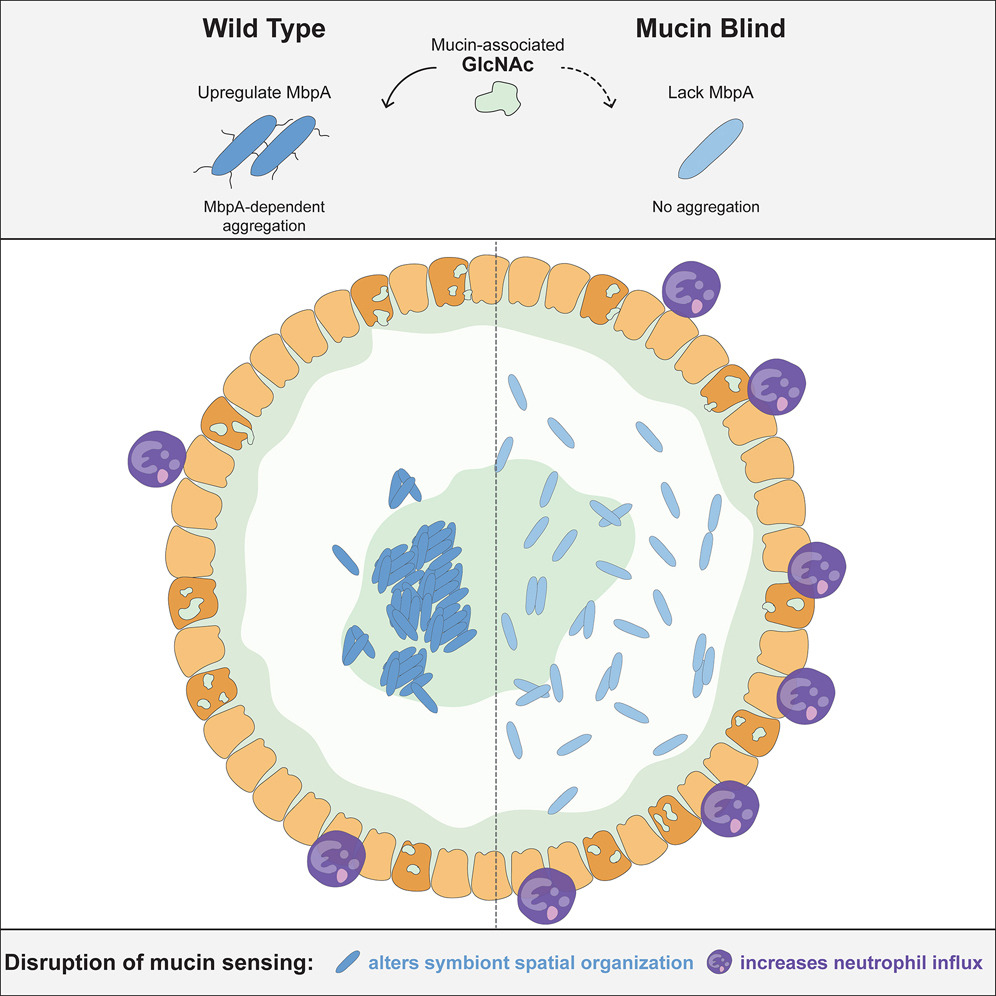
Mucin-binding adhesins: A key to unlocking the door of mutualism. @Goo9Han @ShipraVaishnava highlight work of @tjarrods @GuilleminLab unveiling that mucus binding by bacteria is crucial for host-microbe symbiosis. https://t.co/vSh9RAvg4q
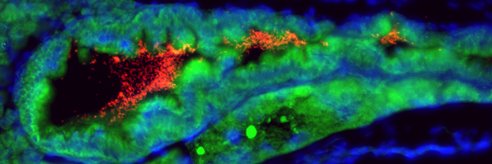
Sticking point for Aeromonas. @tjarrods @GuilleminLab report #zebrafish#symbiont, Aeromonas, uses mucin-reg. adhesin to control its inflammatory character & spatial organization in gut.Analogous Akkermansia adhesins suggest similar mechanisms in human gut https://t.co/exMUsnOrPW
Congratulations to @SconceMichelle and her fantastic team of co-authors on the publication of this Gnotobiotic Atlas that reveals the impacts of the microbiota on transcriptional programs across all tissues of a model vertebrate, the zebrafish: https://t.co/O6Qrv3HoBj
Our #SpotlightZebrafish this week is on Dr. Laura Desban @DesbanLaura a #postdoc with #EisenLab & @GuilleminLab@uoregon. She studies how interactions between microbes and chemosensory systems shape animal behavior– specifically in context of olfaction and social behavior (1/2)
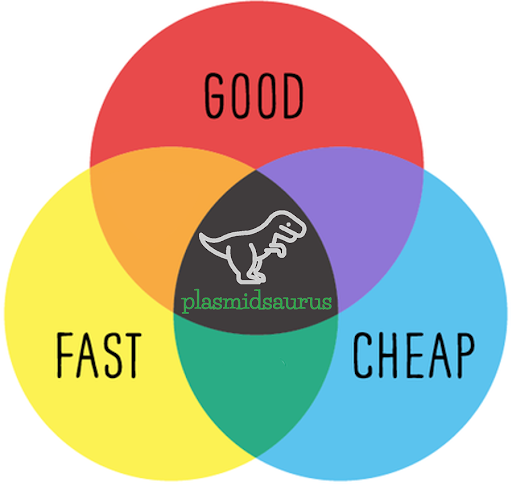
For bacterial genome sequencing, would you pick fast, good, or cheap? Now you can get ALL 3 with our new ONT sequencing service that almost always produces circular, full-length bacterial chromosome contigs with consensus accuracy >Q50 -- often with their full plasmids too! (1/3)
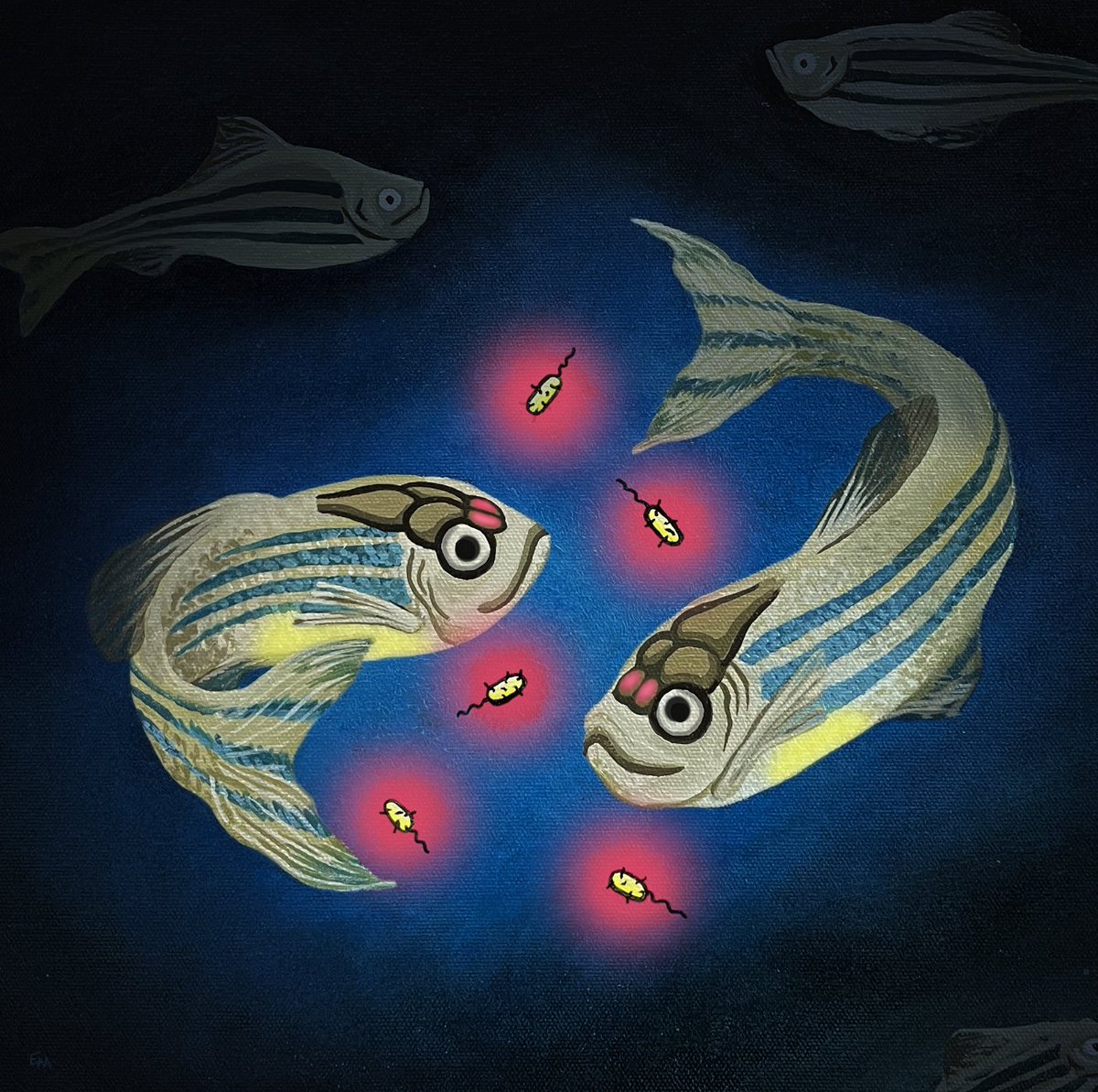
Our paper is out today in PLOS Biology, please RT and tell us what you think! We discovered that bacteria encourage zebrafish social behavior by promoting microglial remodeling of 'social neurons'.🧵
https://t.co/HzwxpoKOip
@PLOSBiology@MooreFoundation@LSRFdtn@ZebrafishRock
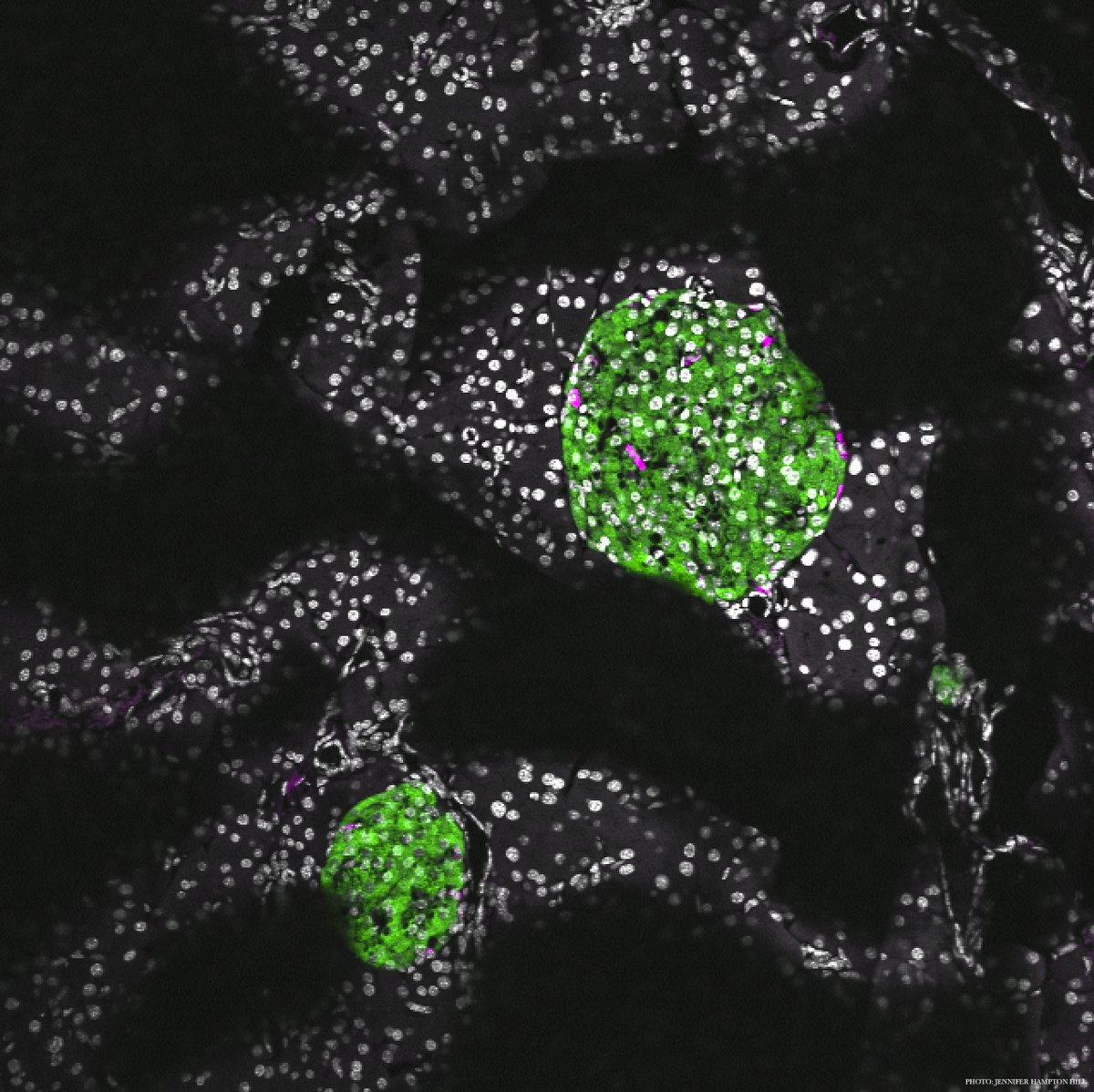
So proud to finally share our finished work describing the membrane busting mechanism of our beloved bacterial BefA protein, out today in @Cell_Metabolism! https://t.co/sfaytfrVlf
Two prominent research groups come to a shockingly similar finding from totally different angles! Checkout these two papers #OnlineNow@seeleyrj#KarenGuillemin
🔗 https://t.co/XkmQdxlVAk
🔗 https://t.co/1PYyuxTDSA
Also, check out* this Essay in @ScienceMagazine by lead author of the BefA paper, Jennifer Hampton Hill, winner of the 2022 NOSTER & Science Microbiome Prize
https://t.co/nphh9N1jMw
Honored to be selected as the winner of this year's Noster & Science Microbiome Prize! A huge thanks to all the support on this epic project @GuilleminLab@RoundLabUtah@MurtaughLab Go read my essay on beta-cells and microbes in @ScienceMagazine ! 🤩 https://t.co/n1DIvXyrac
Jennifer Hampton Hill is the winner of this year’s NOSTER & Science Microbiome Prize for her work showing that restoring lost bacterial cues in the gut can stimulate development of insulin producing cells.
Learn more: https://t.co/QeapRw90mL
I am so proud of @Jen_Suzanne, Grand Prize Winner of the Noster & Science Prize for this essay about her pioneering work:
From bugs to β cells https://t.co/JGjVq1yoMs
This preprint describes the vast transcriptional responses elicited by the microbiota across every cell of the developing vertebrate body: https://t.co/qBsSC9KnGK
Our work on the biochemical mechanism behind a bacterial modulator of host development is out as a preprint. Check it out to learn how both host and microbial membrane perturbing proteins promote the expansion of insulin producing beta-cells. #microbiome#BefA
Our preprint describes how a secreted bacterial protein, BefA, disseminates through the body and stimulates pancreatic beta cell expansion via its membrane permeabilizing activity: https://t.co/dBn4xkqRuL