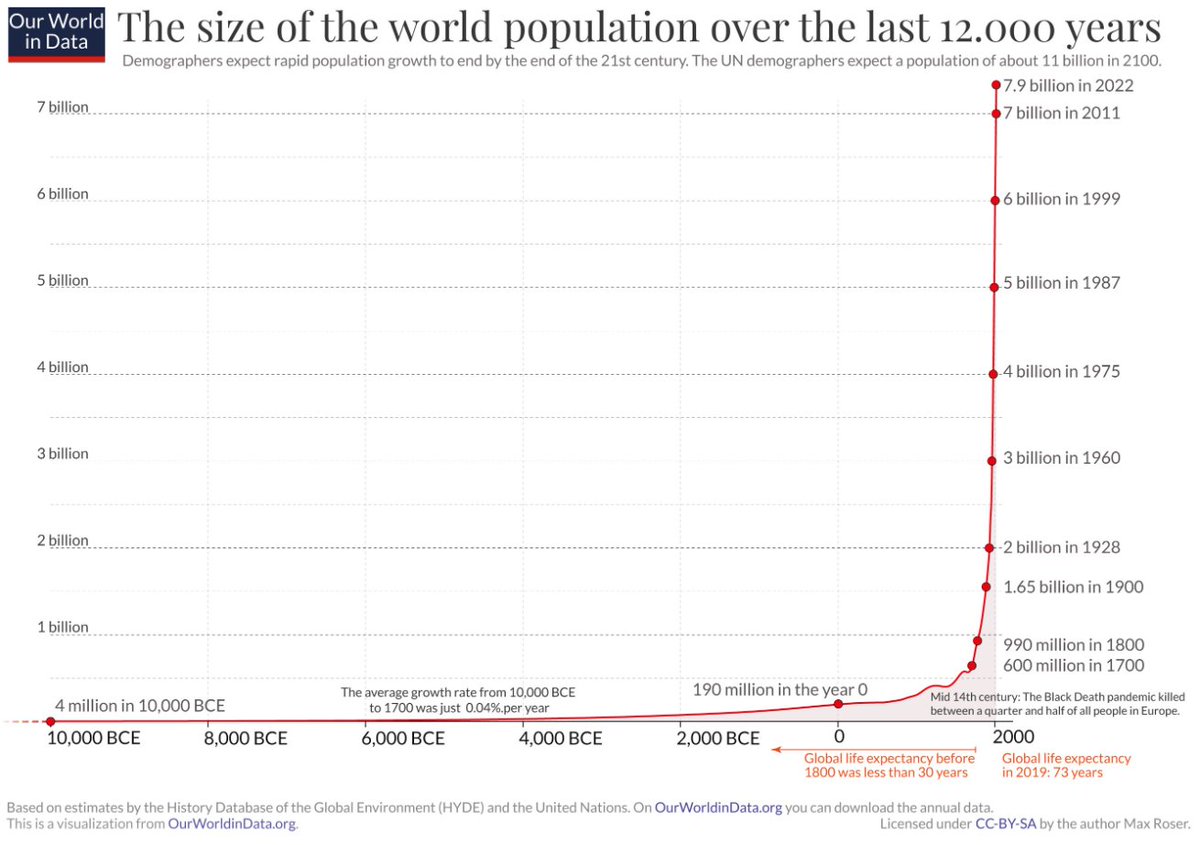
If you can't see the problem with this graph, think again.
Sooner or later, the curve will go in the other direction.
The smart choice is a global birthstop for several years, until our #overpopulation is down to the sustainable carrying capacity of our planet at ~500 millions.
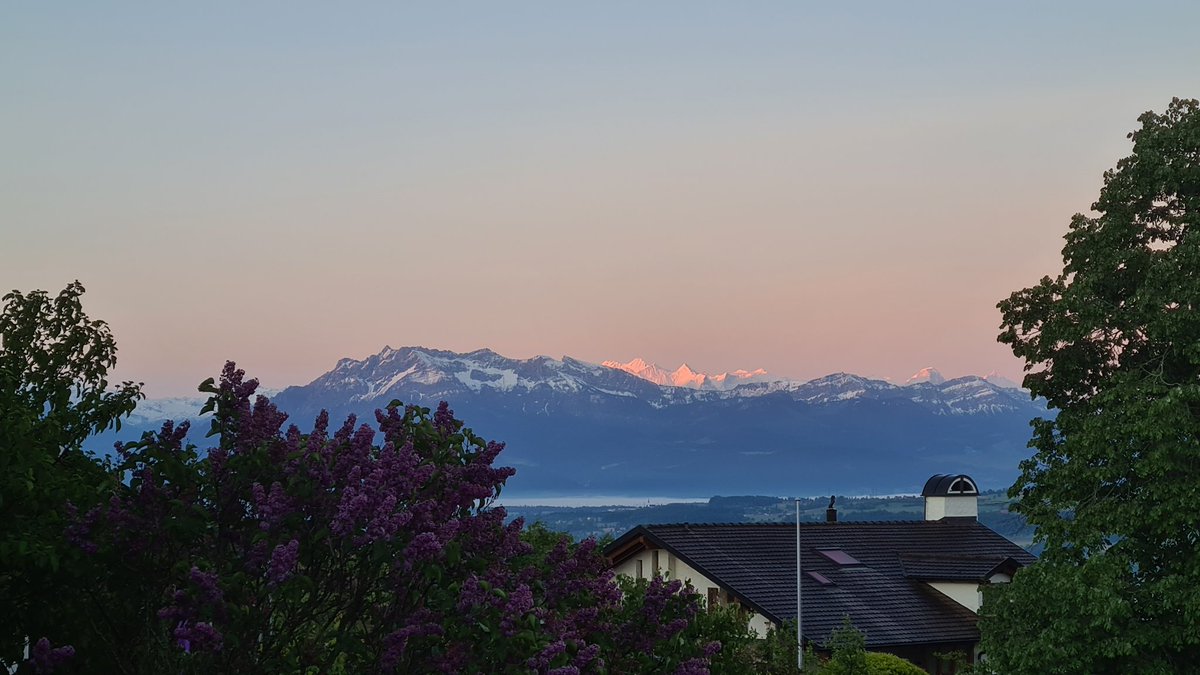
@FredomOfSpch@forallcurious Then can you explain this image? The sun has risen on the mountains with a higher peak, but not yet on the lower ones. But because the higher mountains are farther away, they are lower from the viewers perspective and the curvature of the earth.
@potatoslav Here in Europe, we know how to build houses with insulation. Open the windows in the morning and evening when the air is cool outside, and the house stays comfortable the entire day.
Shifting Baseline Syndrom. Eins der großen Probleme in der Wahrnehmung des Artensterbens. Kurz gesagt: Das was wir als Heranwachsender kennen, wird als der Normalzustand empfunden. Damit verschiebt sich aber die Baseline von Generation zu Generation, und viel Information geht verloren… der tatsächliche Verlust an Vielfalt ist viel dramatischer als wir ihn wahrnehmen.
@ThomasL27877220@HighWarlord_Del@reddit_lies No, I want us to be able to sustain our current level of technology and progress. But that will collapse if we don't care for our planet and its nature, with all its floric and faunic lifeforms.
@izotopium@grok@reddit_lies Sorry, your question to Grok wasn't that precise, that's why I thought that your IQ was room temperature (in Celsius), but I was wrong. Of course there are multiple factors which influence population size.
@HighWarlord_Del@ThomasL27877220@reddit_lies My number is supported: 1 square km of arable land can feed 12 people sustainably. Applied globally, plus leaving nature and its wildelife enough space to coexist and thrive, you get to a global population of ~530 Million humans. That can be sustained over 1000s of years.