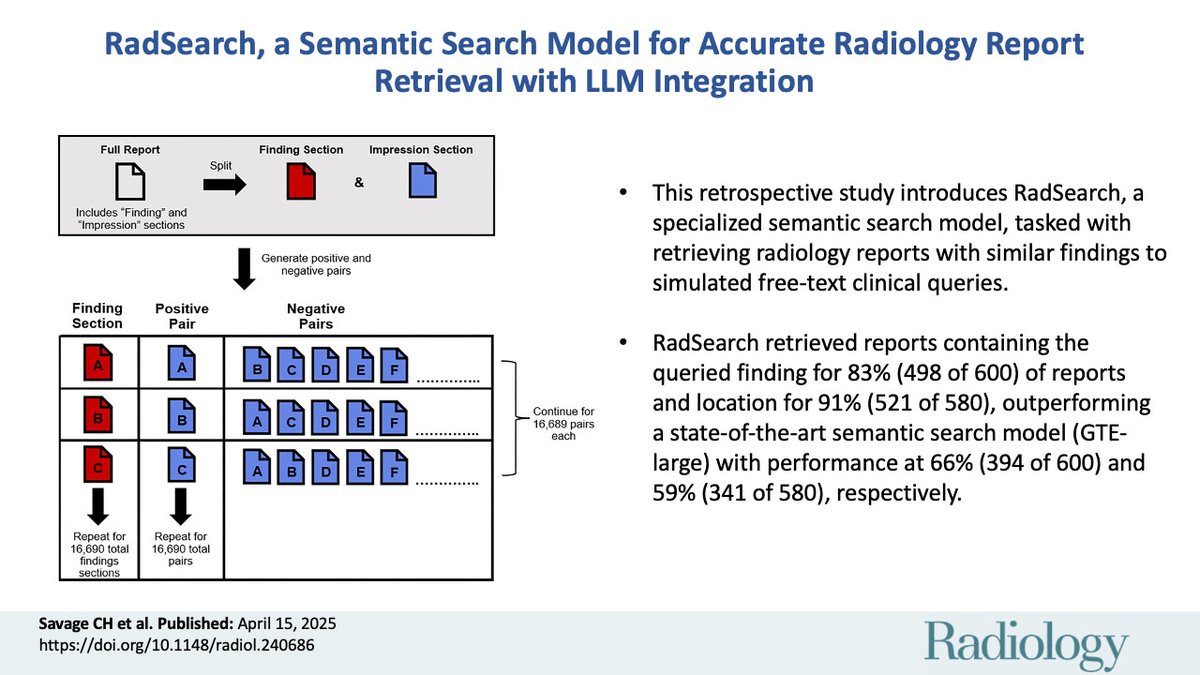
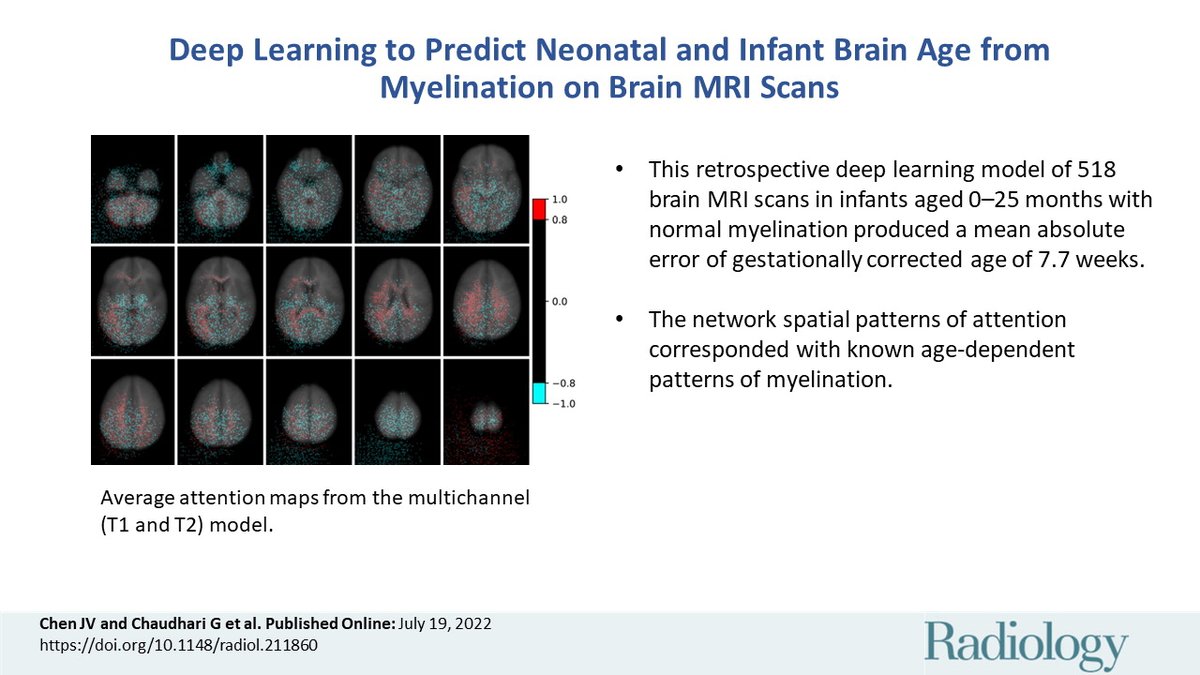
Can smarter search boost diagnostic AI? 🧠 A study by @CodySavRad, @gunvant_c, @AndrewSmith_AI & @sohn522 shows that RadSearch, a specialized semantic search model, improves radiology report retrieval and boosts LLM diagnostic accuracy. See how it works!
https://t.co/lPi9YHSRmu
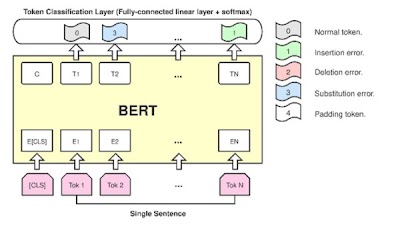
T1. BERT is a type of large language model that takes into account context of words in a sentence when doing natural language processing. It was a significant leap and initial step breakthrough towards the current large language models that we see in the field. #RadAIChat
UCSF medical student and 0.55T lung MRI researcher, Felicia Tang, commenting on her recent research and potential future directions for lung MR:
https://t.co/6tUN7R3gAv
@GeoffTison@UCSFCardiology created an AI-powered algorithm that accurately predicts 💝myocardial injury using #ECG data.
✅The algorithm's negative predictive value of 80% allows it to triage low-risk patients using a simple and cost-effective ECG. https://t.co/5vVg8uK5cx #AI
ChatLLaMA - an open-source implementation of LLaMA based on RLHF.
Claims a 15x faster training process than ChatGPT. It allows users to fine-tune personalized ChatLLaMA assistants.
https://t.co/puc3BF1JSU
I can't recall a @UCSF grand rounds that was more fascinating or mind-blowing than this far-ranging discussion of #ChatGPT's implications for healthcare – clinical, research, and education – by @atulbutte, @AaronNeinstein, @SaraMurrayMD & @LowensteinMD. https://t.co/QKRbMi5Uvt
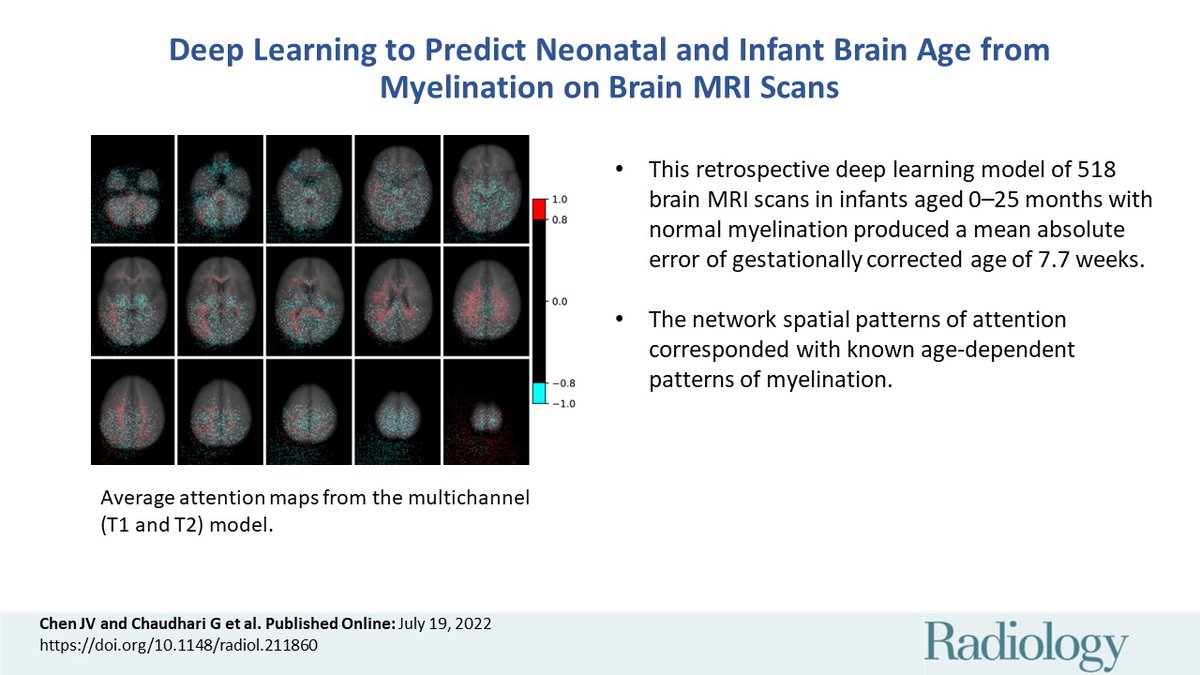
A #DeepLearning model that evaluates myelination patterns can predict the gestationally corrected age of neonates & infants on the basis of T1- and T2-weighted MRI scans of the brain. https://t.co/4NINbtW11y Great work @DrDreMDPhD@YiLiMD & team!
"Our algorithm provides more relevant results than a custom Google search engine, especially for longer and more clinically complex imaging indications," says @gunvant_c, @UCSFMedicine student & first author on this recent @UCSF_ci2 BDRAD study. https://t.co/qAKjotWmu5
Speech recognition errors during radiology report dictation are often not caught by traditional spell checkers. In @Radiology_AI, we evaluate a context based deep learning-based approach using #BERT to detect dictation errors and suggest corrections.
New blog post: 'A Natural Language Processing (NLP) Search Algorithm to Facilitate Use of Appropriateness Criteria' https://t.co/qAKjoudXSF via @UCSF_Ci2
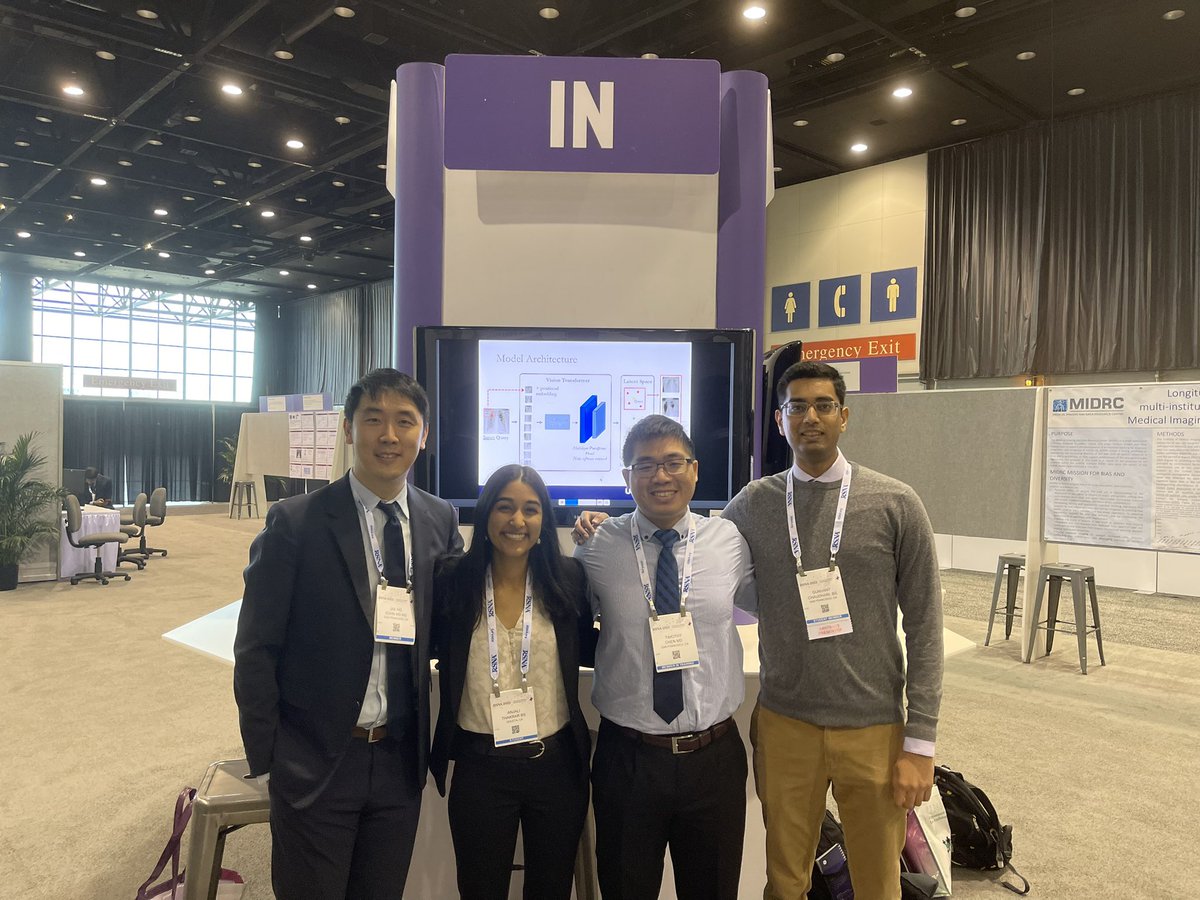
Highlighting some of the outstanding exhibits, posters and scientific talks by #UCSF Radiology residents, fellows and med students at #ASNR22. So fortunate to work with such talented and hard working physicians!
Great work by @gunvant_c, @TimothyLChen, Yeshwant Chillakuru, @sohn522, @NeuroDx, @PedoiaValentina, Thienkhai Vu & Youngho Seo on this approach that can be integrated into imaging ordering systems for automated access to guidelines. https://t.co/Ns0O7UyCyk
The @UCSF_ci2 Big Data in Radiology (BDRAD) team have developed & evaluated an natural language processing (NLP) algorithm that matches clinical indications to appropriate AC guidelines. Find out how they did it ➡️ https://t.co/Ns0O7UyCyk
In our recent work in @JAMACardio we trained an #AI neural network for a wide variety of 12-lead ECG diagnoses that also “explains” its predictions using commonly available ECG data and labels. https://t.co/X8b6NQpM28 Read more: https://t.co/1WUbhWClyd
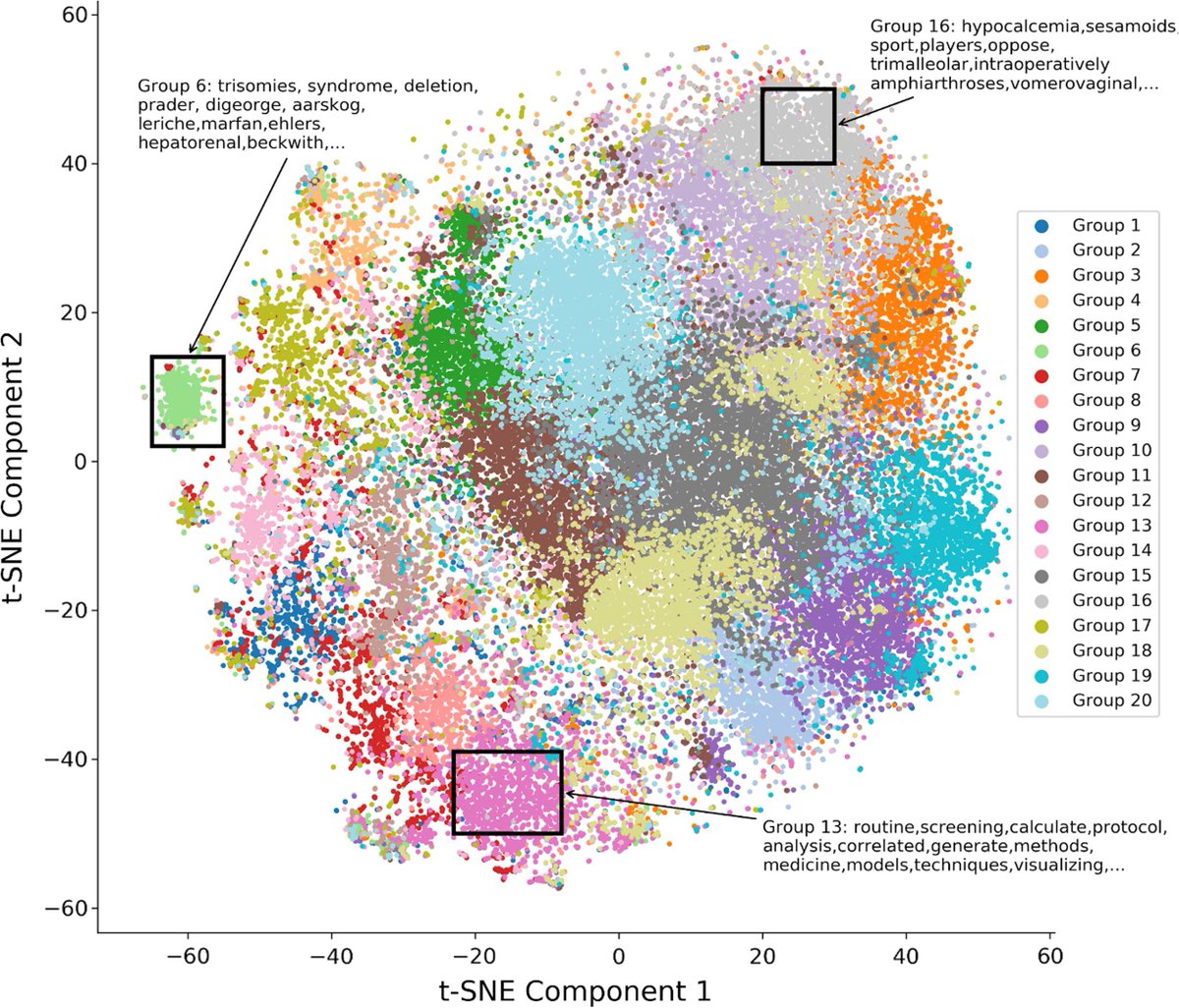
New work using @Radiopaedia to produce and test word embeddings, by @sohn522 et al from @UCSFimaging, published in @J_Biomed_Info.
Nice use of a publicly available corpus, and publication of over 1700 new radiology analogies for intrinsic validation.
https://t.co/FHYRYLZ2QF
Why has the United States handled this pandemic so badly? The Editors note that although we came into this crisis with enormous advantages, our current political leaders have demonstrated that they are dangerously incompetent.
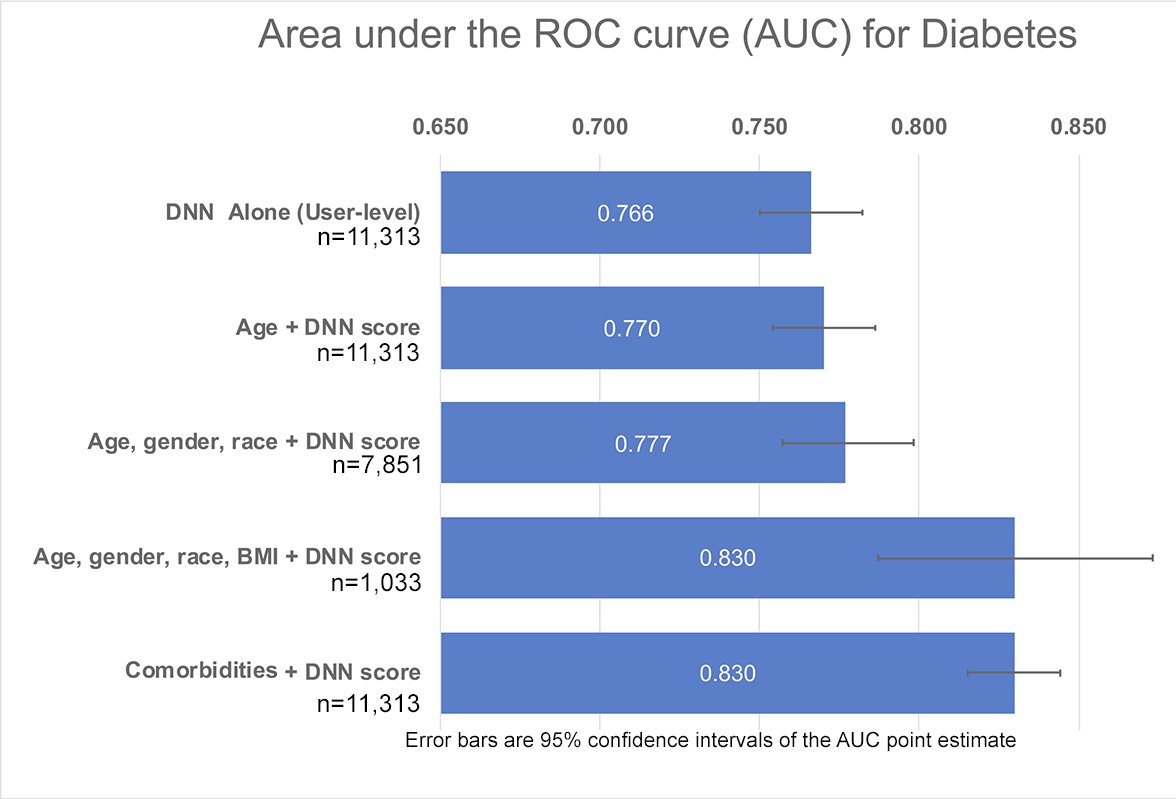
Interesting deep learning work from my research mentors on detecting diabetes from smartphones, published in @NatureMedicine today! Looking forward to future work in this field