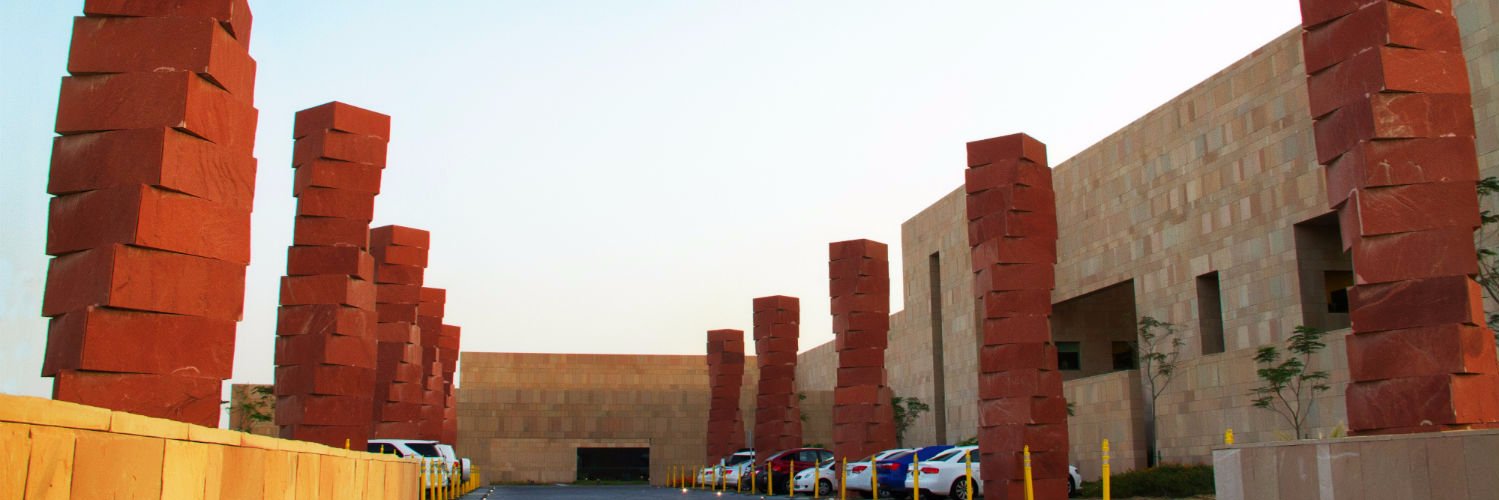
Established in 2005 as a student-centric global campus of @Georgetown University with the support of @QF, GU-Q prepares future leaders for a changing world.
Paul Musgrave, associate professor of government at Georgetown University in Qatar, tells Al Jazeera that Ukraine’s drone strike on an Iranian vessel could widen the conflict and threaten shipping, energy supplies and global markets.
Is the Arab Gulf's pivot to Asia only about China? Think again. While Beijing dominates the headlines, players like Japan, South Korea, India, and ASEAN nations have quietly built deep, highly strategic relationships with the GCC.
Read more from Dr. @RoryDavidMiller: https://t.co/ncQvLSOhnP
Over the past two decades, our alumni have built careers across sectors, from @BCG and @Visa to ventures like @AgriCope and roles at Qatar Investment Authority.
A five-year look shows a clear pattern. Our graduates are competitive, high-performing, and many take the initiative to build something of their own as well.
Read more: https://t.co/LHUEHwMVgA
Regional generalizations are a mistake. Even neighbors have vastly different security priorities. Yet, all face the same challenge: building resilience against hybrid & conventional shocks. Traditional alliances are no longer enough. Multipolarity & new tech demand we modernize. Read the full article by @RoryDavidMiller here: https://t.co/6Sek8jRpCh
This week’s column in @GulfTimes_QATAR considers the alliance options available to regional states in an increasingly uncertain and dangerous strategic environment
@GUQatar@SmallStates_GUQ https://t.co/JwxfNsMK8g
The global security landscape is shifting. A sobering new report from PRIO reveals that 2025 saw the highest number of interstate conflicts since 1946.
This is a stark warning for the UN’s 108 small states. Read Dr. @RoryDavidMiller’s full take on their role: https://t.co/U2IHtojY5d
In @ForeignPolicy, Professor Paul Musgrave argues the Iran war may be a bigger U.S. setback than Vietnam, calling it a “war of choice” with lasting political and military fallout shaping perceptions of American power.
Read here: https://t.co/nzG6DxaVpm
Professor Abdullah Al-Arian appears in a mini-documentary on Arab teams at the World Cup, discussing rising qualification rates and the region’s growing investment in football after decades of relative isolation.
“It’s about having a seat at the table where people are bound to pay attention,” he says.
Watch here: https://t.co/Vk45JrauM4
My column this week on the challenges and opportunities for small states in a dangerous world @GUQatar@GulfTimes_QATAR@SmallStates_GUQ
The might of soft power https://t.co/cBlAl1x3Bo
In @AlShabaka’s latest roundtable, GU-Q Practitioner-in-Residence @DianaButtu discusses how the regional war is reshaping US–Israel–Gulf ties:
“The issue is no longer normalization, but creating a regional order that compels these countries to deal with the Zionist state—because the only way to reach the U.S. is through it.”
She argues the priority is now regional dominance—not just military, but economic and political supremacy, including weakening Gulf influence.
Read more: https://t.co/GJmyrjvHmo
Global energy supply chains have become active battlefields. From the Black Sea to Malta, drone warfare is colliding directly with Russia’s massive sanctions evasion program.
Prof. @RoryDavidMiller breaks down how this is redefining maritime security: https://t.co/IqAGiK6mpg
Who writes the rules for the Arctic’s future?
As US dominance declines relative to others, Russia, China, and key European actors are challenging the status quo in the Frozen North.
Read Dr. @RoryDavidMiller's brilliant breakdown here: https://t.co/whXyCroJGd
Join us live on 5 June for the Termez Dialogue, where GU-Q students and alumni will discuss key issues affecting their generation. Scan the QR code or use the Zoom link to participate online.
Geopolitics, finance, and security are officially fused. The US Dept. of War just built a critical-minerals team of bankers and traders to fight the rare-earths war. China has a multi-decade head start, but Washington is finally waking up. Read the full article in @GulfTimes_QATAR by Prof. @RoryDavidMiller to learn more:
https://t.co/NXl28tNWux
Six African Leadership Academy graduates from Nigeria, South Africa, Zambia, Uganda, Senegal and Cameroon chose @GUQatar over more traditional paths. At Education City, their journeys spanned music, diplomacy, fieldwork, legal studies, and student leadership. The Class of 2026 also mentored the eight ALA students who followed in their footsteps, building a growing bridge between #Africa and #Doha. Tap the link in bio to read their stories.
Read more: https://t.co/pqRCMysUxQ
Elated to announce that I have earned a B.S. in Foreign Service from @Georgetown’s School of Foreign Service in Qatar, @GUQatar🎓
Grateful to God, my family, friends, professors, and the @HTembassyQatar for their support throughout this journey.
Excited for the next chapter!
@GulfTimes_QATAR has announced a new group of international journalists, academics, and media professionals who will be contributing regular analysis and commentary, and it is a strong addition to their editorial mix.
At a moment when the Gulf is investing heavily in AI, data infrastructure, and clean tech, this kind of perspective feels especially needed. There is a tendency to focus on scale and speed, but the more difficult question is what actually makes a country durable and influential in the tech space over time.
Among the new contributors is our own @RoryDavidMiller, GU-Q Professor of International Politics, whose first article takes a step back and asks a useful question for the Gulf right now: what can smaller states actually teach us about building real tech power?
Read the full piece here: https://t.co/5cUgMcg8FX