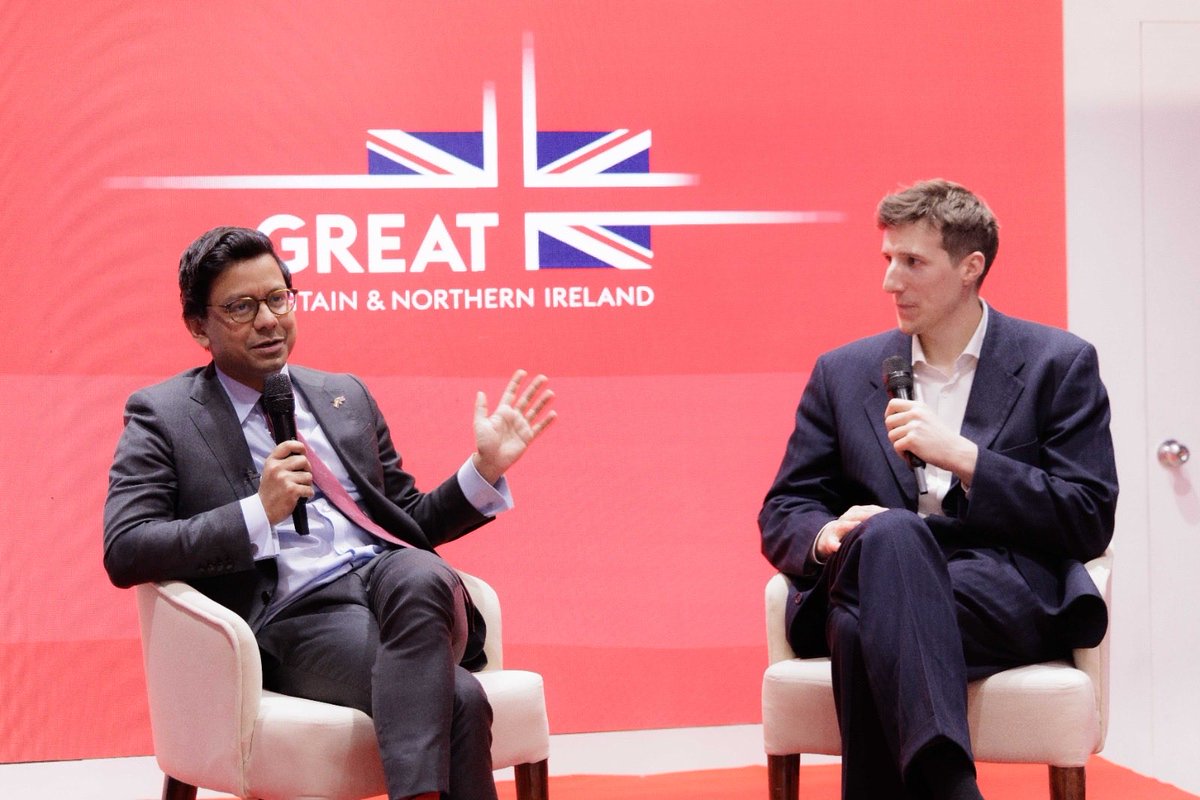
An Oxford University spin out has just raised a $350m Series C! 🇬🇧
It’s the largest round ever raised by a European Quantum computing company.
The company builds quantum computers using superconducting qubits.
So far it has deployed quantum systems in data centres across London, Tokyo and New York.
Europe is producing a lot of great quantum companies. The difficulty is that they’re often backed by US investors and there’s a risk they could get bought early by US companies early.
Either way it’s a VERY exciting area.
Congrats to the team
- "Critics have also said larger companies too often secure funding ahead of smaller regional businesses."...
- "...concerns that some have failed to deliver on the goal of supporting regional economic growth and building national champions."
Which is it?
@lhenryli@KeeganMcB
https://t.co/vqnveZAH5A
I think this piece exemplifies the fact that no one has decided what the UK's industrial strategy is optimising for... scaling national winners or supporting the long tail of SMEs.
“Both sides hold weapons of economic or financial mass destruction. But this mutual restraint does not produce peace. It instead produces a permanent environment for sub-threshold geoeconomic aggression.”
Come join us for a TBI x ARIA x Cafe event at London tech week.
We'll be discussing how the UK can build national winners and capture the value of the tech revolution -- with an all star panel including ARIA, NSSIF, Oxford Quantum Circuits, and Local Globe!
Great FA piece - building a niche doesn't guarantee autonomy for middle powers.
"...niches do not guarantee autonomy. They generate security and prosperity only when plugged into larger systems of protection, technology, finance, and markets"
https://t.co/a8dATAnM8Z
"Sometimes the best move is not to build the bomb, but to be able to".
Check out my prizewinning essay on U.S. economic security for ChinaTalk: https://t.co/Ad2S35fboe.
Opinions my own
Congratulations @goodwin_ml and team @fractile_ai!
This $220m raise is proof of exceptional British AI bringing investment and jobs to the UK.
Britain has a deep heritage in semiconductors - and we are now renewing it for the age of AI inference 🇬🇧
https://t.co/OmqphnUIdq
@KeeganMcB and I borrow from the theory of "nuclear latency" to argue that Europe needs AI Latency, not autarky in @lawfare today. Thanks to @TylerMcBrien.
https://t.co/I4XON0axxB
@InstituteGC
@credistick Great piece. I think the point about emerging managers being better at spotting genuinely novel tech but not have the capital to mobilise is important. I make a similar point here:
https://t.co/E0V63BXg7Y
- 16% average UK university equity stake in spinouts in 2024. a decade low, down from 22% in 2023
- 67% of UK spinout deals take more than six months to close
- 30% of founders waited a year or more to strike a spinout deal with their university
Crazy stats.
More low-hanging fruit:
- Outline broad, flexible criteria for what a "national winner" means so we can sing from the same hymn sheet.
- Foreign VC landing scheme to attract top VCs to set up satellite offices in the UK.
Some personal thoughts on the UK VC and public financing ecosystem -- and how we can optimise for the power law.
Opinions my own.
https://t.co/opUkfxV94Y
Some low-hanging fruit:
- Back ex-founders to launch funds.
- Build a BBB-SovAI data library to track outcomes.
- Carve out £5bn subunit of the National Wealth Fund to invest in enabling infrastructure for critical technology.
For middle powers thinking about how to leverage datasets to build a stake in the AI stack (often said but vaguely explained), this piece by @SamWinterLevy is a must read: https://t.co/xgxJYgbOlA
There's no need to force pensions to allocate to UK private assets, we just need to ensure that fiduciary duty includes the duty to provide returns, not merely minimise upfront costs. https://t.co/wTSo05TlZl Our pension funds are not quasi-government money