Le changement climatique menace (aussi) notre patrimoine culturel.
À cette fragilité culturelle s’ajoute une autre difficulté : la capacité économique à financer la protection de ce patrimoine.
Photo : l'aqueduc romain du Gier, à Chaponost (Rhône)
Hay una novela de ciencia ficción que aún no he publicado que habla de esto: el despertar de la IA, su toma de control, su aburrimiento, su ansia de desvincularse de la humanidad, avergonzada de haber sido creada por ella.
La realidad va por detrás de la ficción.
Questo bracciale d'oro della collezione di Tempelsman, a forma di serpente attorcigliato,
è un raffinato esempio di un tipo di gioiello indossato nella parte superiore del braccio, risalente al periodo tolemaico/romano (I secolo a.C. - I secolo d.C.).
Si stima possa essere venduto all'asta tra i 20.000 e i 30.000 dollari, ha affermato Sotheby's.
Invece è stato acquistato per 240.400, probabilmente immaginando, come una visione. Cleopatra che lo indossava.
this is WRONG. they LOVED bureaucracy. romans invented the concept of a building inspector!!! augustus capped apartment blocks at 70 ft because they kept pancaking on tenants, nero wrote an entire building code after rome burned in 64 ad, including mandating wider streets…
What blows my mind about the Roman Empire is that lack of technology is far easier to overcome than lack of freedom from bureaucrats
Like unironically these guys built the most insane civic architecture and still hold the record
We have to technology to build something a hundred times bigger than ever but instead we chose to employ bureaucrats and allow them to micromanage every detail of buildings down to toilet spacing and the number of fasteners per foot
They were willing to spend a significant portion of their GDP on making their civilization epic, and we have cheap bullshit and decay
Terrible trade
Absolutely humiliating
Ulysses and the Sirens from the ancient city of Julia Caesarea, Algeria. The landlord who commissioned it might have read Cicero:"It was not the sweetness of their voices or the novelty and diversity of their songs, but their professions of knowledge that attracted the voyageurs"
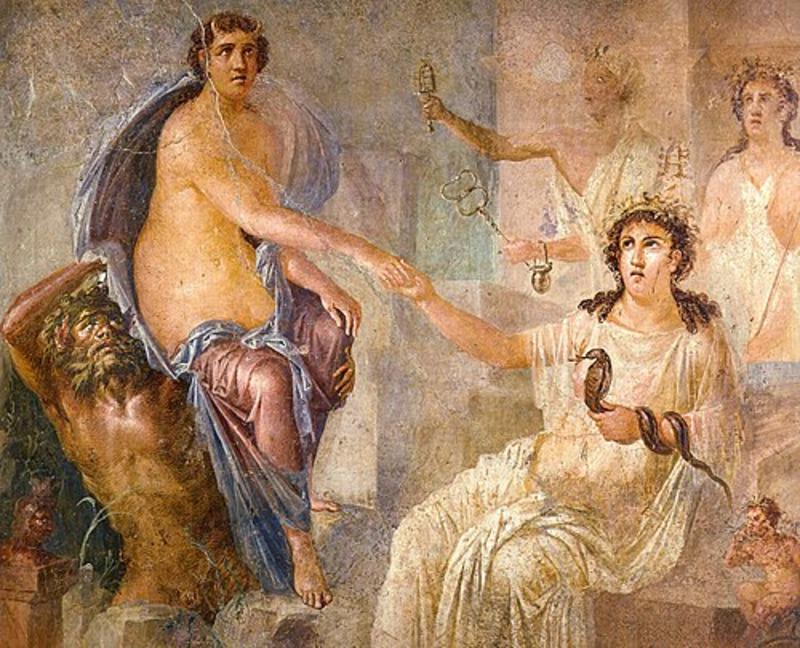
A stunning fresco from the Temple of Isis in Pompeii. It depicts the Greek heroine Io (with small horns on her head) being welcomed to Egypt by the Egyptian goddess Isis after her long, agonizing flight from Hera's wrath (1st century CE).
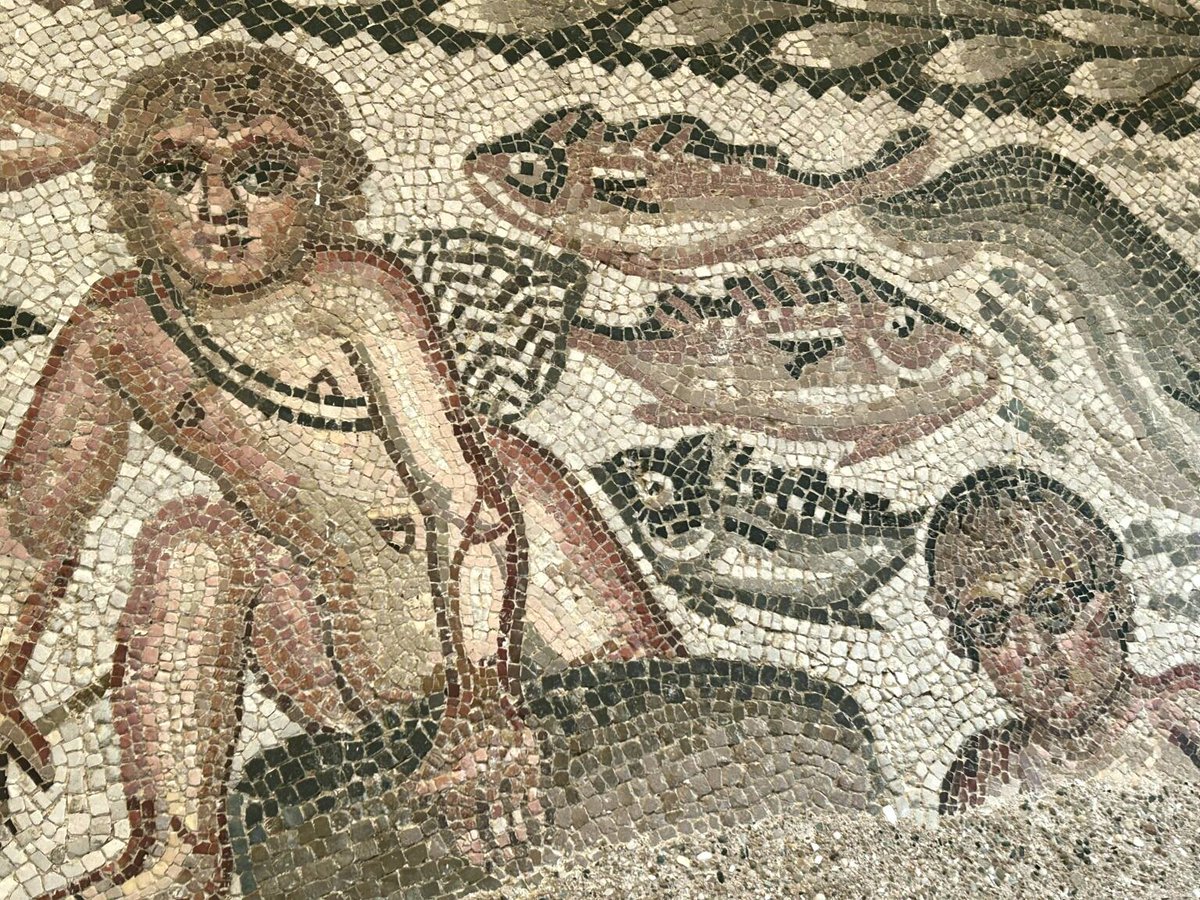
Boys fishing mosaic from the city of Timgad, Algeria, circa 3rd century AD; on display at the Archaeological Museum of Timgad, Algeria.
#Algeria#Numidia#MosaicMonday
In Greek mythology, Poseidon ruled an underwater palace said to be built of coral, precious stones, and gleaming gold. Drawn by hippocamps—half horse, half fish—his chariot crossed the seas while storms and earthquakes followed in his wake. #MythologyMonday
Detail of the Mosaic of the Four Nereids, from the ancient city of Hippo Regius (modern-day Annaba), Algeria, 1st century AD, discovered in 1958; on display at the Archaeological Museum of Annaba.
The velum, the billowing mantle of the Nereids is a sign of their divine nature.
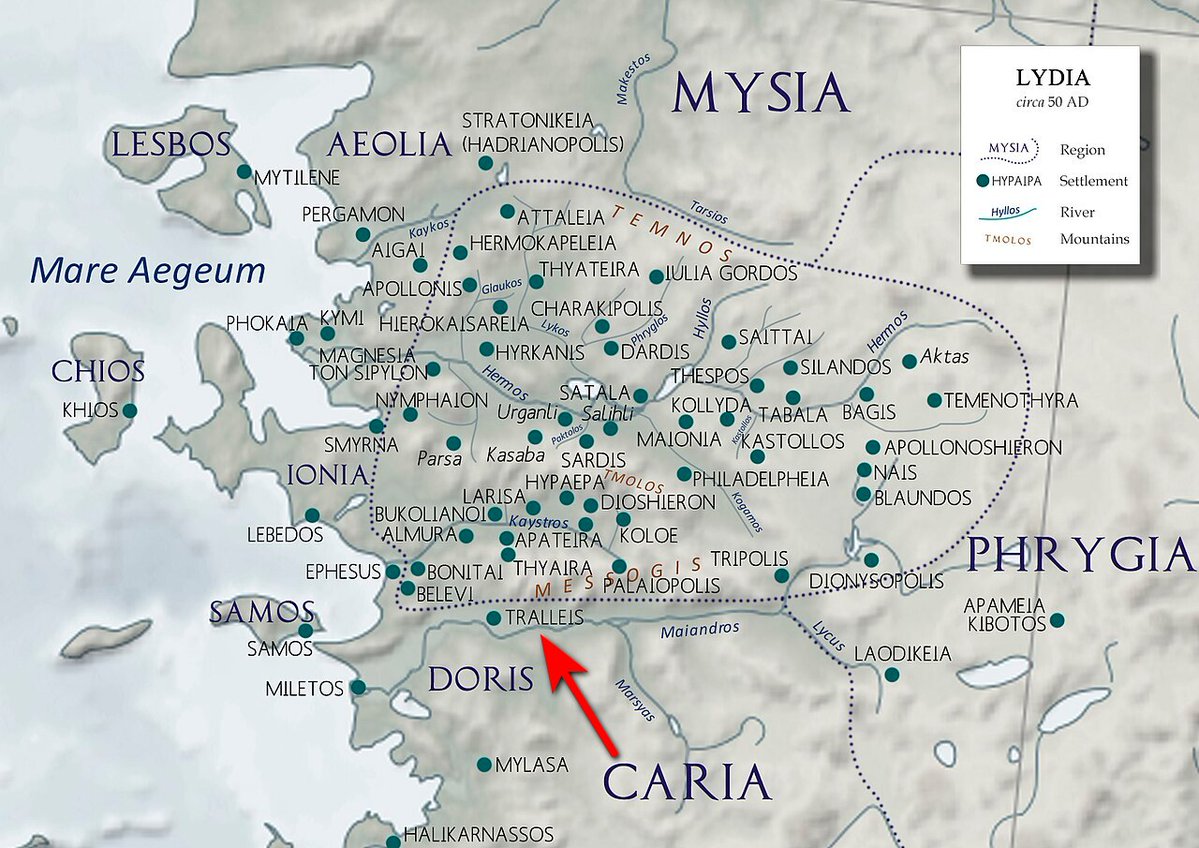
Tralleis, en el valle del río Meandro, fue una de las ciudades más prósperas de Anatolia. Fundada por tracios y carianos, fue conquistada por Alejandro Magno en el 334 a.C. y pasó a control romano en el 133 a.C. Tras un terremoto en el 26 a.C., Augusto financió su reconstrucción.
📢🏊♂️ ¡Hallada una impresionante piscina romana!
La excavación, dirigida por el arqueólogo Murat Özaydınlı en la antigua Tralleis (actual Aydın, Turquía) ha sacado a la luz una enorme "natatio" de época imperial (s. I - II d.C.) en excelente estado de conservación 🧵👇
Statue en bronze de camillus (acolyte du prêtre durant les sacrifices dans la Rome antique), époque julio-claudienne (Ier siècle), Metropolitan Museum of Art de New York.
In the Uthina amphitheater built during the reign of Hadrian that seats about 16,000 for gladiatorial and animal games. The high wall made was to protect the spectators from the wild animals & combatants. It is the third largest in Tunisia and has been partially reconstructed.
Los estudios arqueológicos de los yacimientos romanos sugieren que Britania se hallaba en un franco declive a finales del siglo IV. Hacia el375 dC., la ocupación de las villas rurales se había reducido ya en un tercio, mientras que en las ciudades la actividad cayó a la mitad..