Welcome to Gen-Z, your gateway to innovative Real World Asset investment. Seamlessly navigate visionary projects and invest with purpose. 🌐💼 #GenZLaunchpad
🔍 Intrigued by the RWA Crypto Narrative for the bull market 🎢in 2024? 🔥🔥
Explore the #Crypto#RWA trend with our latest article! 🏦Unlock potential market impacts & discover new possibilities. Check it out: 🔗https://t.co/WwTYMeYVtk 🌟 #GenZ#DeFi#CryptoNews
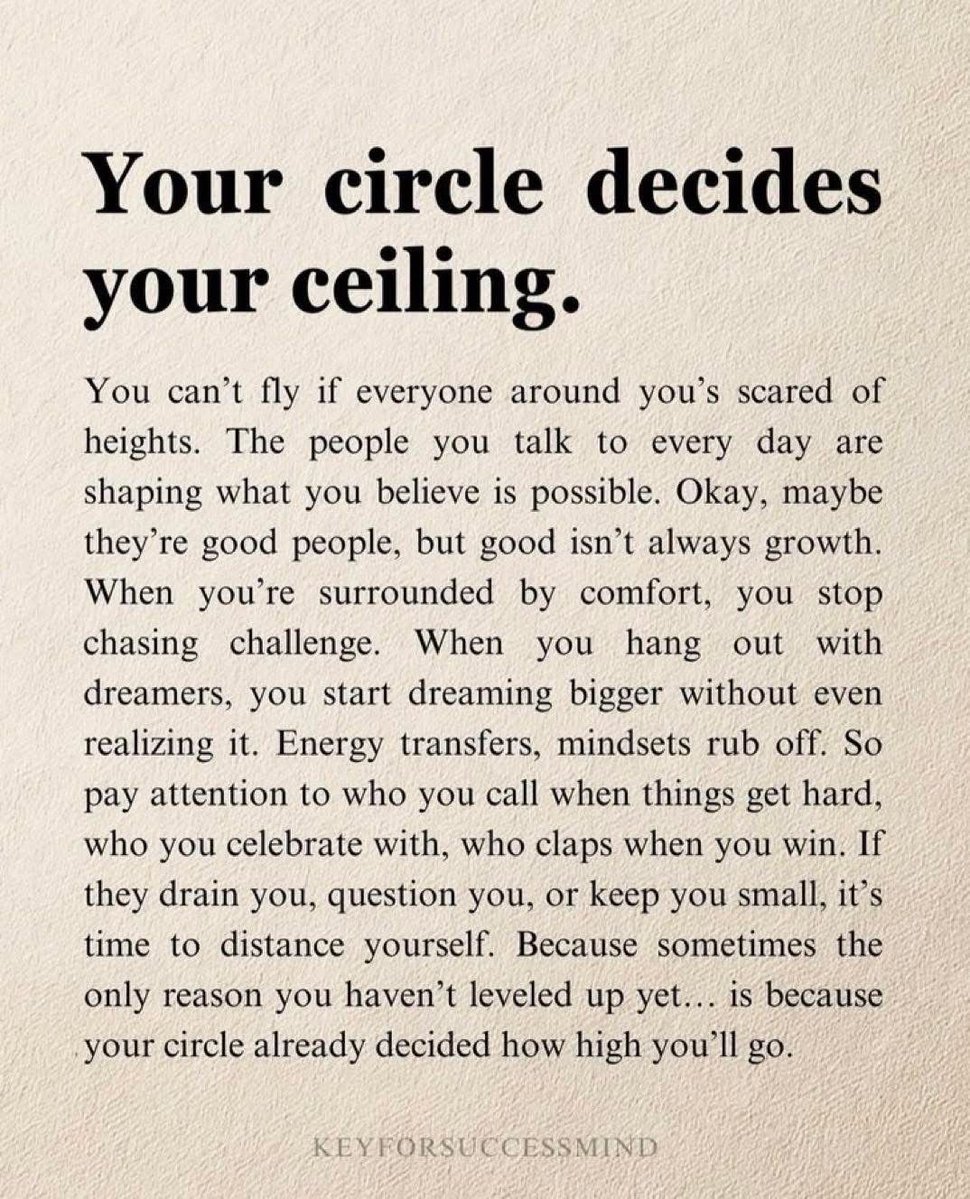
If you’re surrounded by people who fear heights, don’t be surprised when you stop climbing.
The conversations you have every day shape what you believe is possible.
Good people aren’t always growth people. Comfort isn’t the same as progress.
When you spend time with dreamers, you start dreaming bigger.
When you surround yourself with builders, your standards rise without you even noticing.
Energy transfers. Mindsets rub off.
So pay attention:
• Who do you call when things get hard?
• Who celebrates your wins?
• Who challenges you to level up instead of keeping you small?
If your circle drains you, doubts you, or dulls your ambition, that’s not a circle, it’s a cage.
Sometimes the only thing holding you back isn’t your ability…
It’s your environment.
Choose intentionally. Because your circle will decide how high you go.
The real privilege of a long run isn’t the role or the result, it’s getting to show up every morning and do the work with the same people.
When it ends, that’s usually what you remember.
The problem is we think we have time.
On average, we get about 80 summers… if we’re lucky.
We tell ourselves,
“I’ll take that trip next year.”
“I’ll call them when things slow down.”
“I’ll rest after the next big project.”
But time doesn’t wait.
Moments don’t repeat.
And one day, the “someday” we keep talking about will quietly run out.
So take the trip. 🌍
Stay up late with friends.
Wake up early to watch the sunrise.
Tell people you love them, today, not later.
Work hard, yes. But don’t forget to live hard too.
Because success means nothing if we never stop long enough to feel it.
AI is redrawing the global economic map and we are only at the beginning.
The global economy is projected to reach $128 trillion in 2026. The US remains dominant, China continues to scale, and Asia is becoming an increasingly important engine of growth.
But here’s what caught my attention.
AI could become one of the biggest forces reshaping this economic order. Not just through technology companies, but through productivity, capital allocation, manufacturing, services and the competitiveness of entire nations.
The next economic winners won’t necessarily be those with the biggest economies. They’ll be those who figure out how to use AI to do more, move faster and create more value.
And this applies just as much to individuals and executives as it does to countries and corporations.
That’s exactly why we’re building 10xme, helping executives and professionals move beyond simply using AI tools to fundamentally rethink how they work, make decisions and multiply their impact.
The AI advantage isn’t about knowing more. It’s about doing more with what you know.
The question is no longer whether AI will change the economy.
It’s whether you’ll be ready to compete in it.
Explore: https://t.co/w94e8fUB3v
Putting back Jensen in charge of Nvidia is a no-brainer, without Jensen helming Nvidia, Nvidia will follow the same path of Apple in its early days when they removed Jobs.
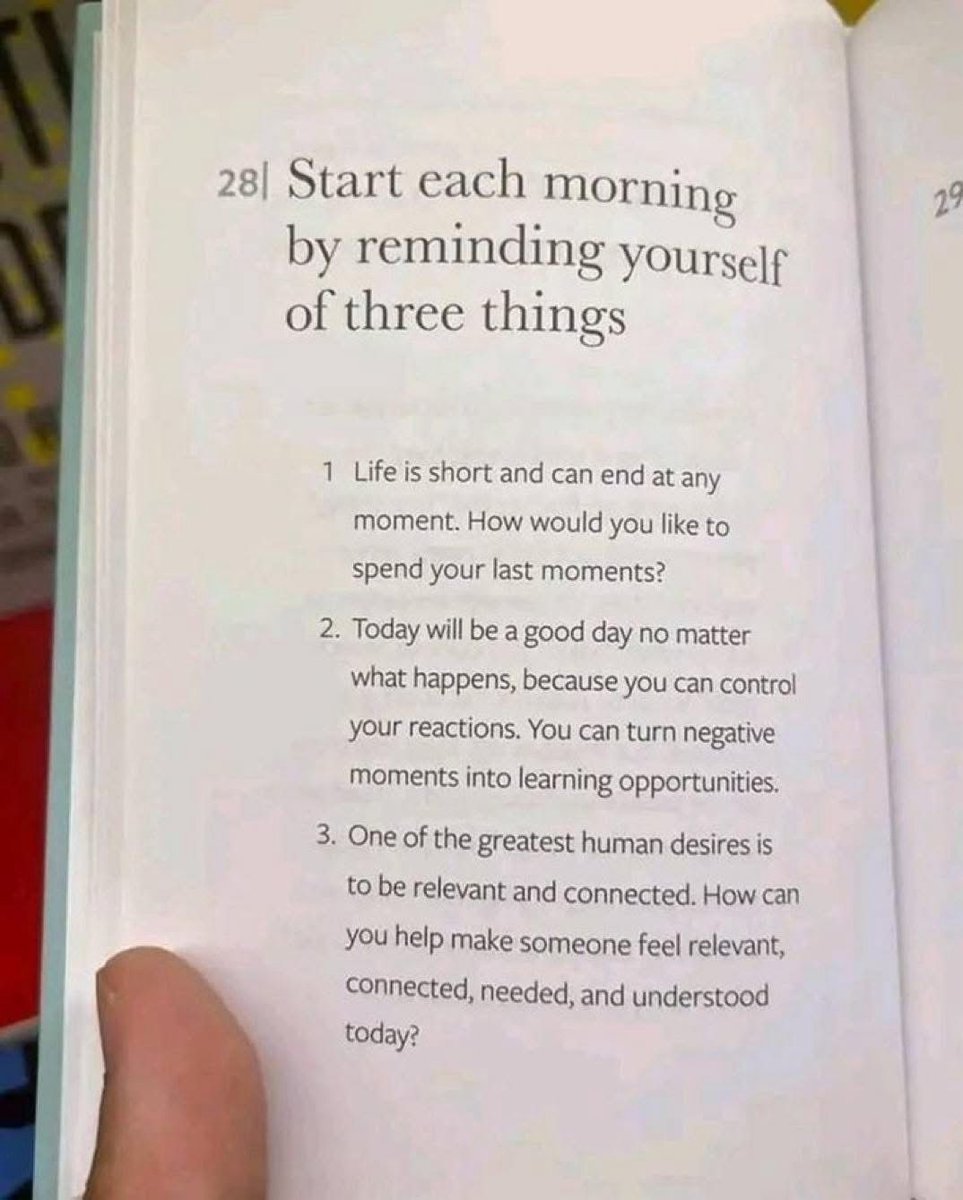
Every morning, before the world starts pulling me in a hundred directions, I remind myself of three things:
1. Life is short.
None of us know how much time we have.
So the question becomes: How do I want to show up today?
2. I get to decide how I respond.
Maybe things go smoothly. Maybe they don’t.
But my reactions are always within my control, and that changes everything.
3. Everyone wants to feel seen and valued.
We underestimate how powerful a moment of presence is.
A message. A sincere compliment. Listening without interrupting.
It takes almost nothing, yet it means everything.
The quality of your life is shaped by the intentions you set each morning.
Not massive goals.
Just simple truths.
Awareness. Choice. Connection.
Start there, and the rest of the day tends to follow.
In leadership, communication is our greatest leverage. But it’s also the easiest place to cause unnecessary harm, especially when emotions, pressure, or ego get involved.
Over the years, I’ve learned:
• Truth without empathy can feel like attack.
• Kindness without honesty becomes avoidance.
• Necessity without intention becomes noise.
The real mastery is speaking with clarity and compassion.
Because the impact of our words doesn’t end when the conversation ends.
They echo.
In our teams, in our families, and within ourselves.
Choose words that build. Not break.
Before computers, airline reservations in 1945 were a complex and manual process involving paper records, phone calls, and travel agents. Although less efficient than today’s systems, it had a distinct organization.
Key Elements of the Manual Reservation System
1. Travel Agents and Phone Calls
Passengers typically booked flights through travel agents, who contacted airlines directly. Agents maintained detailed records on paper and utilized printed timetables to assist customers, especially for complex itineraries.
2. Reservations Clerks and Paper Logs
Clerks at airline offices received bookings via phone, manually recording passenger details in ledgers. They checked flight availability using paper systems, adjusting seat availability with physical booking cards.
3. Ticketing
After confirming a reservation, clerks prepared handwritten or typed paper tickets for passengers, often requiring multiple tickets for international flights.
4. Coordination Across Airlines
Since airlines lacked computerized links, coordinating connecting flights required meticulous manual oversight, often involving multiple agents and careful confirmation of details.
5. Check-In at the Airport
At the airport, staff manually checked passengers against flight manifests and issued boarding passes, often confirming seats through physical logs.
Challenges of the Manual System
The main issues included inefficiency, human error, and outdated information, leading to frequent overbookings and misplaced reservations. These challenges necessitated more time spent resolving issues at travel counters.
Transition to Computerized Reservations
Beginning in the 1950s with systems like SABRE, the industry gradually shifted to computerized reservations, enhancing speed and reliability. This evolution laid the foundation for the fast, efficient booking systems we have today.
When geopolitics, intelligence and the media collide, even the most powerful people aren’t immune.
The Jensen Huang controversy raises some uncomfortable questions.
Let’s separate what we know from what we’re being told.
China has been actively pushing its technology companies towards domestic AI chip alternatives. The US, meanwhile, is trying to prevent its most advanced semiconductor technology from strengthening its biggest strategic competitor.
Nvidia is caught right in the middle, then comes the alleged honeypot story.
A Chinese businesswoman. An alleged intelligence operation. A personal relationship. Restricted AI chips. Classified intelligence that the public cannot independently examine.
But here’s where things get interesting.
Singapore reportedly investigated Alice Huang and ultimately found insufficient evidence to establish illegal chip rerouting by her. US intelligence allegations remain largely opaque, and public reporting suggests officials themselves have not reached certainty about whether she was acting as a Chinese spy.
That’s a very different thing from proving an espionage operation.
My take: We are entering an era where the battle for technological supremacy is no longer fought just in laboratories, boardrooms or semiconductor factories. It’s fought through intelligence, influence, regulatory pressure, capital markets and information warfare.
Jensen Huang built one of the most consequential technology companies in history. Nvidia sits at the centre of the global AI revolution.
But when your company becomes strategically important to two superpowers, you are no longer just running a business. You are operating inside a geopolitical battlefield.
And there’s a lesson here for every CEO, founder and investor:
Your biggest business risk may not be your competitor, it may be the geopolitical system surrounding your business.
In the AI era, technology creates power. But power attracts scrutiny, influence and enemies.
The uncomfortable question isn’t simply whether Jensen Huang was targeted. It’s whether we still know how to distinguish verified intelligence from allegations, and facts from narratives, before passing judgment.
Because in a world where information moves faster than investigations, reputations can be destroyed long before the truth catches up.
Good people are those who love animals. Animals are special creatures, and anyone who has had the good fortune to have a relationship with them knows well.
Animal nobility is a real teaching. Thanks to them, we are more modest, more empathetic, more affectionate people. They give us their love unconditionally, without asking for anything in return, they do us good.
AI is reshaping the global economic order and the stock market is already telling us the story.
Look at the world’s 16 largest stock markets. The concentration of market value is striking.
But here’s what I find interesting: AI could accelerate this shift even further.
The next decade won’t just be about which countries have the biggest economies. It will be about who controls the AI infrastructure, computing power, data, talent and companies that turn AI into economic value.
The winners won’t necessarily be the biggest economies today. They’ll be the ones that adapt fastest.
The AI race is also a capital markets race. Are you positioning yourself for it?
At 10xme, we’re helping professionals and executives turn AI into a competitive advantage.
Explore: https://t.co/w94e8fUB3v
Scott Galloway drops some insights on relationships & happiness:
* Men benefit MORE from relationships than women (live 4-7 yrs longer vs. 2-4 yrs for women).
* Widows are happier after their husband dies. True!
* Single men by 30: 1 in 3 chance of substance abuse.
* Single women invest in friends/career. Single men: "Online content, nationalism, misogyny, anti-immigration."
* Galloway: True fulfillment came from family, not "more."
China produces more room air conditioners than the next nine countries combined (209M vs ~64M). The spiral is a clean way to show it without turning the rest of the chart into a footnote.
This is what concentrated manufacturing capacity looks like in a category with rising global demand. One country accounts for the overwhelming majority of output, while everyone else is operating at a fraction of the scale.