On April 12, we published a piece with a section titled, “Why aren’t oil prices higher?”
Here’s what I wrote:
Over the weekend, I had a subscriber express his frustration to me: “How can the oil market be so complacent?”
Let me answer that question by first saying this: I’ve been neck deep in the oil market for the last 11 years. And oil prices almost always trade to extremes. Right before it does, it always gets “obvious” from a fundamental setup standpoint.
I remember a great conversation I had with Nelson Wu of Open Square Capital about the oil market being analogous to toilet paper. You don’t realize how badly you need it until you run out of it.
Oil prices trade on the margin. As long as there are onshore inventories to draw from, traders don’t panic. It’s when you run low on onshore inventories that panic starts to set in.
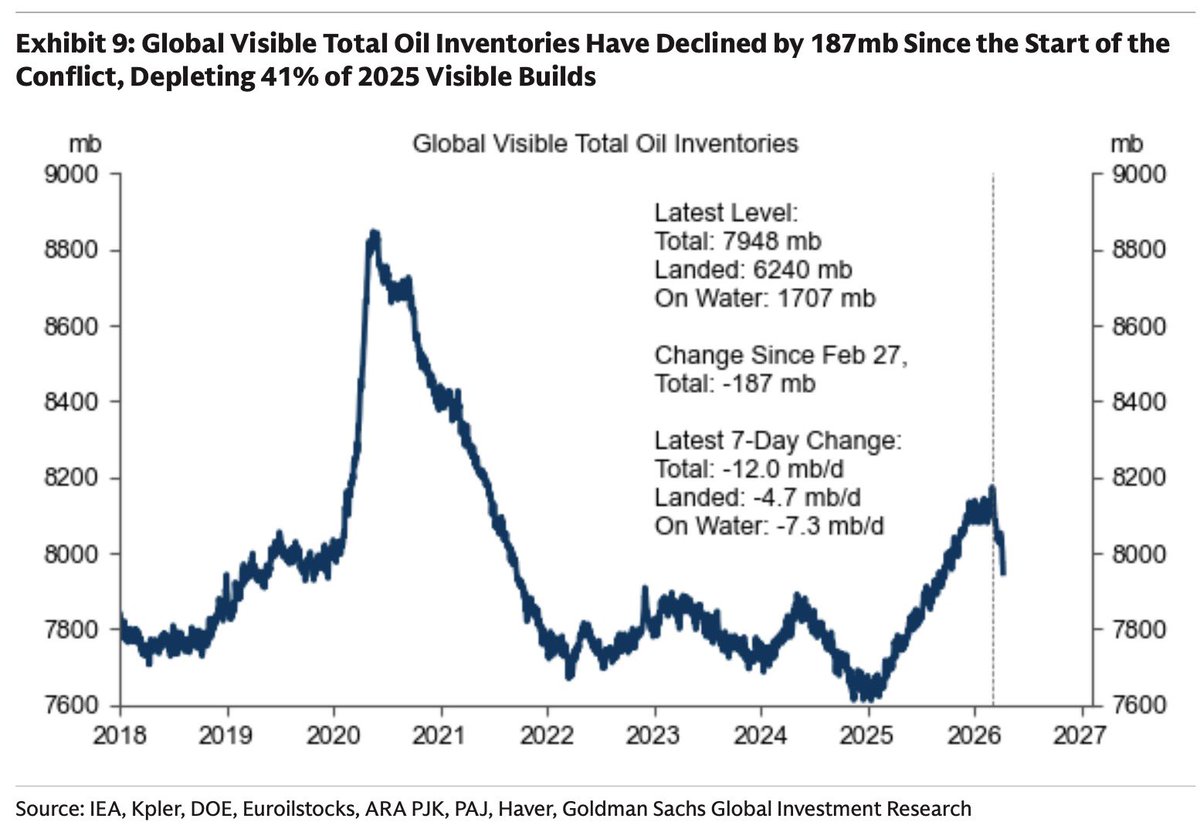
Goldman published an update on Thursday that basically captured the storage math phenomenon that we are seeing:
Global visible total oil inventories remain bloated relative to historical standards. If, for example, we had started the conflict with global oil inventories at the 2025 lows, WTI and Brent would already be above $200/bbl.
The ~1.4 billion bbl cushion at the start of 2026 is what gave the US time to navigate the Iranian conflict without the oil market blowing up. It was also the same reason why at the beginning of the conflict, I wrote a piece titled, “Why Aren’t Oil Prices At $100?”
But fast forwarding 6-weeks later, the facts have changed. The conflict is ongoing, and that onshore cushion you are seeing in storage is nothing but a mirage. Even if the conflict ends this very second and everything returns to normal, that oil inventory is gone.
Vanished. No more.
In essence, the oil market really should be pricing forward balances as if we are already near 7.6 billion bbls, but it’s not, and this creates the biggest mispricing trade since the COVID lockdown (short oil) trade.
Oil traders, the physical guys, lack both the means and capabilities to drive financial prices higher. Financial markets are exponentially larger than the physical side, but there’s one quirk: expiry.
As the futures market approaches expiry, people who continue to hold the contracts are obligated to deliver the goods (literally). This mechanism will be tested first at the May WTI expiry, where the physical market is already quoted at a +$20 premium to financial prices. It will be tested again in the Brent expiry at the end of the month.
What will happen is that as we get closer to the expiry, market participants who are short have to cover because there’s no way in hell they can deliver the goods physically.
We are literally going to run out of available commercial crude storage. This will force the prompt month higher, which will suck in financial flows into the June contracts. This inflection point will shock market participants awake.
This is one of the main reasons why I’ve remained so calm over the past few weeks. The math is what it is. The Trump administration can jawbone oil prices all they want. Axios can publish whatever headlines it wants, but the reality will be swift and vicious. If you do not have the means to deliver the goods, you have to cover.
Today, three of the world’s most credible institutions spoke.
World Bank. IEA. S&P Global.
All three said the same thing.
Here’s what they said — and what it means. 👇
Europe imports 80% of the hydrocarbons it consumes and that oil and gas keeps getting more expensive as they unplug from Russian gas and become hostages of the Strait of Hormuz.
Germany resisted deindustrialization during the “China Shock” of the early 2000’s in large part due to the ultra cheap Russian pipeline gas that it built its economy around since the 1970’s oil shocks.
France electrified its way out of its oil dependence with 54 large reactors built in 20 years.
Today’s Europe is short on domestically produced hydrocarbons, refuses to explore for more and has lost the state and industrial capacity to build nuclear effectively.
It has somehow convinced itself that deindustrialization and offshoring emissions to Asia was climate heroism. That buying hydrocarbons from elsewhere rather than producing them at home would absolve them from their sins.
Will 1970’s energy literate leadership return to Europe? What do you think?
"Renewables - we're told they're cheap, no they're not. Wind and sun are free, the machines to turn wind and sun into electricity are not free - they are expensive"☀️🌬️
@KathrynPorter26 @ #BattleFest 2025 "Net Zero or ‘drill, baby, drill’? The future of UK energy"🛢️🏭
👇
In which I explain the extraordinary energy density of nuclear power using the world‘s most famous equation E=MC2.
Start with a 100 tonne fuel load in a 1 GW PWR.
We fission 3kg of heavy metal per day.
Everyday 3g of that mass is transformed into energy.
According to E=MC2 thats 3g x the speed of light 300 million m/s squared.
3g x 90,000,000,000,000,000 m2/s2 equals a lot of Joules.
Expressed in more familiar terms for the power sector thats 75GWh thermal or 24GWh electric.
So to summarize that 3g/day powers 1 million homes every day for 18 months.
To watch the full interview on the Great Simplification podcast with Nate Hagens see the link in the replies.
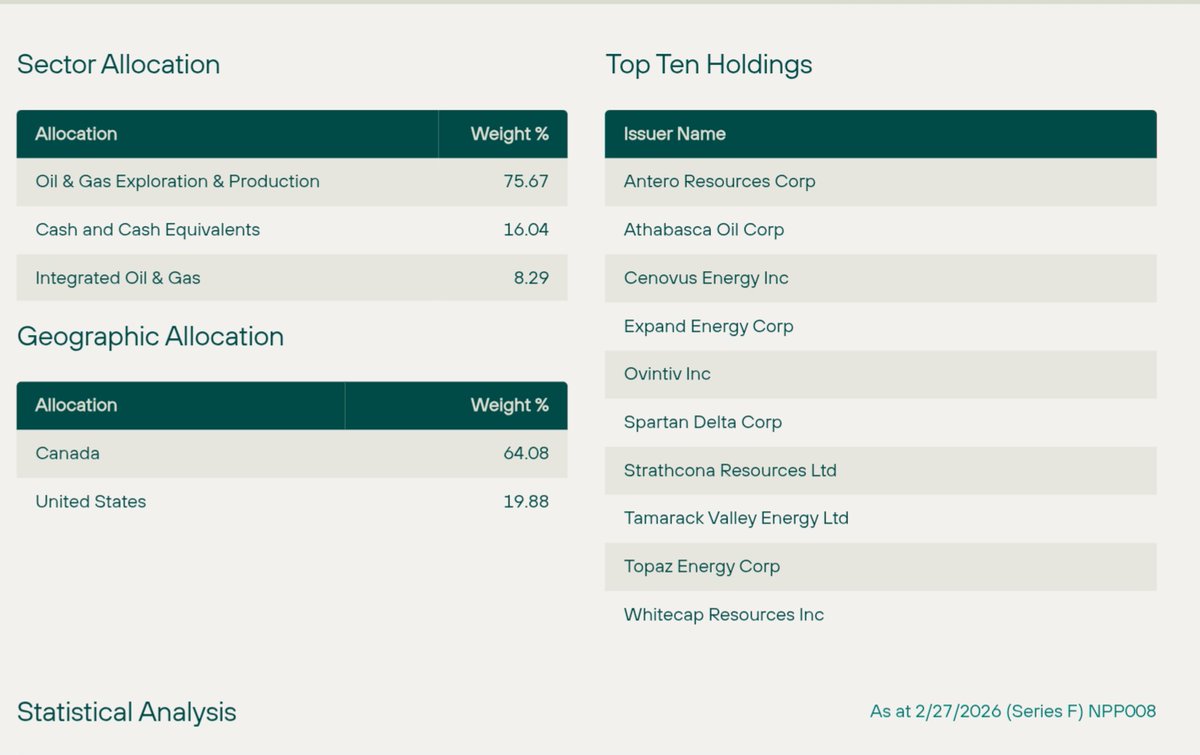
Eric's @ericnuttall latest top 10 holdings -
up near 17% on year #oott
always nice option if want exposure to sector with out much effort besides finding ticker symbol
@garquake@ericnuttall Moved all my oil/gas holdings into Eric's Nine Point ETF's a couple years ago, glad I did less work [stock picking] for an old fart like me...Also have been buying some ECHI lately, good fit for same reasons.
The amount of society-sucking waste driven by anti-nuclearism thinly veiled as environmentalism is astounding. "Environmentalists" have used once-through cooling to try to require huge/expensive cooling towers be built when there's vast fish-friendly cooling available. After they learned that fish don't get killed by the inlets, they switched the story to be about the fish larvae that get sucked in. These fake concerns make America worse and hurt the environment.
Nuclear Fuel Is The Swiss Watch of Energy and The Most Sophisticated Industrial Product You've Never Heard About.
Buckle up for a mega-🧵
There is a peculiarity at the heart of nuclear energy that rarely gets the attention it deserves. Every other thermal power plant in history destroys its fuel.
Coal goes in as a black rock and comes out as CO2, water vapor, and ash. Natural gas barely leaves a trace at all, just heat and gaseous combustion products dispersed into the atmosphere.
The fuel is gone, irreversibly transformed, its chemical identity obliterated in the furnace.
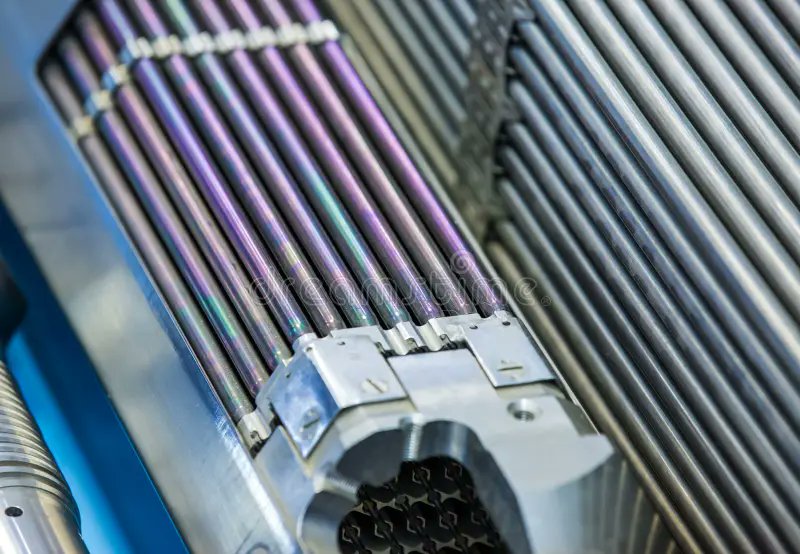
Nuclear fuel does almost none of that. The fuel elements that go into a reactor and the fuel elements that come out are, to a first approximation, the same material in the same geometry, sitting in the same place.
A spent fuel assembly pulled from a reactor after six years of operation looks nearly identical to the fresh one that went in.
The mass has changed by a tiny fraction of a percent, nuclear alchemy has occurred in which half the periodic table has been generated in the form of fission products within the ceramic pellets but the volume and geometry is essentially identical.
This one fact, that nuclear fuel must be preserved rather than destroyed, that the job of every layer of every system surrounding the core is to maintain the integrity of a material through years of radiation bombardment and extreme temperature gradients, shapes much of nuclear engineering.
It explains the cladding materials, the obsessive quality control in fabrication facilities, and the decades of slow, painstaking improvement that have transformed a fleet that routinely operated with failed fuel elements into one where a single leaker triggers a formal investigation.
I spent a long conversation with Michael Seely, the @AtomicBlenderYT, a nuclear enginner with a focus on fuel, going through what nuclear fuel actually is, how it is made, why it fails, and how the industry learned to prevent those failures.
What follows is my attempt to synthesize that conversation into something useful for anyone who wants to understand nuclear from the inside out.
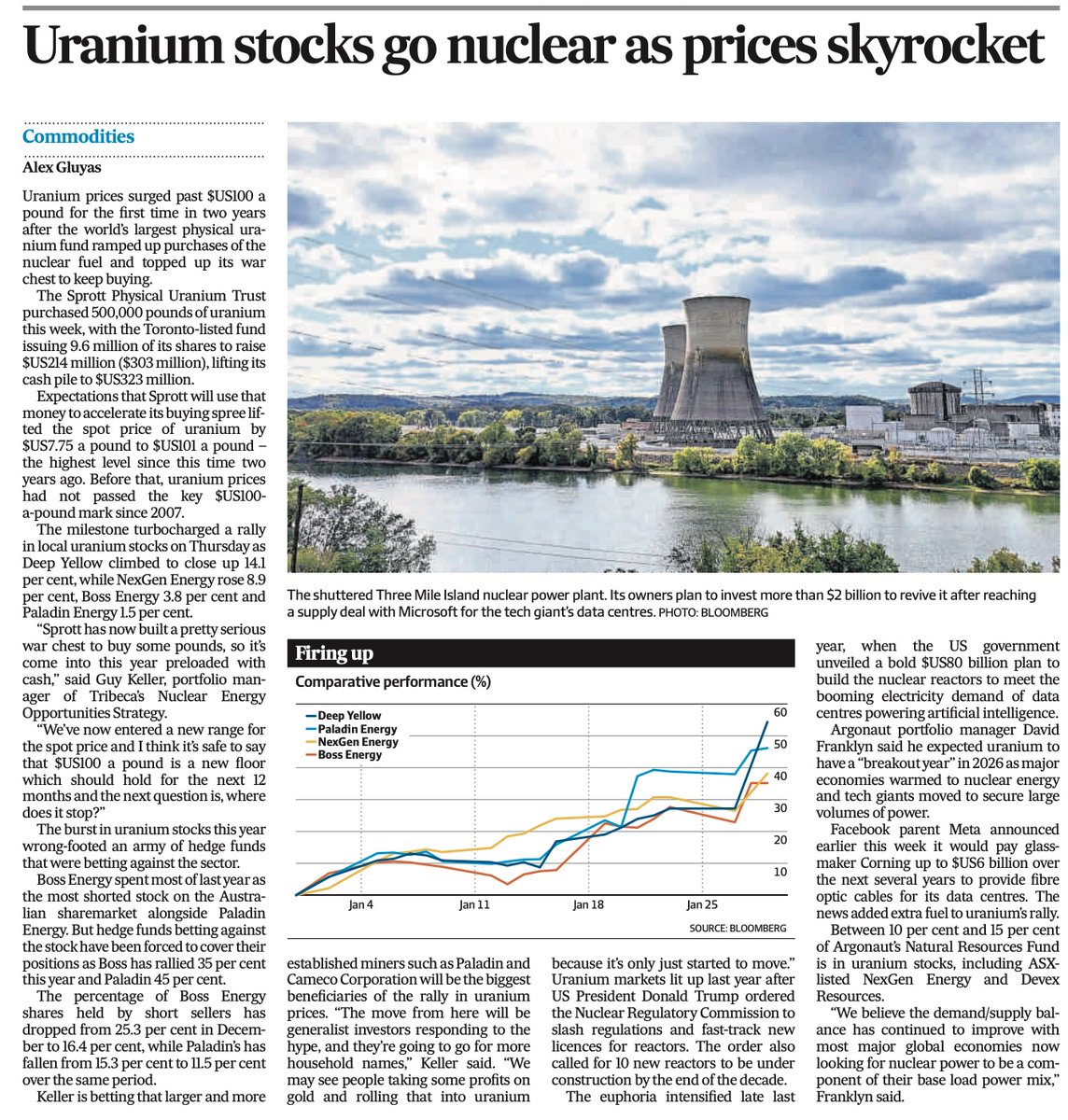
Interesting read in today’s @FinancialReview on #uranium
Spot prices back above US$100/lb for the first time in 2 years, driven by physical buying from @sprott rather than retail hype.
Shorts being unwound in names like Boss Energy and Paladin Energy, while commentators like Guy Keller (Tribeca) and David Franklyn (Argonaut) point to tightening supply and rising power demand.
Feels like uranium is quietly re-entering the mainstream conversation.
Elizabeth May and I don’t agree on very much.
But there is one thing we absolutely agree on:
It is insane to give Cabinet Ministers the power to secretly exempt any individual or any corporation from the laws of this country.
That should disturb every Canadian, regardless of party.
No government should have the power to place itself above the law.
That’s why I’ve launched a petition to protect the rule of law and stop this dangerous precedent.
Please sign it: https://t.co/juYmtTQ3Qp
Because in Canada, the law must apply to everyone including those in power.
#cdnpoli
Coastal First Nations does not own land, is not a First Nations band, and is not a reserve.
They are political alliance, activist group that just happens to be wrapped up carbon credits just like Mark Carney.
Carney is going to meet with the Coastal First Nations, the non-profit set up by American foundations to promote climate and environmental issues
"Now joining Prime Minister Mark Carney will be Energy Minister Tim Hodgson."
CBC continues the fiction of presenting "Coastal First Nations" as if it were a regular tribal council... it's not!
But CBC always puts its climate activism first destroying its credibility @brodiefenlon@CBCMarina
Trump on Venezuelan Oil
2023: Their oil is garbage… the worst you can get. It’s like tar.
2026: Venezuelan oil.. a very good oil—great oil. It’s fantastic for certain things like asphalt roads.
H/t @Acyn