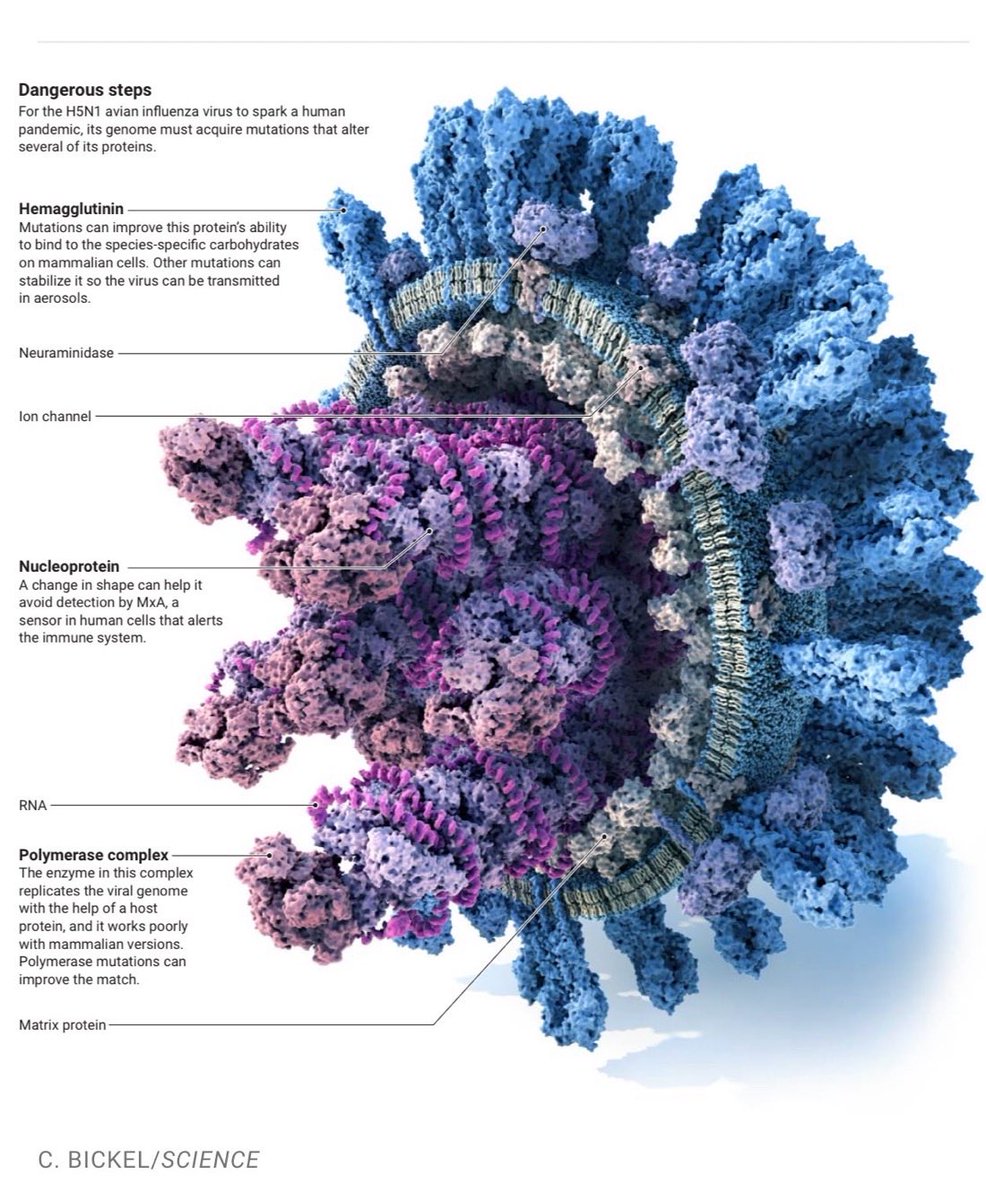
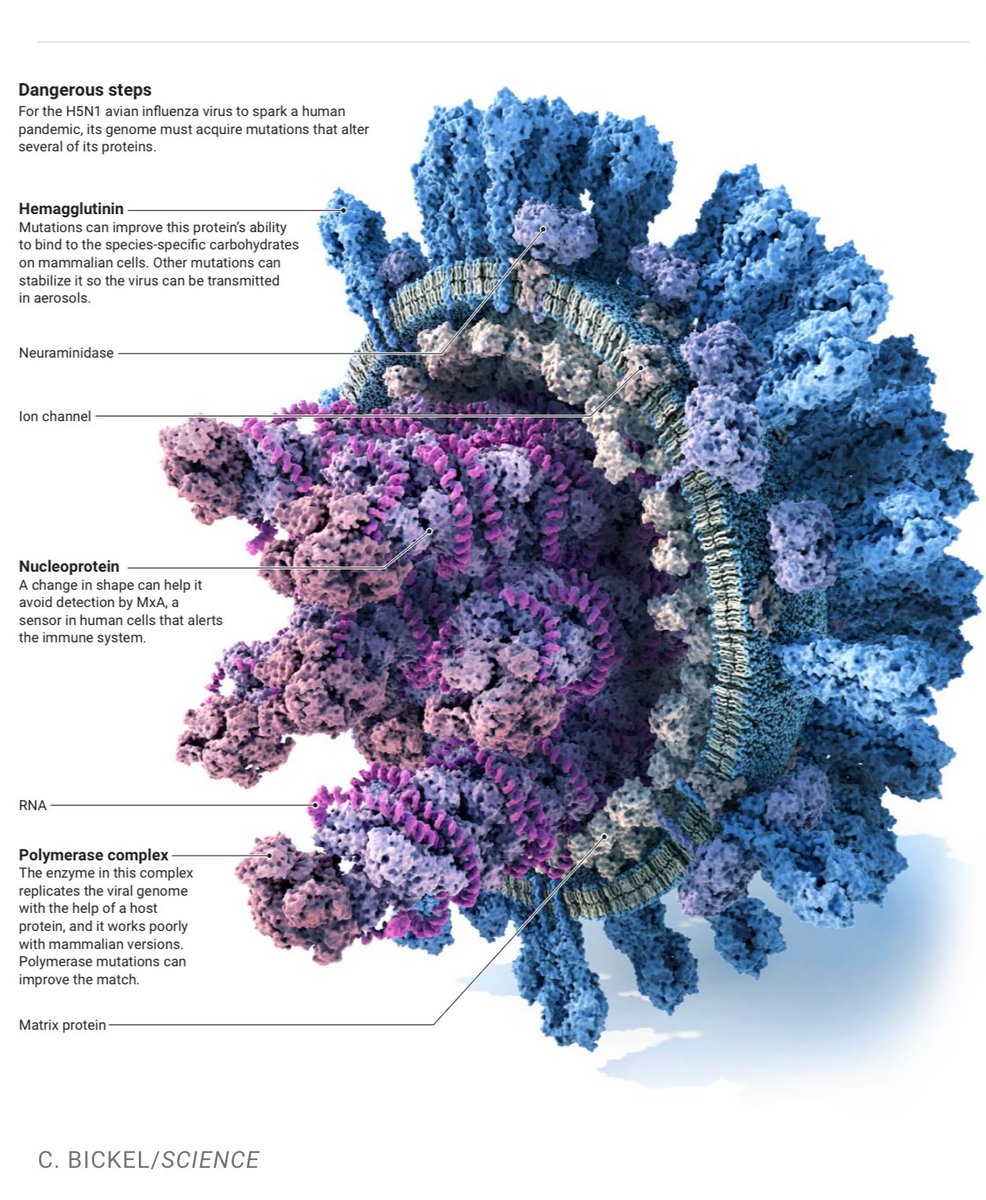
Heartbreaking news from Heard Island in Australia. H5N1 has devastated the southern elephant seal colony there, killing over 13,000 pups and wiping out more than 75% of the local population in a shockingly fast outbreak.
Bird flu kills more than 13,000 baby seals on remote Australian island, wiping out over 75% of pups
H5N1 avian influenza spread rapidly through southern elephant seal colonies on remote Heard Island, marking one of the deadliest wildlife outbreaks ever recorded in the region
Avian flu H5N1 outbreak at national poultry show spreads to other provinces: CFIA
Agency is encouraging attendees who brought or took home birds to contact it
https://t.co/PvTGVEdves
Canada: Two New Bird Flu H5N1 Detections in British Columbia. One at a Non-Commercial, Non-Poultry Premises in Vancouver and Another at a Commercial Poultry Farm in Abbotsford.
#H5N1#BirdFlu#Canada#BritishColumbia
https://t.co/uX71Gx0ba5
⚠️H5N1 Bird Flu.
A Pandemic timeline 🇺🇸 :
✴️Birds: Largest modern outbreak. 2300 flocks & 212M birds since Feb 2022. Still active in 2026.
✴️Cattle: Unprecedented. 1230 herds across 22 states since Mar 2024 (B3.13), recent spread in WA & first case in IN.
✴️Mammals: 800+ detections. Utah mink farm outbreak (Aug 2026, same cattle lineage) still ongoing — no mandatory cull which is playing with fire.
✴️Humans: Dozens of cases. First 2026 death in WA linked to dairy exposure.
✴️Seasonal flu: H1N1 arrived unusually early (rising since Aug). Higher activity than normal.
✴️Sustained H5N1 in birds, cattle & mink + early seasonal H1N1 raises the risk of a recombinant, human-adapted virus. Gaps in control (especially mink) keep the risk elevated.
https://t.co/DtwDEho7pY
A few reasons I think the Washington state #H5N1 bird flu case is important.
1) I believe it would the first human death from B3.13 genotype (once this is confirmed) which was found in viruses transmitting from dairy cattle directly to humans. Will be important to look at whether there are any relevant genomic changes to pathogenicity or if this was more due to the host having underlying conditions.
2) Detection occurred after cows were already sick. We then saw multiple herds get affected quickly and now human spillover. They were not detected through the National Milk Testing Strategy (this is a state-level surveillance strategy w/ decreasing frequency of sampling once you are negative for long enough). This is different than the Daily Herd Status Program which is optional weekly bulk-sample testing at farms which I don't think was happening here. The trade-off of reducing surveillance when you don't have any detections makes sense from an operational/$ perspective but shows that you will then probably miss a new introduction.
3) It is not clear if the infected worker was utilizing PPE at the time of infection. In our research in Central California, PPE use (specifically eye protection) was minimal/none on surveys we did this year. @StanfordCIGH@Stanford_ID
A person in Yakima County Washington died after catching H5N1 bird flu from infected dairy cows. Health officials report three human cases there so far, all linked to cattle exposure. Thirty three dairy herds in the county tested positive after the first two were found in early October.
2 infected dairy herds.
Then 33.
Then 3 confirmed human infections.
Now a death.
All in one Washington county.
H5N1 is giving us a very uncomfortable lesson in how quickly an animal outbreak can become a human health problem.
'Mink in captivity have previously been described as pandemic “time bombs”. The size and density of the farms give invading viruses a perfect environment in which to mutate'.
H5N1, mink, seasonal influenza, potential for reassortment, no action.
A biological risk nightmare.
United States: Bird flu (H5N1) has been detected in a dairy herd in Benton County, Washington, for the first time. The herd has been quarantined.
Eight dairy herds in Yakima County have also tested positive. Officials warn people not to consume raw milk or unpasteurised dairy products. Pasteurised milk remains safe.
In essence, this is no different than running risky Gain-of-Function research on on a dangerous pathogen...
Uncontrolled H5N1 outbreaks on mink farms are a global risk, as Mink have α2,6 receptors similar to humans. The virus could evolve that infection route in Mink.
Experts say officials should have ordered a Utah mink farm to cull its animals after H5N1 bird flu spread there. The state never seriously considered it after a fur trade representative warned that doing so would destroy the industry.
When bird flu spread through a Utah mink farm, the government should’ve ordered it to cull its mink, experts say.
But the state never seriously considered it.
A fur trade representative warned that doing so would kill the industry.
https://t.co/FW14avuS27
⚠️Viral reassortment happens when two coexisting viruses mix in a bird or a mammal, and result in a mammalian adapted virus that could cause a human pandemic.
It’s all about the throat receptors these viruses bind, and how efficient human to human spread would be.
H5N1 has seemed the most likely pathogen to develop human adaption IMO, and I’ve written much on this over the years.
https://t.co/DtwDEho7pY
Currently we have H5N1 and H5N6 co-circulating in Chinese birds, and multiple Bird and Human flu viruses co-circulating in minks and pigs.
It’s a giant lottery, we watch it very carefully.
https://t.co/R4EKEIt0J4
https://t.co/q6HknU9YcX https://t.co/DtwDEho7pY
We’re in too deep now. In 2024, we noted H5N1 & influenza A are surging together at record levels in wastewater. After 70 human cases & 1 death were reported in Jan. 2025, including H5N1 in kids with no identifiable source, we ignored it. We don’t have a functioning CDC.
We coexist with bird flu now, but the public hasn’t figured that out yet. Both Sides have ignored it for over 4 years. H5N1 is in birds, mammals, humans, mice/rats, etc. The U.S. reported 70 human cases & 1 death by Jan. 2025, & then nothing until now.
Winter is coming.
'...if H5N1 mutates and gains the ability to spread person-to-person, it could trigger the next global pandemic – and each new infection gives the virus more opportunities to replicate and change'.
Important to note here: this is the first *reported* case in the US this year.
⚠️ BOOKMARK THIS. READ TWICE.
H5N1 is now on every continent. Wildlife reservoirs are permanent.
Next: commercial poultry & dairy hits → egg/chicken/dairy shock → pure supply-side inflation on top of existing energy, diesel and fertiliser stress.
Central banks can print money. They cannot print food, biosecurity or hospital capacity.
Rate hikes into a supply-side crisis are counterproductive. This is how stagflation becomes a bankruptcy cycle.
The intersection of entrenched H5N1 + economic fragility is the real risk most people are ignoring. Preparedness costs a fraction of the GDP hit (OECD models show 3–16% in uncontrolled outbreaks).
If it human-adapts, it’s orders of magnitude worse than COVID. Until then, gold remains the cleanest hedge against both monetary debasement and supply shocks.
https://t.co/DtwDEho7pY
#H5N1 #BirdFlu #Stagflation #Gold #DiseaseX
H5N1 alert
A person in Yakima County Washington tested positive for bird flu after exposure to infected dairy cows. They are isolating at home and have not had severe illness. This follows the first cattle cases in the state this month.
#H5N1
[No word on symptoms.]
⚠️
➡️ Washington: Human case of bird flu confirmed in Yakima County; person was exposed to infected cow
—person who was exposed to infected dairy cows has bird flu in Yakima County, local health officials confirmed.person who was exposed to infected dairy cows has bird flu in Yakima County, local health officials confirmed.—person who was exposed to infected dairy cows has bird flu in Yakima County, local health officials confirmed.
- A person who was exposed to infected dairy cows has bird flu in Yakima County, local health officials confirmed.
- The person is isolating at home and ➡️ hasn’t experienced severe illness or been hospitalized, according to a news release from the Yakima Health District.
- Avian influenza, also called bird flu, is caused by viruses that primarily circulate among wild birds but can also infect other animals such as poultry and dairy cattle. On rare occasions, the viruses infect people and make them sick.
- ➡️ Bird flu was confirmed at two dairy farms in Yakima County earlier this month, the first detection in Washington state. The dairies weren't identified. Dairy cattle in 19 states have been infected since the outbreak began in March 2024.
- In Washington state, this strain of bird flu was first identified in a backyard flock in May 2022. The first human case was identified in October 2024 and was linked to close contact with birds and their environment during a commercial poultry outbreak, according to the state Department of Health.
- ➡️ Bird flu was also detected in a flock of backyard poultry in Kittitas County on Oct. 9, according to the health department there.
Risk low to general public
- The risk of avian influenza infection to the general public remains low, a news release from the health district said. People at greater risk include dairy workers and others who have close or prolonged contact with infected animals or environments contaminated with the virus. Most human infections have occurred following close or prolonged contact with infected animals or environments contaminated with the virus.
- Human-to-human spread is extremely rare and has never been documented in the U.S. ➡️ Local public health officials are reaching out to anyone who has been in close contact with the patient to monitor for symptoms.
- The health district is working with state and federal partners to provide guidance and testing, and make sure dairies have access to personal protective equipment for workers.
Symptoms
- Symptoms of avian influenza in people can include eye redness or irritation, fever or feeling feverish, cough, sore throat, runny or stuffy nose, muscle or body aches, headache, and fatigue. More severe illness can occur. People can become infected when virus enters their eyes, nose, or mouth.
- People who may have been exposed to sick animals are advised to get a flu vaccine. While it will not prevent bird flu infection, it reduces the risk of becoming sick with both human and avian influenza viruses at the same time. The flu vaccine is recommended for everyone 6 months and older, the health district said.
- People who work on a dairy farm and develop symptoms after potential exposure to infected cattle, should contact a healthcare provider or the Yakima Health District at (509) 249-6541.
Avoid raw dairy products
- Pasteurized milk and dairy products remain safe to consume. Pasteurization inactivates bird flu virus and other harmful pathogens. People should avoid raw milk and unpasteurized dairy products because they may contain harmful germs, the health district said. Do not feed pets raw milk, unpasteurized dairy products, or raw meat, including raw pet foods.
https://t.co/1iRc9hcedI
H5N1 is now on every continent.
Australia & New Zealand confirmed detections in wild birds — the last holdouts are gone. Wildlife reservoirs are established worldwide.
US poultry and dairy continue to report cases. Spillover risk is structural, not hypothetical.
Food supply shocks (eggs, chicken, dairy) would hit as pure supply-side inflation. Central banks can’t print biosecurity or protein.
Preparedness is cheaper than the GDP hit if it spreads further.
⚠️ BOOKMARK THIS. READ TWICE.
H5N1 has now reached every continent on Earth.
Australia and New Zealand — the last holdouts — have confirmed detections in wild birds. The virus is established in wildlife across the planet.
US poultry and dairy continue to get hit (new turkey/duck farms + dairy herds, including Washington state).
Wildlife reservoirs are permanent. This is no longer a “possible” animal-health event. Spillover risk to livestock and humans is now structural.
When it hits commercial flocks and cattle harder (or adapts further), the food-system shock is immediate: eggs, chicken, dairy, supply chains.
That is pure supply-side inflation layered on top of existing energy, fertiliser and supply-chain stress. Rate cuts and fiscal stimulus do not fix it. Central banks cannot print food or biosecurity.
OECD modelling shows uncontrolled outbreaks can cut GDP 3–16%. Preparedness costs a fraction of that.
Most people are still treating this like background noise. They won’t when protein prices and hospital load both move at the same time.
We are not prepared for entrenched H5N1 + economic fragility.
And if this virus human adapts and goes pandemic it will be 1000 times worse than COVID.
#H5N1 #BirdFlu #Stagflation #DiseaseX
“An outbreak of highly pathogenic avian influenza virus that nearly wiped out an Illinois farmer’s backyard flock also spread to a domestic cat & wild rats on the farm.”
The U.S. has ignored H5N1 in cats for 3 years, & in rats for 2 years. https://t.co/0c892xUmGz