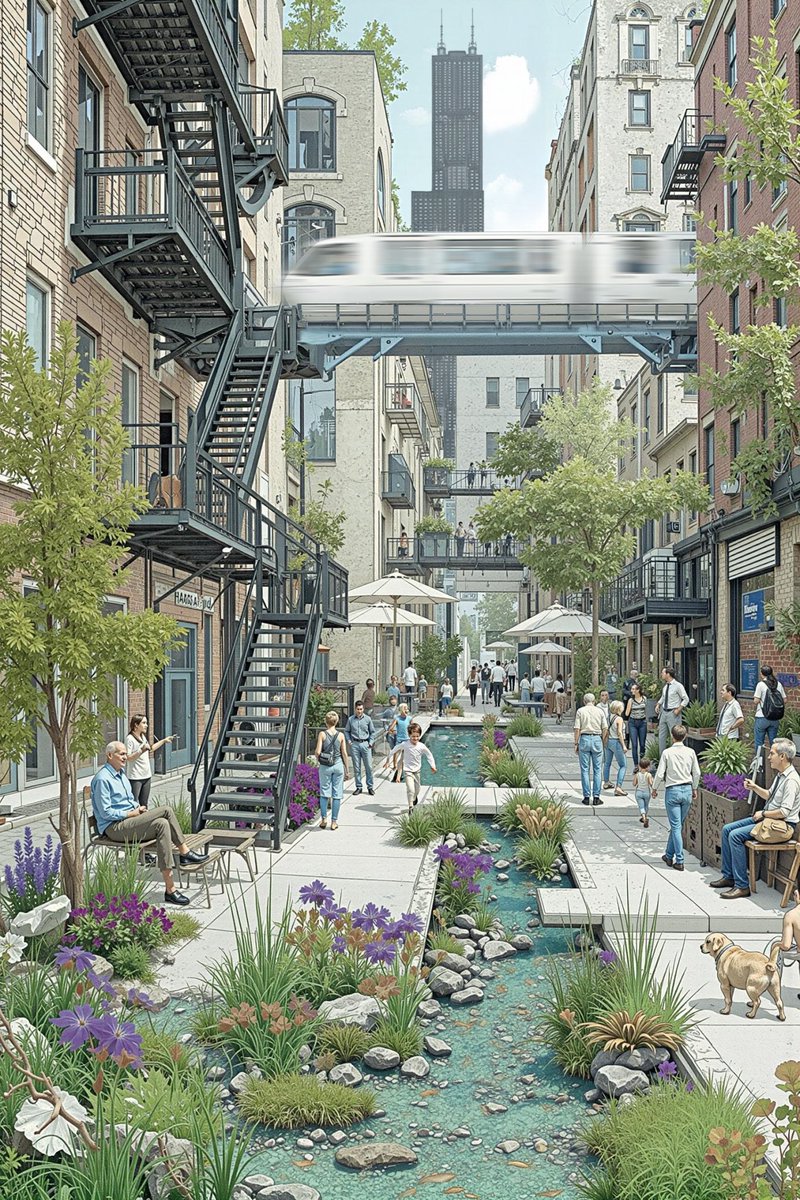
The fact that our national parks are not primarily accessible by train/bus and we don’t severely restrict the number of cars is very bad policy. All these people could be traveling at 80MPH, staring out the window, sipping Chardonnay. For those who want an SOV, a bike trail.
Today I sit down with Riley Meik (@rileymeik), co-founder and CEO of @americanhousing, a company building factory-made row homes for the kind of city lots we've stopped building on.
For 70 years we got great at putting single-family homes on the outskirts and basically quit building family-sized housing in the places people actually want to live.
Riley's bet is that you fix that the way you'd fix any hard manufacturing problem: own the whole stack, design every part from first principles, and build the home in a factory.
His first prototype went from manufactured to installed to finished in 13 weeks, and the goal from here is a home that costs 30 to 50% less than local construction.
Timestamps:
(00:00) Intro
(01:22) The Housing Crisis Is a Production Problem
(04:33) Why America Stopped Building Family Housing in Cities
(09:50) The First Company and Why Selling to Home Builders Doesn't Work
(14:58) First Principles Engineering: What Does a Wall Actually Need to Do?
(21:39) Getting Code-Certified for a Building System That Doesn't Exist Yet
(27:57) One Miracle at a Time
(31:47) Three Entities, One Mission: How AHC's Capital Stack Works
(37:52) 18 Months of R&D: Panel Install Time Dropped 70%
(44:22) The Two-Week Build Goal
(47:03) Eichler Homes and Designing for Young Families
(52:24) Beautiful Housing Gets Approved: Design as Regulatory Strategy
(1:00:08) Gigafactory Over Mobile Micro-Factory
(1:04:40) Margin Targets, Market Selection, and the Coastal City Thesis
(1:11:39) Earning the Right to Automate and Hiring for the Housing Crisis
11 social housing apartments in Menorca, Spain
Built from local materials, stone and timber. Sustainability is not treated as an additional layer of technology, but is holistically integrated in the architecture
By Josep Ferrando, Simbiotiqa and Vilardell Architecte
I’m for bold land reclamation projects, but in many cities the most productive form of land reclamation may be directing transportation departments to return excess right-of-way acquired during road-widening projects a century ago.
(Example of giving back road to building in Berlin)
These exact numbers might be off, but it's definitely way more expensive overall to run the same level of service in the suburbs compared to a dense city.
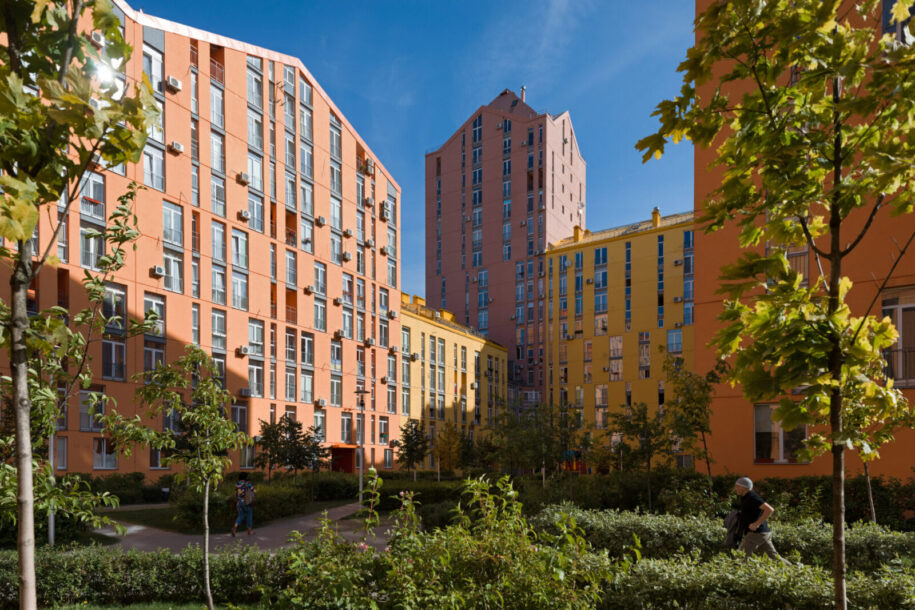
Fine-grained courtyard blocks are having a revival across Europe. Here is a playful new courtyard block development in Ukraine, where developers had goal of
“Creating a residential block that would sell itself even in the time of crisis, with the optimal cost price and attractive environment for future residents.
Optimizing both construction cost price and technology”
I wrote this 7 years ago
In it I called for cities to better embrace greenery, reflective coatings, water and shading to tackle urban heat.
More relevant than ever….
I like this apartment plan.
Each living space is dual-aspect, and easy to cross ventilate.
The kitchen in the middle, splits the space in terms of function, but also forms a larger balcony.
There is a decent lobby!
By Think Architecture in Kilchberg, Switzerland
The ~60' wide x 6 stories tall x 40' deep building is the basic box that makes up courtyard blocks.
It's a PRETTY forgiving form. Many styles often look better when they appear in a perimeter block format, rather than a detached, isolated building.
Brick and stucco always look amazing, but even the "biophilic brutalist" and "modern glass curtain wall" styles look better here than in other contexts (to me).
more social housing apartments from France that look better than most market-rate American new builds
-no front or side setbacks, 60' wide and 6 stories tall, masonry construction
Converting an abandoned supermarket into a library. I hope we can all agree this is a good idea!
Especially when it also now has enough solar panels to power the entire building
By Hennebery Eddy Architects, in Oregon
How can we build more housing, while using fewer materials and less waste?
This design for apartments in Basel is proposed to be built with reused materials ‘mined’ from nearby deconstructed warehouse structures
By Kosmos Architects