Researches on transnational organized crimes, VE & social change in the Horn of Africa, #CVE, a Fellow of Volkswagen Stiftung, teaches at Egerton University
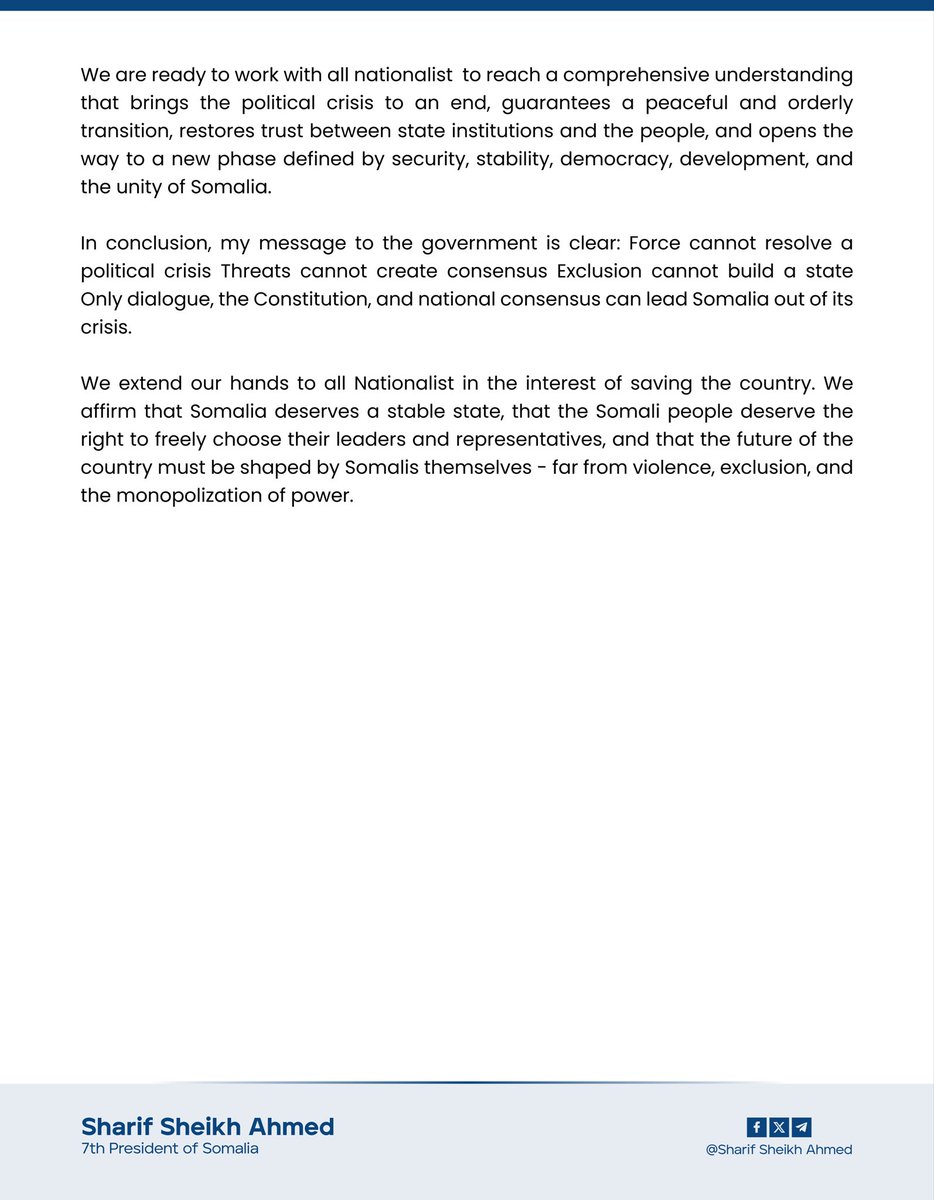
Force cannot resolve a political crisis. Threats cannot create consensus. Exclusion cannot build a state. Only dialogue, the Constitution, and national consensus can lead Somalia out of its crisis.
One way or the other, the Horn of Africa’s return to the Middle East theater is likely irreversible. Our latest op-ed in @ForeignAffairs. https://t.co/uaNwyG3fBk
#BREAKING
Serious buildup of troops and hardware on the Ethiopia-Eritrea border.
There have been sustained external pressure, principally the United States in the last 24 hours, to stop the almost inexorable slide toward full-blown war.
The massing of large rival forces along a volatile border is always dangerous even when order for invasion not given.
The risk of an accidental war - an escalated artillery duel quickly sparking bigger conflict - is significally elevated.
There is also the fatal war calculations of the two sides.
Both sides have an incentive for escalation - PM Abiy is under immense pressure from his core base to press his current advantage while his army has the initiative and the upper hand in the north to finish the 'Eritrea problem' once and for all.
Asmara, fully supported and possibly instigated by Egypt, calculates Ethiopa is too weakened, battling large internal armed insurrections, fighting on multiple fronts, and lacking the strength to take on Eritrea.
Moving against Addis now, with active support from TPLF factions, possibly with support from other rebel groups like Fano and OLA, is from Asmara's perspective advantageous.
The Next Phase of the Tigray War at the Eritrean Frontier
In my previous analyses, I examined what was happening behind the rapid territorial losses in Tigray and whether the TPLF could sustain another insurgency after its conventional military setback. With Mekelle now under federal government control and the TPLF withdrawing from the regional capital, those two questions have converged. The issue now is where the TPLF goes from here and whether the next phase of the conflict moves north toward Eritrea.
Relations between Addis Ababa and Asmara have also deteriorated sharply. Ethiopia has accused Eritrea of supporting the TPLF and participating directly in the fighting, allegations Asmara denies, while diplomatic relations between the two governments have now been severed. The TPLF’s military setback is pushing the conflict north at a time when relations between Abiy and Isaias are already at their lowest point.
With the collapse of the TPLF’s planned southward offensive, Eritrea’s strategy of keeping the battlefield away from its own border has also failed. Debretsion Gebremichael has indicated a shift toward mobile warfare rather than continuing to defend fixed positions. Multiple sources indicate that the TPLF leadership and command structure have moved toward the Eritrean border, apparently with the intention of shifting to an insurgency. Although their precise locations and intentions remain difficult to verify independently, continued movement toward the Eritrean frontier would make the TPLF’s ability to survive as an organised fighting force increasingly dependent on what happens along that border. This presents a dilemma for both the Eritrean and Ethiopian governments.
Isaias’s Dilemma
For Isaias, allowing TPLF forces to cross into Eritrea presents two competing risks. On one hand, the survival and regrouping of the TPLF would allow him to continue his proxy war against his Ethiopian adversary. It would also preserve the rebel alliance that Eritrea helped assemble, which could weaken considerably if the TPLF is militarily destroyed. Eritrean territory could give the TPLF the space it needs to reorganise while preserving an important source of military pressure on Abiy.
Allowing substantial TPLF forces into Eritrea would also create a problem of control for Isaias. Preserving the TPLF as a fighting force would remain useful only as long as its operations fit Eritrea’s own strategic calculations. Once operating from Eritrean territory, TPLF military actions against Ethiopia could have direct consequences for Eritrea, giving Isaias a strong interest in controlling when, where and how those forces return to the battlefield.
On the other hand, allowing a defeated TPLF force to cross into Eritrea and launch an insurgency from there could give Abiy a justification to cross the border in the name of self-defence. The international actors currently pressing Ethiopia and Eritrea to avoid direct confrontation could find it much harder to maintain that pressure if Ethiopia can demonstrate a clear and continuing armed threat emanating from Eritrean territory. TPLF operations launched from Eritrea would strengthen Addis Ababa’s argument that it faces a cross-border security threat. In other words, by providing the TPLF with sanctuary, Isaias could unintentionally accelerate the very direct confrontation with Abiy that he has so far sought to avoid by relying on proxy warfare.
Sudan and Egypt widen the regional calculation, with Sudan potentially providing strategic depth and supply access around the western border, while Egypt’s dispute with Ethiopia and its relationship with Eritrea add another regional dimension. Addis Ababa has accused both countries of supporting the TPLF-led alliance, although these allegations remain disputed.
Abiy’s Dilemma
The TPLF’s movement toward Eritrea creates a different problem for Abiy. Pursuing its forces across the border before they can reorganise would deny them time to prepare another insurgency, while allowing them to remain beyond the border could give them space to recover. The ENDF still has to consolidate the territory captured during its rapid advance, deal with remaining TPLF formations and recover from the recent fighting. Entering Eritrea would also risk direct confrontation with the Eritrean army.
The timing of any Ethiopian operation would also shape the international response, particularly if the TPLF has not yet launched attacks from Eritrean territory and Addis Ababa cannot demonstrate an imminent cross-border threat sufficient to persuade the international community to accept an Ethiopian military incursion into Eritrea. Acting before such a threat becomes clear could turn the conflict from a war against an internal armed opponent into an interstate confrontation and give Isaias stronger grounds to portray Ethiopia as the aggressor.
Waiting carries its own military risk, giving the TPLF time to recover and reorganise while its external allies could resupply it with weapons and other capabilities. Eritrea, the TPLF and other allied forces would also gain time to develop a more integrated command structure and operational strategy, potentially producing a much more difficult insurgency to contain later.
Time also works differently for the three actors, with the TPLF needing it to reorganise, Abiy trying to deny his opponent that opportunity while consolidating his own gains, and Isaias balancing the value of giving the TPLF time against the danger that its recovery could accelerate direct confrontation with Ethiopia.
Abiy could consolidate control inside Tigray, reinforce the frontier and increase pressure on Eritrea before considering direct military action. The effectiveness of that approach would depend on whether Addis Ababa can prevent the TPLF from establishing a durable base across the border.
Where the War Goes Next
If Isaias allows TPLF forces to cross into Eritrea and establish themselves there, Abiy will face a difficult choice between accepting a future insurgency or taking the enormous risk of pursuing the rebels across an international border.
The recent deployment of additional divisions from the centre toward the north, together with the movement of logistical equipment including mobile bridging capabilities, could be consistent with preparations for operations in the northern theatre, although their precise purpose remains unclear. They do not establish that Addis Ababa has decided to enter Eritrea, but their direction and composition deserve close attention.
Whether the TPLF establishes itself across the Eritrean frontier could now determine how close the decisions of Abiy and Isaias move toward direct military confrontation.
Unless Isaias prevents TPLF forces from crossing into Eritrea, or a diplomatic breakthrough brings Abiy and Isaias to the negotiating table, I believe the conflict could be entering its most dangerous phase yet, one in which the battlefield moves from Tigray into Eritrean territory.
#ALERT
Regional tensions sharply escalated overnight in the Horn.
Ethiopia recalled its diplomats from Asmara, ordered Eritrean diplomats out and closure of diplomatic mission in Addis.
Ethiopian state-run EBC and national TV ETV observed posting video messages linking fighting in northern Ethiopia directly to Eritrea and Egypt in English and vernacular languages.
Ethiopian messaging frame Cairo as malign regional actor, working with Eritrea to destabilise Ethiopia.
Meanwhile, the AU (based in Addis Ababa) has put out a statement appealing for restraint, urging three states to maintain channels of communication, consider dialogue.
The deterioration, sabre rattling comes against backdrop of intense fighting in northern Ethiopian regional states of Tigray, Afar and Amhara.
Officials in Afar claim Eritrean troops now directly engaged in combat against ENDF and regional state forces.
Addis also signalling it will pull out its troops from Somalia for redeployment to the north. This likely explains Somali President Hassan Sheikh's one-day trip to Addis to directly appeal to PM Abiy to reconsider, dissuade him from withdrawing forces.
Without urgent and concerted international diplomacy to de-escalate the rapidly worsening tensions in the Greater Horn, the region could slide quickly into an even deadlier broader inter-state wars.
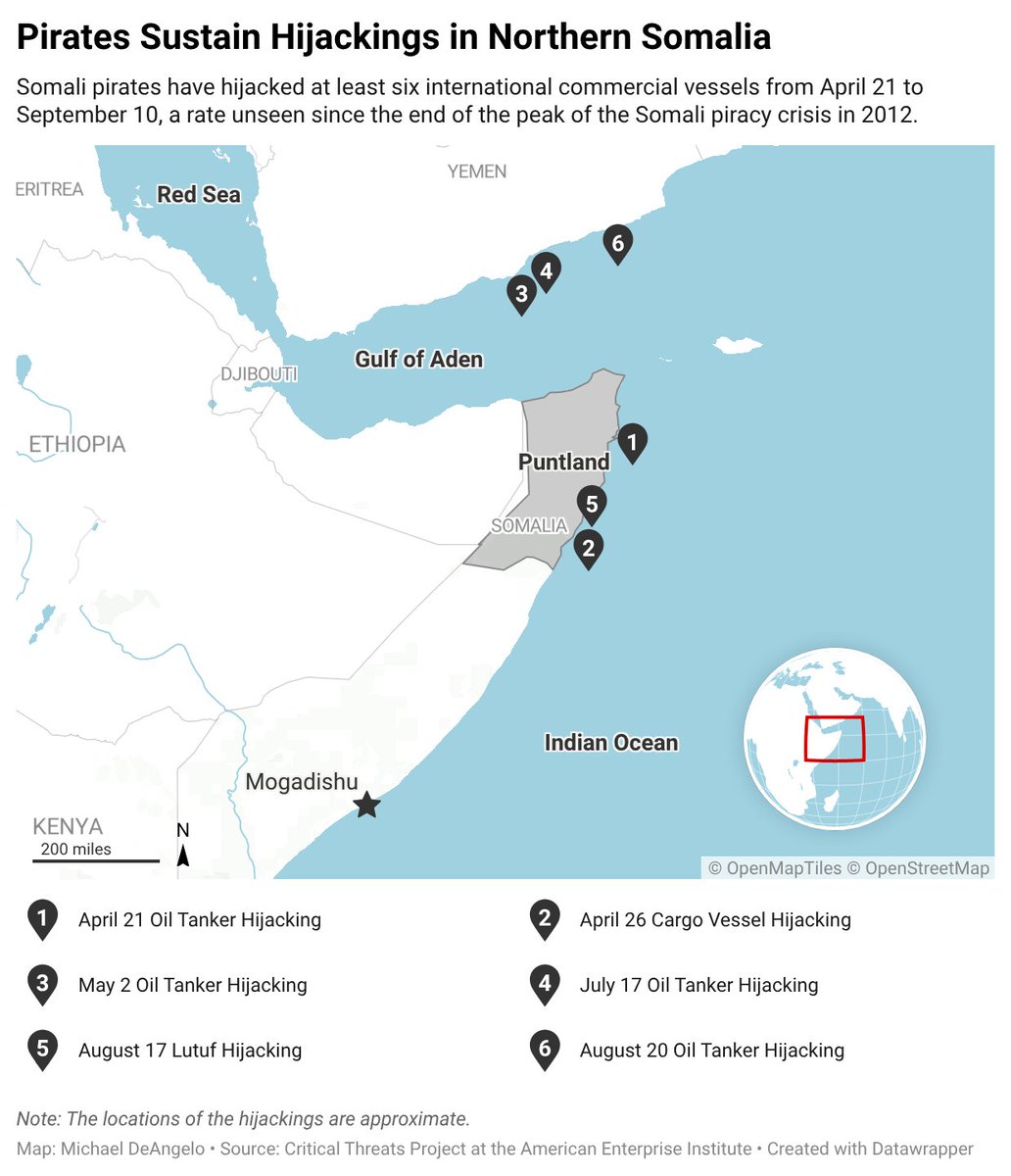
Security forces from Somalia's semi-autonomous Puntland state have rescued the MT Honour 25, a Palau-flagged petroleum products tanker seized by pirates in April, Puntland's state television channel reported on Tuesday. https://t.co/Yq1Nq8dc8C
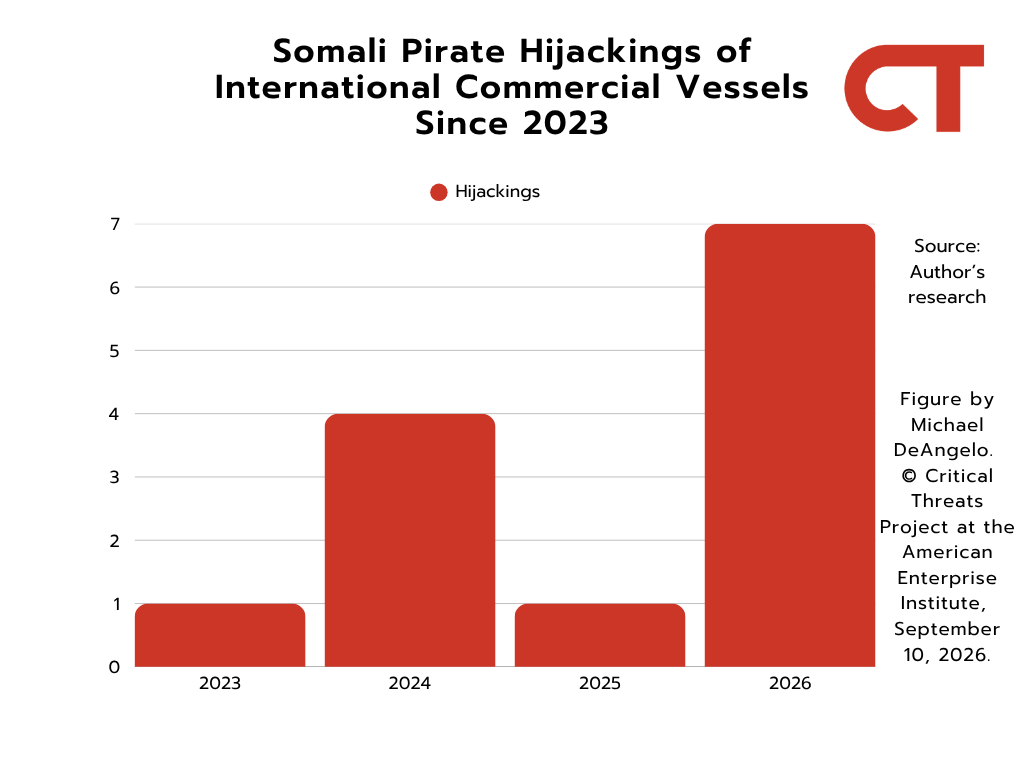
ICYMI | CTP assessed earlier this month that the Houthis may be cooperating with Somali pirates, including via their ties with al Shabaab, to support the ongoing surge in Somali pirate attacks.
The Houthis’ recently launched ground offensive in Yemen is meant to gain direct control of the northern entrance to the Bab el Mandeb Strait, and supporting pirate groups could allow the Houthis to indirectly disrupt the southern entrance to the Bab el Mandeb.
The Houthis have long sought to develop this capability through ties with Somali groups, as UN reports have claimed that Houthi links with al Shabaab are part of a Houthi strategy to evaluate options to carry out maritime attacks from the Somali coast and “wield increasing influence in the region.”
Al Shabaab has longstanding links to pirate networks and reportedly offered to support pirate attacks as part of a partnership with the Houthis, according to the UN, and both groups have met with and armed pirates over the last two years, according to various reports and claims from regional officials.
Why should Sifuna use his popularity for the benefit of Kalonzo?
Anyway, let the horses trade because they are all there to maintain the system and benefit only themselves. The entitlement in our politics is as frightening as the disregard for the needs of the nation!
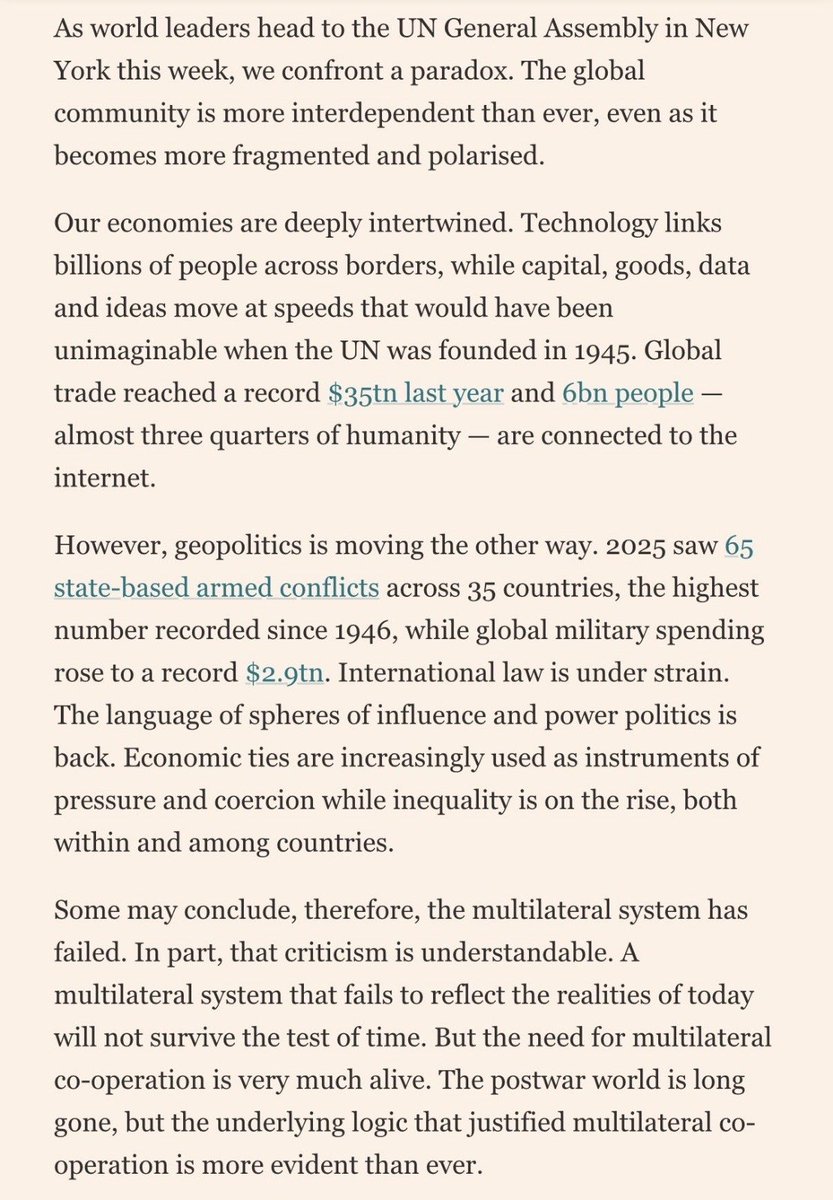
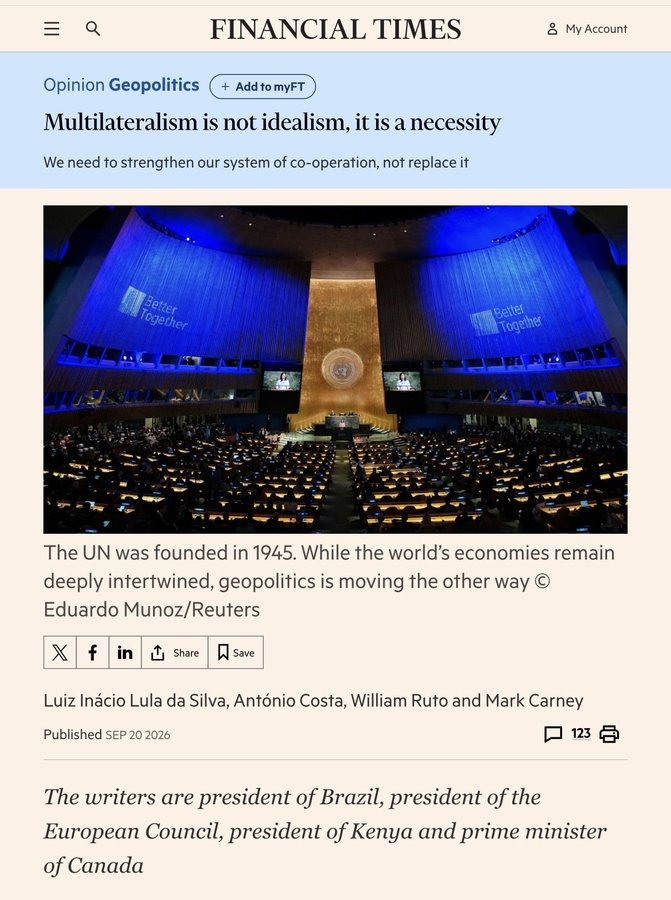
Kenya and Canada lead push for a new global alliance to salvage multilateralism.
The ideas animating the proposed "Partners for Multilateralism" (P4M) - contained in new joint op-ed by Ruto, Carney, Lula and Costa.
👇
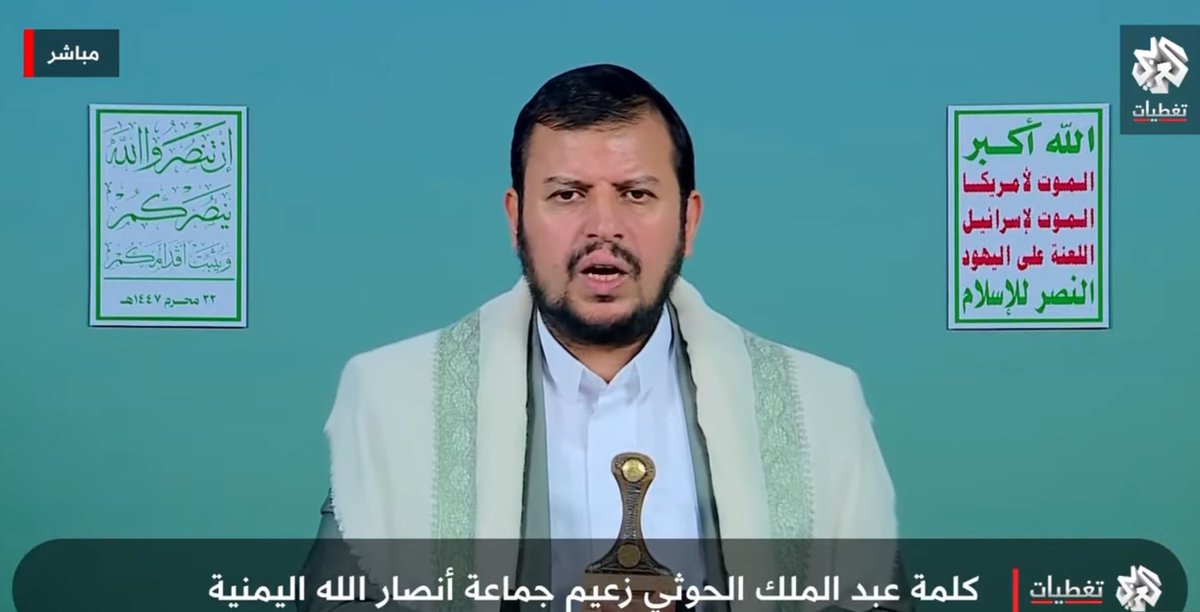
It is now almost a standard universal refrain to refer to Houthis in Yemen as Shi'a.
Historically, Muslim scholars differed sharply on the theology of the Zaydis, and in Yemen Zaydis were often indistinguishable from Shafi'is, because their fiqh (jurisprudence) was closely aligned with that of Imam Shafi'i (one of the orthodox 4 Sunni schools of jurisprudence).
I prefer to think of Zaydis as a bridge sect, and its distinct theology as syncretic, hybridised, amalgamating Shafi Sunnism and Twelvers' Shiism.
Let me explain a bit.
1. Ritual: Zaydis take ablution like Sunnis, fold their arms across their chest during salat like Sunnis, do not place their forehead on turba al-husayniya (piece of dry clay from Karbala, Iraq) during sajdah (prostration).
2. Prophets bloodline: Zaydis venerate the ahlul bayt and believe they constitute a source of guidance and authority.
Zaydi theologians also endorse the disputed historical claim that Imam Ali was the anointed successor of Prophet Muhammad.
Sunni orthodox Imam Shafi'i places special status on ahlul bayt and the offsprings of Imam Ali, but stops short of endorsing the concept 'anointed successor.'
Shafi'i also seeks more diversified sources for establishing his fiqh - in effect dismissing the majority Shia view that fiqh must be derived exclusively from the ahlul bayt Imams.
Veneration of the ahlul bayt in itself does not make a faith community 'shia'. In East Africa, in the Shafi'i belt of the East Coast, Somali Penisula, Sha'fism has distinct sub-groups with strong attachment to the ahl al bayt.
When the name Ali Ibn Talib is mentioned, the customary Shafi'i formula for honouring him is to say "karramallah wajha" - while for the other three 'rightly-guided Caliphs' it is simply 'aleyhi salaam.'
Unlike the Twelvers (ithna ashariyya), Zaydis do not regard the Imams as ma'suumin (infallible). The concept of isma (infallibility) of the Imam, is a central tenet of the Twelvers (the dominant branch of Shiism in Iran).
Zaydis were referred to by classical scholars as khamsawiyin (fivers) because they stop their theological lineage at Imam Zayd Bin Ali (hence the name - Zaydiyah) the 5th Imam of the Prophet's blood line. Another Shia sect Ismailiyah stops its genealogy at the Seventh Imam.
3. Hidden Imam. Zaydis reject the doctrine of ghaybah - the notion of hidden imam who will emerge in the end of time to bring justice to the world. Ghayba is another central tenet of Twelvers. An Imam must be present and living to be followed, argue Zaydis.
Let me pause here.
The IRGC-backed Houthis are now entrenched at the Babal-Mandab Strait. Yet it was Israel,not Riyadh or Cairo,that foresaw the strategic danger.
By recognizing Somaliland,barely 140 km across the strait,Israel secured a friendly partner directly opposite one of the world’s most critical maritime chokepoints.
What once looked like strategic foresight now looks like a geopolitical masterstroke.
Somali Pirates Release Mombasa-Bound Fertiliser Ship MV Sward and Its 17 Crew Members After $1.3 Million Ransom. The ship was hijacked in April, 2026 off #Somalia coast.
This report by CNN is a true bombshell - a first explicit confirmation that Ukrainian operatives are in Mali, embedded within the FLA militants in the North, performing an advisor role. 15 Ukrainians are supposed to be hosted by the Tuaregs. https://t.co/6xeyydkqAl
#SecurityAlert
The Houthis, Bab el-Mandeb and the Growing Threat to U.S. Military Presence in Djibouti & Somalia
The rapid developments in Yemen, particularly the Houthi movement’s capture of strategically important cities and islands from which the movement can potentially exert greater control over the Bab el-Mandeb maritime corridor, have introduced a new and potentially dangerous dimension to the security threats facing the Horn of Africa, the Red Sea and the Gulf of Aden.
The Houthis’ seizure of large quantities of weapons, military equipment and territory from forces aligned with the internationally recognized Yemeni government, despite years of support from Saudi Arabia, represents a significant strategic development. It poses growing security risks to Saudi Arabia, Somalia and Djibouti, all of which have critical national security and strategic interests directly exposed to instability emanating from Yemen.
Djibouti may now face one of the most serious strategic risks, given its geographical proximity to Yemen and the presence of the U.S. military base at Camp Lemonnier. Although a direct Houthi attack on the base is not currently expected, the risk could increase substantially if the United States undertakes military action against the Houthis. In such circumstances, the Houthis could seek to retaliate against U.S. military assets in Djibouti, potentially targeting Camp Lemonnier, the principal U.S. military installation supporting American operations in Africa and the wider region.
Somalia could also become an increasingly important secondary theatre of confrontation. Puntland and Somaliland, given their geographic position across the Gulf of Aden from Yemen, could face greater exposure to military, maritime and asymmetric security threats. The expansion of Houthi capabilities could increase the strategic importance of Somalia’s northern coastline and maritime approaches, while creating opportunities for hostile actors to exploit existing security vulnerabilities.
Saudi Arabia, meanwhile, could become a more accessible and vulnerable target than it was previously. If the conflict becomes protracted, Riyadh could face sustained pressure through missile and drone attacks, disruption of maritime trade, attacks on critical infrastructure and other forms of asymmetric warfare. The longer the confrontation continues, the greater the potential economic and security costs for Saudi Arabia.
A major strategic test now confronts the emerging alliance involving Pakistan, Türkiye and Saudi Arabia. The alliance will face increasing pressure to determine whether, and in what form, it should respond to the expanding Houthi threat. Any substantial growth in Houthi military capabilities could challenge the strategic balance across the wider region and eventually affect the security interests of all three states.
The emerging regional picture is particularly concerning because the Houthis and Iran possess influence over two of the world’s most strategically important maritime chokepoints, Bab el-Mandeb and the Strait of Hormuz, respectively. If Tehran and the Houthis are able to maintain or expand their ability to threaten both corridors, the consequences could extend far beyond the immediate conflict zone. Disruption to maritime trade and energy flows could generate significant economic and security consequences for hundreds of millions of people, particularly through rising transportation costs, energy prices, food prices and pressure on already vulnerable supply chains.
At the same time, prolonged instability could create additional operating space for terrorist and criminal networks in both Yemen and Somalia. Al-Shabaab, ISIS, Al-Qaeda and other militant actors could exploit deteriorating regional security conditions, while piracy and other forms of maritime crime could experience renewed momentum.
#Somalia
#Yemen
#Djibouti
#USAFRICOM
#Houthi
#Security
#Counterterrorism
#AlShabaab
#AlQaeda
#ISIS
Trump claims that he received a call from Yemen’s Ansarallah, effectively reiterating the group’s commitment to its ongoing ceasefire with the United States, and its pledge to allow safe and free passage of ships not linked to Saudi Arabia or Israel.