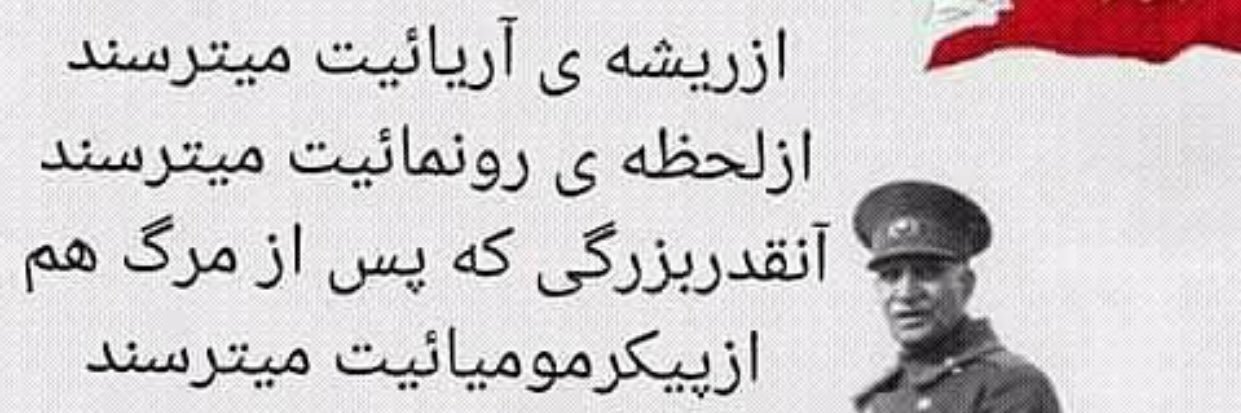
"An Iranian Muslim is a Muslim only because his father was a Muslim, and his father was a Muslim for the same reason. The end of this chain leads back to a tortured Zoroastrian who was forced, at the sword of the Arabs, to say 'There is no god but Allah' - without knowing what it meant." - Shojaeddin Shafa
On January 8 and 9, the regime’s security forces not only murdered protesters—they filmed their victims and mocked them. In one video, a member of the security forces can be heard saying: “We fucked your sisters, ha!”
To respond to all the bs points made in this video.
1. “Only the ‘Jewish-Iranians’ are pro-Israel.”
It is safe to assume that 90% of the Iranians in the diaspora are pro-Israel. That is a couple million Iranians, just in the diaspora alone. The total population of Jewish Iranians outside of Israel is around 50,000.
Given the fact that stadiums with tens of thousands of Iranians chant anti-Palestinian slogans, it is safe to assume that Iranians both in and outside Iran share similar views around Israel.
2. “Reza Pahlavi does not want to return to Iran at all.”
Here he is half wrong. Reza Pahlavi wants to go back as a transitional leader who puts Iran on the right path for the future. He has said this time and time again. This is often conveniently left out.
If the people, in a referendum, vote in a majority for a constitutional monarchy, he would fulfill his duties to his nation.
3. “His wife is cheating on him with his French personal trainer.”
His wife, Yasmin Pahlavi, has a best friend whose husband is a yoga instructor. Yasmin Pahlavi has pictures with him, as they are family friends. In most of these pictures, it's pictures in which Reza Pahlavi is also present but cropped out. These pictures are then cropped and spread around to try and discredit Reza Pahlavi.
This is, interestingly enough, often pushed by social democrats, who apparently consider it unacceptable for a woman to take pictures with a man outside her husband.
I wonder why they call it the alliance of the red and the black.
4. “Iranians hate him”
Millions of Iranians went to the streets on January 8th and 9th after his call, and thousands were killed.
The most non-partisan poll conducted by GAMAAN shows his support inside Iran at around 40%. In comparison, the Islamic Republic held less than 10% support in those same polls, and other alternatives remained between 0.1 and 5%.
5. “They hate him because his father made SAVAK, they tortured, kidnapped, bla bla.”
At its peak, SAVAK held around 2,500 prisoners. This was at the height of the Cold War, when the Soviet Union was attempting to influence Iranian politics.
Across the Shah’s reign, SAVAK imprisoned around 15,000 people. This was admitted by Mohsen Sazegara, co-founder of the IRGC.
Compared to other countries during the Cold War, these numbers were relatively low.
6. “His father overthrew Iran’s only democratically elected prime minister in 1953 with the help of the CIA and MI6.”
His father appointed that prime minister. That prime minister later dissolved parliament and concentrated power, effectively staging a coup against the head of state. The Shah then retook control after Mossadegh bankrupted the country.
More on that here: https://t.co/j6esH3r00i
7. “They took the country’s wealth”
Even using the highest estimates, the family took around $60–100 million in personal assets in 1979.
This is minuscule relative to the tens of billions in state resources they had generated for Iran, and had access to and did not take. They did not loot the state. They took few personal assets.
Much of that money was spent in the first years of exile: prolonged cancer treatment for Mohammad Reza Shah, security costs, and the price of residence in host countries.
In places like Panama, remaining there required paying substantial sums.
By the time of the Shah’s death, what remained for the entire family was likely closer to $10–20 million.
@ashtiwai You’re the one spreading propaganda and lies, When did Prince Reza Pahlavi claim Iranians aren’t muslim? Please provide evidence for this claim or apologize
@NaeimehDoustdar@Freedom725906M طبق مشاهدات در دی ماه بین ۱.۵ ملیون تا ۳ ملیون نفر در تمام استان ها به خیابان امدند
مردمی که با خونشون بر دیوار #جاويدشاه نوشتند
با توجه به شرایط ایران و تجربه های کشتار گزشته این تعداد شگفت انگیزه
افردای که جانشون در کف دستشون گرفتن برای ازادی به فراخان شاهزاده به خیابان امدن
Why are Iranians chanting Pahlavi?
Because Pahlavi is not a slogan.
It is the only period in modern Iranian history associated with state-building, sovereignty, and measurable outcomes.
To understand this, context matters.
1. Before the Pahlavis: a state in terminal decline
By the end of the Qajar era, Iran was barely a functioning country.
• Central authority barely extended beyond Tehran
• Provinces were ruled by tribal chiefs and local strongmen
• Russia and Britain dictated Iran’s finances, customs, and foreign policy
• Iran, officially neutral during WWI, was occupied
• Russian and British forces requisitioned Iranian food supplies
The result was one of the worst famines in Iran’s history, killing millions.
Iran existed on maps, not in function.
This is the baseline that must be acknowledged.
2. Reza Shah Pahlavi: why centralization was unavoidable
Reza Shah did not inherit a stable state. He inherited fragmentation.
A divided Iran meant:
• Permanent vulnerability to foreign interference
• Endless internal conflict
• A real risk of partition
His methods were forceful, but the objective was clear:
create a state capable of survival.
He:
• Disarmed warlords and tribal militias
• Built a national army loyal to the state
• Centralized taxation and law
• Built railways to physically unify the country
• Established modern courts, bureaucracy, and education
For the first time in centuries, Iran functioned as a centralized, sovereign state.
Everything that followed, to this day, rested on this foundation.
3. 1941: succession under occupation
In 1941, Iran was invaded by Allied forces.
Not only because Iran was neutral during WWII, but because it was strategically vital:
• Oil supplies
• Railways
• Supply corridors to the Soviet Union
Reza Shah was forced by the allied armies to abdicate.
What is often misrepresented is what happened next.
The Allies allowed constitutional succession by Reza Shah's son, Mohammad Reza Pahlavi, because the alternative was instability and fragmentation.
British and American policymakers understood three realities:
1. Removing the monarchy entirely risked immediate civil conflict
2. A power vacuum would be exploited by the Soviet Union
3. Iran could be absorbed into the Soviet sphere, as much of Eastern Europe soon was
Maintaining a recognized line of succession preserved continuity, administrative order, and national cohesion at a moment of extreme vulnerability.
Removing the state’s central pillar would not have produced independence. It would have produced collapse.
4. The Soviet threat to Iran
After World War II:
• Britain and the United States withdrew
• The Soviet Union did not
Soviet forces remained in northern Iran and supported separatist administrations in:
• Azerbaijan
• Kurdistan (Mahabad)
These entities were entirely dependent on external military presence and support.
Had Iran descended into internal chaos between 1941 and 1946, Iran would not exist today in its current form.
5. Diplomacy and military action
Mohammad Reza Pahlavi understood that Iran could not initially confront the Red Army directly without risking national destruction.
He therefore acted in two deliberate stages.
First: diplomacy.
He brought Iran’s case to the newly founded United Nations, challenging the continued foreign troop presence as a violation of international agreements and wartime commitments.
This was unprecedented.
With Western backing amid the early Cold War, the Soviet Union withdrew its forces.
Second: military restoration of sovereignty.
Once foreign troops had left and external protection collapsed, the Shah did not hesitate.
He personally oversaw and led the military campaign to reassert control over Azerbaijan and Kurdistan.
Iranian forces entered the separatist-held regions, dismantled the breakaway administrations, and restored central authority.
The Shah was not governing from a distance.
He placed himself at the forefront of reclaiming Iranian territory.
Iran’s territorial integrity was restored through law first, force second, in that order.
This sequence matters.
It is also important to acknowledge a long-term consequence of these events.
The reassertion of central authority necessarily meant the dismantling of Soviet-backed local power structures, militias, and political projects that had briefly presented themselves as autonomous or independent entities.
For those directly involved, or for communities politically shaped by that period, this moment became a lasting point of grievance.
That history explains why some residual anti-Pahlavi sentiment persists in parts of these regions today.
But the alternative at the time was not benign autonomy.
It was permanent fragmentation under foreign influence.
The Shah’s choice was between:
A unified Iranian state, restored through force once diplomacy succeeded
Or a precedent of externally engineered separatism that would have fragmented the country
He chose state preservation.
That decision secured Iran’s territorial integrity, even if it left political scars that still echo decades later.
6. Modernisation under Mohammad Reza Pahlavi
With sovereignty secured, modernisation accelerated.
• Heavy industry and manufacturing
• Nationwide infrastructure and electrification
• Universities, technical institutes, and scholarships
• Modern healthcare and public health systems
• Land reform dismantling feudal structures
• Women’s legal and political rights
• A professional civil service
• Economic diversification beyond oil
• An independent foreign policy
It was institutional construction.
7. On Mossadegh
I will skip past the Mossadegh part because I have already written about it in depth here:
https://t.co/2A84zHNu2m
8. After 1979: the contrast
After the revolution:
• Institutions were hollowed out
• Ideology replaced competence
• Iran became isolated
• Infrastructure decayed
• Brain drain accelerated
• Environmental destruction intensified
This contrast is why historical memory endured.
9. Why Reza Pahlavi today?
When Iranians chant Reza Pahlavi, they are not voting for nostalgia.
They are referencing a historical pattern.
Reza Shah built the state.
Mohammad Reza Shah defended and modernized it.
Reza Pahlavi represents continuity of that record.
10. Consistency
His positions on democracy, secular governance, national unity, and a referendum decided by the people have not changed in over four decades.
For many years, this very consistency made him less “marketable.”
His language did not shift. His framing did not evolve. He did not reinvent himself with new slogans or ideological pivots.
He did not chase attention.
He did not engage in theatrics, public feuds, or constant polemics with every group or community.
Instead, he remained steadfast:
• Clear about what he believes
• Clear about what he rejects
• Clear about the process he supports
What once appeared unexciting to people, has proven essential today.
After decades of chaos and ideological excess, many Iranians now understand that post-collapse Iran does not need improvisation, it needs principle.
Not charisma.
Not constant novelty.
But predictable values and a clear framework.
11. Authenticity, not performance
He does not perform a role.
He openly shows who he is:
• A family man
• Direct and transparent
• Interested in culture, photography, music and the environment
He has repeatedly stated that, if given the choice, he would prefer to contribute to Iran’s future through environmental restoration: addressing the water crisis, rehabilitating damaged ecosystems, and reversing decades of ecological mismanagement.
Yet he has also acknowledged that this may not be a luxury he nor Iran can afford.
12. What the chant 'Javid Shah' actually means
In the past, when Iranians used general or vague chants, such as “Death to the dictator”, various opposition groups immediately attempted to appropriate them.
• Far-leftists framed these chants as alignment with their ideology
• Communists and groups like the MEK openly claimed popular support for themselves
• Reformists insisted the problem was limited to the head of the system, not the system itself
That framing may have existed in 2009.
It does not reflect today’s reality.
Today, Iranians reject the entire core system, not a single individual.
For decades, the Islamo-Marxist, Mujahedin-e Khalq has attempted—without embarrassment—to hijack every uprising, claiming mass support for Maryam Rajavi and her organization.
Iranians learned from this.
They learned that leaving room for ambiguity allows others to rewrite the revolution in their own image.
That is why today’s chants are explicit.
When people chant for Reza Pahlavi, they are doing several things at once:
• Rejecting the Islamic Republic in its entirety
• Rejecting foreign and ideological occupation
• Rejecting extremist far-left and sectarian movements
• Closing the door on opportunistic hijacking
They are aligning not necessarily with monarchy, but with Reza Pahlavi’s worldview, process, and principles.
Some want a constitutional monarchy.
Some do not.
What unites them is clarity.
The chants are not nostalgia.
They are deliberately chanted by an educated population that has learned from the past.
13. 2022 and the test of consistency
The events of 2022, following the killing of Mahsa Amini, exposed the opposition landscape.
Many figures emerged.
Many contradicted themselves.
Positions shifted. Messages fractured. Ambitions surfaced.
Reza Pahlavi did not change.
What he said then was what he had said for decades.
In opposition politics, consistency over forty-plus years is not stagnation. It is credibility.
Finally
People with very different end goals converge on Reza Pahlavi not because they all want the same system, but because they trust the same process.
After decades of deception, ambiguity, and ideological capture, that trust is rare.
That is why Iranians chant his name.
به زودی آزادی را در کنار هم در ایران جشن خواهید گرفت
هممیهنان عزیزم،
رشادت، میهندوستی و جانفشانی شما در این روزها احترام جهانیان را برانگیخته است و میلیونها تن از کشورهای مختلف حمایت خود را از شما اعلام کردهاند. میدانم که تاریکاندیشان از هراس شنیدن صدای شما راههای ارتباطیتان با جهان بیرون را قطع کردهاند، اما بدانید که پیام شما بلندتر از آن است که با چنین اقداماتی خاموش شود. ایمان دارم که صحنههای حماسی اعتراضهای شما، دیر یا زود، از دیوار سانسور عبور خواهد کرد و ابعاد واقعی آنچه شما در این روزها انجام دادید بیش از پیش موجب حیرت و تحسین جهان��ان خواهد شد.
در این میان تصاویری که در ساعات پیش و در خاموشی ابزارهای ارتباطی، از کشتار معترضان بیگناه در ایران به بیرون میرسد، دل من را به عنوان یک مادر به درد آورده است. هر کدام از فرزندان این مملکت که خونش ریخته می��ود برای من غم جانکاه از دست دادن فرزندانم را زنده میکند. برای مادران و پدران ایران شکیبایی آرزو میکنم و خود را در سوگ آنها شریک میدانم. همچنین به همه هممیهنان که عزیزان خود را در این قیام ملی از دست دادهاند از صمیم قلب تسلیت میگویم و برای مجروحان و آسیبدیدگان این روزها سلامتی آرزو میکنم.
و در این بزنگاه تاریخ ایران بار دیگر روی سخنم با نیروهای مسلح ایران است. به یاد داشته باشید که بقای هیچ حکومتی و حفظ هیچ منفعتی توجیهگر ریختن خون هممیهنانتان نیست. فریاد خشم و خروش معترضان را بشنوید. تا دیر نشده به دیگر برادران و خواهران خود بپیوندید و سرنوشت ��ود را با سرنوشت قاتلان گره نزنید. ایرانِ آزاد فردا به فرزندان شما هم تعلق دارد، با ریختن خون هممیهنان آینده خود و خانواده خود را تباه نکنید. بدانید که روایت این روزهای ایرانِ ما در صفحات تاریخ برای همیشه ثبت خواهد شد و روسیاهی برای آن کسانی خواهد ماند که گلولههایشان سینه برادران و خواهران هممیهن را شکافت.
و در پایان: فرزندان من، امید خود را حفظ کنید. قوی باشید و باور داشته باشید که بهزودی آزادی را در کنار هم در ایران جشن خواهید گرفت و نور بر تاریکی پیروز خواهد شد.
فرح پهلوی
بدانید که تنها نیستید. هممیهنانتان در سراسر جهان، صدای شما را با افتخار فریاد میزنند که حتما تصاویر حضور پرشمار و گسترده آنها را از طریق صفحه تلویزیون میبینید. دنیا امروز کنار انقلاب ملی شما ایستاده است و شهامت شما را تحسین میکند. بهویژه پرزیدنت ترامپ، به عنوان رهبر جهان آزاد، شجاعت وصفناشدنیتان را با دقت دیده و اعلام کرده که آماده کمک به شماست.
خیابان را رها نکنید. قلبم با شماست. میدانم که به زودی در کنار شما خواهم بود.
از هر دسته و گروهی هستید، چپ یا راست، جمهوریخواه یا پادشاهیخواه، موافق یا مخالف من، به یکدیگر بیاحترامی نکنید. بهویژه اگر پرچم ملی شیروخورشید ایران را در دست دارید، حرمت آن را حفظ کنید، و پیامآور اتحاد، احترام، مدارا، و همه ارزشهای نیکی باشید که پرچم ایران نماد آن است.(۵/۵)
پاینده ایران
مکتب پانایرانیسم هفتاد و هشت ساله شد!
پانزدهم شهریور، سالروز بنیاد مکتب پانایرانیسم
پس از اشغال ایران به دست دشمن بیگانه بود که همبنیانگذاران نهضتی که سپس «مکتب پانایرانیسم» نام گرفت، گرد هم آمدند تا برای نجات میهن دست به کاری بزنند.
تنها یک سال از جاویدنامی «علیرضا رئیس» در جریان آن مبارزات میگذشت که هستهٔ تشکیلدهنده آن گروه با گرد آمدن در کنار رودخانه کرج، میثاقی را با خون خود امضا کردند و برای نخستین بار در آن پیماننامه که به #فرما��_رئیس شهرت یافت و بهدست محسن پزشکپور نوشته شد، از واژهٔ «پانایرانیسم» برای نامیدن اندیشهها و مکتب خود بهره جستند.
از آن روز #مکتب_پانایرانیسم بنیانگذاری شد؛ مکتبی که حزب پانایرانیست بر پایهٔ آموزههای آن شکل گرفت. با وجود همهٔ سرکوبها و دشمنیهای پیدا و پنهان تا کن��ن از این میراث گرانبها پاسداری شده است. راهی که ما به نیکی میدانیم همچون امروز که جوانانی بیشمار به آن گرویدهاند، در آینده نیز پیروانی وفادار، کوشنده و مبارز خواهد داشت.
گفتنی است که در سال ۱۳۲۹ کتاب «بنیاد مکتب پانایرانیسم» نیز به قلم سروران محسن پزشکپور، محمدرضا عاملی تهرانی و علینقی عالیخانی نگارش و چاپ شد.
سالروز بنیاد مکتب پانایرانیسم گرامی باد!
«ایران بزرگ آرمان بزرگ میخواهد»
شنبه، ۱۵ شهریور ۲۵۸۴ / ۱۴۰۴
پاینده ایران
#پاينده_ایران #حزب_پانایرانیست #پانایرانیسم
#ناسیونالیسم #ملت_شیروخورشید
On behalf of millions of Iranians, I offer my sincere condolences to the families of Yaron Lischinsky and Sarah Milgrim after their brazen assasination.
Yaron was bold and honorable in his solidarity with the people of Iran and their fight for freedom. Today we stand with @Israel and @IsraelinUSA.
Our fight is one. A fight against the hate and terror the Islamic Republic and its allies and affiliates in the unholy alliance of the red and black have inspired, fueled, directed for decades.
For the sake of our children, from Yaron and Sarah to Pouya and Nika, we will win this fight.
پاینده ایران
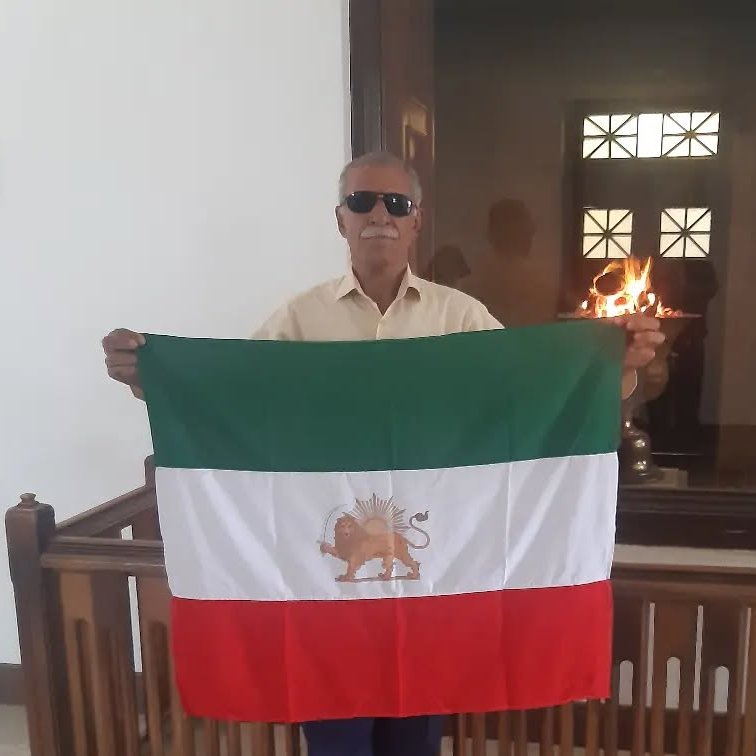
سرور «رضا ناصر» از هموندان حزب پانایرانیست، به جرم برافراشتن درفش ملّی شیر و خورشید زندانی شد!
سرور #رضا_ناصر (پشوتن) از پانایرانیستهای ساکن خوزستان که پیشتر در ۲۴ اردیبهشتماه سال جاری خبر از احضار خود توسط اجرای احکام شعبهٔ هشت بیدادگاه انقلاب اسلامی اهواز داده بود، به جرم پاسداری از فرّ و فرهنگ ایران و برافراشتن درفش سهرنگ شیر و خورشید نشان، زندانی شد.
ایشان در پیامی به دوستان نوشت:
«گویا برای زندان رفتن باید آماده بشوم. از پیشگاه دوستان و هماندیشان بدرود تا هنگامی دیگر.»
یکشنبه، ۲۸ اردیبهشت ۲۵۸۴ / ۱۴۰۴
پاینده ایران
#پاینده_ایران #حزب_پانایرانیست #زندانی_سیاسی #شیروخورشید #شیر_و_خورشید