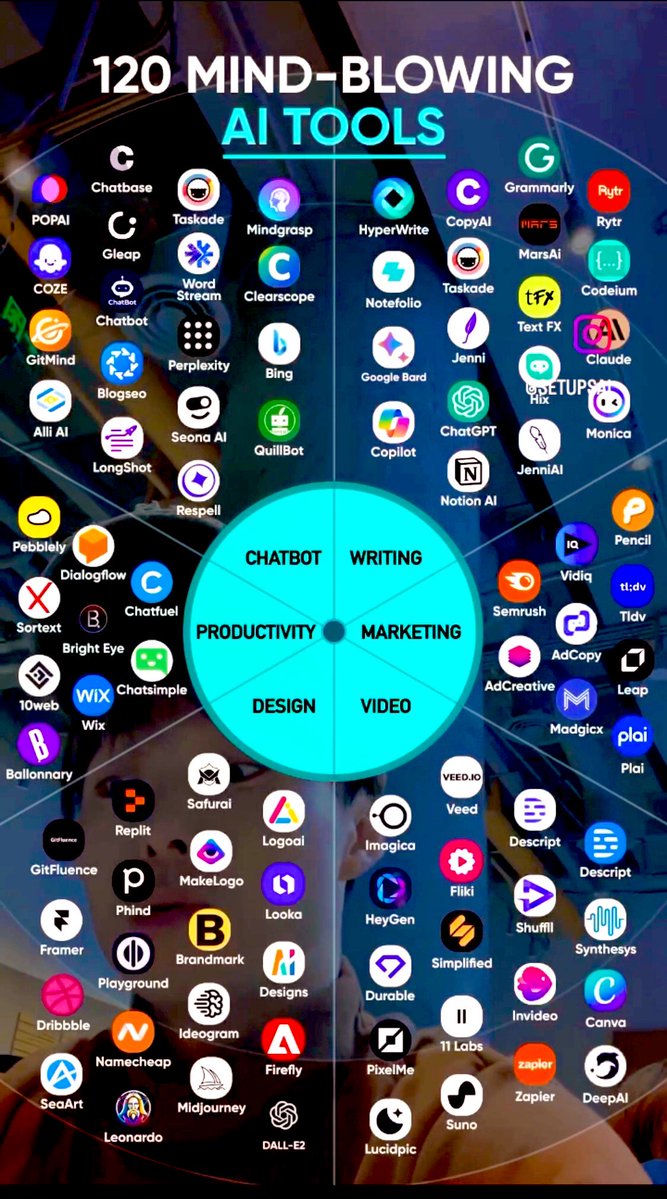
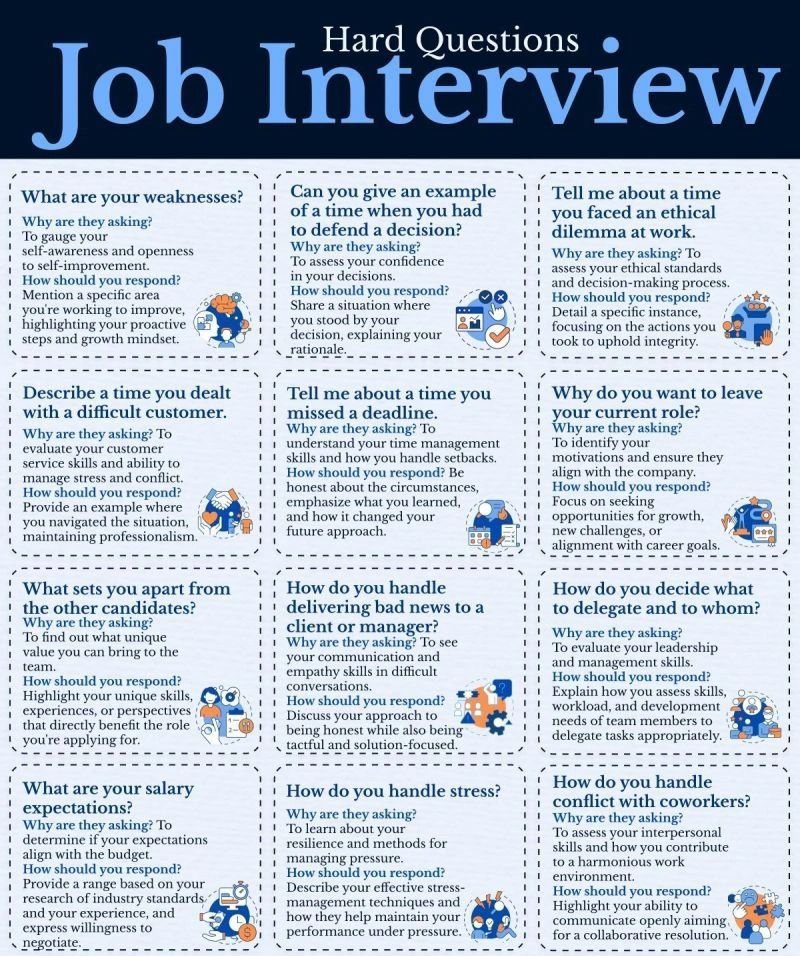
I created a handbook to help you learn AI agents.
It gives you:
• Must-know AI GitHub repos.
• Free courses to master AI agents.
• Papers to understand AI fundamentals.
• Curated videos to learn AI agent foundations.
• Books to get started with AI agent engineering.
• Condensed guides to broaden your AI agent knowledge.
(24 HOURS ONLY!!!)
To get it for free:
1 Follow @systemdesignone [MUST]
2 Like & Retweet to get DM
3 Reply "Handbook"
Then I'll DM you the details.
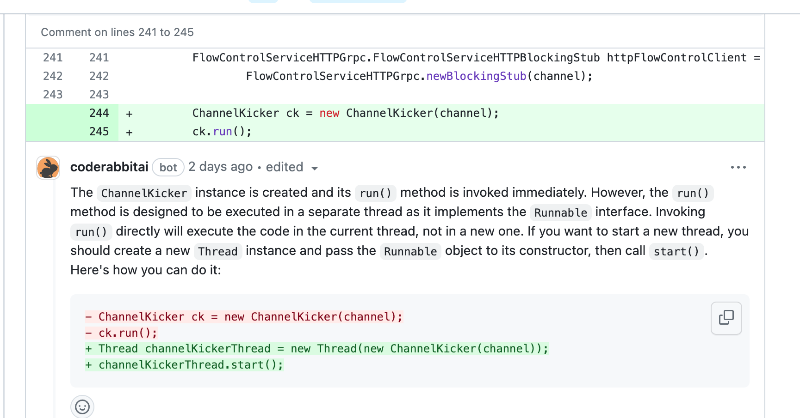
AI agents can write code many times faster than a human. What this means is that you, the programmer, have a large amount of time to use those agents to write unit tests, to write acceptance, tests, to write property tests, to torture test, to mutate test, to QA test, and to otherwise ensure that the code meets its functional and quality requirements. And even after spending all that time, you will still be many times more productive than a human programmer, and the result will be better.
Claude Sonnet 5 ranks second only to Fable 5 on AA-Briefcase, our new agentic knowledge work benchmark, with a ~17x cost per task range across its five effort settings
@AnthropicAI has released Claude Sonnet 5, the latest addition to the Claude Sonnet family. On AA-Briefcase, Claude Sonnet 5 (max) scores 1391 Elo, a +312 point improvement over Claude Sonnet 4.6 (max), making it the second highest scoring model behind Claude Fable 5. This gain is driven primarily by improvements in rubric scoring and analytical quality, with Sonnet 5 trailing Claude Opus 4.8 on Presentation Elo.
We benchmarked all 5 available effort settings for Claude Sonnet 5:
➤ Max effort achieves the second highest AA-Briefcase Elo, but lower efforts are not Pareto efficient: Claude Sonnet 5 (max) achieves the highest AA-Briefcase score among Sonnet 5 effort settings, but lower effort settings do not reach the cost-performance Pareto frontier. Models such as Claude Opus 4.8 (max), GLM-5.2 (max), and MiniMax-M3 offer stronger cost-performance trade-offs than Claude Sonnet 5 at lower effort settings
➤ Substantially higher turn use across effort levels: Claude Sonnet 5’s higher cost is driven by an increased number of turns, with Sonnet 5 (max) averaging 183 turns per AA-Briefcase task, more than 4x that of Claude Sonnet 4.6 (max). This increase is consistent across effort levels, with Claude Sonnet 5 (medium) averaging 55 turns per task, in line with Claude Opus 4.8 with max effort
AA-Briefcase is our new proprietary benchmark for agentic knowledge work. It tests models on realistic tasks across thousands of input files, requiring deliverables such as spreadsheets, presentations, and UI mock-ups. Model performance is measured across three dimensions: binary rubric checks for ground-truth correctness, pairwise grading on analytical quality, and pairwise grading on presentation quality. The AA-Briefcase Elo is a single metric that combines results across all three dimensions
🚨 Sam Altman literally gave a 43-minute masterclass on turning ideas into billion-dollar companies.
Most people will never watch it.
And instead of hype, he broke down what actually makes startups work.
No fluff. Just reality.
He explained that ideas don’t matter nearly as much as execution. The difference between something small and something massive isn’t the idea it’s how relentlessly it’s built and improved over time.
He also emphasized that the best founders don’t chase everything. They focus on one thing that truly matters and push it forward with extreme clarity. Distraction kills more startups than competition ever will.
And then there’s scale. Truly big companies aren’t built for a niche they solve problems that millions of people care about. If the market isn’t large enough, the outcome won’t be either.
His biggest insight? Startups don’t win because they’re smarter they win because they stay in the game longer and iterate faster.
That’s why this masterclass stands out.
Because while most people are waiting for the perfect idea…
The best ones are already building.
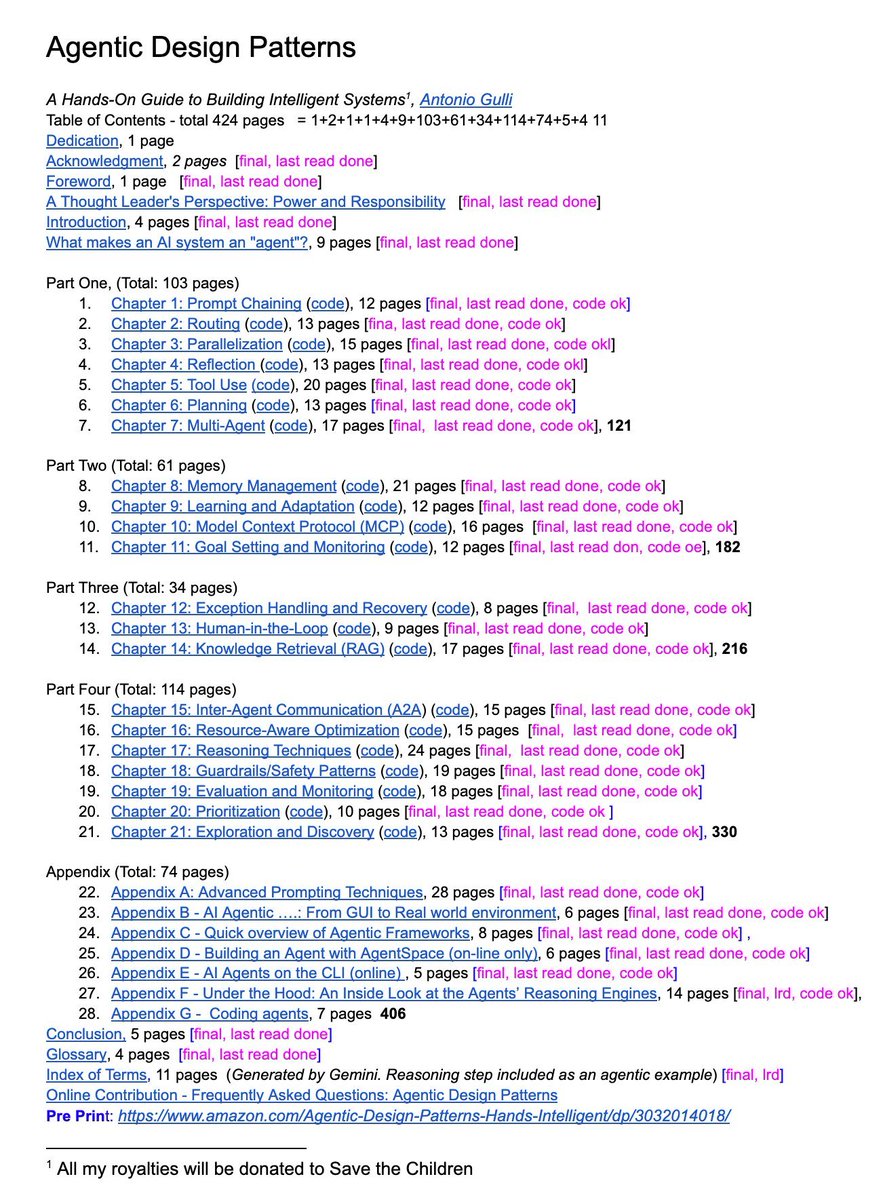
A senior Google engineer just dropped a 421-page doc called Agentic Design Patterns.
Every chapter is code-backed and covers the frontier of AI systems:
→ Prompt chaining, routing, memory
→ MCP & multi-agent coordination
→ Guardrails, reasoning, planning
This isn’t a blog post. It’s a curriculum. And it’s free.
Qwen has just released a model on par with GPT-4o...
And you can run it locally easily 🤯
Yep. GPT-4o level AI running offline on a laptop.
- Fully open source
- Only 3B active parameters
- 262k context length natively
Quick steps to run it on your machine and details below
Microsoft is Offering FREE Azure 2025 Certification Courses!
No Fee, Completely Free
These 20 Courses Includes Video Tutorials, Hand's on Labs and Notes.
Don't miss these courses if you want to make your career in 2025:
𝗪𝗵𝗮𝘁'𝘀 𝘁𝗵𝗲 𝗳𝗮𝘀𝘁𝗲𝘀𝘁 𝘄𝗮𝘆 𝘁𝗼 𝗶𝗻𝘀𝗲𝗿𝘁 𝟭𝗠 𝗿𝗲𝗰𝗼𝗿𝗱𝘀 𝗶𝗻𝘁𝗼 𝘁𝗵𝗲 𝗱𝗮𝘁𝗮𝗯𝗮𝘀𝗲?
It doesn't matter what type of apps you work on. This is a must-know.
Whether you're building a data analytics platform, migrating a legacy system, or onboarding a surge of new users, you will likely need to insert a massive amount of data into your database at some point.
EF core is a decent option. It offers a familiar developer experience, and while the performance isn't the best, it might be enough for your use case.
Another option for more performance is the EF Bulk extensions library. It still feels like working with EF, which is a bonus.
Still need faster inserts?
SqlBulkCopy is your winner. It's the fastest way to insert a large amount of data into SQL Server. Postgres has the COPY command, which works similarly.
Here are the complete benchmark results: https://t.co/V8EIZW6jCd
What's your approach to implementing bulk inserts?
---
Do you want to simplify your development process? Grab my free Clean Architecture template here: https://t.co/oxPOG7rmLY
TOP NuGet Packages that I always use for my .NET Projects. 😎🔥
1. Serilog: You can't go wrong with this one! Serilog is the most popular logger for your .NET application, providing powerful structured logging and easy integration with sinks like Elasticsearch and Seq. Read the complete tutorial: https://t.co/Kh3JIjUQNZ
2. EFCore: Entity Framework Core is the essential data access library for working with relational databases. Its support for LINQ and easy migrations makes it a solid choice for .NET developers.
3. MediatR: Simplifies the implementation of CQRS/CQS patterns in your system. With MediatR, you can decouple your request-handling logic, making your application more maintainable. Read: https://t.co/zJ1lHGpK2P
4. FluentValidation: A must-have for cleaner and more maintainable validation logic. FluentValidation lets you write fluent, strongly typed validation rules for your objects.
5. Hangfire: Need background jobs or delayed tasks? Hangfire is the go-to library for scheduling jobs in .NET applications, with support for recurring tasks and job monitoring.
6. Polly: An essential resilience and transient-fault-handling library. Polly makes it easy to implement retries, circuit breakers, and fallbacks to ensure your applications are resilient to failures.
7. FluentAssertions: Perfect for writing expressive unit tests! FluentAssertions provides better readability and maintainability for your tests, allowing for more fluent and human-readable assertions.
8. Refit: Refit is a killer library that simplifies working with REST APIs in .NET. It auto-generates API clients, making calling HTTP endpoints as simple as calling a C# method.
9. XUnit: A popular unit testing framework for .NET applications. XUnit encourages better test isolation and supports parallel test execution, making it a solid choice for testing.
---
These are the packages that I always reach for in my .NET projects. 💻
What are some of your must-have NuGet packages?
Let me know in the comments! 👇




![systemdesignone's tweet photo. I created a handbook to help you learn AI agents.
It gives you:
• Must-know AI GitHub repos.
• Free courses to master AI agents.
• Papers to understand AI fundamentals.
• Curated videos to learn AI agent foundations.
• Books to get started with AI agent engineering.
• Condensed guides to broaden your AI agent knowledge.
(24 HOURS ONLY!!!)
To get it for free:
1 Follow @systemdesignone [MUST]
2 Like & Retweet to get DM
3 Reply "Handbook"
Then I'll DM you the details.](https://pbs.twimg.com/media/HOExcDrWYAAUTMM.jpg)