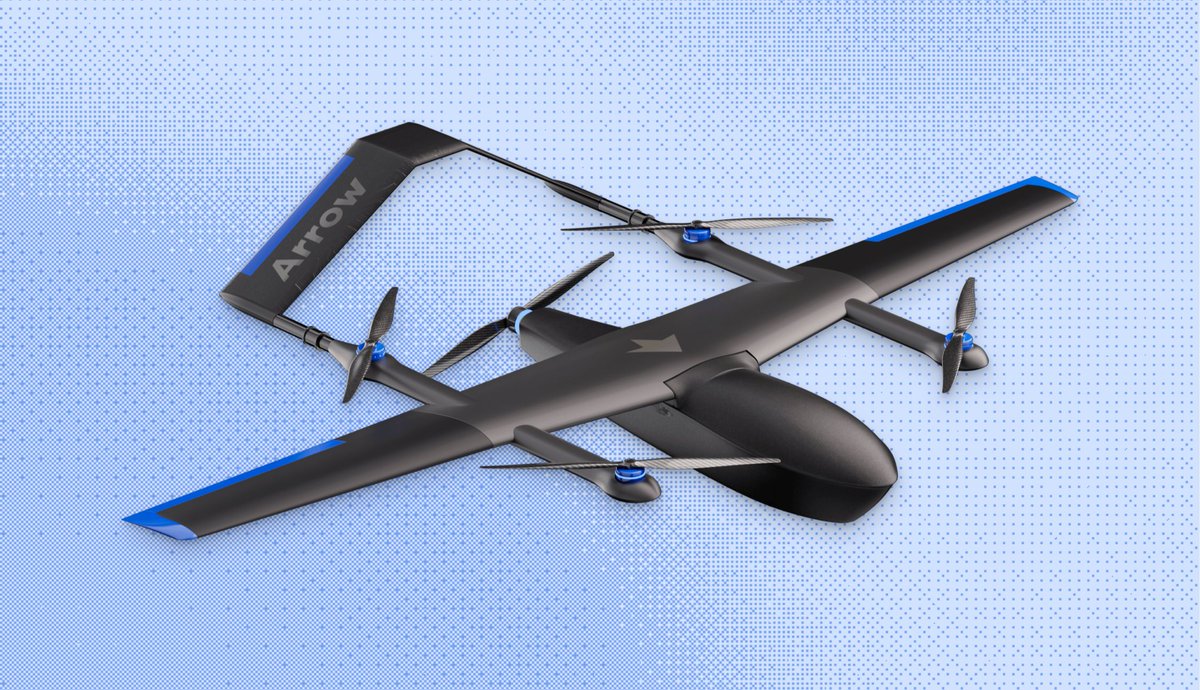
Update on our open-source fixed wing VTOL, Spearhead. Our contributors in Turkey are making great progress this week!
One wing is mated to the fuselage now, and the aircraft has reached the stage where it no longer fits the sofa comfortably 🫤
It is huge, but light, and properly strong.
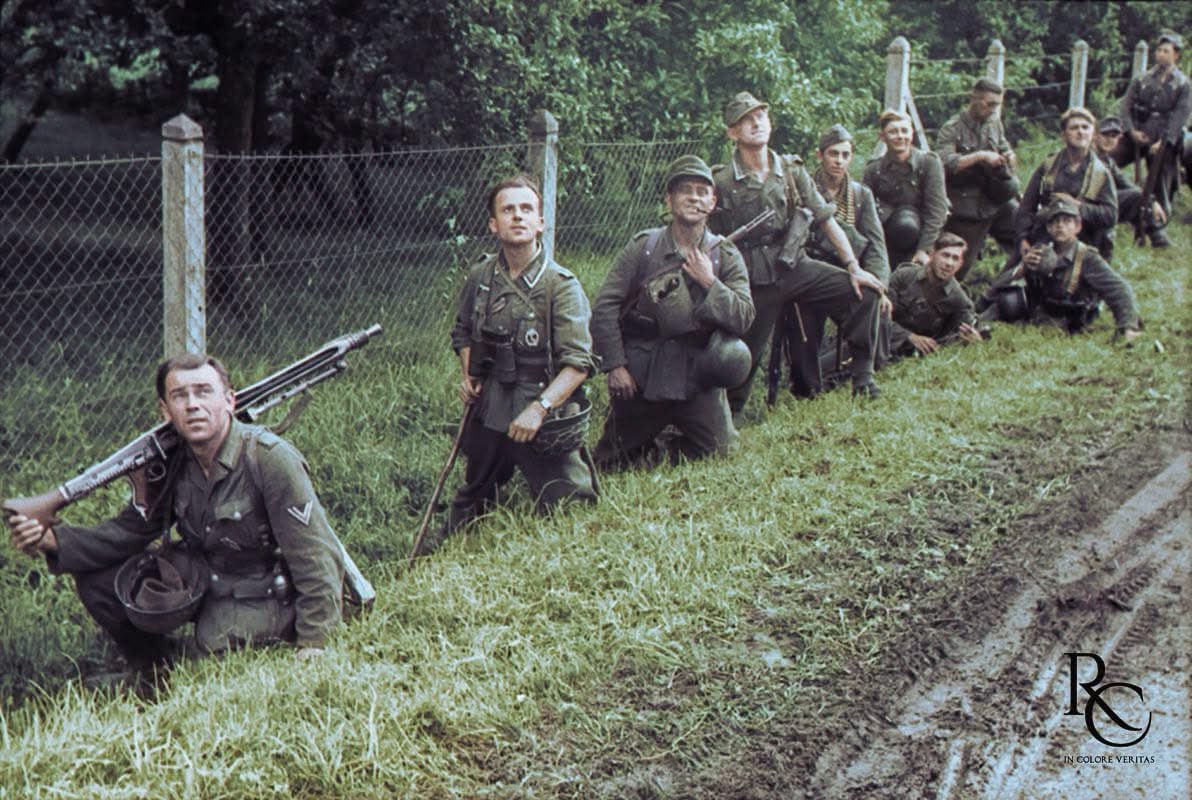
“Low flying fighter in sight!” was the original caption to this picture when it was first published in 1944 in the German press.
For many years believed to have been taken in June shortly after D-Day, this photo is actually part of a set shot by KB Theobald depicting men of the 84. Infanterie-Division (probably Grenadier-Regiment 1052) moving in to relieve the 116. Panzer-Division prior to Operation ‘Lüttich’, referred to in Allied sources as the Mortain counterattack. This dates the set to the 2nd or 3rd of August, not June.
Given the urgency of the situation, the soldiers would most probably not be allowed to stop just to indulge a photographer, so Theobald probably took advantage of a short rest stop to snap this photo near La Haute-Louverie, a small hamlet halfway between Beauchêne and Ger (see comments for the spot today).
Typical of German divisions formed during 1944, the 84. Inf. Div. was a mix of decorated veterans transferred from other units and young recruits, some quite young from what we can see here. Of the first four men from the left, all veterans, three have the Infantry Assault badge, and the left-most NCO displays also a wound badge and what seems to be the EK2.
Unknown to these men, the division would not survive the August retreat to the Seine River, being destroyed in the Falaise pocket.
We are living closer to a cyberpunk future every. single. day.
A masterclass in mechanical kinematics. Watching 3D CAD simulations come to life like this never gets old.
Anyone else following the DARPA Lift Challenge?
$6.5M in prize money to build a drone that can:
- Stay under 55 lbs
- Take off with a 110 lb minimum payload (4x its weight)
- Fly 4 nautical miles loaded (12 laps)
- Drop the payload
- Fly 1 more nautical mile empty (3 laps)
- Finish inside a 30-min window
Top 3 teams split the full prize as long as they clear the 4:1 ratio.
Most heavy-lift drones can barely lift their own weight. DARPA wants 4x. That's never been done.
There's an open-source home robot vacuum you can actually build yourself.
It's called OOMWOO.
Runs on a Raspberry Pi with 2D LiDAR mapping, ROS2 navigation, and native Home Assistant integration. No cloud dependency, no vendor lock-in.
The team spent real time researching before designing it. They reviewed the entire 2025-2026 robot vacuum market, from budget to flagship, and found real-world cleaning doesn't track advertised suction power.
The anti-tangle brush design alone is worth mentioning. A tapered rubber roller that resists hair-wrap, one of the most common complaints with commercial models, easy to 3D-print yourself.
If you've got a Raspberry Pi and a 3D printer sitting around, this is a genuinely interesting weekend project.
One sensor. Thousands of temperature readings. That's how thermal cameras work.
1. Objects emit infrared energy based on their temperature.
2. An infrared lens focuses that energy onto a thermal sensor.
3. Each sensor pixel measures tiny changes in infrared radiation.
4. The camera converts those measurements into a temperature map.
5. A color palette is applied to visualize temperature differences.
A strong back is not just about a beautiful posture. 🤍
It's about a healthy spine, less neck and back pain, and better stability in all exercises and in everyday life.
Save these 3 exercises and add them to your workouts. 💪✨