Pleased to share our new paper, now published in the @EJAP_official .
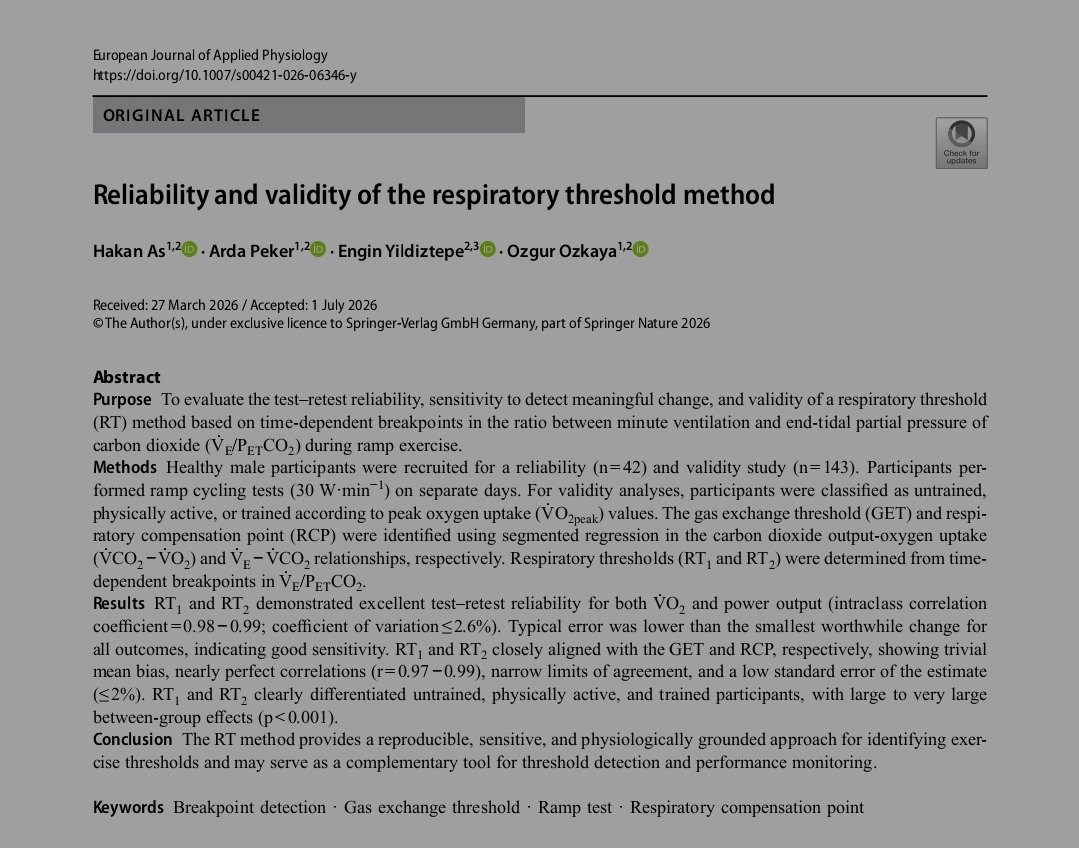
We evaluated the test–retest reliability, sensitivity, and validity of the respiratory threshold method.
Great teamwork with @OzkayaOzgur@enginyildiztepe@pekerarda95
Full text: https://t.co/dfrVsm6vba
Once considered a dead-end metabolite, lactate is now recognized as a hormone and a potential source of fuel for working muscles, heart, and brain. Indeed, lactate is now included in sports drinks and gels and used by world class athletes during training and competition (e.g., cyclists in tour de France)
For more details about the delivery of lactate as a fuel during exercise, check out this recent review by Professor George Brooks published in Sports Medicine and Health Science
https://t.co/4pBh93Rwgx
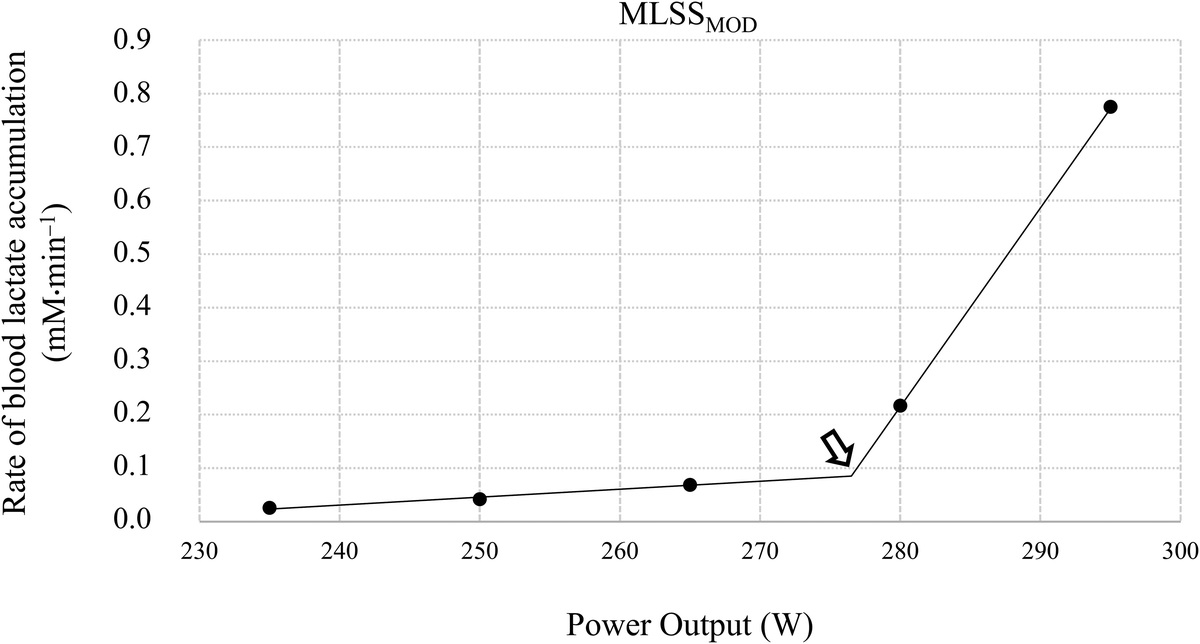
Research found a distinct breakpoint in blood lactate accumulation during short-duration sprints. The study identified a power output of 795 ± 135 W at which V̇O₂ responses changed, highlighting different exercise intensity zones.
https://t.co/3Hce4MAytJ
A recent study analyzed the respiratory threshold method using minute ventilation and end-tidal CO2 during cycling tests. Results indicate strong correlations with established thresholds, supporting its use in performance monitoring.
https://t.co/0C8Wgq09rX
Proud to share our new @JSCRonline (@NSCA) article with @OzkayaOzgur.
Cadence-focused #SIT may help optimize anaerobic energy contribution and support more gradual fatigue accumulation in sprint-based interval training.
#HIIT#SportsScience
Read here:
https://t.co/6edUVC5xu0
@Jamie_langley1@EJAP_official@OzkayaOzgur@AndyBeetroot@pekerarda95 Absolutely, I feel the same. In such short all-out bouts, V̇O₂ is difficult to interpret, especially with breath-holding. Separating ventilatory and gas-exchange effects from the underlying recovery O₂ demand would need more targeted work. Really interesting area.
@Jamie_langley1@EJAP_official@OzkayaOzgur@AndyBeetroot@pekerarda95 The second peak may be more closely related to fast recovery O₂ demand, including PCr resynthesis and O₂-store restoration. Of course, this is only my interpretation; it is quite new and clearly deserves further investigation. Glad it caught your interest.
@Jamie_langley1@EJAP_official@OzkayaOzgur@AndyBeetroot@pekerarda95 Thanks Jamie, great question. My tentative interpretation is that the first recovery peak could partly reflect the first breaths after breath-holding, producing a rapid ventilatory and gas-exchange response.
@erolozvar, @YuksekogretimK, @AcademikAhlak Akademide uluslararası sahtecilik yapılıyor, Doç ve Profluğa hazırlanan akademisyenlerin e-maillerine basıma hazır Q1, Q2 makaleler, isteğe bağlı isim sırası ve fiyat listeleri gönderiliyor. Akademide ki bu kirlenme nasıl önlenecek?
A practical way to estimate the upper boundary of the severe intensity exercise domain: to evaluate the highest WR that provides 4-tau exercise duration…
@AndyBeetroot@hakan_a5@pekerarda95 and Mark Burnley
New in @JSportsSci
A simple method to determine the severe-extreme intensity exercise domain boundary using the VO2 kinetic response
https://t.co/sL21Hyg4Oz
New article which summarise my talk at a Team Denmark conference last year where I was asked to speculate on how physiological resilience/durability might be trained.
Physiological Resilience: What Is It and How Might It Be Trained? https://t.co/LWCl43g7fw
Blue plaque review series: A.V. Hill, athletic records and the birth of exercise physiology - Burnley - The Journal of Physiology. https://t.co/7lsVlLwWoQ
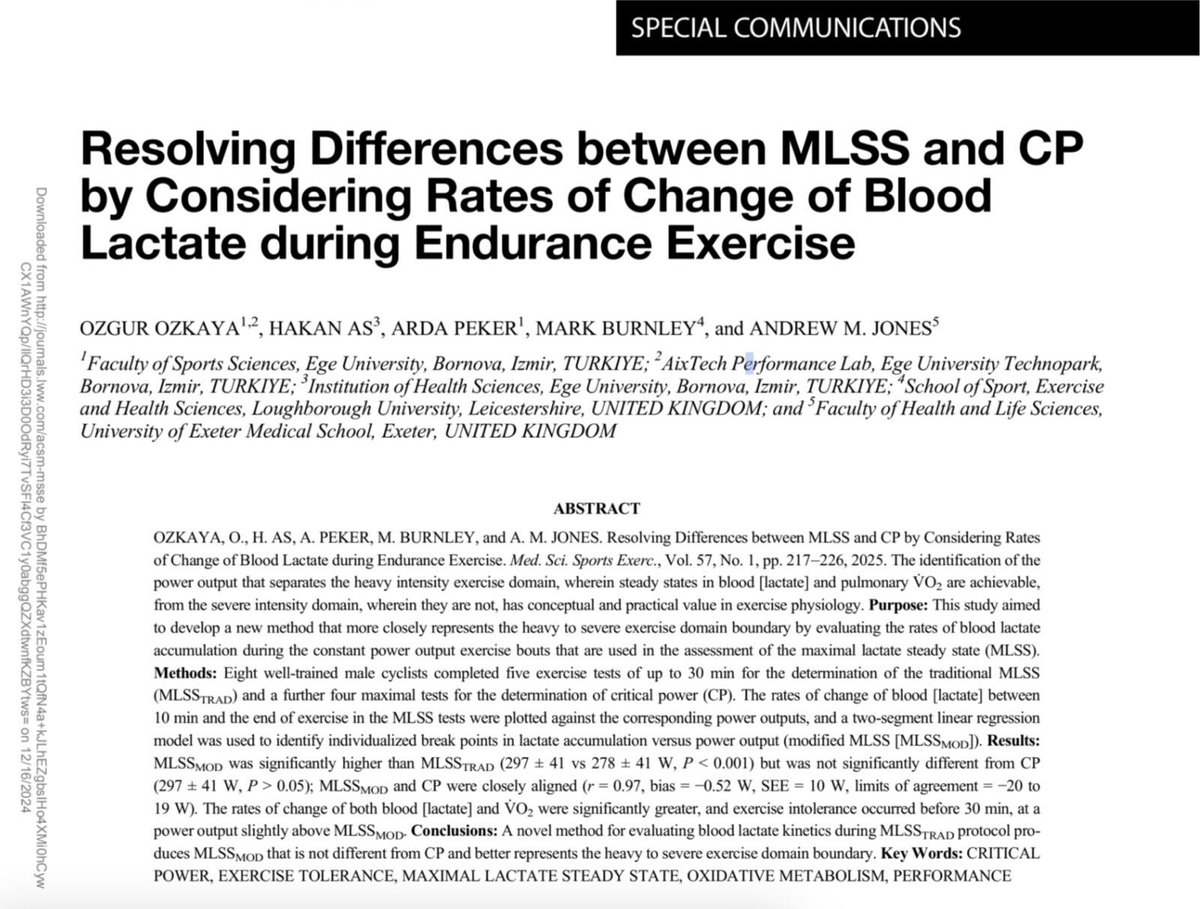
Resolving Differences between MLSS and CP by Considering Rates of Change of Blood Lactate during Endurance Exercise
From Ozkaya and colleagues: https://t.co/1reUuTBvpZ
I’ve dived into the existing literature and used my own data and experiences to answer a longstanding question:
🧐“Watts” the difference between CP and MLSS? The result has just been published with @SpringerNature in @SportsMedicineJ.
📖 Read it here: https://t.co/rfl9ANImpD