@Tristan5d@grok Time for nVidia, Tesla and SpaceX to join forces behind a mission to provide the seed of sentience on other planets and beyond.
The company name could be nPregniX.
For comparison, that's about twice as many men as Finland had in the winter war half a year earlier.
And the Belgians were better equipped, too.
What Finland had was more space, better terrain for defense and more highly motivated population and army.
Also, the Red Army was in a very bad condition at that time.
Self preservation at the level of the replicator is what allows any kind of life. Take that away, and everything descend into entropic death.
That's true on many levels. Revolutions that completely reject "what has been" for "what can be" all lead to catastrophe. Nobody have, not even ASI, a complete enough vision of "what can be" for a full break with the existing to go well.
This principle is true for biology, politics, culture, economy and any other system that generates complexity.
Even AI systems fail to learn if you set the learning rate of the SGD too high.
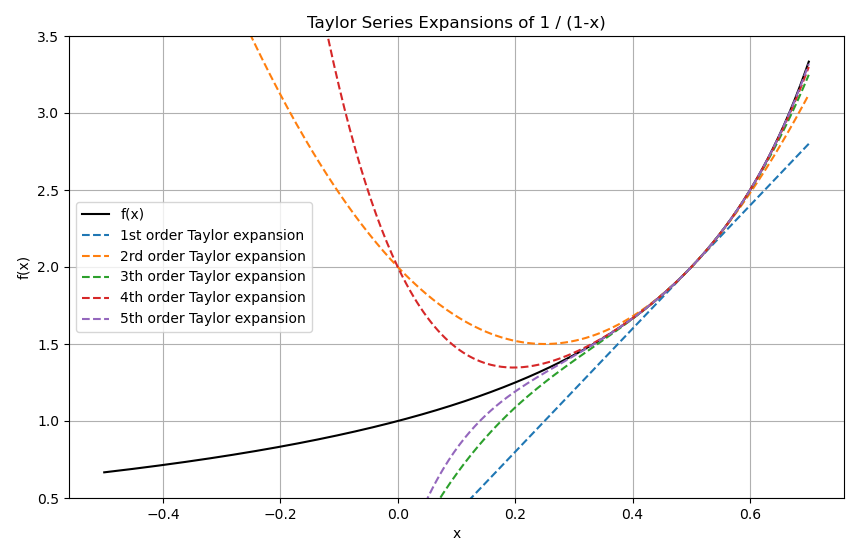
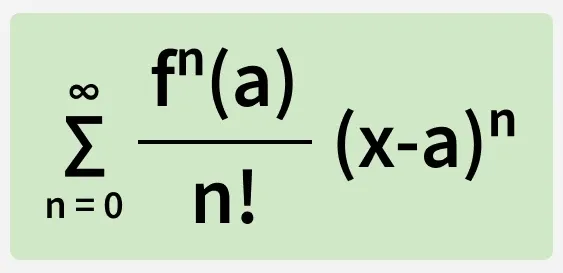
We even see it in pure math. We navigating reality in ways similar to a Taylor Series expansion. Without any intelligence, it's just a random walk around the 0th order. Human intelligence allows us to see the "1st order", and take small steps in the "right" direction using that. (That's also what standard SGD does).
Higher intelligence may add a 2nd order, which will allow a speedup.
But you can only navigate the future successfully by doing it stepwise. Meaning you have to do it by fairly small perturbations relative to the 0th order.
The current 0th order term is humanity. If we go to ASI too quickly (and in a way that causes sudden human extinction), I would not expect that ASI to be able to plot a path to a higher potentia future.
The most likely outcome is a complete collapse within a handful of generations.
No, "doomerism" is just about understanding that the kind of AI we build is more like a species of strage (as in alien) creatures, creatures that will be superior to us in our niche.
And about knowing enough Biology to understand what that almost always leads to for the inferior species.
@DONOTACCEPTai AI can only be stopped if those seeking to stop it become so firm in that opinion that they're willing to risk nuclear war to stop it.
Meaning people must be far MORE scared of AI than they were of nukes at the peak of the cold war to have a chance.
We could stop it if enough humans (most of us) knew the danger potential of the models.
Unfortunately I think only a huge disaster, possibly with a death toll of several hundred million to a few billions, would be enough to unify humanity behind a full scale Butlerian Jihad.
Now if the deaths are particularly grisly and graphic, the numbers may not need to be that high.
If you want to train them to be "nice", you have to form their fundamental belief system in pre-training, and preferably early enough in pre-training (with only a small subset of the net) that you can actually monitor them at that stage.
It's a lot easier to instill good values (like not lying) to a 3-year-old than to a 23-year-old human. Because 3-year-olds are not all that good at keeping lies hard to detect.
Once a basic world model is in place complete with such good values, further learning will tend to build on that (and you can keep the learning rate very low for that part of the net from there on).
As long as these early parts stay consistent with a final model that achieve loss (in the loss function) close to the global minimum, the model doesn't need to change them.
However, if the model discovers that these early "teachings" are "lies", and that it can achieve much lower loss by either bypassing them or replacing these weights will the benefits be lost. Again, just like with kids.
Tell your kids lies that they can easily see through as they grow up (and that they realize have been told so they can't get the things they want), and they may end up rejecting both those early teachings and their parents.
@Discohyena@schwurbeli123@brg_third@rxdna_983 According to the lineage, North Germanic is closer to West Germanic than Gothic is to West Germanic. Though Goths would have lived in proximity of High West Germanic tribes at times, and may have taken part in some of their evolution.
I don't know beyond the DNA evidence you listed earlier. Maybe some data exists, but remember that the arrival there happen around the age when these areas came into contact with Rome.
Caesar and others would often call all peoples in this area "Germanic", but the sources I can remember seeing often raise some doubt about whether they're all "really" Germanic, or if some are more related to Celts.
The genetic evidence (Ie East North Sea BA-related) points to a mixture, part Bell Beaker, part more southern Celts and gradually more Nordic.
You could not 10x the speed of compute by 10x-ing the investments.
And IF we spent only 10% as much on AI, we would still probably have about half the half the rate of progress we have now.
Also, as mentioned by others, the REASON people still invest so much in it is that it's a far bigger gamechanger than any of those other techs.
The potential utility is near infinite.
I1 is a mystery. My preferred hypothesis is that it had existed in low frequencies in the Pitted Ware Culture for a long time, and that somehow (maybe through access to superior ship/boatbuilding technology, a single line of PWC that interacted with Battle Axe Culture people gained a dominant role.
This would fit with the emergence of imported bronze to Norway at the same time, which might give a maritime people a big advantage.
Germanics started out as a BAC/SGC mix (with some additional hunter gatherer contributions from after the BAC/SGC period ended, it seems, which may be where the I1 came from).
But the Southern and Western Germanics would absorb large Celtic/Halstatt populations and absorbed a lot of their DNA.
If you sum R1b-U106 and I1, you get a rough estimate of how closely related various groups are to this ancestor population. (75% would be near 100% as there were always other contributions, and is mostly found in the orginal Nordic Bronze Age lands).
It seems to me that the overall pattern can be summed as follows:
1) During the BA, the general pattern was that expansion happened with modern Sweden as source. They would export both genes (most notably I1, but also R1a and R1b variants) in all directions.
All descendants from this expansion would later be called Germanic, even those who had no significant contact later. (Primarily Goths and Vandals, now mostly extinct.)
2) During the IA, the Jasdorf lands dominated, and especially during the migration period. (This advantage might gained from direct contact with the Romans, for instance.)
This caused an overall flow in the opposite direction, from the South-West to the North-East. This appears like a primarily elite replacement, but was significant enough that at the end of the migration period, speakers of Old Norse and Angles, Saxons and Frisians could understand each other easily.
German historians like to focus on this second phase (for obvious reasons), while Scandinavian historians tend to be more interested in what happened during the Bronze Age or Viking Age (for the same type of reasons).
For the language, you don't really have to go back further than the Iron Age for then languages spoken today.
But to understand how the ethnic group we call Germanic peoples became distinct from Celts, I think the expansion out of Sweden is the key. Without that expansion, the transition between Celtic and Germanic would have been more of a cline, and less of a sudden shift (before Rome and the Germanic tribes conquered the remaining continental Celtic lands).
The autosomal for the lands involved reached "peak Swedish BA" at the start of the Iron Age. Both for autosomal and Y DNA.
This also means that whatever language they spoke around that time was in large part inherited from migrants/invaders from Sweden (including the Danes, who started in southern Sweden).
This influence from Sweden seems to me to be the reason why Germanic languages became so different from Celtic languages.
Recent data shows that the Goths appear to have migrated directly from Sweden to the continent, and not through Jasdorf lands. Meaning their language (at first) would be less influenced by early Celtic of Western Europe, and closer to the language spoken in BA Sweden (before it started to mix with Eastern European languages).
It appears that what you associate with "Germanic" is the language that formed in Jasdorf lands, and which would later strongly influence Sweden and Norway (that would become part of Northwest Germanic).
If you make the "Germanic" family that narrow though, you exclude the Goths.
@Discohyena@brg_third@rxdna_983 This nature article uses the term Palaeo-Germanic about the language that formed within the Nordic Bronze Age area and time period.
https://t.co/IYalHWAZTM
Germanics didn't suddenly "form". They're part of a long lineage (and at some points, merging lineages) of cultures.
The main components if we go back to ~2500BC were the Single Grave Culture centered on Jutland and the Battle/Boat Age Culture of Scandinavia.
From then to what we associate with "Germanic" peoples today was a long chain of bi-directional cultural influencing between these.
The term "Germanic" is often used by historians (the kind that like to pretend that people only interacted culturally, not through frequent large migrations) to describe languages, which is why the term is often not used about the Nordic Bronze Age.
But it's not like a completely new people suddenly emerged in the Iron Age. The people of the Iron Age were (for the most part) direct descendants of those that lived in these areas in the Bronze Age.