Financial sovereignty and privacy are justice. HakiFedha helps CSOs across Africa use privacy and Bitcoin with guides, toolkits, and capacity building.
We’re launching Lipa: an open directory mapping tools to spend and convert Bitcoin across Africa.
Lipa is Swahili for "Pay".
Discover options for:
📲 Mobile money & P2P
🏦 Bank transfers & off-ramps
📞 Airtime, bills, vouchers & merchant payments
🌐 https://t.co/kdnrktWuy1
We were 30 when I joined the team. More countries, new continents, bigger team and many projects. So happy and proud to see WAI growing over the years. More to come🚀
@XLERBonX We're not a donor-funded Bitcoin circular economy project. We don't claim to use donor funds circularly. Lipa is a directory documenting practical ways people can spend Bitcoin and access local currency. Both direct spending and off-ramps have a place in today's economic reality.
Bitcoin is money. But try paying your utility bills when the service provider or merchant doesn't accept it.
Converting to local currency isn't a rejection of Bitcoin. It's a bridge between Bitcoin and the economy we live in.
Consider how we actually transact in Africa today.
New addition to the Lipa Directory: @Bitmsika.
Lipa means pay in Kiswahili. We're making it easier to discover where you can spend Bitcoin, convert it to local currency, buy and sell Bitcoin across Africa.
Explore Lipa: https://t.co/kdnrktWuy1
Across Africa, mandatory biometric SIM registration ties phone numbers directly to national IDs, exposing activists to surveillance and arrest.
That’s why Faragha (Kiswahili for Privacy) already features identifier-free apps like @SimpleXChat.
Explore: https://t.co/1mWNxyuLap
Sounds like the defendants should have used an anonymizing VPN like Tor or @nym. The larger issue is that Signal still ties people to identities via phone numbers, what is needed is more anonymous chat alternatives like @SimpleXChat. Organizing a protest should not be a crime!
Strong new batch of BDF grantees
Self-custody, privacy, education, sovereignty
Proud that HRF can continue to support the expansion of freedom money and freedom tech worldwide 💪
How has privacy changed in the age of AI? In my latest collaboration with @ProtonPrivacy I discuss the best practices to follow.
https://t.co/Ul3gPjf4z9
There’s a lot of truth to this. We need fresh voices, more perspectives on Bitcoin and adjacent topics, and from around the world.
While they receive very little attention, podcasts like @TCBcoin have been doing this HARD but oh so important work, helping advance adoption.
Bitcoin Is a Silent Revolution is a new documentary featuring @anitaonl and her work since 2017, the people, challenges, passion and mission behind it.
Not for profits, but for human rights, financial freedom, privacy and a fairer world.
Watch: https://t.co/sBwxyaYIiu
As part of #BitcoinWhitepaper Month, join us on 20 October at 16:00 UTC!
Guest: Collins Mwanga, who translated the Bitcoin whitepaper into Swahili and localised tools like Tando and BTCPay Server.
The Bitcoin Whitepaper: What Is It and Who Is It For?
Save the date!
When people speak about financial freedom, they often mean escaping from inflation, excessive money printing, and centralised control. But financial freedom is not only economic; it is deeply human. Financial autonomy and social solidarity are inseparable. When people control their own economic lives, they are better able to resist harm, reject division, and invest in relationships that foster dignity, care, and inclusion.
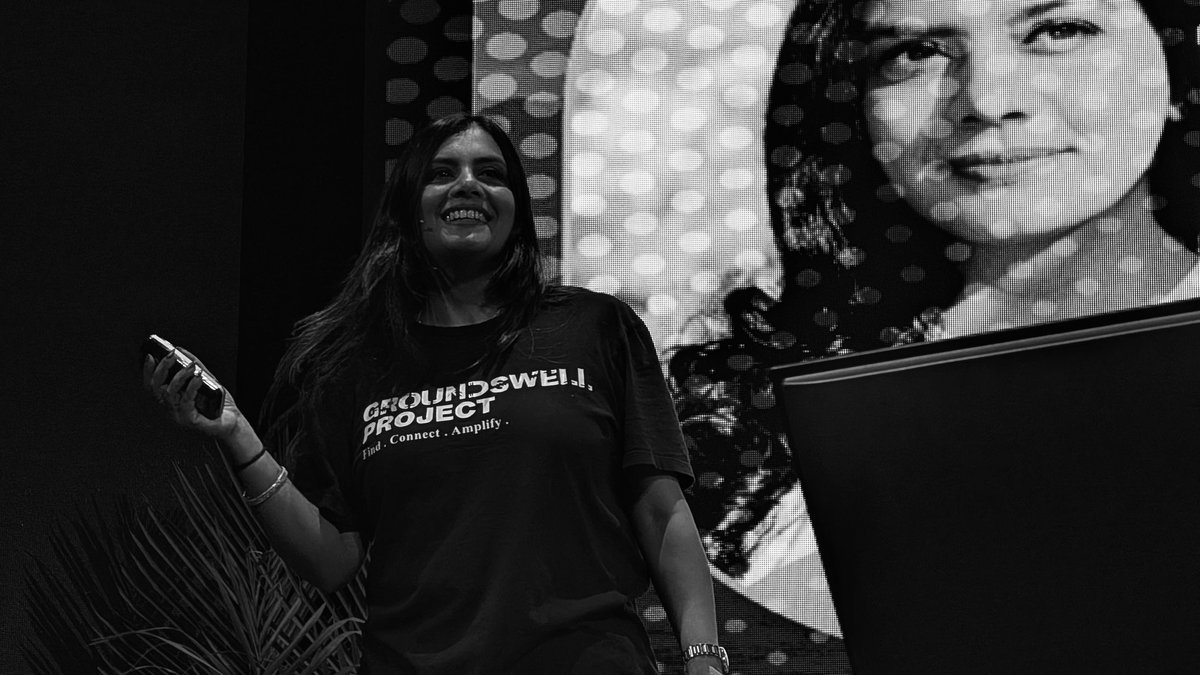
This was the vision of my dear friend Hadiya Masieh, an inspiration and a role model to many of us.
Today marks four weeks without her. And while this loss is still deeply painful and difficult to process, Hadiya’s work and spirit continue through those she inspired.
If you’d like to support the mission she started in 2019 to promote financial freedom through responsible Bitcoin adoption, please consider: https://t.co/QsAvzK9SE1
A heartfelt shout-out to the incredible @GroundswellPro3 team for carrying Hadiyas vision forward.
You are remembered, and your impact lives on 🤍
📉 Growth is not always upwards!
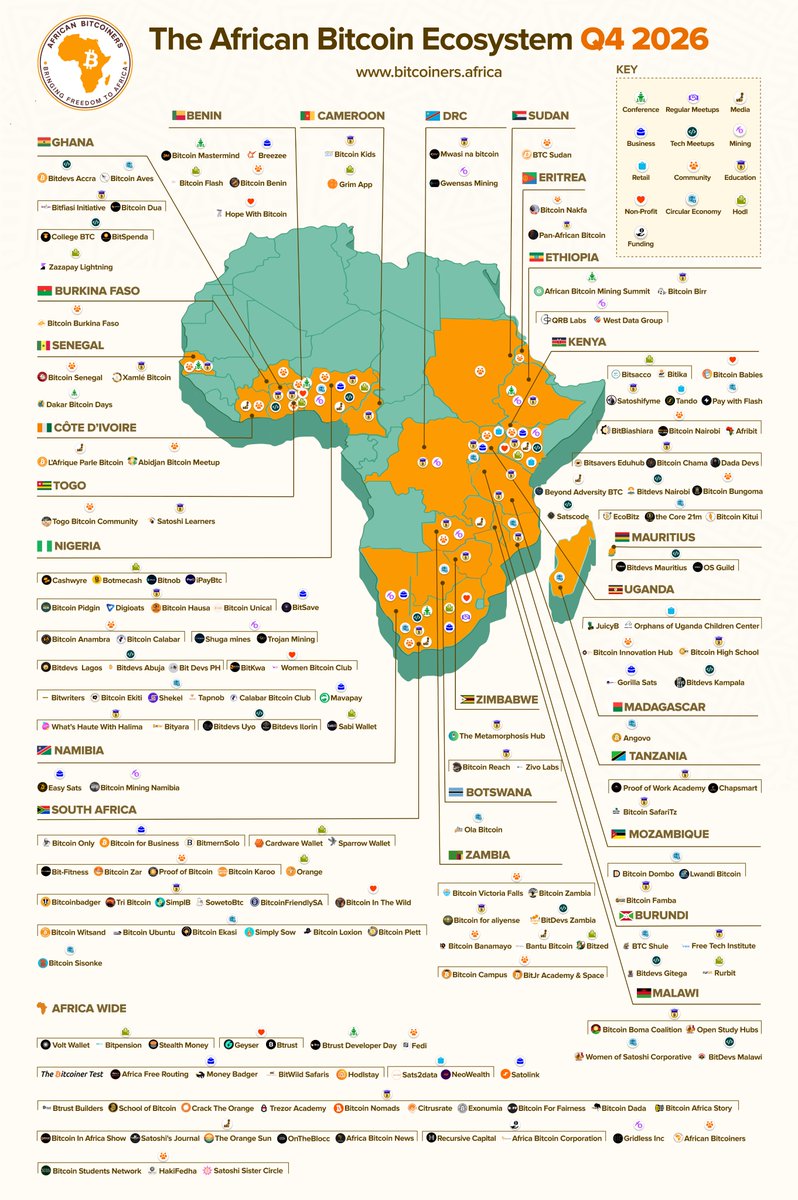
Africa’s Bitcoin ecosystem now has 180 verified projects across 23 countries. That is down from 189 projects in Q3, a 4.8% decrease after our latest directory review.
But a smaller number does not necessarily mean less growth.🚨
As part of our regular review, 11 projects were removed because they were no longer active, no longer met our Bitcoin-only criteria, or had unresolved technical issues.
At the same time, 2 new verified projects were vetted and added, bringing the total to 180 projects.
The goal is not simply to keep adding projects to the map, it is to maintain an accurate, up-to-date directory of active Bitcoin-only initiatives across Africa.
If your project is already listed, claim it and keep your information up to date.
If you’re building Bitcoin in Africa and are not on the map yet, submit your project for review.
A special thank you to the builders, communities and organisations continuing to drive Bitcoin adoption across Africa. 🧡
Check out the Live African Bitcoin Directory, discover the builders, and share it with more builders across the continent.
🔗 https://t.co/9w0hfMmUX9
REMINDER: bitchat is now capable of sending itself to another Android phone with no internet, AppleStore or PlayStore required.
With the updated bitchat app on your phone. You can share the app using NearbyShare or simply turn on your WiFi hotspot, share the APK file over HTTP
When banks and payment apps couldn’t reach Afghan women, Bitcoin offered another solution.
Read my essay in The Wall Street Journal about how access to Bitcoin opened new possibilities for financial independence.
https://t.co/iGRBU9mUSs via @NakamotoProjct
In 2013, Bitcoin wasn’t an investment story for me. It was a way to pay Afghan women who had little or no access to banks and to give them greater control over the money they earned.
I wrote about that experience for @WSJ, and why “permissionless” technology can matter most where traditional systems fail.
Thank you @thetrocro for sharing.