بڑی بڑی فلمیں دیکھیں لیکن مصطفے قریشی صاحب کا یہ سین اور اداکاری ہمیشہ ٹاپ پر رہی۔ یہ سنسنی خیز سین جو لہو کو گرما دے، معنی خیز ڈائیلاگ اور اوپر سے بے ساختہ ڈائیلاگ ڈلیوری کبھی پرانے نہیں ہوں گے۔
(مولا جٹ)
The Special Committee on Gender Mainstreaming met today under the chairpersonship of Dr. Nafisa Shah, MNA at Parliament House, Islamabad.
#NACommittee@ShahNafisa
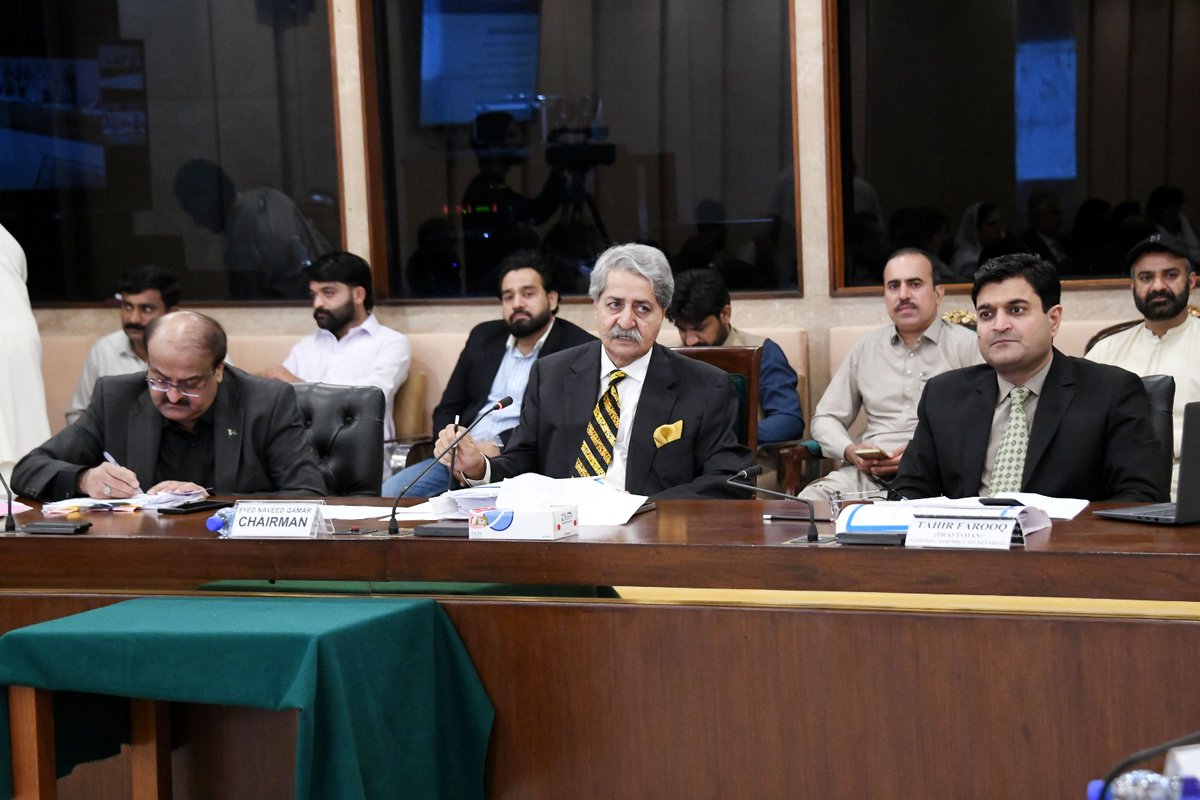
The National Assembly Standing Committee on Finance and Revenue met today under the Chairmanship of Syed Naveed Qamar, MNA at Parliament House, Islamabad.
#NACommittee@naveedqamarmna
Chairman Syed Naveed Qamar emphasized that a balanced and sector-neutral framework would not only enhance competition but also contribute to a stronger, more resilient, and efficient aviation industry.
He was chairing meeting of the Standing Committee on Finance and Revenue, which concluded its intensive series of meetings held to undertake a comprehensive clause-by-clause examination of the Finance Bill, 2026. Following extensive deliberations, the Committee approved a number of significant legislative refinements aimed at strengthening transparency, protecting taxpayers' rights, improving accountability, and enhancing the effective implementation of tax laws.
Among the key amendments approved was a strengthened legal safeguard providing that no freezing order against property held by a third party may be issued unless the Special Judge records written reasons and affords the affected person an opportunity of being heard, except in circumstances where immediate action is necessary to prevent the dissipation of assets.
The Committee also approved amendments enabling the Independent Case Scrutiny Committee to co-opt a Chartered Accountant as a non-voting member in technically complex matters, endorsed provisions excluding the approval period while computing statutory limitation, and omitted several redundant sub-clauses to improve legislative clarity and streamline the law.
The Committee also held a comprehensive discussion on the challenges confronting Pakistan's aviation sector, particularly the operational and financial difficulties faced by all airline operators. During the deliberations, Members observed that while the proposed fiscal concessions for Pakistan International Airlines (PIA) were intended to support the national carrier, similar structural challenges were also being experienced by other domestic airlines operating in an increasingly competitive environment.
After detailed consideration, the Committee recommended that the Government adopt a sector-neutral approach by extending equivalent fiscal concessions and incentives to all eligible airline operators with effect from 1st July, 2027, thereby ensuring a level playing field across the aviation industry.
The Committee held a detailed discussion on the proposed taxation of mobile phones, during which Hon. Members strongly objected to the imposition of additional taxes on selected smartphone brands and expressed concern over the existing taxation regime on imported smartphones. Members observed that smartphones are no longer luxury goods but essential digital infrastructure that enables education, financial inclusion, e-commerce, freelancing, e-governance, and employment. The Committee emphasized that excessive taxation undermines Pakistan's Digital Pakistan vision by restricting access to the digital economy and recommended that the Government rationalize taxes, particularly on entry and mid-range smartphones, to promote digital inclusion, expand the formal market, encourage compliance, and support sustainable economic growth.
The Committee emphasized that sustainable growth of the aviation sector requires policies that promote fair competition, strengthen investor confidence, and support the long-term viability of all operators rather than conferring selective advantages.
Chairman Hon. Syed Naveed Qamar, MNA, stressed that fiscal policy should remain equitable, transparent, and free from any perception of preferential treatment. He observed that government support should be guided by objective policy considerations and applied uniformly across the sector, stating that public policy must avoid creating the impression of one-sided favoritism. The Chairman emphasized that a balanced and sector-neutral framework would not only enhance competition but also contribute to a stronger, more resilient, and efficient aviation industry.
The Committee also held an in-depth discussion on the proposed taxation mechanism for the steel sector. Government representatives informed Members that the prescribed electricity consumption benchmarks—700 units per metric ton for steel melting and 110 units per metric ton for steel re-rolling—are explicitly prescribed in law and linked to data published by the Pakistan Bureau of Statistics (PBS), thereby eliminating administrative discretion.
During the proceedings, Chairman Hon. Syed Naveed Qamar underscored the importance of legislative precision over expediency. He said "In the balance between speed and accuracy, I will always prefer accuracy. The Committee must not rush through legislation at the cost of precision and sound law-making."
Throughout the deliberations, Members expressed several important observations and concerns regarding the proposed fiscal measures. The Committee emphasized that taxation mechanisms should remain firmly anchored in law, operate with complete transparency, and avoid excessive administrative discretion. Members sought detailed clarification regarding the proposed electricity consumption benchmarks and taxpayer compliance ratios to ensure that the methodology is scientifically determined, objective, and consistently applicable.
The Committee further cautioned against introducing legislative amendments without adequate technical examination and parliamentary scrutiny, observing that last-minute changes could compromise legislative quality, create legal ambiguities, and lead to implementation challenges. Members stressed that all proposed amendments should undergo comprehensive review to uphold the principles of sound legislation, transparency, and effective parliamentary oversight.
Over the course of its meetings, the Committee received comprehensive briefings from the Federal Board of Revenue (FBR), the Ministry of Finance, the National Tariff Commission (NTC), Ministry of Industries, Ministry of Commerce, and other relevant stakeholders on a broad range of fiscal and taxation proposals. These included measures relating to income tax, sales tax, customs, federal excise, tariff reforms, petroleum levy, digital taxation, banking data sharing, tax administration, compliance mechanisms, and sector-specific fiscal incentives. Members thoroughly examined each proposal, carefully assessing its economic implications, implementation feasibility, impact on taxpayers' rights, transparency, and the potential consequences for consumers, businesses, exporters, and Pakistan's overall investment climate.
Chairman Syed Naveed Qamar consistently emphasized that fiscal policy must strike a careful balance between revenue generation and sustainable economic growth. He reiterated that broadening the tax base should take precedence over increasing the burden on existing taxpayers, while safeguarding taxpayer privacy, ensuring transparency in enforcement mechanisms, and promoting a predictable, equitable, and business-friendly tax regime. He further stressed that tax reforms should strengthen industrial competitiveness, protect vulnerable segments of society, and contribute to long-term economic development.
Following detailed deliberations, the Committee made a number of recommendations to further strengthen the proposed legislation. These included the phased implementation of major tax reforms, enhanced institutional oversight and accountability, stronger safeguards for consumer interests, improvements in administrative efficiency, and the development of robust implementation mechanisms to ensure that fiscal measures remain practical, equitable, and capable of achieving their intended policy objectives.
Concluding its examination of the Finance Bill, 2026, the Standing Committee reaffirmed its unwavering commitment to ensuring that the legislation reflects the principles of fairness, transparency, fiscal responsibility, and good governance. The Committee emphasized that a well-considered and balanced Finance Bill is essential to safeguarding taxpayers' rights, strengthening public confidence in the tax system, promoting sustainable economic growth, and advancing Pakistan's long-term economic stability.
Ms. Sharmila Faruqui and Mr. Muhammad Javed Hanif, MNA submitted notes of dissent on EV policy and existing taxation structure on imported mobile Phones respectively.
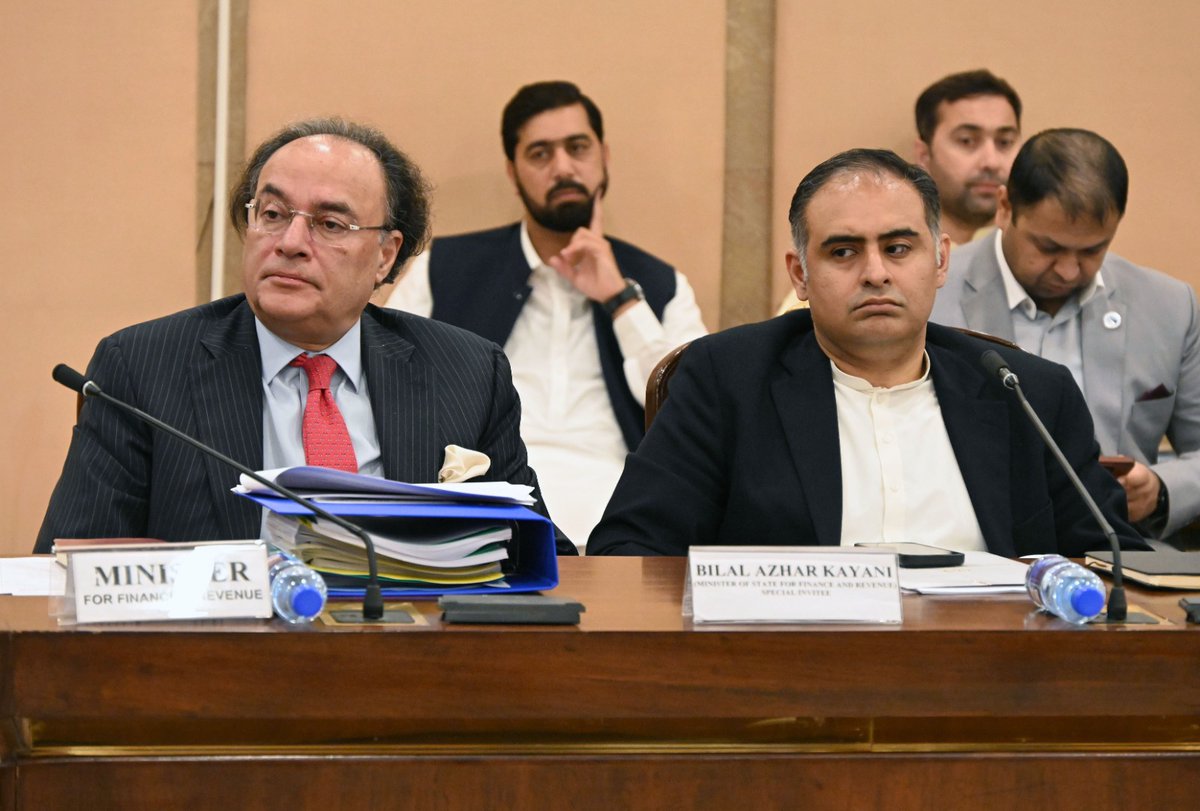
The meeting was attended by Rana Iradat Sharif Khan, Mr. Ali Zahid, Syed Sami ul Hassan Gillani, Mr. Bilal Farooq Tarar, Mr. Muhammad Usman Awaisi, Dr. Nafisa Shah, Ms. Hina Rabbani Khar, Dr. Sharmila Faruqui, Dr. Mirza Ikhtiar Baig, Mr. Muhammad Javed Hanif Khan, Mr. Arshad Abdullah Vohra, and Ms. Shahida Begum, MNAs. The meeting was also attended by the Hon. Minister of State for Finance, the Secretary Finance, the Secretary Commerce, Additional Secretary Industries, the Director General (Tax Policy Office), Members of the Federal Board of Revenue, and senior officials from the Finance Division, the FBR, and other relevant Ministries and Divisions.
#NACommittee @naveedqamarmna@Financegovpk
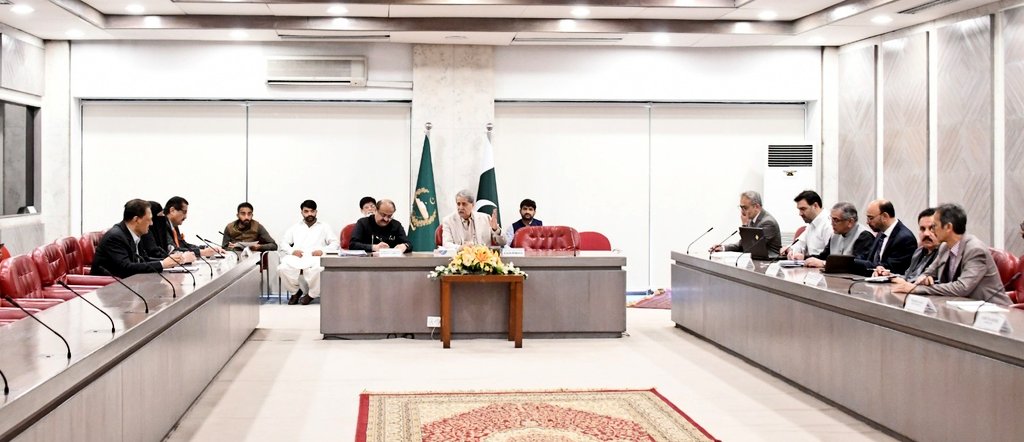
The Standing Committee on Finance and Revenue, under the Chairmanship of Hon. Syed Naveed Qamar, MNA, continued its clause-by-clause consideration of the Finance Bill, 2026 during its meeting held at Parliament House, Islamabad.
The Committee undertook a comprehensive review of the remaining budgetary proposals and received detailed briefings from the Ministry of Commerce, the National Tariff Commission (NTC), the Federal Board of Revenue (FBR), the Petroleum Division, and the Islamabad Capital Territory (ICT) Administration on proposed reforms relating to the National Tariff Policy, ICT vehicle token tax, and amendments to the Petroleum Products (Petroleum Levy) Ordinance, 1961.
The Committee received a comprehensive briefing on the Year-II reforms under the National Tariff Policy (2025–2030), aimed at simplifying Pakistan's tariff structure, reducing the overall tariff burden, promoting industrial competitiveness, encouraging exports, and aligning the tariff regime with international best practices.
The proposed reforms include rationalization of Customs Duty, Additional Customs Duty, Regulatory Duty, and exemptions under the Fifth Schedule, with reductions proposed on thousands of tariff lines and the removal of redundant exemption entries. The Committee was informed that the reforms are expected to reduce the overall average tariff while carrying an estimated revenue impact of approximately Rs.143.4 billion.
During the deliberations, the Chairman observed that tariff liberalization should be implemented in a balanced and phased manner to safeguard domestic industry while improving competitiveness and promoting exports. He emphasized that lower tariffs must ultimately translate into reduced production costs, affordable consumer prices, and increased value addition rather than merely benefiting importers. Stressing the importance of transparency and evidence-based policymaking, the Chairman directed that all future fiscal proposals should be accompanied by comprehensive revenue impact assessments, noting that taxation must serve a clear economic purpose and should not become merely an extractive exercise.
Hon. Members expressed concerns regarding the possible impact of tariff reductions on domestic manufacturing, revenue collection, and employment, as well as the proposed relaxation of restrictions on used vehicle imports.
The Committee also strongly opposed tariff concessions on environmentally hazardous imports such as shredded tyres, observing that such measures contradict Pakistan's climate commitments and undermine domestic recycling efforts. The Committee recommended phased implementation of the tariff reforms, periodic impact assessments, regular progress reports by the NTC, and adequate safeguards for strategic industries to ensure that the reforms promote sustainable industrial growth while protecting national economic interests.
The Committee also examined the proposed revision of token tax for motor vehicles in the Islamabad Capital Territory. Members expressed concern that shifting from a fixed-rate system to an invoice value-based taxation model for private vehicles, particularly in the 1300cc to 1800cc category, could disproportionately burden middle-income taxpayers.
The Chairman emphasized that any revision in token tax should be transparent, equitable, and proportionate to vehicle value without placing unnecessary financial pressure on ordinary citizens. The Committee recommended that the proposed tax structure be implemented only after a comprehensive impact assessment and appropriate consultation to ensure consistency with provincial tax regimes while maintaining taxpayer affordability.
The Committee further scrutinized the proposed amendments to the Petroleum Products (Petroleum Levy) Ordinance, 1961, with particular focus on strengthening enforcement against defaulting Oil Marketing Companies (OMCs).
The Chairman observed that OMCs merely act as collection agents for government levies and therefore cannot be permitted to retain public funds. Expressing serious concern over delays in the recovery of petroleum levies, he directed the Government to introduce a strict inbuilt enforcement mechanism providing for suspension of product supplies to any defaulting OMC after thirty days of non-payment, while eliminating discretionary extensions or installment facilities that weaken compliance. The Committee also recommended linking petroleum levy compliance with regulatory enforcement to safeguard public revenue. The Chair directed the Petroleum Division to redraft the proposed legislative amendments to explicitly eliminate installment powers for defaulting OMCs and institute immediate supply suspensions.
The Committee decided to continue its consideration of the Finance Bill, 2026, at its next sitting scheduled to be held on Sunday, 21st June 2026, at 11:00 a.m.
The meeting was attended by Rana Iradat Sharif Khan, Mr. Ali Zahid, Syed Sami ul Hassan Gillani, Mr. Bilal Farooq Tarar, Mr. Muhammad Usman Awaisi, Ms. Zeb Jaffar, Dr. Nafisa Shah, Ms. Hina Rabbani Khar, Dr. Sharmila Faruqui, Dr. Mirza Ikhtiar Baig, Mr. Muhammad Javed Hanif Khan, Mr. Arshad Abdullah Vohra, and Ms. Shahida Begum, MNAs. The meeting was also attended by the Hon. Minister for Finance, the Minister of State for Finance, the Secretary Finance, the Secretary Aviation, the Director General (Tax Policy Office), Members of the Federal Board of Revenue, and senior officials from the Finance Division, the FBR, and other relevant Ministries and Divisions.
#NACommittee @naveedqamarmna
The National Assembly Standing Committee on Finance and Revenue met today under the Chairmanship of Syed Naveed Qamar, MNA at Parliament House, Islamabad.
#NACommittee@naveedqamarmna
Chairman of the Standing Committee on Finance and Revenue, Syed Naveed Qamar, MNA, chaired the meeting of the Standing Committee at the Parliament House, today.
@naveedqamarmna@NA_Committees
The Committee stressed the need to broaden the tax base through documentation, enforcement, and administrative reforms rather than repeated tax rate increases. Members called for stronger action against illicit trade, counterfeit markets, and undocumented economic activity. The Committee also highlighted the importance of increasing investment in renewable energy, climate resilience, and energy-efficiency initiatives.
The Committee further stressed that Budget FY2026–27 must move beyond short-term stabilization measures and instead serve as a platform for sustainable economic reform, fiscal transparency, improved governance, and inclusive growth.
The Committee also approved the minutes of its previous meeting held on 14 May 2026.
The meeting was attended by Ms. Shahida Begum, Dr. Mirza Ikhtiar Baig, Mr. Muhammad Javed Hanif Khan, Mr. Ali Zahid, Dr. Nafisa Shah, and Dr. Sharmila Faruqui, MNAs. Senior officers from the Finance and Revenue Divisions, along with independent economists, also attended the meeting.
Chairman Standing Committee on Finance and Revenue, Hon. Syed Naveed Qamar, observed that continued reliance on indirect taxation and petroleum levies instead of sustainable tax-base expansion remains a serious concern.
Syed Naveed Qamar also expressed concern over the growing burden of circular debt, the slow pace of reforms in state-owned enterprises, and the rising socioeconomic pressures caused by inflation, unemployment, and poverty.
The Chairman further noted the delay in the circulation of the Budget Strategy Paper and observed that the Ministry of Finance was legally bound under the Public Finance Management Act, 2019, to circulate the document in a timely manner to ensure meaningful parliamentary scrutiny ahead of the budget session.
He made these observations while chairing a meeting of the Standing Committee on Finance and Revenue held today at Parliament House, Islamabad. The meeting conducted a detailed review of Pakistan’s macroeconomic outlook and fiscal priorities for Budget FY2026–27, with particular focus on emerging economic risks, IMF programme performance, and structural reform requirements.
During the briefing, the Committee was informed that Pakistan remains on a “fragile stabilization path” despite signs of gradual economic recovery. GDP growth for FY2026–27 is projected between 3.5% and 4.5%, while inflation has once again entered double digits, reaching 10.9% year-on-year in April 2026.
Independent experts informed the Committee that Pakistan’s total foreign exchange reserves currently stand at $22.58 billion, providing approximately 2.58 months of import cover. The State Bank of Pakistan’s policy rate presently stands at 11.5%, following cumulative cuts of 1,200 basis points since June 2024. FBR tax collection in Q3 reached Rs9.304 trillion, reflecting a shortfall of Rs611 billion against targets. Pakistan’s gross public debt stands at Rs83.28 trillion, while external debt has reached $137.56 billion. Circular debt has climbed to nearly Rs5 trillion across the power and gas sectors. The trade deficit widened to $32.19 billion during July–April FY2025–26 due to weak export performance and rising imports. Meanwhile, remittance inflows remained strong at $33.86 billion during July 2025–April 2026, with projections for FY2026 estimated at $41.2 billion.
The presentation further highlighted that Pakistan sources nearly 90% of its energy imports from the Middle East, making the economy highly vulnerable to regional geopolitical instability and oil price shocks. The Committee was informed that any prolonged regional conflict could significantly increase inflation, widen the current account deficit, and place renewed pressure on the exchange rate.
The Hon. Chairman reiterated that the Federal Board of Revenue has consistently failed to meet collection targets despite repeated taxation measures imposed on existing taxpayers. He emphasized the urgent need for broadening the tax base through sustainable and equitable reforms instead of increasing the burden on already documented sectors of the economy.
Hon. Members of the Committee observed that provincial fiscal surpluses are disproportionately supporting federal IMF compliance targets. They further noted that development expenditure continues to remain compressed in favour of current expenditure and debt servicing, while Pakistan’s export sector continues to underperform compared to regional economies.
The Committee also emphasized that excessive taxation on digital connectivity and telecom services is restricting digital inclusion, freelancing opportunities, and broader economic participation, particularly among youth and low-income groups.
@naveedqamarmna
The National Assembly Standing Committee on Finance and Revenue met today under the Chairmanship of Syed Naveed Qamar, MNA at Parliament House, Islamabad.
#NACommittee@naveedqamarmna
Chairman Syed Naveed Qamar expressed serious concerns regarding the proposed indemnity provisions and the extensive protections being extended to financial institutions and their officials. He categorically observed that such “boilerplate clauses,” which grant blanket immunity under the umbrella of “good faith,” should not become a routine feature of legislation. The Chairman further emphasized that legal protections must either apply equitably to both parties or not be extended in a one-sided manner.
He was chairing a meeting of the Standing Committee on Finance and Revenue held at the Parliament House for a detailed clause-by-clause review of the proposed amendments to “The Financial Institutions (Recovery of Finance) Amendment Act, 2026,” with particular focus on the newly introduced Section 15A concerning housing finance and foreclosure procedures.
During the deliberations, the Committee engaged in an extensive discussion on the proposed foreclosure mechanism under housing finance arrangements. Members expressed deep concern that, if enacted without adequate safeguards, the proposed legal framework could become unduly stringent and disproportionately burdensome for borrowers and ordinary citizens.
The Committee emphasized that while financial institutions required legal mechanisms for recovery of defaulted loans, the legislation must also ensure balance, fairness, and adequate safeguards for borrowers. Members stressed the need for meaningful remedies and appellate protections to prevent misuse of powers and arbitrary foreclosure actions.
During discussion, Members also raised broader concerns over the increasing trend of granting sweeping powers to institutions without corresponding accountability mechanisms.
The Committee directed the concerned Ministry and stakeholders to incorporate the agreed amendments and observations of the Committee in the revised draft for further consideration.
The Committee approved the minutes of its previous meeting held on 7th May, 2026
The meeting was attended by Dr. Nafisa Shah, Ms. Hina Rabbani Khar, Dr. Mirza Ikhtiar Baig, Mr. Muhammad Jawed Hanif Khan, Mr. Arshad Abdullah Vohra, and Ms. Shahida Begum, MNAs. The meeting was also attended by Hon. State Minister for Finance and Revenue, Secretaries of Finance, and Law and Justice, along with senior officers of the Finance Division and the State Bank of Pakistan.
#NACommittee @naveedqamarmna
The Standing Committee on Finance and Revenue, in its meeting held today at Parliament House, Islamabad, under the Chairmanship of Hon. Syed Naveed Qamar, continued its consideration of “The Financial Institutions (Recovery of Finance) Amendment Act, 2026” and deliberated in detail upon a series of proposed amendments aimed at safeguarding mortgagors against arbitrary, coercive, or unfair exercise of powers, particularly in relation to foreclosure and recovery proceedings under Sections 15A(2), (6), (7), (10), (12), (14), 15(b), 15(d), and 15(17).
After detailed deliberations, the Committee recommended that the Bill, as reported by the Standing Committee, may be passed by the National Assembly.
During clause-by-clause consideration of the newly inserted Section 15A, the Committee examined the proposed mechanism relating to issuance of first, second, and final notices, each carrying a minimum notice period of thirty days prior to initiation of further recovery proceedings.
The Committee also deliberated upon provisions concerning restructuring, rescheduling, and settlement of mortgage liabilities, and expressed concern that borrowers should not remain subject to indefinite delays by financial institutions in deciding such requests.
The Hon. Chairman emphasized the importance of maintaining a fair and equitable balance between the rights of financial institutions and those of borrowers.
The Committee extensively debated the proposed foreclosure mechanism under housing finance arrangements and expressed serious concern that, in the absence of adequate legal safeguards, the proposed framework could operate harshly against borrowers and ordinary citizens.
The Committee also approved the minutes of its previous meeting held on 13th May, 2026.
The meeting was attended by Mr. Bilal Farooq Tarar, Dr. Nafisa Shah, Dr. Sharmila Faruqui, Dr. Mirza Ikhtiar Baig, and Mr. Muhammad Jawed Hanif Khan, MNAs. The meeting was also attended by the Hon. State Minister for Finance and Revenue, Secretary, Ministry of Law and Justice, and senior officers from the Finance Division, Law Division, and the State Bank of Pakistan.