@man_of_options I believe that Straitway practices it. I saw that Elder Kabeer had a concubine. So they have probably studied it. (Not that I don't think they are cultish) But let's not throw out any babies with the bathwater.
Sua vida é entediante porque não tem missões secundárias.
Você acorda, trabalha, fica rolando o feed, dorme. Repete. Sem riscos, sem história, sem nada para contar para ninguém.
Aqui estão 34 missões secundárias para completar antes de outubro. Escolha cinco. Faça de verdade.
What would a masculine church look like?
It's a good question...
1. Real music isn't of knockoff Jesus is my boyfriend Taylor swift light, etc.
Less emotionalism, more substance.
2. Real male leadership, instead of what has defined evangelicalism for the past 30 years (and seeped into all conservative churches) which is a posture of "we are so sorry God is so mean to you ladies and says you sin and doesn't allow you to do X, Y, and Z, but see we aren't mean like God so we are going to do everything we can to skirt what He actually teaches about male headship and authority"
3. A focus on equipping men to lead their households well, and disciple their wife and children, instead of an approach that undermines the husband as head of his wife and house, and replaces his role with his wife and children, especially through a million programs focused at other people discipling his wife, especially women doing so.
4. Family integrated church structure and worship instead of public school lite knockoff church structure...
5. Men's activities that actually match what men need... not just "let's share our feelings but with added bacon." This should be biblically/doctrinally rich AND physically/skill wise challenging and growing.
See what @BrettaBaggett has done at his church with his Men of Valor program.
6. Women's ministry that is strictly limited to Titus 2 practicals as the Bible teaches.
Can easily add to this list, but it's a solid start.
No cigars needed.
PS... guns do have something to do with the "actual faith." Rather important things, but that is a separate discussion.
“Complete abstinence is easier than perfect moderation.”
Read that 3x. This is the absolute truth:
It’s easy to say NEVER. Never drink coffee. Never touch nicotine. Never eat certain foods. Never do this. Never do that.
But can you have a relationship with something without becoming dependent on it?
Can you enjoy something AND comfortably go without it?
That’s where things get interesting.
I love experimenting with cycles in practically every area of life.
Nicotine for a period. Then none.
Caffeine for a few days. Then weeks without it.
Releasing for a few days on end with my woman. Then retention intimacy for a week.
Eating more. Eating less. Fasting. Feasting.
Raw foods. Cooked foods. Fruits. Fats. Seasonal foods.
Training intensely. Lifting heavy. Sprinting. Then walking, stretching, playing, and resting.
Sleeping longer when the body needs recovery. Sleeping less occasionally when life calls for adventure, without making sleep deprivation a lifestyle.
Lots of sunlight full body. Then shade.
Hot summers. Cold winters.
Sauna. Cold plunges. Warmth. Stillness.
Supplements when there’s a purpose. Cycling off and seeing how I feel without them.
Minerals. Hydration. Sweating. Replenishing.
Periods of intense creation. Periods of doing absolutely nothing productive.
Being social as hell. Then disappearing into the jungle with my flute.
Talking. Silence.
Traveling the world. Staying grounded in one place.
Discipline. Play.
Even nature doesn’t live in perpetual summer.
The sun rises and sets. The moon waxes and wanes. Trees grow, shed, rest and grow again.
Duh, some things aren’t worth cycling back into. And certain habits, especially addictive ones, can be easier and healthier to leave behind entirely.
But I find it fascinating how quickly humans turn a practice that benefits them into another rigid identity.
Suddenly you’re the fasting guy. The carnivore guy. The caffeine-free guy. The cold-plunge-at-4-AM guy.
Congratulations. You’ve built yourself another hell hole prison.
I enjoy having the freedom to experiment, notice what works AND change my mind.
Sometimes moderation makes sense. Sometimes abstinence. Sometimes consistency is exactly what the body needs.
Can you enjoy something without needing it? Can you stop something without fearing you’ll lose a part of yourself?
Life moves in seasons and I intend to actually experience all of them.
If your church has a kitchen you should 100% be using it to teach young women to cook and can, and to mass assemble freezer meals for new moms, the sick, and the elderly.
Most churches have a commercial kitchen that gets used for Wednesday night supper and the occasional funeral.
Rent it to a young couple starting a food truck. Let a single mom run a meal-prep business out of it. Charge half of market. Pray over them every Monday.
You'd do more discipleship in that kitchen than most small groups do all year.
What else is your church sitting on?
The reason Christmas and holidays felt so special as a child was because of the effort adults, like parents, grandparents, teachers, put into making it festive. Then you grow up, and you realize it is now up to you to create intentionality and find your own ways to mark the seasons and celebrate milestones. It is your responsibility and also your freedom. And then you realize a lot of things about adulthood are this way. So much of what makes life magical is something someone once lovingly cultivated
@fwmarqix We get like 15 Spam calls a day, and I told my husband that some old lady somewhere has to be having fun with it! I wonder how many old ladies are doing this!!
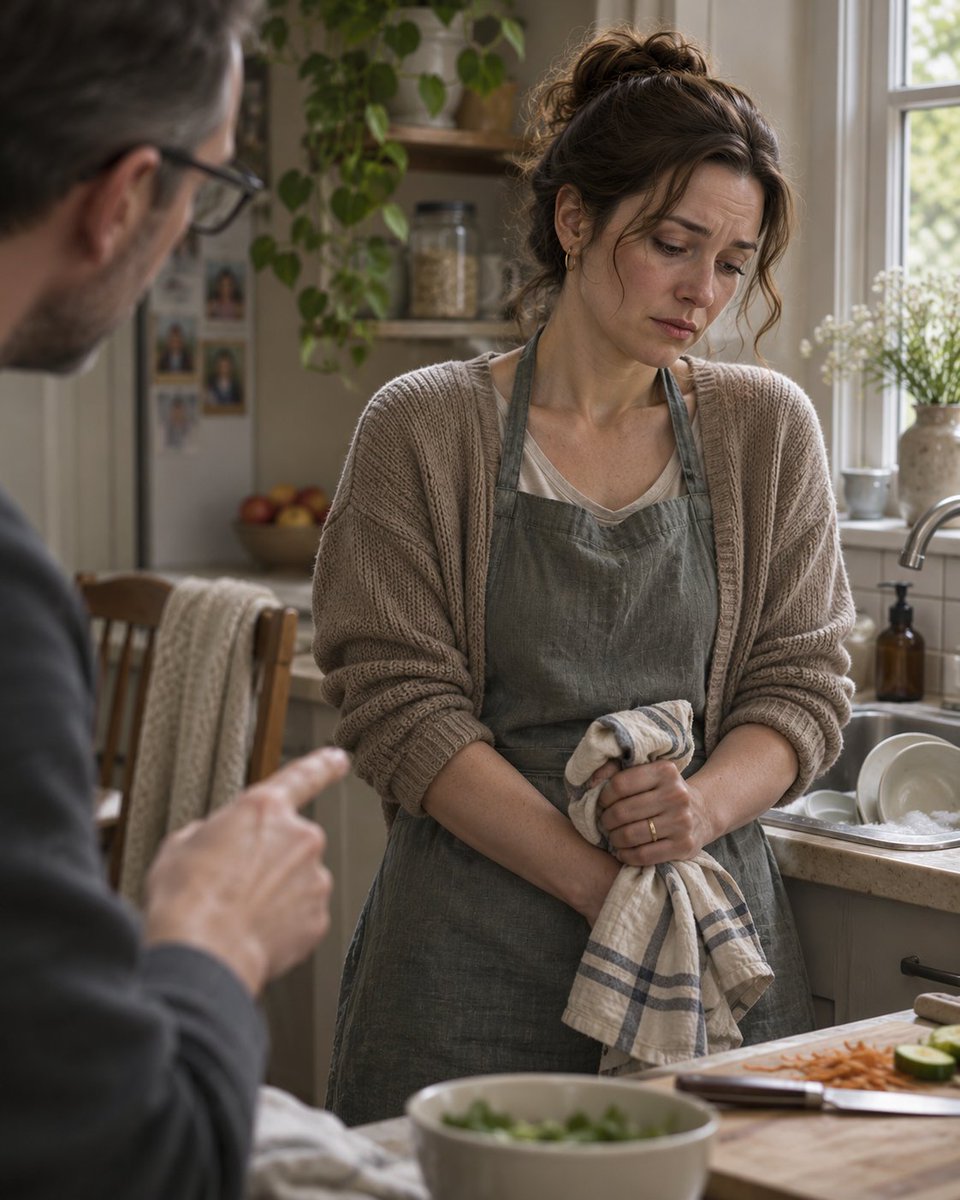
A good husband doesn't correct everything his wife does wrong.
There's a kind of husband who makes his wife feel constantly inadequate without ever raising his voice.
He notices when she forgets something, leaves something untidy, spends a little too much money or handles a responsibility differently from how he would.
He mentions each mistake. Perhaps his criticism is quite mild. And perhaps he's even correct.
But eventually she begins to feel that he's always watching her, looking for something to correct.
Traditional Catholic moral theology actually warns against this.
McHugh and Callan teach that minor faults should ordinarily be left uncorrected. People who continually scold others over trivial mistakes do more harm than good (Moral Theology, 1270).
There's a reason for this.
Fraternal correction is an act of charity, intended to help another person overcome genuine wrongdoing.
It isn't a licence to impose your preferences or demand perfection.
Book III of Aristotle's Economics also states that a good husband will pass over 'any trivial or unintentional errors' his wife has made.
Before correcting your wife, ask yourself:
- Is this actually wrong, or merely different from how I would do it?
- Is it important enough to mention?
- Will correcting her genuinely benefit her or our family?
Sometimes the most charitable thing a husband can do is notice a small imperfection and say nothing.
The Church’s Blind Spot About Sex
Marriage and sex problems are often masculine leadership problems in disguise. Men coming alive is what actually reignites desire in a woman.
The Church has worked on strong marriages for generations. But it has a blind spot. It’s been weak on masculinity since the Industrial Revolution.
(See @NancyRPearcey's THE TOXIC WAR ON MASCULINITY for more on this.)
It wasn’t really the Church’s fault. For most of history, men led their families as the captain of a home economy. Farmers and tradesmen worked with their wives and children at their side.
Then economic pressure pulled men out of their homes and into factories. That left women without their husbands’ leadership, and it wreaked havoc on family life.
Society split in two: the public, secular world of men, and the private, religious world of women. The Church championed women’s concerns. After all, they were the ones filling the pews.
So our script for Godly character grew up apart from what boys learn from their fathers and brothers about becoming men.
That’s why so much Christian marriage advice falls flat. It’s diagnosing the wrong problem.
It’s time to put testosterone back into the faith, and Christ back into masculinity.
👇Free book.