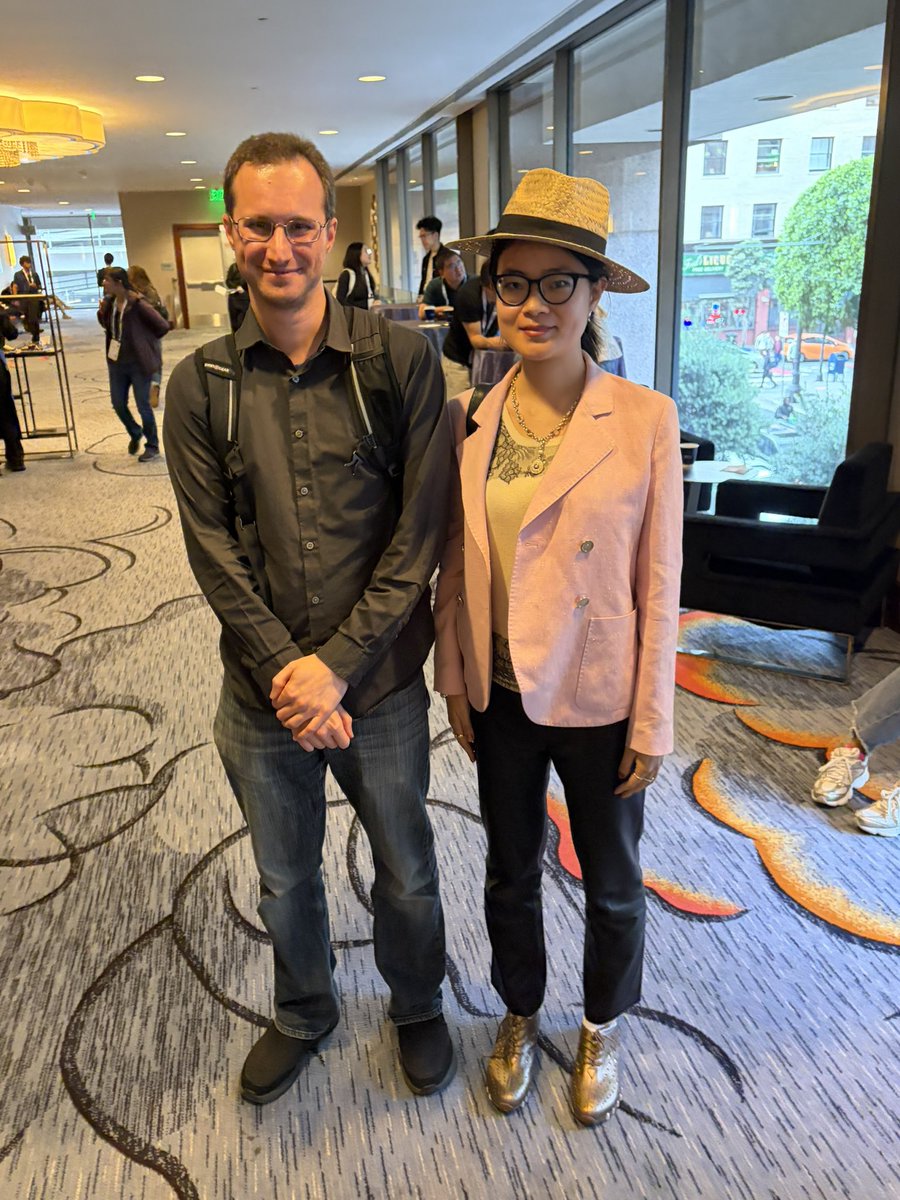
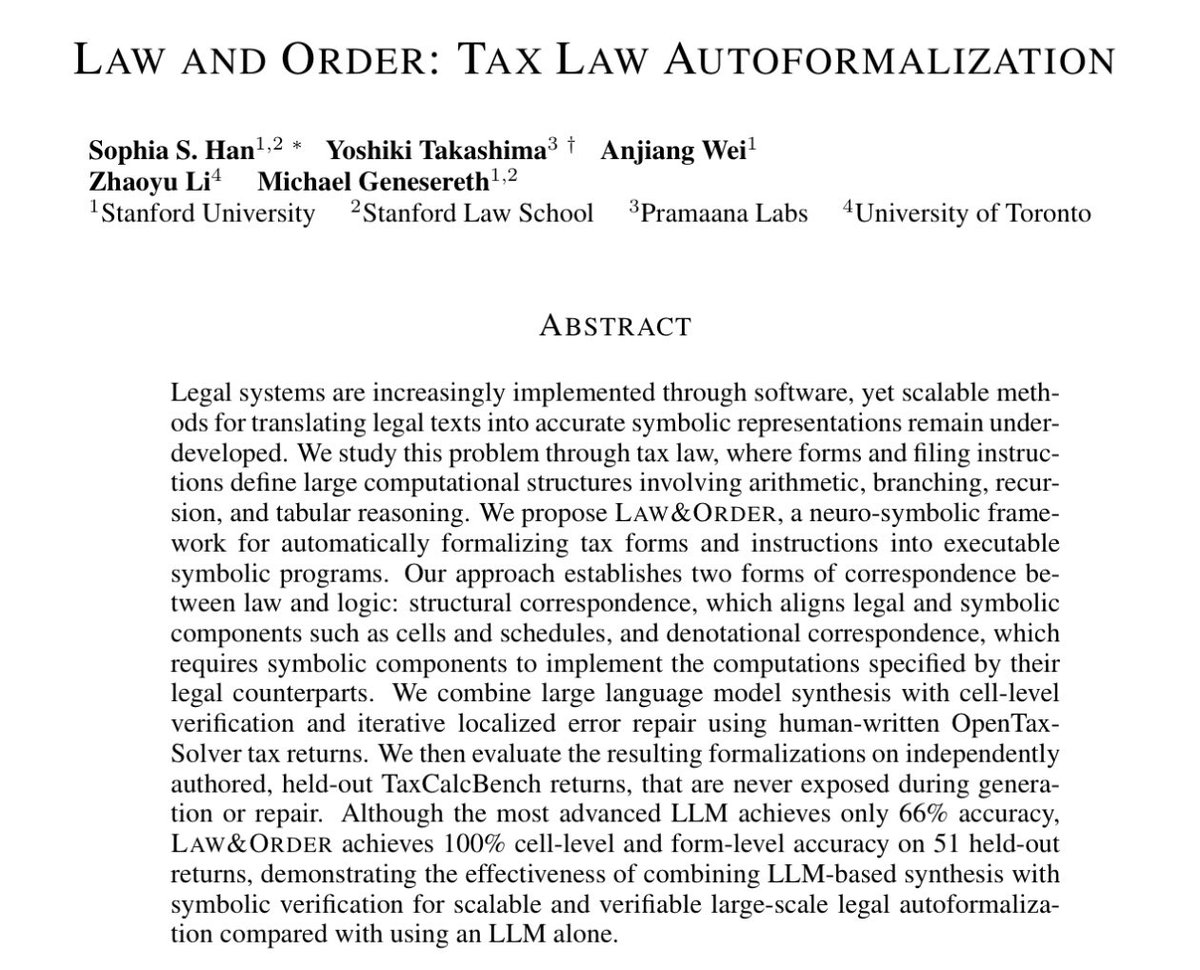
I’m organizing “Recent Advances in Generative Models: Theory and Applications” at INFORMS on November 1, 4:15–5:30 PM, in Moscone South 304 (Level 3). The session will cover AI for mathematical and legal reasoning, theoretical foundations of generative models, and more. You are all cordially invited, and I hope to see you there!
🦩 Introducing Gen4P: Video Generators are 4D Perceivers.
We turn a pretrained video generator into a feed-forward 4D perceiver—recovering geometry and motion from monocular videos in a single forward.
Project page: https://t.co/QPb3MDVps7
Key highlights:
🎯 Single-pass encoding—no iterative denoising
🎯 On-demand spatial and continuous-time queries
🎯 A frozen depth LoRA as a plug-in geometry prior
From thin flamingo legs to complex motion: explore our interactive 4D reconstructions!
A work led by Yitong Xia and @CodyJzr (@Oxford_VGG)
Leonard Read's pencil story: no one knows how to make a pencil from scratch, yet millions are made without a central manager. Each worker knows only their part. Incentives, not central control, coordinate their efforts.
Current multi-agent AI seems to work the opposite way. A central manager does everything: assigns roles, writes the workflow, and decides who acts next. As agents increase and tasks get harder, that manager might become the bottleneck: it should understand every agent and every task, and adaptation becomes inefficient.
So how can a group of machine agents organize themselves into something none of them could achieve alone? Further, how can that society of agents keep improving itself over time?
In Economy of Minds (EoM), we show that simple local incentives can drive global self-coordination and self-improvement for modern LLM agents. We let agents live in a minimal economy: they compete for work, earn by helping others succeed, and go broke when they don't. Workflows, specialists, and improvement naturally emerge, with no one in charge.
Across 5 domains (math reasoning, financial research, scientific research, accelerator design, and distributed-system optimization), limited agents grow into strong societies.
The whole idea in a 90-second cartoon👇
Next week, I’ll be at OOPSLA/ISSTA in Oakland during the day and CoLM in San Francisco in the evenings. Looking forward to catching up with old friends and meeting new ones!
Most people dismiss the improbable. We back the founders building it. 150+ companies shaping what comes next in AI, robotics, enterprise, healthcare & medicine, climate, consumer, fintech, manufacturing, infrastructure, space and beyond.
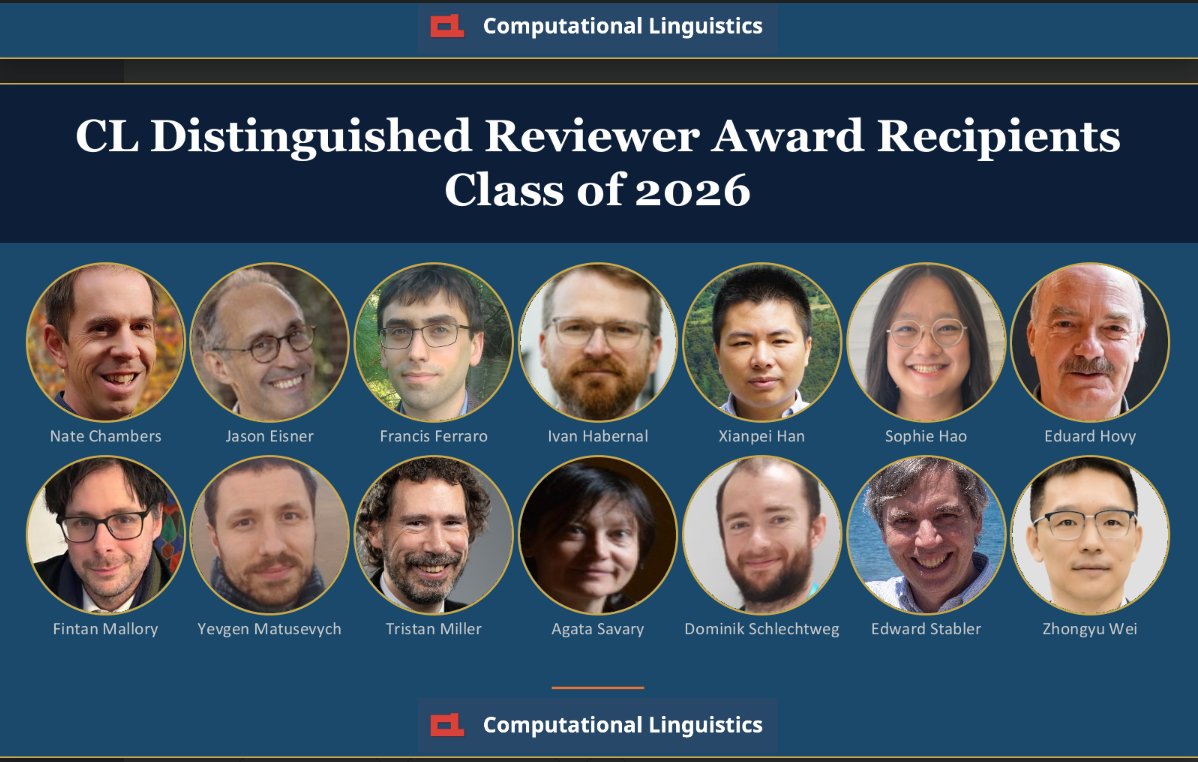
🏆2026 Computational Linguistics Distinguished Reviewer Awards: It aims to highlight and promote high standards in peer review and to acknowledge reviewers whose contributions have had a meaningful impact on the quality of our #CLjournal. Congratulations to our 2026 awardees!
A lot of people have opinions about the philosophy of AI and want to write things about it and I would like to say to these people: *please* talk to a philosopher first. Philosophy is hard!
Everyone who actually understands history, technology, the diffusion of innovation, and economics already understands that AI will create more jobs than it displaces.
But mass media and politicians never waste a good fake crisis to terrify people.
And a few very loud, very prominent people in AI were screaming nonsense about the end of all jobs, the same nonsense people once babbled about "computers" in the 80s.
You can still sell a million copies of a crappy book if you want to keep telling that story. People love scary bedtime stories.
@mhaeberli Good to hear from you Martin! And thanks so much for thinking of me. I am not too surprised at the result as LLMs do excel at long chains of deduction (at least empirically). There are a few startups automating contract reasoning according to my knowledge.