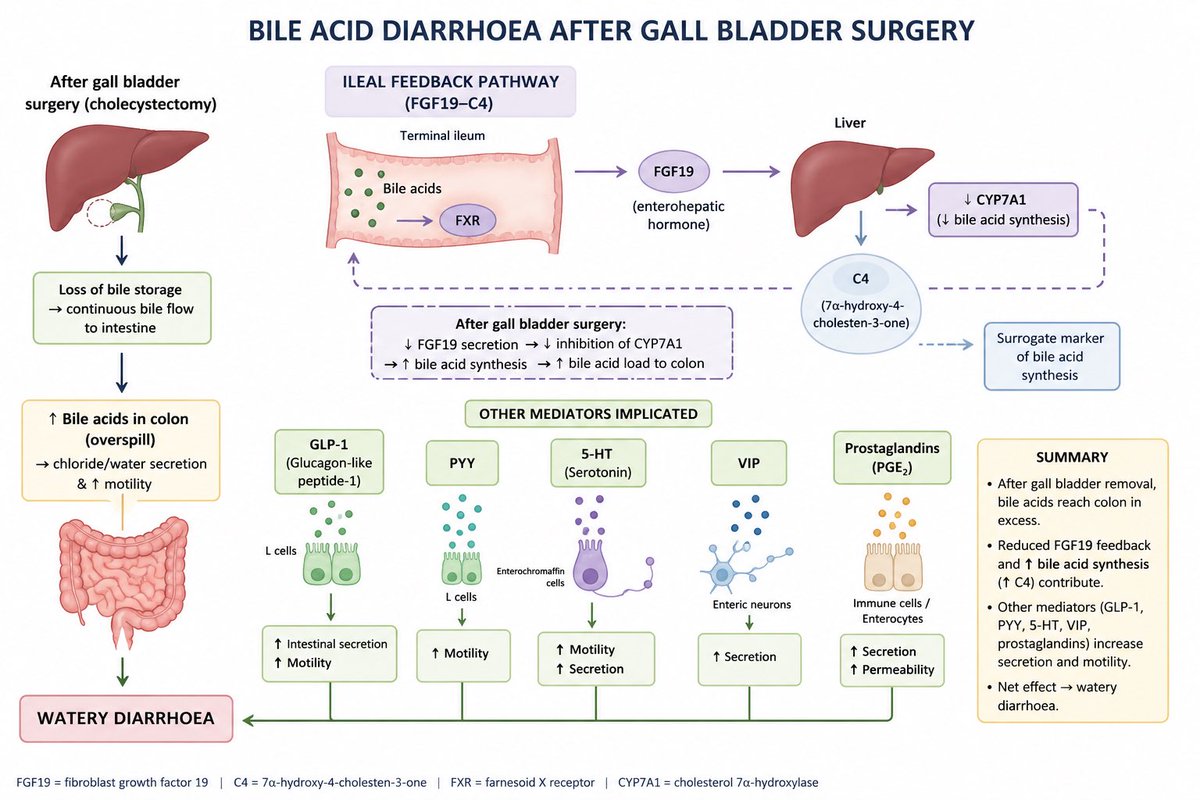
Is it possible to get diarrhoea symptoms after gallbladder surgery?
The answer is yes - it’s called bile acid diarrhoea (BAD) and it’s more common than we think.
@HalletJulie@JayKumar_MD_PhD@ZhiVenFongMD@TomVargheseJr Completely agree. IOC has an important role…but as I’ve said many times, I hate the idea of making a hole in something just to figure out what it is. If there’s already a hole in it, that’s a different story. @StJoesHPB this is how we do it and teach it:
Key Rules for Basket Use
Challenges in ERCP: Management of Bile Duct Stones Using Stone Extraction Baskets
More than 12 tips for your daily practice
WATCH: https://t.co/FnMOG76a1A
Robotic TAPP (rTAPP) Repair of Left Inguinal Hernia with Imbrication of Transversalis Fascia
Why imbricate:
🔵Direct defect/large hernia risk factors for postoperative seroma
🔵In open hernia repair, direct defect often closed
➡️Helps create a flat posterior wall and expedite mesh placement 🔵However it is not a routine practice during MIS
Robotic Imbrication of Transversalis fascia:
🔴Possible advantages include:
➡️Reduce seroma risk formation
➡️Reduce risk of recurrence (mesh migration)
🔴Avoid deep bite
➡️Cord structures can be easily caught in sutures
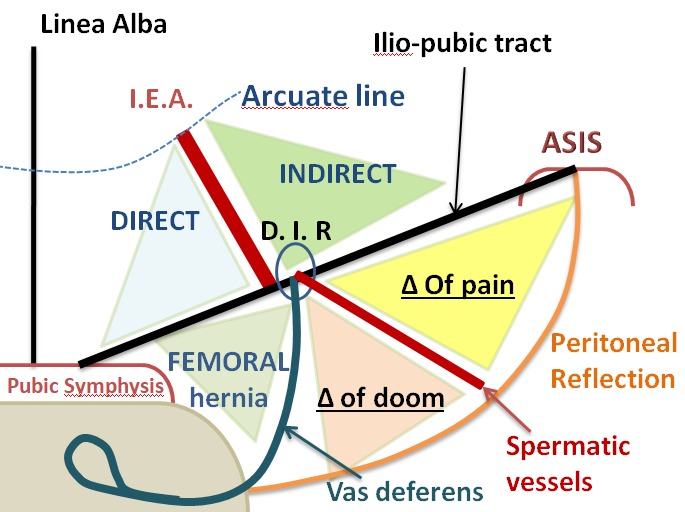
Master the surgical anatomy of laproscopic inguinal hernia.
Key concepts: Direct vs Indirect hernia, Femoral hernia, Triangle of Doom, Triangle of Pain, Iliopubic tract, Inferior epigastric vessels, and ASIS landmarks.
A quick visual guide on this high-yield topic.
𝗙𝗲𝗹𝗹𝗼𝘄𝘀𝗵𝗶𝗽 𝗔𝗱𝘃𝗲𝗿𝘁
Our Post CCT/Senior Complex Benign PB & Robotic Fellowship at @UHDBTrust is now open for applicants to start from Aug 2026.
Gain experience in advanced laparoscopic and robotic benign PB surgery. In addition, fellows will develop skills in laparoscopic and robotic hernia surgery including complex abdominal wall hernias as well as training in ERCP.
Advert below or DM for more details:
https://t.co/PvTHpwknQE
Kehr's sign- It is the golden sign of splenic rupture, characterized by referred left shoulder pain due to diaphragmatic irritation from blood in the peritoneal cavity, elicited in supine position with leg elevation.
∆ Clinical Significance- Kehr's sign occurs via phrenic nerve referral (C3-C4) when free intraperitoneal blood from splenic laceration contacts the diaphragm undersurface.
• It is highly specific (though less sensitive) for splenic injury in blunt abdominal trauma.
#MedTwitter #FOAMed #MedX
70-year-old man from China underwent cholangioscopy to investigate blockage of bile duct.
During the procedure, five live Clonorchis sinensis flatworms (liver flukes) were discovered and removed from his biliary tract.
NEJM-DOI: 10.1056/NEJMicm2304237
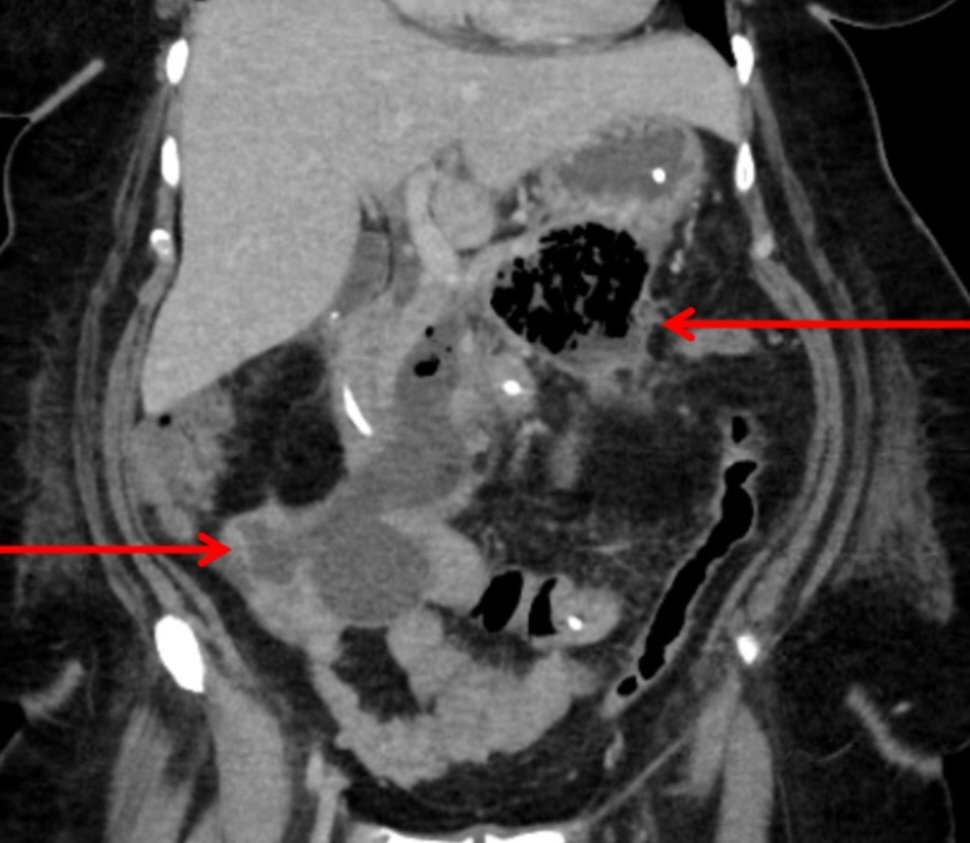
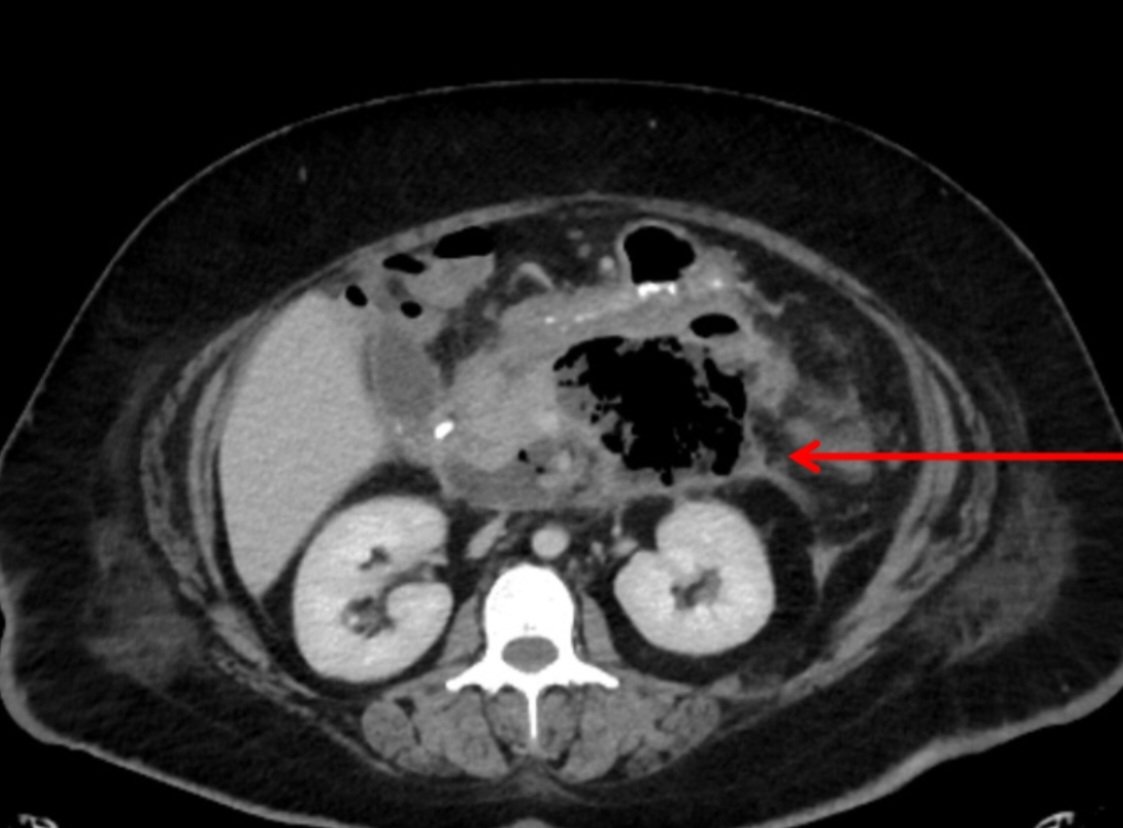
Laparoscopic Infracolic Necrosectomy and Drainage of RIF Abscess
🔴Septic patient but no organ failure
🔴Narrow window of access for EUS or IR drainage
🔴Single stage clearance of WON and drainage of RIF abscess
➡️Prevents hits of sepsis between multiple procedures
➡️Address both collections at once
➡️Select cases
➡️Benign PB MDT
➡️"One size does not fit all"
Our paper on infracolic approach in @JournalofGISurg: https://t.co/qtvoGrHLvt
#Surgery #HPB #Pancreatitis
This is a bile leak. What is the source of the leak? Dont blink!
This is one of the reasons I like to do ERCP after cholecystectomy when suspect for stones — if there is a bile leak I do not want to do 2 ERCPs!
🔴Nice teaching case for the advanced therapeutic fellow
ERCP Teaching Pearl 🧠 | Hock-Pull Technique in Supine Position
🛌 Supine patient = altered orientation → technique matters
🔹 Papilla orientation:
In supine ERCP, the papilla often appears more inferior/posterior and less en face, with a tendency for the catheter to fall into the pancreatic duct due to gravity and scope torque.
🔹 Why Hock-Pull helps:
• Hockey bow redirects the tip upward toward the biliary axis despite gravity.
• Gentle pull-back everts and opens the papillary orifice, counteracting the “downward fall” seen in supine cases.
• Improves coaxial alignment (~11 o’clock) without pushing.
🔹 Manoeuvrability advantage:
• Pulling back stabilizes the papilla against respiratory motion.
• Small rotations become effective—micro-adjustments instead of force.
• Reduces repeated pancreatic duct entry and papillary trauma.
💡 Pearl:
> “In supine ERCP, gravity favors the pancreas—hock-pull brings you back to bile.”
#ERCP #SupineERCP #Endoscopy #GI #TeachingPearls #PatientSafety
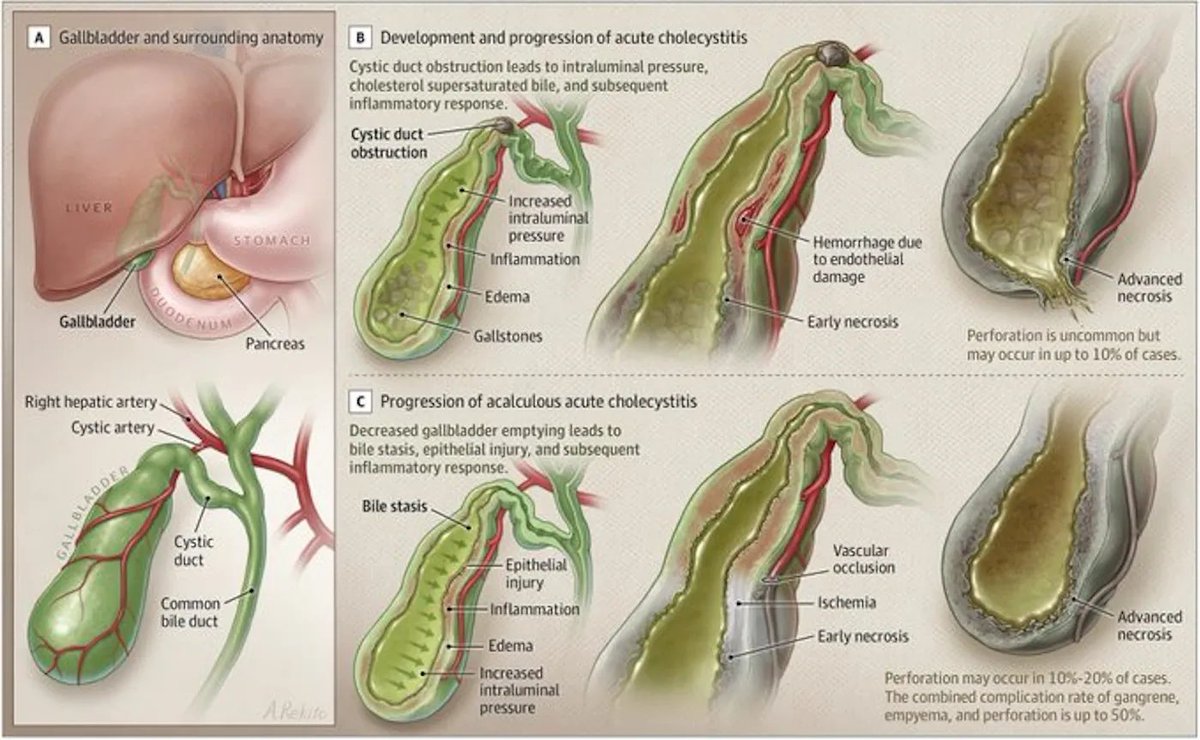
ACUTE CHOLECYSTITIS - Timing of Surgery Changes Everything
DIAGNOSIS: Gallstone obstruction causes 90-95% of cases. Ultrasound shows 81% sensitivity, 83% specificity.
Early vs late laparoscopic cholecystectomy
EARLY SURGERY (1-3 days):
- 11.8% complications
- 5.4 day hospital stay
- Lower costs
LATE SURGERY (>3 days):
- 34.4% complications
- 10.0 day hospital stay
- Higher costs
BOTTOM LINE: Early lap chole cuts complications by two-thirds and halves length of stay.
SOURCE: J. Gallaher and A. Charles. JAMA. 2022;327(10):965-975
Read the full review: https://t.co/46j43ZpuHM