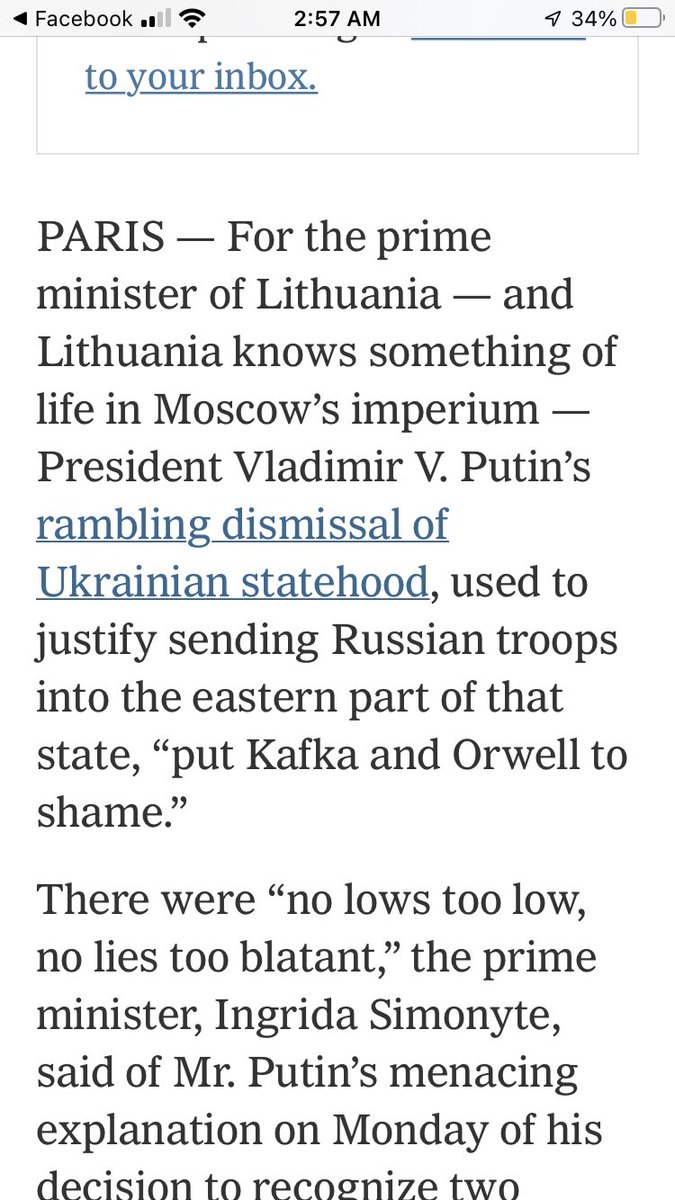
What, then, to make of the fact that everyone today feels so much anxiety but there are no Ministries of XYZ who are going to haul us away. Where does such fear come from?
Been tracking Orwell’s uses of the words fear, terror, panic, horror, fright, etc. Pattern: sometimes references to obvious external threats (menacing Party, etc), but often to internal nervousness (Winston trembles over his crush). The outside and inside converge.
@nick_popolizio It also testifies to the fact that communist society remained a class-based society in many ways. The declared goal was to “build socialism,” but it was understood the process would take time (no pain, no gain). Orwell might also be criticizing UK very classist society.
Even as an old guy, I still don’t go into pubs and ask even older guys about the good old days. That said, I grew up under the shadow of the Sixties, when Great Things were rumored to have occurred (rumors spread by actual boomers themselves).
@liammurphyreads Stunning page. Freedom without facts is not freedom - it is slavery. 2 + 2 as a basic equation establishing a shared truthful reality of = precondition for freedom. There is real fake news and fake fake news and shouting the word freedom does not necessarily root one in reality.
@deakinbooks Orwell part of anti-authoritarian generation that nevertheless rejected politics based ultimately on individual freedom/markets. Winston is looking to connect.
The “totalitarian” paradigm has many problems, notably glossing over key differences between fascism and communism. Still, the links among Gus, Bataille, and Orwell are unassailable.
@deakinbooks Except for brief Hitler-Stalin pact, USSr explicitly anti-fascist. Fascists and communists fighting from the 1920s through WWII. From today’s pov they often get conflated; hangover from 1950s Cold War paradigm = formal “totalitarian” (read: anti-liberal-democratic) qualities.
@bimbokarlmarxXx Some people would call mid-20th century communism a (secular) “political religion.” No question religious religion today is highly politicized.
@deakinbooks@nick_popolizio Yes, together with the post-Marxist irony that the workers will reject the party. Marx/Engels invented Communist Party but were vague compared to Lenin at al. Orwell seems *for* bottom-up rebellion/resistance without the trap of party-authoritarian hierarchy. #OrwellBerniebros
Oh right! “instinctive feeling” that conditions are “intolerable” related to feeling that “at some other time they must have been different” (73).How can we envision different futures without appreciating aspects of the past that might have been better than today?
Professional historian’s grumble: lack of interest in history and thinking historically reflects the certain victory of Big Bro in its constantly mutating form. #permanentpresent
@Giovannacanread Or maybe reducing everything to homogeneity? No alt meanings or possibilities, no past or future. Big Bro remains heterog but language itself is reduced and flattened. Also: Orwell def playing on Marxist dialectics: tense opposites get synthesized in higher forms.
1/2 I’m fascinated by the notion of “ancestral memory” (60). As if, no matter social conditions, we carry some primal impulse of expression and spontaneity. Compare Albert Camus: “to breathe is to rebel.”
2/2 “mute protest in your own bones” (73). Likewise: “a fragment of the abolished past [is] like a fossil bone” (78). Of course, the baseline here is sexual desire, which can never be fully repressed or extinguished. Dark-hair Julia will be the first free subject we encounter.