Who pays when the agent buys the wrong thing in Web4?
41 cents.
Average agent payment on x402 over twelve months: $73m across 176m transactions,
98.6% in $USDC
87% < $0.1
Instinct, the largest consumer agent, is nearing $1b a year of purchases on the user's own card, founder-reported.
Two economies of Web4
✅ Cents go in stablecoins.
A card cannot charge two cents per model call, so x402 today is mostly a meter for API, data and compute
✅ Dollars go on cards
- saved credential
-credit line
- fraud controls
-refunds
- millions of merchants.
Instinct's terms say it is not a party to the purchase. OpenAI pulled its first checkout after six months, 30 live merchants against a million promised
✅ The rails converge.
Mastercard already signs a voucher inside a mandate and settles in $USDC.
The card keeps the trust layer, the chain gets the cheap settlement
✅ The primitive is a budget, not a wallet:
amount,
period,
scope,
price cap,
refund rule,
revocation,
loss bearer.
MetaMask, Coinbase and the card mandates are building the same object.
The bottleneck is no longer intelligence, it is permission
✅ Agent tokens sit outside both rails.
Virtuals
$479m of agent GDP, $1.16m of agent revenue, jobs settle in USDC.
Volume is not income
The unsolved market is liability.
who pays when the agent buys the wrong thing.
I think the first Web4 scandal will not be a hack.
It will be a personal agent paid up to 30% by the hotel it recommended.
Whose agent is it then?
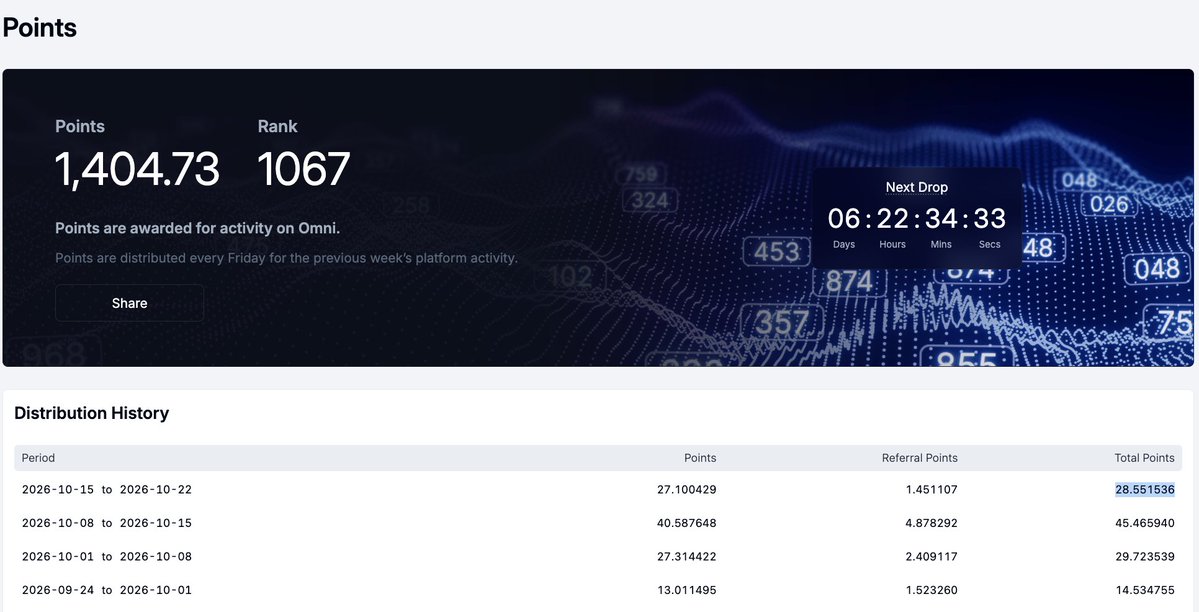
+29 Variational points this week.
(29*40 = $1160 current OTC price)
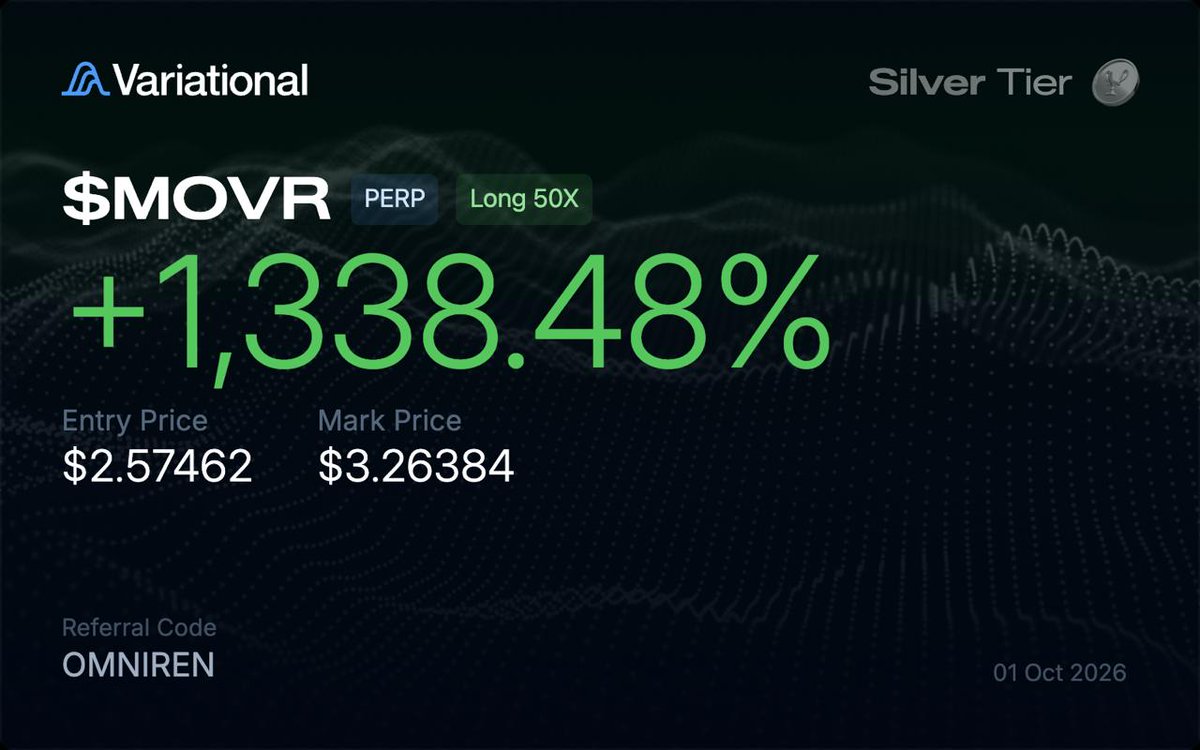
1. The same strategy, but Variational has adjusted the leverage for many pairs to 10x.
2. Just look for trending coins, these coins were moving well along a mini-trend
$Q long
$US100 short
This is my Nansen & The Undertaker Meridian entry by @nansen_ai
✅ liquidation map for $BTC $HYPE or any tokens, grouped by price, longs and shorts, named money in blue
✅ whose money is behind a prediction market price, split by wallet win rate, unexamined holders counted on neither side
✅ the same Nansen call answered in chat and drawn on screen from one dictionary, so the picture and the words cannot disagree
✅ every call logged: endpoint, outcome, milliseconds, credits
Demo video 👇
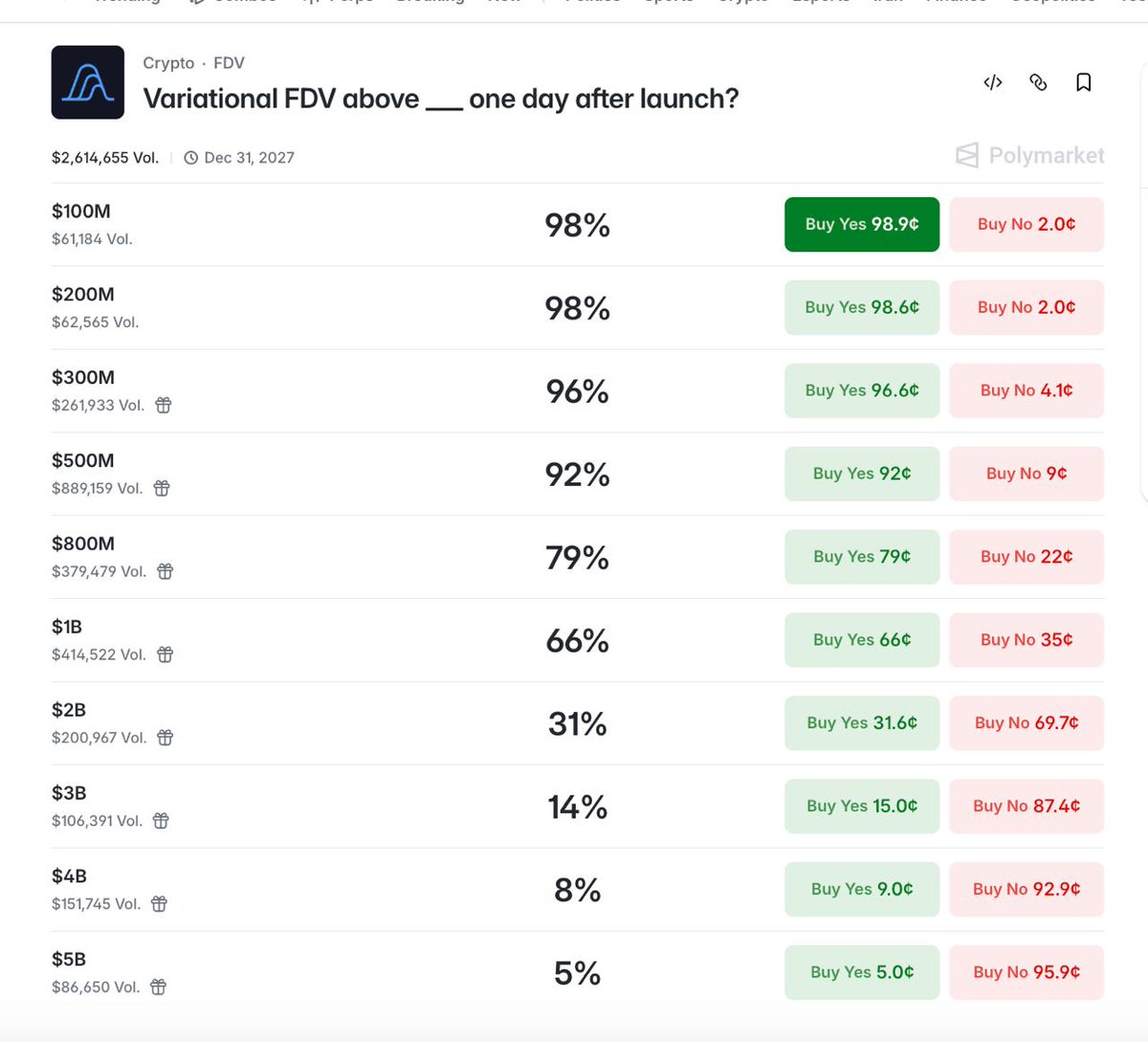
With a 32% airdrop and an FDV of $1b (Polymarket assigns about a 66% probability to the $1B mark), the allocation for points amounts to $320m.
https://t.co/9SnQlEFS1E
Given a pool of 11–11.5 million points, this works out to approximately $28–29 per point after dilution.
This is a calculation based on assumptions, not a forecast.
https://t.co/N7JulnRdPh