Against the Grain: Quiet Social Gains in a Harsh Development Landscape; #Eritrea's development story reveals nuanced social gains despite severe constraints, showcasing resilience & incremental progress through policy autonomy & social mobilization.👇👇👉
https://t.co/zlbPV8L8id
Celebrating Eritrean Women on 8 Megabit (March 8th): History, Culture, and Legal
March 4, 2026
By Sharron Yemane
@RedSeaBeacon
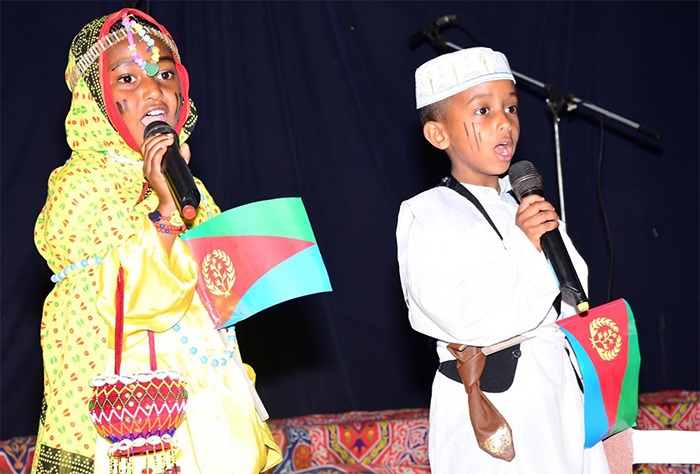
On the 8th of Megabit (March 8), Eritreans across the globe gather to honor the women whose courage, resilience, and leadership have shaped the nation. Streets, community centers, and public spaces come alive with the vibrant colors of LUWYET and bright ZURYA, traditional Eritrean garments that symbolize the country’s rich cultural heritage. Women, adorned with carefully crafted jewelry and ornaments, showcase the elegance and diversity of Eritrean culture during festivities organized by the National Union of Eritrean Women (NUEW). These celebrations are more than a display of fashion and tradition; they are a tribute to the central role of women in Eritrean history, society, and nation-building. For Eritreans, International Women’s Day is not merely a ceremonial observance. It is a time of reflection, appreciation, and recognition of the contributions of women throughout Eritrean history. Women were pivotal in the struggle for independence, serving in both combat and essential non-military roles. They participated actively within the two major liberation fronts, providing logistical support, intelligence, healthcare, and moral encouragement. By the late 1970s, nearly thirty percent of the Eritrean People’s Liberation Front (EPLF) membership consisted of women, many joining as early as the 1970s, bringing immense courage and determination to the liberation effort. Equally important was the contribution of women civilians across villages, towns, and diaspora communities. They provided shelter, food, medical care, and crucial information, often under extreme conditions. Their support made it possible for fighters to sustain operations and for the movement to grow despite intense adversity. It is no exaggeration to say that the Eritrean independence struggle was shouldered on the backs of an entire generation of Eritrean women women whose sacrifices laid the foundation for Eritrea’s sovereignty.
Recognizing the central role of women and the need for organized support, the National Union of Eritrean Women (NUEW) was established in 1979 within the EPLF. Its formation marked a decisive step toward empowering women, promoting equality, and ensuring that women’s voices were included in the liberation movement. NUEW provided a structured platform to mobilize women, coordinate efforts, and advocate for their rights both within the movement and across society. During the liberation struggle, NUEW undertook multiple initiatives. It helped recruit, train, and support women who joined the EPLF, ensuring they were fully integrated into strategic operations. It coordinated food, shelter, and medical assistance to fighters and civilians affected by the conflict, while establishing informal schools in liberated zones to teach literacy and practical skills to women and children. Even during war, NUEW encouraged the continuation of Eritrean traditions, ensuring that cultural identity remained a unifying force. Through these activities, NUEW became both a political and social powerhouse, enabling women to actively shape the direction of the independence movement while fostering solidarity among women in Eritrea and abroad.
Following Eritrea’s independence in 1993, NUEW transitioned into a critical institution for advancing women’s rights, empowerment, and social development. Inside the
ReadMore @RedSeaBeacon@hawelti@Sudan #Djibouti #Somalia #Egypt #SaudiArabia #Turkey #Qatar #UAE
@shabait@EmbassyEritrea@hadnetkeleta@SirakBahlbi@EliasAmare@Ghidewon@Yehdavid@GhideonMusa@Sharronyemane@PMEthiopia@MFAEthiopia@MofaSudan@MOFASomalia@KagutaMuseveni@MOFAEGYPT@AfricanUnion@IGADsecretariat@antonioguterres@cnni@AJEnglish@BBCWorld@Reuters@AFP@AlAhramWeekly@FT@latimes@nytimes@BBCWorld@AlJazeera@tberhan0437898@ERiTV_Official@shabait
https://t.co/qccZW6E8LO
#Eritrea's struggle began in 1952 when a federation with #Ethiopia under Resolution 390 A(V) placed it under Ethiopian sovereignty,leading to over 50 years of challenges, including Tedla Bayru's resignation in 1955& Emperor Haile Selassie's annexation.👇👉
https://t.co/zmLz6AqWME
By Hadnet Keleta
@RedSeaBeacon
Eritrean women have carried the nation’s medical story from the dimly lit underground hospitals of the independence struggle to the brightly lit operating rooms and rural clinics of today. Their journey is one of sacrifice, skill, and social transformation, an arc that mirrors Eritrea’s own path from war to nation‑building. Across Africa and the world, women form the backbone of healthcare, representing the majority of the global health and social care workforce. In Eritrea, this truth has been lived for decades, long before it was ever measured.
The Wartime Years: Medicine in the Shadows of Liberation
During the 30‑year War for Independence, Eritrean women stepped into roles few liberation movements had ever entrusted to them. Roughly one‑third of the EPLF’s fighters were women, but their presence in the medical corps was even more profound. With no formal hospitals, no steady supply chains, and constant aerial bombardment, they built a self‑reliant health network that treated both fighters and civilians under extraordinary pressure.
The underground medical world they created was unlike anything seen in conventional warfare. Clinics were carved into mountainsides to evade bombardment, their entrances hidden beneath rocks and brush. Inside, surgeries were performed under the flickering glow of kerosene lamps, often with improvised tools fashioned from whatever materials could be found. Mobile medics walked miles across rugged terrain to reach the wounded, carrying medical kits on their backs and hope in their hands. Barefoot doctors many of them young women barely out of adolescence delivered vaccinations, maternal care, and health education in liberated villages, often becoming the first health workers those communities had ever encountered.
These women were not assistants; they were the system itself. They carried rifles and medical satchels with equal resolve. They fought to defend life and fought again to save it. Many fighters later recalled how women medics embodied both the fierceness of combatants and the tenderness of mothers giving life in the very places where life was most fragile.
Profiles in Courage
Among the most remarkable figures of Eritrea’s liberation era was Dr. Laynesh Gebrehiwot the EPLF’s first dentist and a distinguished maxillofacial surgeon whose life reflects the rare fusion of professional excellence and unwavering patriotic commitment that defined many fighters of the Eritrean People’s Liberation Front. After completing eight years of medical training in Europe, she made an extraordinary decision in 1977: to abandon the comfort and prestige of a career abroad and return to join the EPLF, placing her knowledge and skills at the service of the struggle for national liberation.
ReadMore @RedSeaBeacon@hawelti@Sudan #Djibouti #Somalia #Egypt #SaudiArabia #Turkey #Qatar #UAE
@shabait@EmbassyEritrea@hadnetkeleta@SirakBahlbi@EliasAmare@Ghidewon@Yehdavid@GhideonMusa@SharronYemane@NationalEr_Int@PMEthiopia@MFAEthiopia@MofaSudan@MOFASomalia@KagutaMuseveni@MOFAEGYPT@AfricanUnion@IGADsecretariat@antonioguterres@cnni@AJEnglish@BBCWorld@Reuters@AFP@AlAhramWeekly@FT@latimes@nytimes@BBCWorld@AlJazeera@tberhan0437898@Eritrea19911@Fre4glsTsegay@eri_id_@ERiTV_Official@shabait@eriblood1991
https://t.co/MyiNl8gDmq
High-school students Eritrea 🇪🇷 is doctorate in Ethiopia 🇪🇹 even the prime minister baby Abi is High-school.
ኤርትራዊ ብግብሪ ብተግባር ምስሉ ክእለቱ ዓቕሙ ይጥቀመሉ።
ክብሪ ንስብ ግብሪ እንብል እኮ ኣብ ግብሪ ስለ እንኣምን እዩ።ነርኢ ካኣ !
Ethiopia’s Missing Millions: Famine Mortality, Demographic Inflation, and the Politics of Statistical Certainty
March 3, 2026
By Alula Frezghi
@RedSeaBeacon
A state that has not completed a nationwide census since 2007 continues to project population figures in the 120–130 million range with declarative confidence. That confidence becomes analytically untenable when placed against a decade defined by civil war, famine alerts, internal displacement, and large-scale migration. The sharper question is no longer whether projections exist. It is whether they have been recalibrated to absorb documented human loss.
At the center of this inquiry lies famine mortality.
Excess Mortality: The Variable No One Publishes
Multiple humanitarian assessments over the past several years have documented acute food insecurity across Tigray, Amhara, Oromia, Afar, Somali, and parts of Benishangul-Gumuz. Aid suspensions, drought cycles, market collapse, and conflict-induced blockades have produced conditions consistent with famine thresholds in several zones.
In demography, famine is not merely a food-security event. It produces excess mortality, deaths above baseline expectations and long-term cohort distortion.
The technical questions that must be confronted are straightforward:
•What excess mortality rate has been applied to conflict-affected regions?
•How are famine-related indirect deaths (from disease, malnutrition, and health system collapse) estimated?
•How is underreporting addressed in areas where civil registration is functionally absent?
•Have peri-urban informal settlements, particularly on the outskirts of Addis Ababa, been mortality-adjusted in national projections?
If the answers are not publicly documented, then high-end population claims are operating without disclosed mortality correction.
The Addis Periphery: Urban Growth or Urban Attrition?
The outskirts of Addis Ababa have expanded rapidly, absorbing internally displaced persons and economically displaced rural migrants. Yet rapid urban expansion under economic strain does not equate to demographic robustness.
Peri-urban settlements frequently exhibit:
•Elevated malnutrition rates.
•Limited access to sanitation and healthcare.
•Weak vital registration systems.
•High child and maternal vulnerability.
ReadMore @RedSeaBeacon@hawelti@Sudan #Djibouti #Somalia #Egypt #SaudiArabia #Turkey #Qatar #UAE
@shabait@EmbassyEritrea@hadnetkeleta@SirakBahlbi@EliasAmare@Ghidewon@Yehdavid@GhideonMusa@SharronYemane@HagerawiDihnet@PMEthiopia@MFAEthiopia@MofaSudan@MOFASomalia@KagutaMuseveni@MOFAEGYPT@AfricanUnion@IGADsecretariat@antonioguterres@cnni@AJEnglish@BBCWorld@Reuters@AFP@AlAhramWeekly@FT@latimes@nytimes@BBCWorld@AlJazeera@tberhan0437898@ERiTV_Official@shabait@UN_News_Centre@CensusWorld@PopSci@StatePRM
https://t.co/RSC0558M7P
Community participation in health activities
At an activity assessment meeting conducted on 27 and 28 February, it was reported that encouraging community participation has been registered in the implementation of charted programs as well as in the expansion and renovation of health facilities in the Anseba Region.
Noting that strong efforts are being exerted in health service care provision, Dr. Henok Tsehaye, head of the Ministry of Health branch in the region, said that owing to the integrated efforts undertaken in 2025, the number of pregnant women giving birth at health facilities increased from 72% to 80%; the TB cure rate reached 95%; the malaria infection rate declined from 8.5% to 6.5%; and vaccination coverage for children under five years of age reached 92%.
Dr. Henok went on to say that addressing medicine demands, putting in place the necessary medical facilities and human resources, renovating surgical facilities at Keren Hospital and Hagaz Community Hospital, as well as conducting successful cataract surgeries, were among the implemented activities.
The participants conducted extensive discussions on the issues raised at the meeting and adopted various recommendations. The recommendations included upgrading the Melobso health station to a health center; organizing capacity-building training for newly assigned health practitioners; expanding community-based environmental sanitation activities; as well as exerting stronger efforts to control the prevalence of malaria.
Noting that the achievements registered will have significant contribution to the implementation of future programs, Ms. Amina Nurhusein, Minister of Health, called for reinforced efforts with a view to meeting the Sustainable Development Goals and controlling the prevalence of diseases.
In the Anseba Region, there is one referral hospital, three community hospitals, six health centers, 29 health stations, and 36 health units providing active health care services to the public.
Tsimdo was born from pain. From years of tension, fear, and communities along the Eritrea–Tigray border who suffered the most.
While #Abiyahmed and Potemkin party political forces expected confrontation between Eritrea and Tigray, that plan did not succeed. Instead, Tsimdo emerged as a peace platform, and the people chose stability over war.
Today, more groups are joining because peace is stronger than division. Members and figures connected to the TPLF, Assimba Democratic Party, the Afar People's Democratic Party, and the National Congress of Great Tigray are becoming part of Tsimdo’s growing movement.
Individuals like activists Godefay Tilahun and Kidane Amene have also aligned themselves with this path.
Why? Because peace at the border is no longer a dream, it is becoming reality.
Tsimdo represents communities who are tired of conflict.
It represents Eritreans and Tigrayans who choose coexistence over chaos.
That is why its membership continues to grow.
#Tsimdo #eritrea #tigray #Awelseid #TsimdoForPeace
#PeaceOverWar
#EritreaTigrayHarmony
#FromConflictToCoexistence
#TsimdoMovement #UnityNotDivision #PeaceWins
#TsimdoStrong
🔎🇪🇷 Crocodile Tears Won’t Rewrite Reality
💬 “You cannot solve a crisis with propaganda. Reality always prevails.”
Eritreans are not fooled by cheap sympathy politics or diversionary rhetoric.
When leadership credibility weakens at home, attacking neighbors becomes a convenient distraction.
⚖️ Let’s Separate Noise from Facts
🔴 Internal instability cannot be masked by commentary on Eritrea’s economy or education.
🔴 Eritrea’s development challenges have been shaped in part by years of sanctions and external pressure.
🟢 Yet despite constraints, national institutions continue to function and expand.
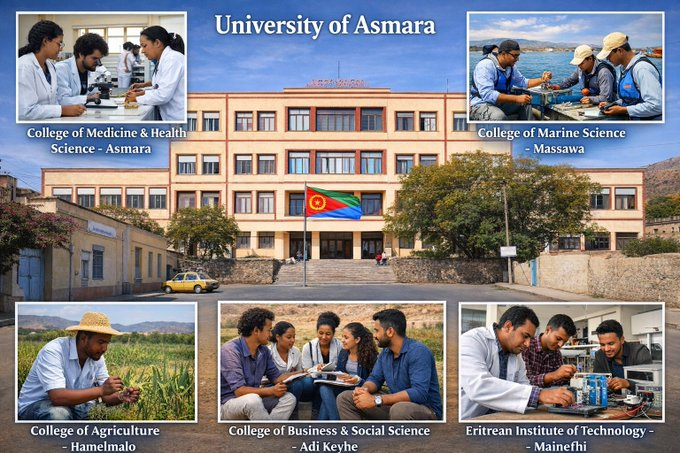
🎓🇪🇷 The Reality on the Ground: Eritrea’s Higher Education Structure
The University of Asmara system has evolved into a decentralized model with multiple colleges:
🟢 College of Medicine & Health Sciences – Asmara
🟢 College of Agriculture – Hamelmalo
🟢 College of Marine Sciences – Massawa
🟢 College of Business & Social Sciences – Adi Keyh
🟢 Eritrea Institute of Technology (EIT) – Mai Nefhi
Despite economic pressure, Eritrea continues investing in education, technical capacity, and human capital development.
🌍 Strategic Perspective
🟡 Nations facing internal fragmentation should prioritize domestic stability over external rhetoric.
🟡 Regional peace requires measured leadership, not political theatrics.
🟡 Long-term legitimacy is built on governance — not grandstanding.
💡 “A lie may travel fast, but truth walks steadily and arrives with certainty.”
The Horn of Africa deserves stability, institutional development, and responsible leadership — not narrative battles.
#Eritrea 🇪🇷 #EducationMatters #HornOfAfrica #RegionalStability #Geopolitics #HumanCapital #AfricaDevelopment #TruthMatters
Propaganda Versus Performance: Ethiopia’s Education Crisis and the Eritrean Contrast
March 4, 2026
By Debessai Tsegai
@RedSeaBeacon
Introduction
When a house is on fire, its owner does not usually step outside to lecture the neighbors about their gardens. Yet that is precisely the spectacle now unfolding in the Horn of Africa. At a time when Ethiopia faces mounting crises, educational collapse, economic paralysis, and deep social fragmentation, its leader has chosen to direct his attention outward, attempting to belittle Eritrea’s education system. The irony is striking. Instead of confronting the severe failures within his own country, he points accusingly across the border, hoping rhetoric might obscure reality.
Such statements are not merely careless; they are revealing. They expose a leadership more concerned with political theater than with addressing the profound challenges facing its own society. The attempt to mock Eritrea’s institutions of higher learning, while Ethiopia’s own education system struggles with catastrophic examination results, widespread corruption, and declining academic standards, is less a critique than a diversion. It is a familiar political tactic: when the failures at home become too visible to ignore, redirect the public’s attention elsewhere. But facts have a stubborn way of resisting propaganda, and the contrast between the two educational systems tells a story far different from the one Ethiopia’s leadership wishes to project.
Deflection and Decline: Ethiopia’s Education System in Crisis
In recent days, Abiy Ahmed has taken to belittling Eritrea’s education system and repeating the tired claim that the country lacks meaningful institutions of higher learning. The spectacle would be comical were it not so revealing. At a moment when Ethiopia is engulfed by deep political instability, economic strain, and social fragmentation, its leader has chosen to lecture his neighbor rather than confront the crisis unfolding within his own borders. The irony is unmistakable: a government presiding over systemic dysfunction pointing fingers abroad in the hope that noise might drown out reality.
This is not serious criticism; it is diversion. When the record at home becomes too uncomfortable to defend, propaganda becomes the substitute for policy. Instead of addressing the failures hollowing out Ethiopia’s institutions, the leadership attempts to manufacture a narrative about Eritrea. But facts are stubborn.
ReadMore @RedSeaBeacon@hawelti@Sudan #Djibouti #Somalia #Egypt #SaudiArabia #Turkey #Qatar #UAE
@shabait@EmbassyEritrea@hadnetkeleta@SirakBahlbi@EliasAmare@Ghidewon@Yehdavid@GhideonMusa@SharronYemane@HagerawiDihnet@PMEthiopia@MFAEthiopia@MofaSudan@MOFASomalia@KagutaMuseveni@MOFAEGYPT@AfricanUnion@IGADsecretariat@antonioguterres@cnni@AJEnglish@BBCWorld@Reuters@AFP@AlAhramWeekly@FT@latimes@nytimes@BBCWorld@AlJazeera@tberhan0437898@ERiTV_Official@shabait@Harvard@addisstandard@AJEnglish@firstpost
https://t.co/r0pLsxiDuR
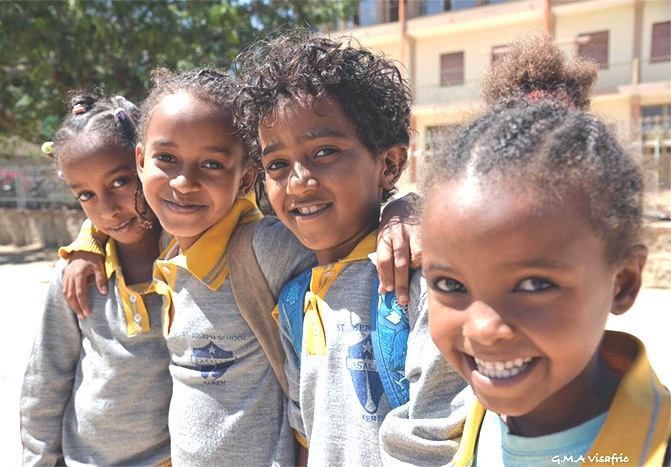
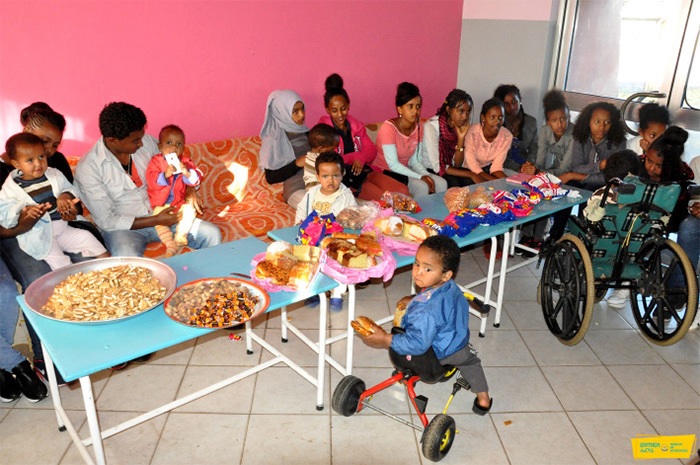
A Deep, Enduring Commitment to Children: #Eritrea’s Report on Implementation of the ACRWC; by Bana Negusse
"Overall, #Eritrea’s second periodic report under the ACRWC reaffirms the country’s steadfast commitment to its children as central actors in shaping the nation’s future. Through sustained investment in education, health, and social protection, a determined fight against harmful traditional practices, and meaningful child participation at all levels, Eritrea continues to build on a strong foundation of inclusivity, equity, and human dignity. Its journey, while ongoing, stands as a testament to the transformative power of national ownership, community engagement, and the unwavering belief that every child deserves the chance to thrive".
https://t.co/nMBjKLB5Ey
8 Megabit (March 8th): Celebrating #Eritrea|n women's contributions, honoring those who fought for freedom and continue to shape the nation, reflecting the country's history, identity, and values of courage, resilience, and solidarity. @Sharronyemane
👇👉
https://t.co/FPMHPp0rz6
Education in Eritrea is free, from the beginner to the highest level.
There are many colleges in different regions of Eritrea that graduate with, degree and diploma certificate levels. of which are Adi Keih College.
Mai-Nefhi College is a university. Hlal College is a universti.
ETHIOPIA’S AGGRESSION AND SUDAN’S RESOLUTE DEFENSE OF SOVEREIGNTY
… The most prominent point of contention between Ethiopia and Sudan has long been the Grand Ethiopian Renaissance Dam (GERD), constructed on the Blue Nile.
… In early February 2026, Sudanese military observers reported multiple UAV flights crossing from Ethiopian territory into eastern Sudan.
… Further compounding the threat to Sudan is the alleged involvement of Ethiopia in supporting the RSF.
… Ethiopia’s conduct under Colonel Abiy including unilateral dam construction, drone incursions, and alleged support for the RSF has created a serious and ongoing threat to Sudan’s sovereignty and regional stability.
Read more: https://t.co/TR6wtVGjwq by David Yeh
#AfricanUnion #HornofAfrica #Eritrea #Ethiopia #Sudan #Somalia #Egypt @hawelti@shabait@EmbassyEritrea@hadnetkeleta@SirakBahlbi@Ghidewon@PMEthiopia@MFAEthiopia@MofaSudan@MOFASomalia@MfaEGYPT@_AfricanUnion@StateDept@AJEnglish@BBCWorld@AFP@TheEconomist@thenation@PressTV@Telegraph@nytimes@UN@dwnews@tesfanews@TheReporterET@gulf_news