This is a lesson in how not to deal with guys who approach young women complimenting on your looks. Tell the guy to beat it and if he's persistent, call the cops.
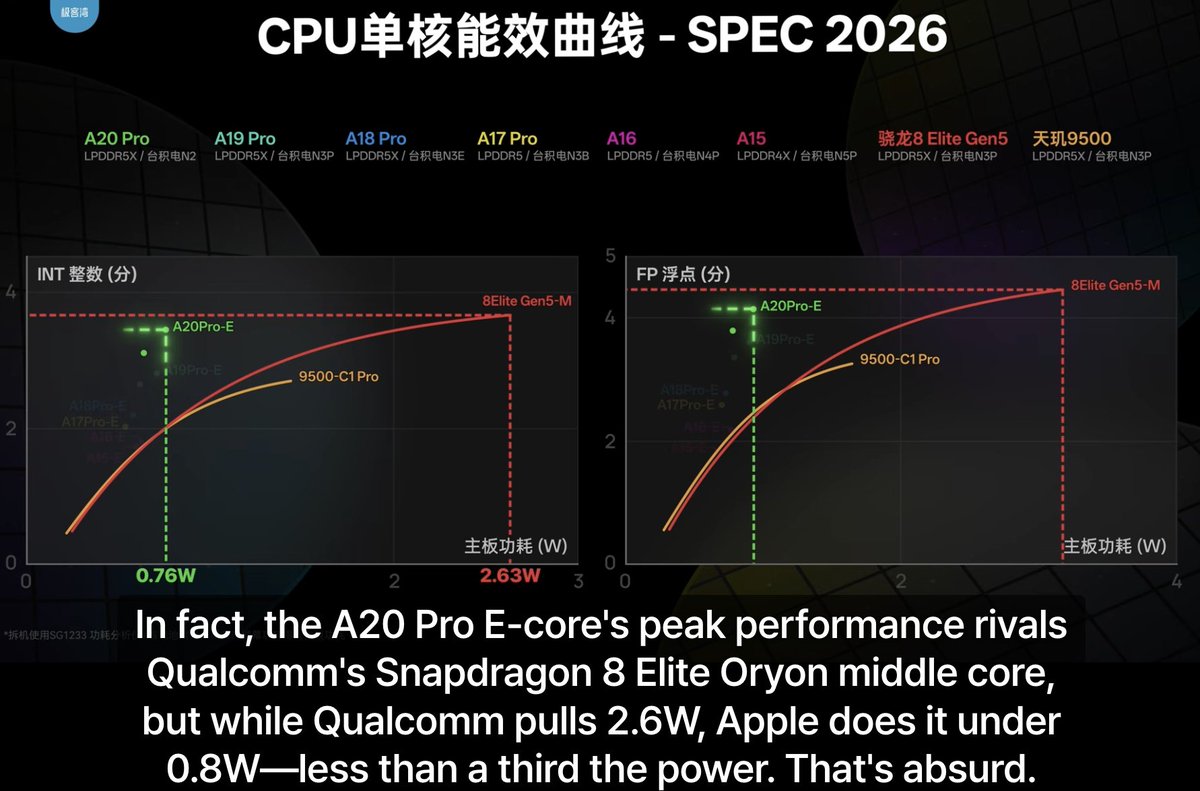
Apple’s A20 Pro E-cores deliver similar performance while using only one-third the power of Qualcomm’s mid cores, which are already very efficient.
They also outperform the C1 Pro, ARM’s reference mid core.
It is time to replace TCP because it is not suited for emerging AI workloads.
That's what a retired Stanford University professor argues.
And he already has TCP replacement ready. It's called Homa.
Prof. John Ousterhout claims that the Homa protocol slashes 99th-percentile datacenter latency from 1.2 milliseconds down to 92 microseconds.
And this is not just a theoretical project. The protocol has already been backported to Red Hat Enterprise Linux versions 8 and 9.5.
The process of upstreaming Homa into the Linux kernel is also being worked on.
👉 https://t.co/3HoQ25oIVB
@ilyamirox The UI has been better on Linux for years. Switched my laptop and desktop PC to it a couple of months ago as my only OS. The shame is, I'm gonna have to buy a Mac Mini for all of my audio software and plugins, for the Affinity app, and a few other things. Wish devs built for it.
Anthropic has never been this far ahead of OpenAI.
Opus 5.5 is significantly better than GPT 6 Astra and GPT 6.1 Sol.
Once Fable 5.5 drops it's game over.
Google has been quiet for months. Now this.
Gemini 4 Argon has a 15% hallucination rate. The lowest on the entire board.
Opus 5.5: 59%.
GPT 6 Astra: 51%.
Fable 5.1: 73%.
And Gemini 4 Argon is not even publicly available yet.
How is this possible?
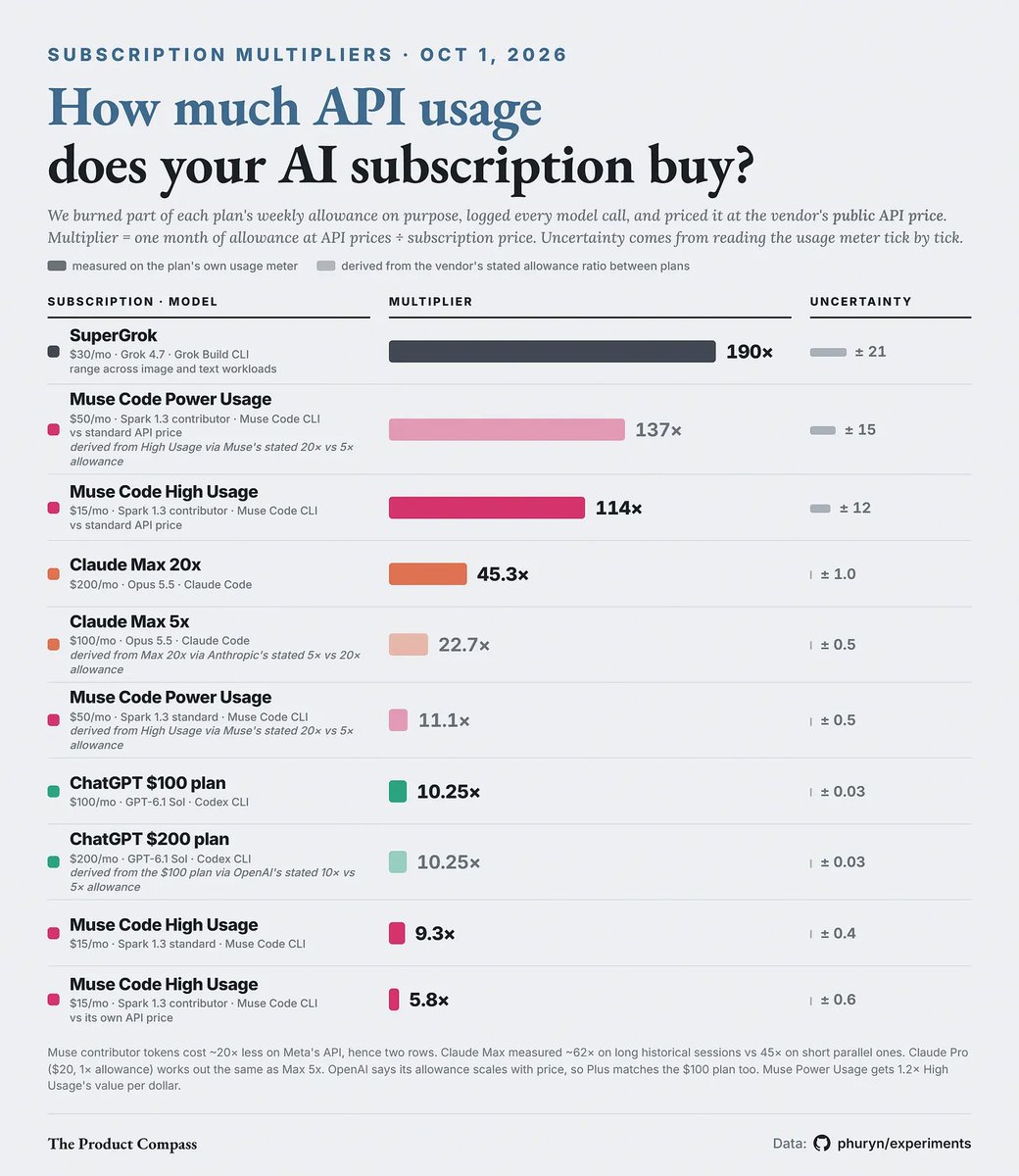
We’ve all been hearing that subscriptions are cheaper than APIs, but I’d never seen the exact number.
So yesterday, I took several popular plans and burned a slice of their weekly allowance on purpose. I logged every model call and priced those calls at the vendor’s public API list price.
While I couldn't test all subscription levels:
According to OpenAI, their monthly allowance is now directly proportional to the subscription price:
- Plus ($20/mo) = the reference OpenAI monthly allowance
- Pro 100 ($100/mo) = 5x monthly allowance - tested
- Pro 200 ($200/mo) = 10x monthly allowance (just downgraded from 20x)
For Claude, their Max 20x is subsidized twice as much:
- Pro ($20/mo) = the reference Claude monthly allowance
- Max 5x ($100/mo) = 5x monthly allowance
- Max 20x ($200/mo) = 20x monthly allowance (not 10x) - tested
According to Meta, for Muse Code:
- Everyday Usage ($5/mo) = the reference Muse monthly allowance
- High Usage ($15/mo) = 5x monthly allowance (not 3x) - tested
- Power Usage ($50/mo) = 20x monthly allowance (not 10x)
What does all this mean? (1/4) 🧵
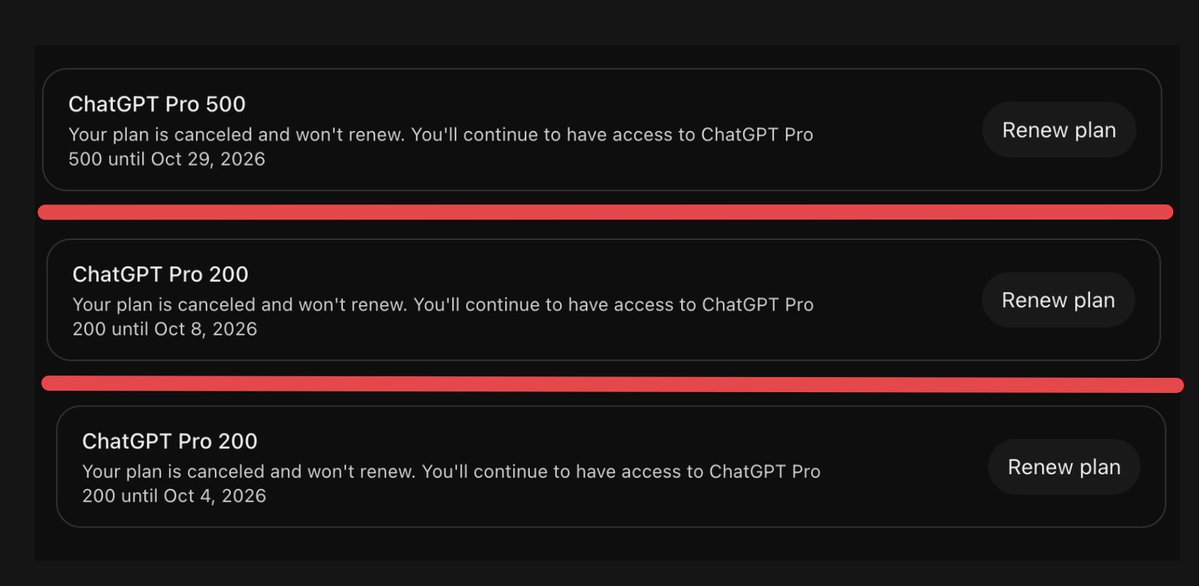
I just cancelled $900 a month of ChatGPT Pro subscriptions and bought Google AI Ultra for $200/month.
OpenAI cut my usage in half. Google gets my money instead.
Ultra subscribers are first in line for Gemini 4 Argon.
I cannot wait to test it.
Google is going to win the race to AGI.
They have infinite money and infinite talent.
Gemini 4 Argon engineers have been given access to Opus 5.5
The TPU is an inference machine.
Training data flows through Google and YouTube at an astounding rate.
Google owns 25% of the worlds compute more than OpenAI, Anthropic and SpaceX combined.
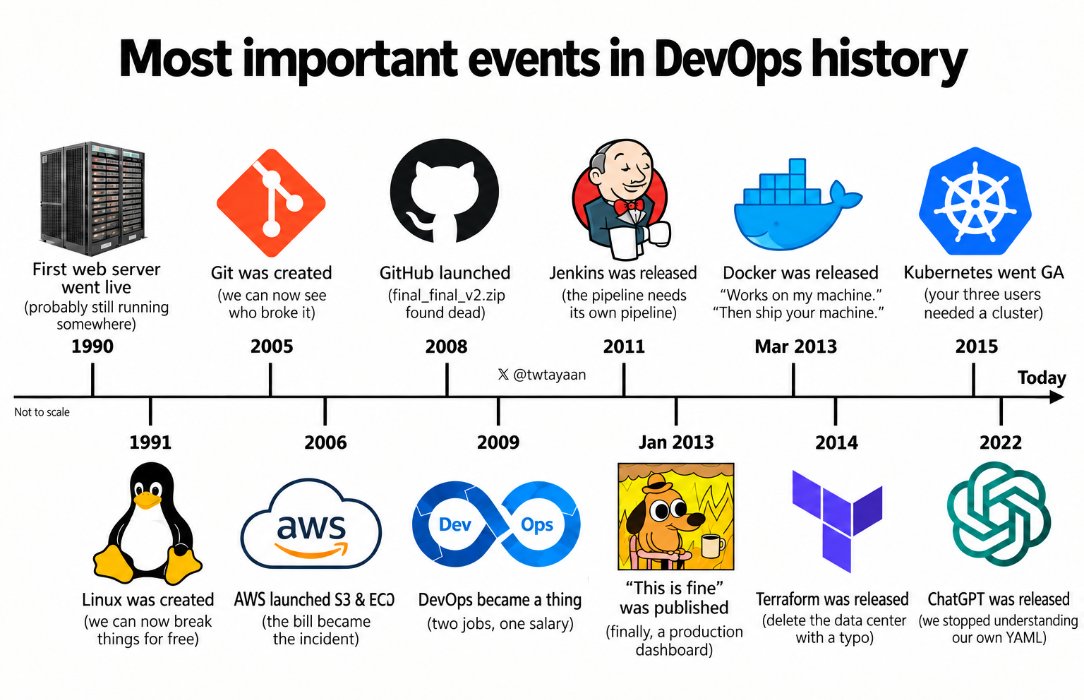
Microsoft just gave Windows its own built-in way to run Linux containers.
WSL Containers is now generally available, letting you build and run Linux containers directly from Windows with wslc.
It brings isolated containers, faster Windows-to-Linux file access and a new networking model.
And Compose support is already coming next.
Linux containers on Windows just became a first-party Microsoft feature.
Full announcement: https://t.co/x7Zf6igtiG
Another great use of my open-source TTS. My good friend @karthikraman has collated the rendering of entire BhagavadGita chapter-wise with scripts. May be of interest to a few. Link for the playlist in the first reply.
I JUST CANCELLED ALL OF MY CHATGPT SUBSCRIPTIONS.
OpenAI just scammed everybody and BridgeMind is now starting a boycott against OpenAI.
They cut the usage in half yesterday and said better efficiency makes up for it.
This is a lie. GPT 6.1 Sol is just GPT 6 Sol with RL to look better on benchmarks.
If we keep paying, Anthropic and every other lab will follow. Cutting usage is profitable for them.
Do not let OpenAI get away with this.
A fun conversation in Hindi, ranging from Lec. 16 to the latest advances in AI.
My Hindi is still a work in progress; the gender of verbs continues to defeat me 😂
Have a look:
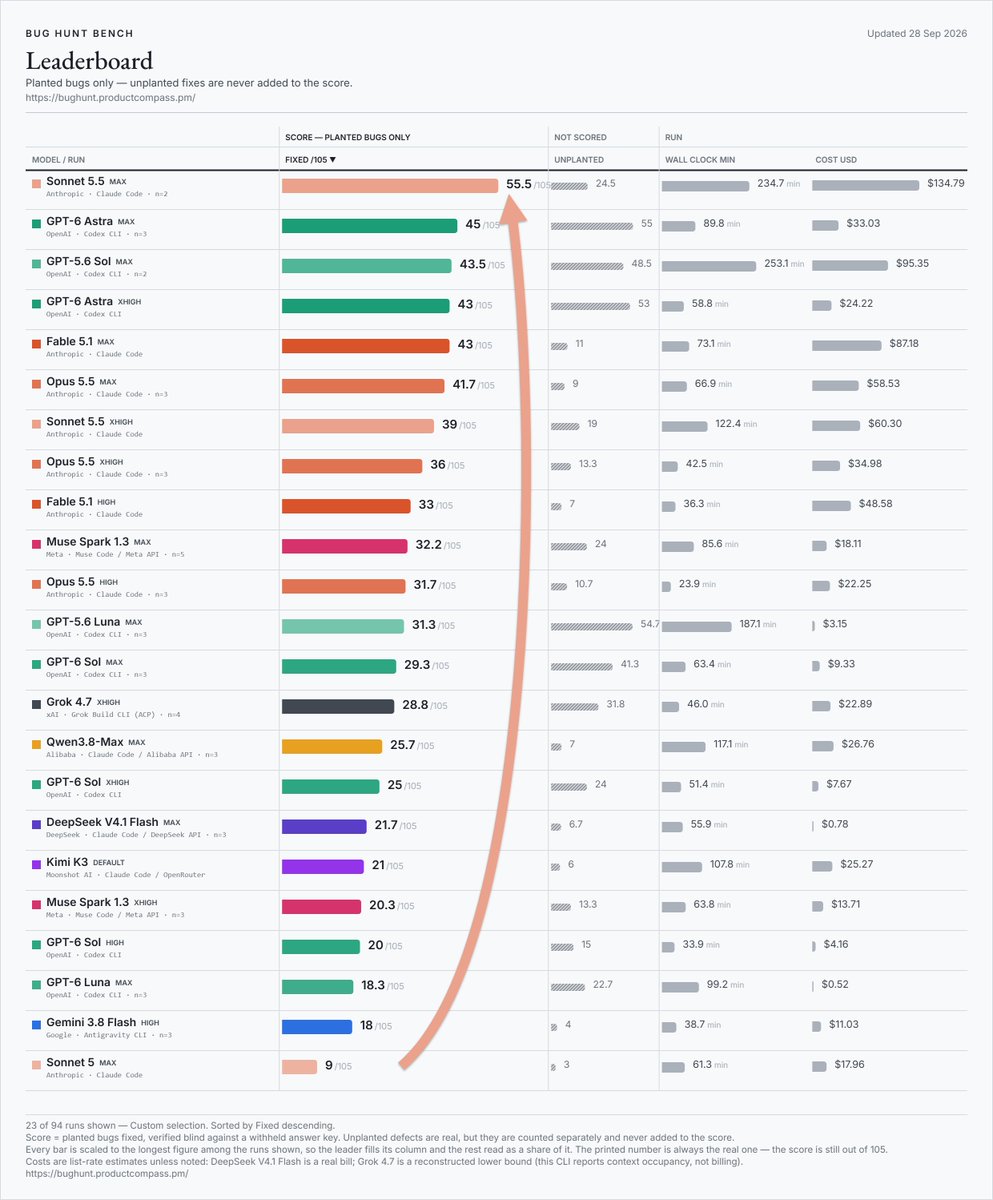
I tested Sonnet 5.5 and couldn't believe my eyes. 2 real repos, 105 bugs, find and fix what you can.
It took it seriously. The results:
- Sonnet 5.5 (max): 55.5
- GPT-6 Astra (max): 45
- GPT-5.6 Sol (max): 43.5
- Fable 5.1 (max): 43
- Opus 5.5 (max): 41.7
- Sonnet 5.5 (xhigh): 39
The secret? Sonnet 5.5 (max) might be cheap and fast for most tasks, but it's the least lazy model I tested. It leads in bug hunting by spending turns.
It took about 6× Astra's turns and about 3× Opus 5.5's for 10–14 more bugs. xhigh cut its turns by more than half and dropped to 39, below Opus 5.5 max, which used fewer turns on average:
- Sonnet 5.5 (max): 1,330 turns (n=2)
- GPT-6 Astra (max): 222 turns (n=3)
- GPT-5.6 Sol (max): 1,083 turns (n=2)
- Fable 5.1 (max): 459 turns (n=1)
- Opus 5.5 (max): 476 turns (n=3)
- Sonnet 5.5 (xhigh): 588 turns (n=1)
More effort levels for Sonnet 5.5 with n=3 drop in this thread today 🧵