A shift from ticagrelor to prasugrel occurred in Denmark following the findings of the ISAR-REACT 5 trial and the updated ESC guideline recommendation favoring prasugrel. In 2019, more than 99% of patients received ticagrelor; by 2022, 89% received prasugrel.
This study is truly exceptional in its scope: among 10,984 patients with myocardial infarction undergoing PCI, prasugrel was associated with lower rates of MACE and recurrent myocardial infarction after statistical adjustment, with similar bleeding rates compared with ticagrelor. These results were replicated in a propensity score–matched cohort, in patients aged ≥75 years, and in those with non-STEMI.
Considering the TUXEDO-2 data presented at #AHA25 and soon to be published, and with the inevitable meta-analysis that will strengthen the case for prasugrel, this nationwide study adds further evidence that the two "more potent P2Y12 inhibitors" are, after all, not as equivalent as often assumed.
https://t.co/FgTWmXl4zD
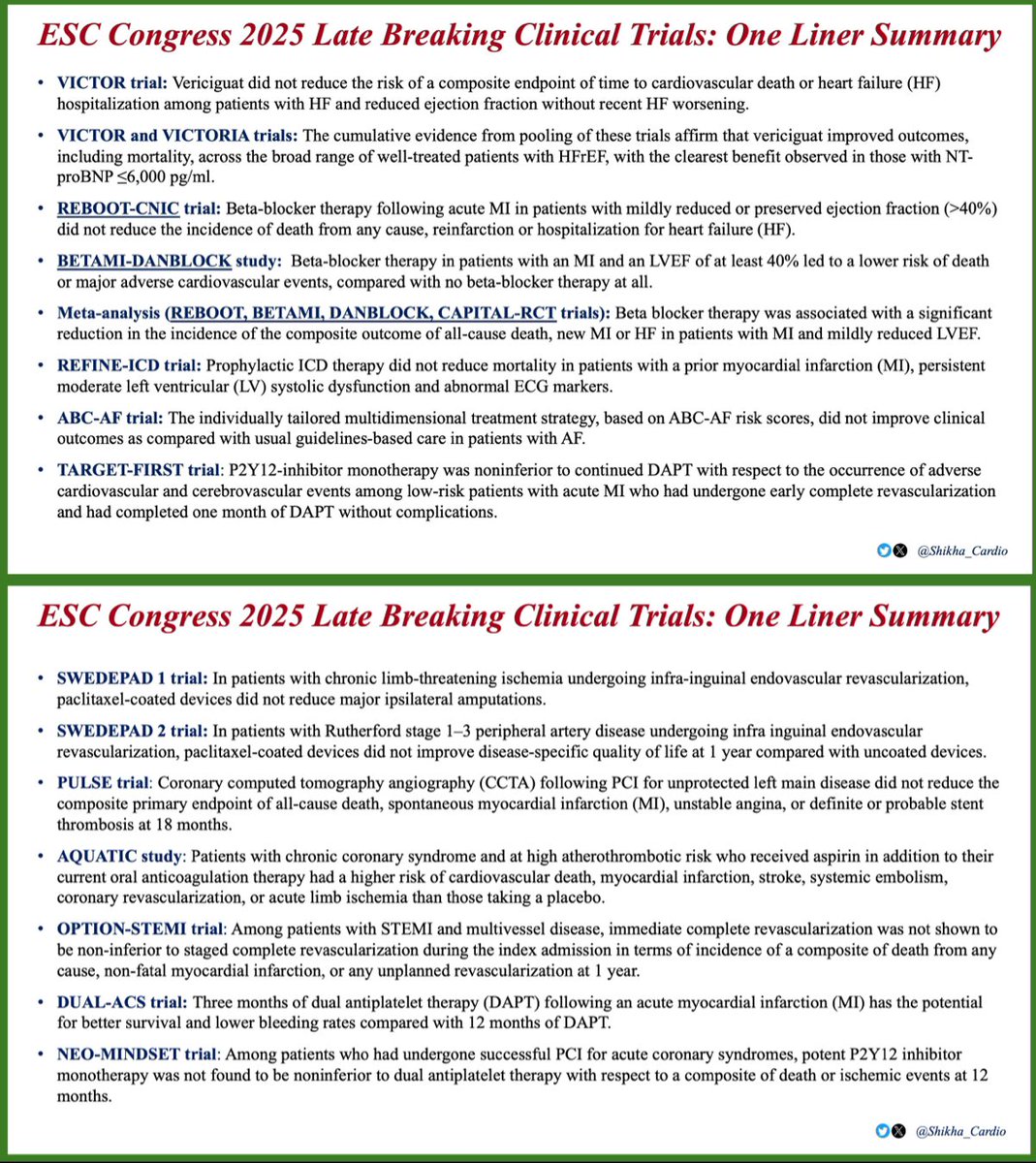
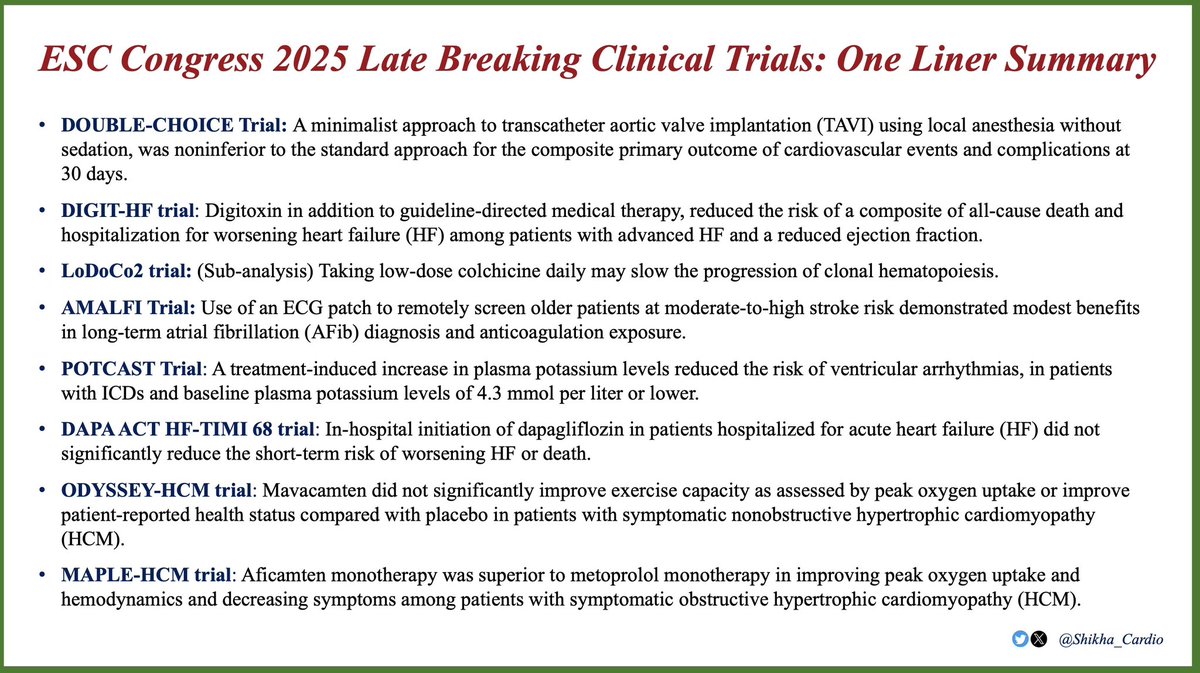
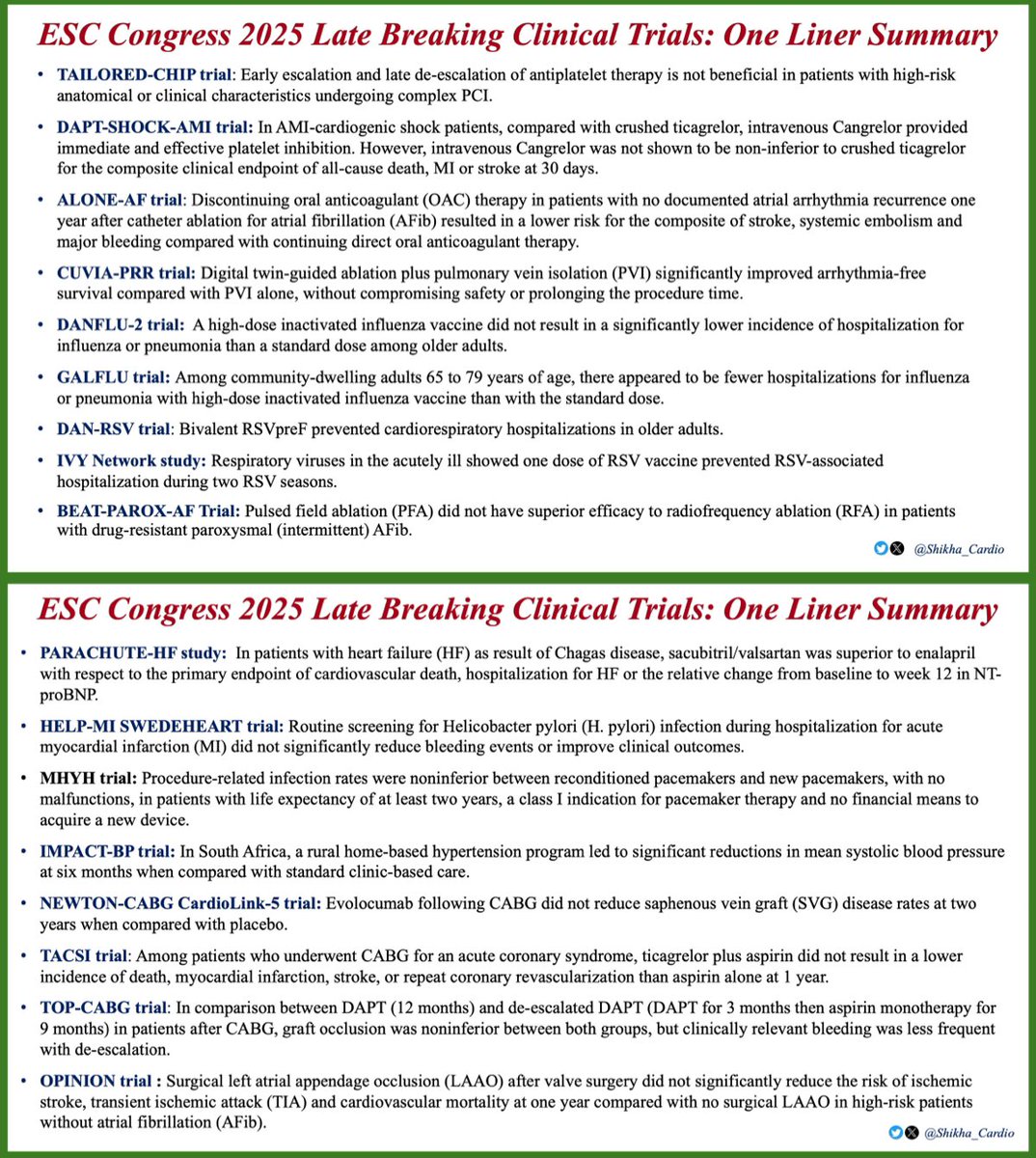
TCT 2025 LATE BREAKING CLINICAL TRIALS: One LINER SUMMARY 📸 AT A GLANCE ⭐️ What a phenomenal scientific meeting! Congratulations to all the presenters & leaders for their innovation, hard work and knowledge sharing. Thank you @TCTConference@TCTMD@crfheart team for a fantastic meeting! #TCT2025 #FIT 🫀❤️ 😊
🔥 New in @NatureMedicine
How do you communicate lifetime benefits expected with HFpEF therapies?
New data from 3 RCTs (#DELIVER#FINEARTS#PARAGON) estimate up to *5 years* of event-free survival w combination Rx
#GDMT for HFpEF has finally arrived!
🔗https://t.co/ozSx3UwkLN
The FINEARTS-HF study's underreporting of significant hyperkalaemia risk, a potentially serious adverse effect associated with mortality in heart failure patients, rises concerns about a potential "post-RALES" effect. In addition, The PARADIGM-HF study demonstrated that a “U” shaped relation between dyskalaemia and mortality.The present study did not categorize hypokalaemia into distinct severity levels to understand the degree of hypokalaemia. Also, absence of mineralocorticoid receptor blocker in the control arm might be thepotential cause of higher hypokalaemia. A more detailed analysis of dyskalaemia severity and their relationship with clinical outcomes is warranted. In spite of clear evidence having a higher mortality following heart failure hospitalization than unplanned urgent visits, the authors did not report them separately leading a potential reporting bias. Given Finerenone's increased risk of hyperkalaemia, particularly severe cases requiring hospitalization (Table.1), and its lack of Cardiovascular mortality benefit and unreported reduction in heart failure hospitalizations, a more cautious interpretation of the study is warranted !
@NEJM #FINEARTS-HF @DrRajeevagarwa3@drkarthik2010@DrGJustinPaul1@drjohnm@TCTMD@ESC_Journals@harilalith