Introducing Claude Code Security, now in limited research preview.
It scans codebases for vulnerabilities and suggests targeted software patches for human review, allowing teams to find and fix issues that traditional tools often miss.
Learn more: https://t.co/n4SZ9EIklG
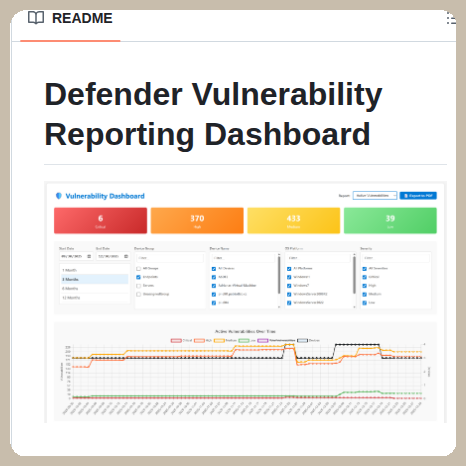
Defender for Office 365 now ships a ready‑to‑use Power BI template and an upgraded Sentinel workbook built on Advanced Hunting, designed for how security teams actually work.
https://t.co/RYY40kcLBq
Look.. it's a Conditional Access policy simulator built by an infra architect guy who got tired of squinting at What If results 🫠 Shiny graphs yay! 🔗https://t.co/hqKKVDnBFV No sign-in needed, click Sample Data and play around. Or connect to your own data - all's in browser.
Just built a demo “monitoring matrix” for a slide in my blind spots talk.
Many orgs I’ve worked with have the same idea: “we monitor our systems, visibility is pretty good, only a few systems are not integrated yet.”
Then you put it into a simple table and the pattern is always the same: the top-left looks great. Servers and workstations send OS logs, basic auditing is enabled, some alerting exists. It feels like control.
But when you go deeper, it gets thin fast. Application logs are missing, not collected centrally, not normalized - and often there isn’t even alerting defined for them. People also rarely agree on what a “critical” application-level alert should be. That needs application owners and security to sit down and define signals. OS-level monitoring is already hard; application-level monitoring is where many programs stop.
And when you expand the coverage, it gets harder too. The further you move away from the “standard” systems, the more limits you hit: legacy systems, appliances, OT/embedded, unusual platforms, proprietary log formats, limited access, sometimes legal or organizational limits. Even if you get logs, they are often not easy to ingest and use.
Main point: “we have monitoring” is not a checkbox. It’s a spectrum - and many environments are fairly wide, but shallow.
A new #malware campaign is targeting the Middle East, disguising itself as the Palo Alto Networks GlobalProtect VPN tool.
This malware can execute remote commands, steal files, and evade detection, posing a severe threat to organizations in the region.
https://t.co/cbiYKcxb5O
@jeffmorgannz@CrowdStrike Apparently this allows for you to boot up:
- reboot into safe mode, rename C:\windows\system32\drivers\crowdstrike folder to something else and reboot
Just had a chat with https://t.co/zd30cHXeqp, and apparently, I'm living my best life in Qatar! 🌍 😅
hats off to the https://t.co/zd30cHXeqp crew their continuous efforts to pinpoint spot on the map.
🔐 How Secrets Leak in CI/CD Pipelines
This post describes a number of subtle ways secrets can leak in CI 😅
Second-order secrets, leaky artifacts, output logs...
And offers several mitigation strategies
By @KarimPwnz, @trufflesec
https://t.co/VFdNssIBsL
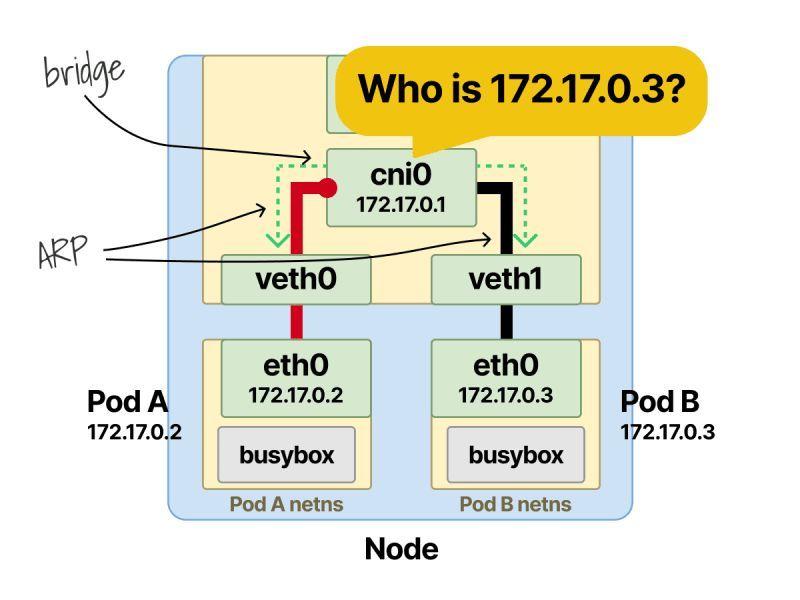
How does Pod to Pod communication work in Kubernetes?
How does the traffic reach the pod?
In this article, you will dive into how low-level networking works in Kubernetes
➤ https://t.co/jmtalEsZst