Acoustics & Climate Science Researcher at @arlnus. Chief Editor,@earthzine. Ex-Visiting at Scripps. ECOP member of @OceanDecadeECOP. Posts reflect my own views
Excited to announce our latest paper: we’ve shown that the sounds produced by melting glaciers are quantitatively linked to their melt activity, conclusively, for the first time! 🔊🧊
https://t.co/L6BTRYINLy
#Glaciology#Acoustics (1/4)
I continue to advocate for acoustics as a versatile tool—for marine mammals, reefs, fishes and much more. With Distributed Acoustic Sensing extending its reach, I believe acoustics can become truly mainstream for these applications.
(4/4)
Seeing research make real-world impact in products/action/policy is very rewarding. So it was heartening to see my work on acoustic marine-mammal biodiversity characterization in Singapore used to inform policy—converting Sisters, Lazarus–Kusu islands to Marine Parks.
(1/4)
Regions with high activity levels were eventually determined to be biodiversity hotspots. For technical details: https://t.co/p4r5MSe8hV . This work is ongoing, we’ve learned a great deal, and there’s more to uncover as we mine our datasets and refine our interpretations.
(3/4)
Over the last few years we explored #robotics to monitor remote glacial termini and complement our acoustic studies. Introducing Glacial Ablation Monitoring Robot (GLAMOR), a surface vehicle to operate in the hazardous region near #glacier termini https://t.co/ykGwqjFlLd (1/3)
This region is poorly studied due to calving hazards. In 2023, GLAMOR collected #thermohaline+#acoustics+video data right next to the #glacier wall—likely amongst the 1st close direct surveys of this zone. These studies enhance our understanding of ablation processes (2/3)
Excited to announce our latest paper: we’ve shown that the sounds produced by melting glaciers are quantitatively linked to their melt activity, conclusively, for the first time! 🔊🧊
https://t.co/L6BTRYINLy
#Glaciology#Acoustics (1/4)
To tackle this, we created a physics-based model to explain how the sound varies across the glacial bay! The result? We can estimate how much sound melting glaciers produce, & link this to what drives melt (water temperature) & its outcome (how fast the glaciers retreat). (3/4)
The competition is bigger than ever! 🌍 With participants from 14 different countries, it's an exciting global showdown. We can't wait to meet all the passionate and innovative student minds!
Countdown to #sauvc2025#marinerobotics
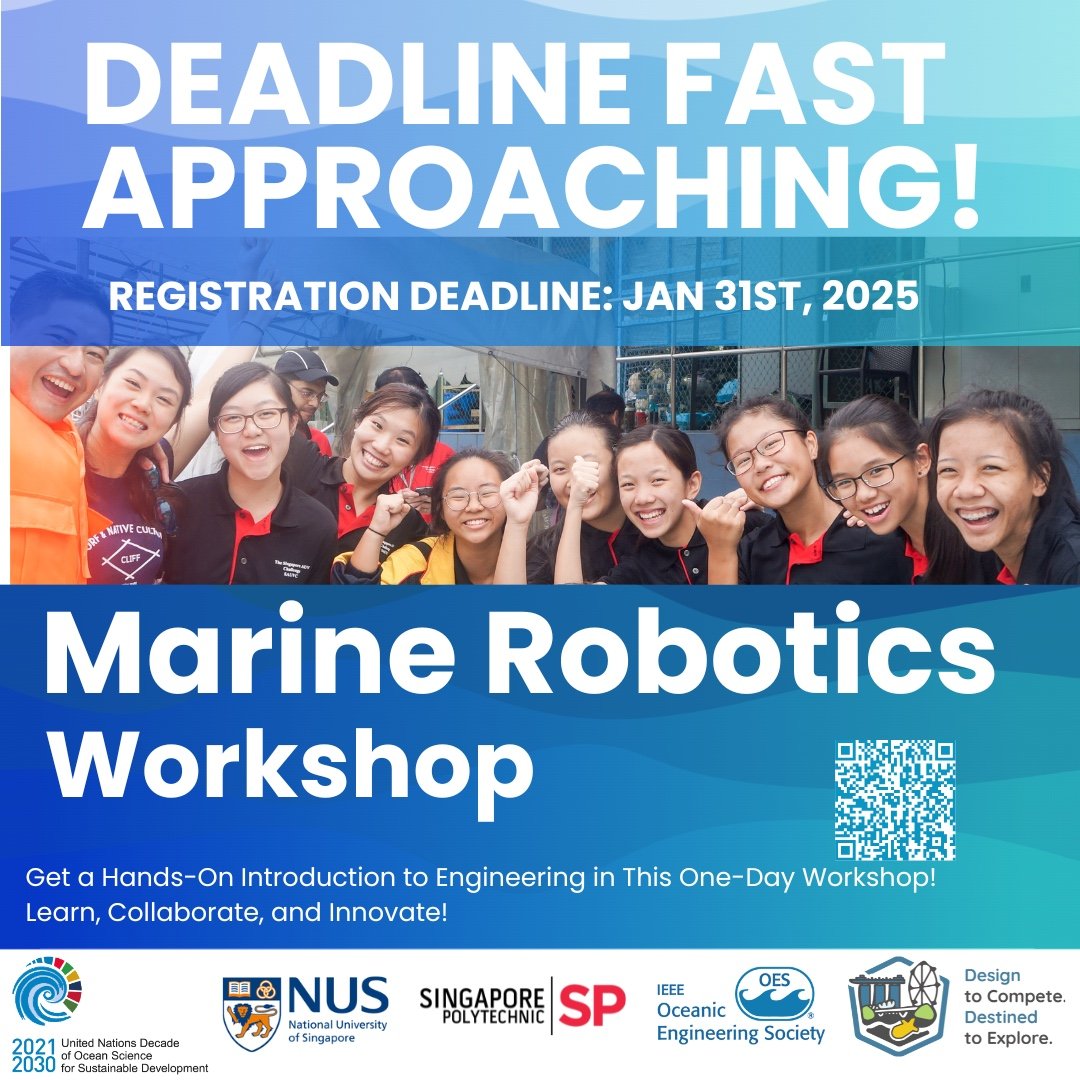
Deadline for Marine Robotics Workshop is quickly approaching! Sec school students eager to explore autonomous robots&ocean conservation, gather your teams& register now. Don't miss this opportunity to learn from SG's top underwater robotics experts and build your very own robots!
Thrilled to announce my recent published work on polar monitoring using comp vision at IEEE OCEANS, a culmination of fieldwork in Svalbard last year. It focuses on estimation of floating ice distribution in glacial bays using aerial imagery by fine-tuning+robustifying a SAM (1/2)
Our findings can help understand ice dynamics, complement our ongoing study on acoustic monitoring at glaciers, & may also pave the way for real-time analysis of glacial changes. Paper available here, or can be downloaded from my webpage: https://t.co/Kb0udnPOE1 (2/2)
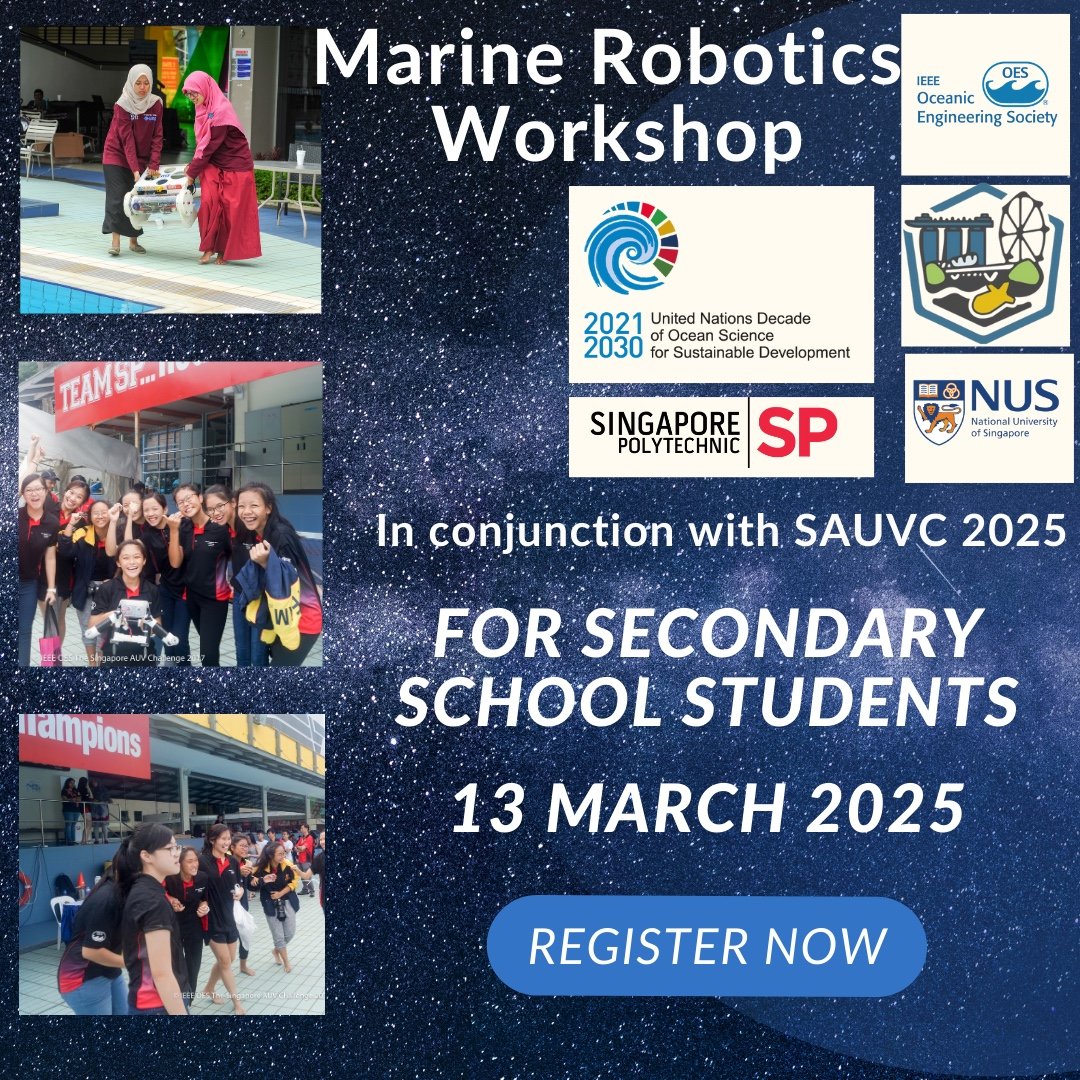
Secondary School Students!Join the Marine Robotics Workshop—a hands-on event focused on ocean sustainability and robotics, endorsed by the UN ‘the Ocean Decade’!Organized by SP Polytechnic & NUS, along with SAUVC.
Registrations are open https://t.co/JWKT18bBLu
@UNOceanDecade