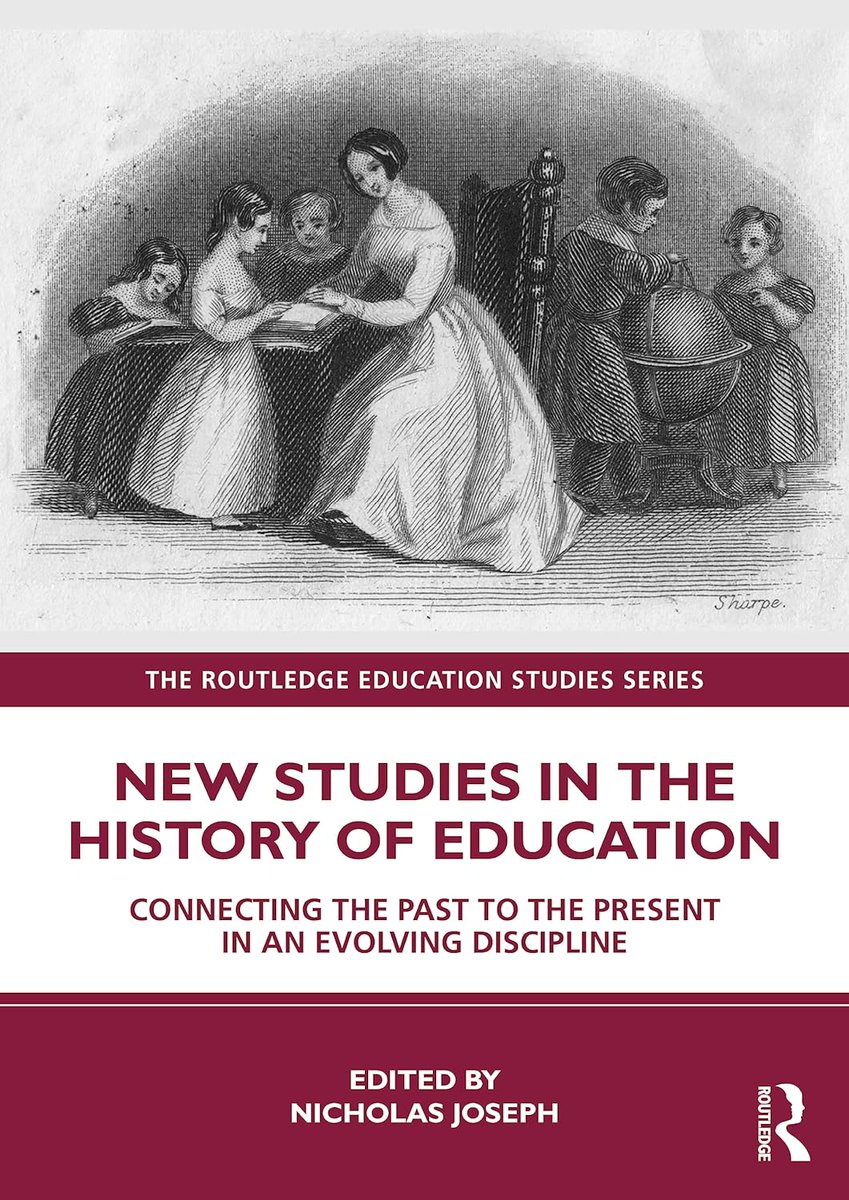
I'm proud to have contributed two chapters - on liberal education and mass education - to this important new Routledge book on the history of education https://t.co/XKB5yds1Ft
#history#education#historyofeducation#liberaleducation
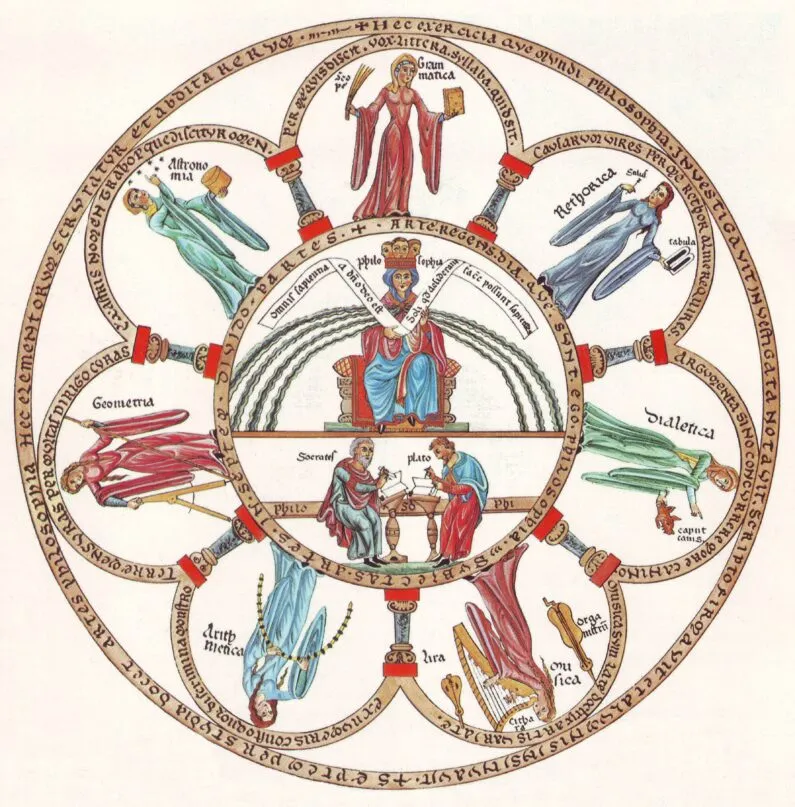
The fragile unity of the Trivium: how a powerful model of education was reshaped by religion, philosophy & power.
Pt 3 of my series on the Seven Liberal Arts, which shaped learning across Europe for centuries
https://t.co/LJexAsXF7s
#history#historyofeducation#liberaleducation
Baroness @amanda_spielman former Ofsted chief inspector, describes my book The Crisis in the Classroom: How the special needs explosion is destroying education as ‘brave and well informed’
https://t.co/Q4C29aMhHT
Good data can still lead to bad decisions.
A behaviour log doesn’t show behaviour itself. It shows what’s noticed, challenged, escalated and recorded.
That’s the trap of collider bias: once we study only selected cases, patterns can start to look like causes.
My latest: The Problem with Patterns.
https://t.co/GvvPW7LyAc
The Trivium - Grammar, Rhetoric and Dialectic (logic) - emerged from a practical political problem: how to prepare citizens to participate in public life...
https://t.co/HH3ua4Pd1Y
#education#historyofeducation#liberaleducation
The special-needs crisis in the classroom by Dave Clements
The AOI was delighted to co-host the book launch of The Crisis in the Classroom: How the special needs explosion is destroying education, a new book by @daveclements_ , published by @LuathPress. This is an important book because it both passionately argues a viewpoint, but swerves away from an overly simplistic, black-and-white approach. It asks urgent questions on rising levels of diagnosed needs and behavioural difficulties in schools.
https://t.co/NIi026Mc0X
Imagine a 19-year-old scrolling TikTok. She watches a creator list five "signs you have undiagnosed anxiety." She recognizes three in herself. By the end of the week, she's describing herself as anxious to her friends. A month later, she's avoiding situations she used to handle fine.
What went wrong?
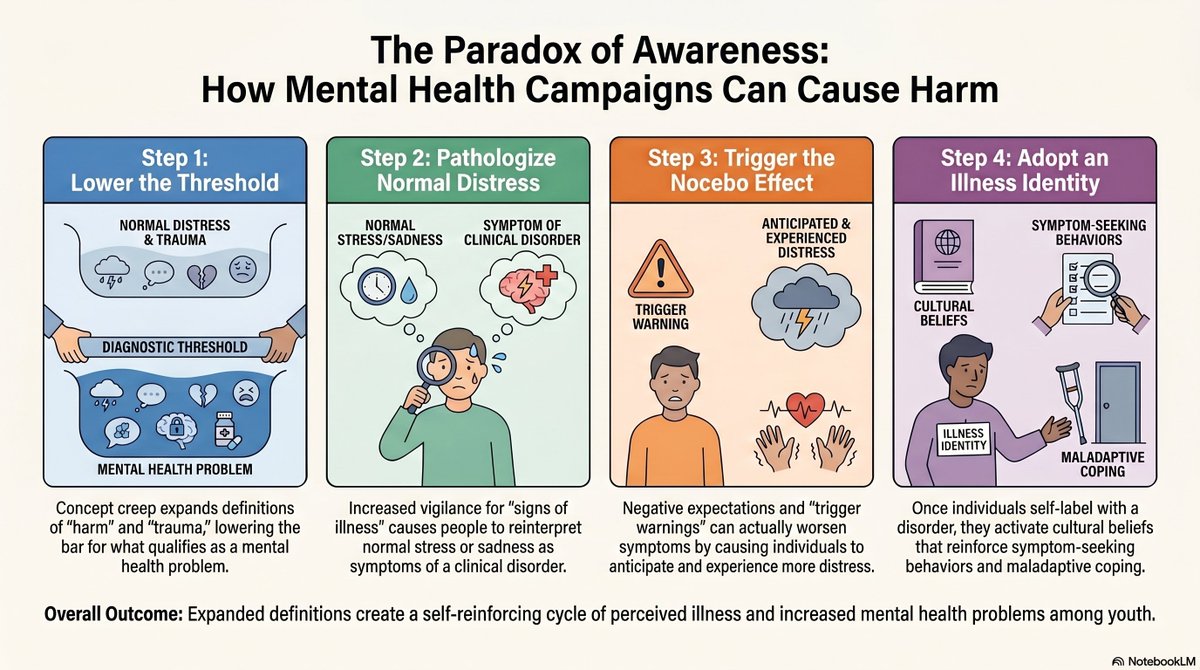
In a new paper by my PhD student Dasha Sandra, titled "Why mental health awareness can harm: Converging explanations for a societal problem", we argue that well-meaning mental health awareness can backfire, and we identify how. Four separate literatures (concept creep, nocebo effects, prevalence inflation, and illness self-labeling) have been circling the same problem from different angles. We show they converge on three mechanisms:
1.Awareness lowers the threshold for what counts as a disorder.
2. It trains people to scan their inner lives for symptoms and reinterpret normal distress as pathology.
3. Once someone adopts an illness identity, they behave in ways that confirm and deepen it.
The evidence is wide. Learning that loneliness is harmful makes solitude feel worse. Learning that stress is harmful worsens well-being and performance. Awareness videos about fake conditions like "wind turbine syndrome" produce real headaches. Trigger warnings raise anticipatory anxiety without reducing distress.
This does not mean awareness should stop. It means awareness can have unintended consequences, including manufacturing the suffering it tries to prevent. Inoculating people against these mechanisms works, and we already have evidence it does.
Link to paper: https://t.co/ucoGyhEuAj
The Seven Liberal Arts: how freedom in the ancient world gave birth to the liberal arts, taking education beyond the realm of necessity and into the realm of possibility for the first time.
https://t.co/8ZkCBgeOAP
#education#historyofeducation#curriculum#liberaleducation
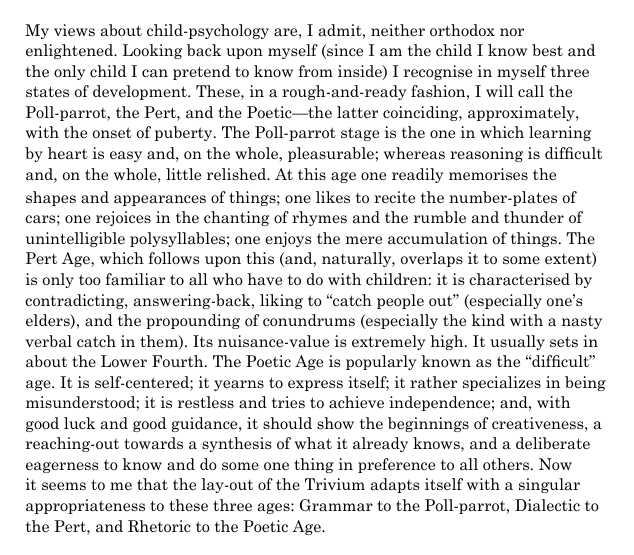
Dorothy L Sayers' slightly eccentric stages of educational development: the Poll-parrot, the Pert and the Poetic (from The Lost Tools of Learning, 1947)...
#historyofeducation#education#childdevelopment
16th Century scepticism about academic life: after 20 yrs studying for a doctorate ‘the most part of students do... live like drone bees on the fat of colleges... doing little good in their own vocation and calling’ (Harrison's Description of England, 1587)
#historyofeducation
@GregoryMcKeown ...Nevertheless that era was one of humanity's creative golden ages. And the school-leisure connection reminds us that carving out the 'free time' for all, away from drudgery and survival, to educate ourselves is a hard-won civilisational achievement.
@GregoryMcKeown Schole/leisure in the ancient Greek sense was in distinction to domestic work/slavery and simply wasn't an option for most of society. 'Leisure' in the modern sense it wasn't, and play didn't come into it in the way you imply... (cont)
The Department for Education has extended funding for NELI in England until 2029!
This funding commitment is part of the plan to extend early language support in the new ‘Giving Every Child the Best Start in Life’ strategy.
Lessons learned: the adoption 10 years ago of a more linear structure for A Levels transformed KS3/4 teaching for the better, argues Neil Davenport in the @acadofideas Education Forum's latest @TeachSecondary column
https://t.co/lMlAzGiZe1
#schools#education#alevels
What future for history in the National Curriculum for England?
Join our next @acadofideas Education Forum discussion. Speakers: Robert Tombs, Professor Zongyi Deng, Dr Nicholas Tate, Louise Burton, Toby Marshall
Monday 16 June, 7pm, online, free to attend
https://t.co/cKFlmDgkRH
Delighted to welcome Dr Nicholas Tate, former head of the QCA, to the panel for next Monday's @acadofideas Education Forum discussion on the future of History in the National Curriculum.
7pm Monday 16th June on Zoom (free to attend, registration required)
https://t.co/cKFlmDgkRH
An invisible authority... @ASCphiled explains why exam boards are the hidden arbiters of what knowledge gets taught in schools, in the @acadofideas Education Forum's latest @TeachSecondary column.
Read the article at https://t.co/LNZLc5HDo2 (pages 12 and 13).
What future for history in the National Curriculum for England?
Join us for the next @acadofideas Education Forum meeting with speakers Zongyi Deng, Robert Tombs and Louise Burton.
Monday 16th June, online, 7pm. Free but book to attend
https://t.co/DB81gXSN1X
#history#curriculum
Special needs in the classroom: From last week's @acadofideas Education Forum meeting, listen to the opening comments by @daveclements_ about the huge increase in demand within schools for SEN support. https://t.co/gpzUKXFnuM