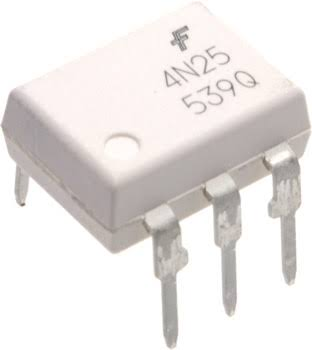
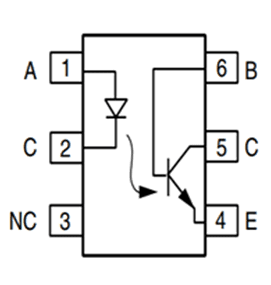
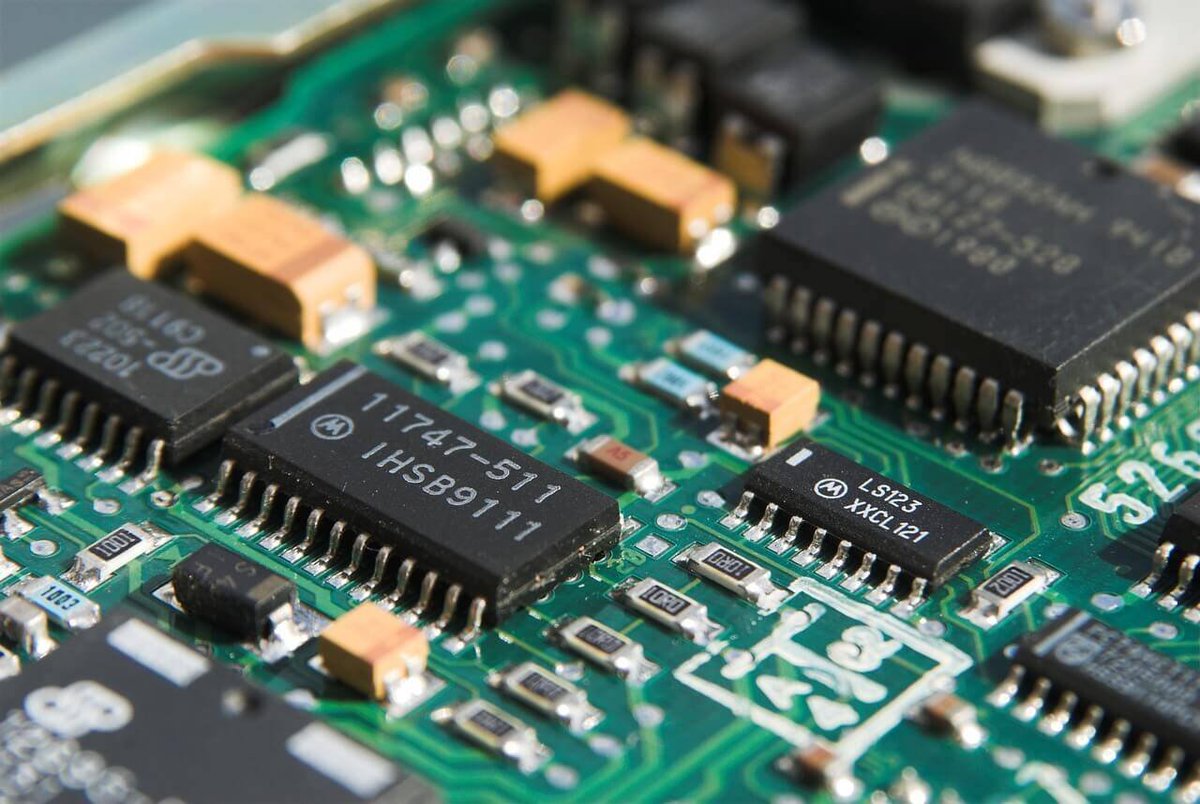
The 4N25 is a reliable coupler that work as a radio PTT switch.
They provide electrical isolation between the control circuit and radio, with the phototransistor acting as a switch to pull the PTT line low.
https://t.co/L4443zFJ6r
#4n25#digitalmodes#hamnotes#js8#winlink
There's an open-source home robot vacuum you can actually build yourself.
It's called OOMWOO.
Runs on a Raspberry Pi with 2D LiDAR mapping, ROS2 navigation, and native Home Assistant integration. No cloud dependency, no vendor lock-in.
The team spent real time researching before designing it. They reviewed the entire 2025-2026 robot vacuum market, from budget to flagship, and found real-world cleaning doesn't track advertised suction power.
The anti-tangle brush design alone is worth mentioning. A tapered rubber roller that resists hair-wrap, one of the most common complaints with commercial models, easy to 3D-print yourself.
If you've got a Raspberry Pi and a 3D printer sitting around, this is a genuinely interesting weekend project.
Rust is no longer just for MCUs. It's coming to sensors too.
STMicroelectronics has officially introduced platform-independent Rust drivers for its MEMS sensor portfolio.
Why this matters 👇
- Memory-safe drivers written in Rust
- Platform-independent architecture
- Supports both SPI and I²C
- Published on crates. io and GitHub
- Covers motion, environmental, infrared, and biosensing MEMS devices
- Works alongside existing Rust embedded ecosystems like Embassy
- ST will continue maintaining its C drivers while expanding Rust support
Why embedded developers should care:
- Fewer memory-related bugs
- Better code safety and reliability
- Easier driver reuse across projects
- Modern package management with Cargo
- Stronger foundation for safety-critical applications
The trend is becoming clear:
- Espressif → Official Rust ecosystem
- ST → Official Rust MEMS drivers
- More silicon vendors are embracing Rust every year
Read the announcement:
https://t.co/oFDysd8dea
AI for KiCad just got even more interesting.
After KiCAD MCP Server, check out Konnect.
It's a next-generation AI plugin for KiCad, rebuilt from the ground up in Rust as a native KiCad 10 plugin.
Why it's exciting:
- Native KiCad 10 plugin
- Written entirely in Rust
- Built on KiCad's official IPC API
- No Node.js or Python runtime dependencies
- 170+ AI-powered engineering tools
- AI-assisted schematic and PCB workflows
- Automated design reviews and engineering audits
- Manufacturing pipeline integration
- Faster, simpler, and more maintainable architecture
The future of PCB design is AI-native.
Meet the ESP32-S3-Nano
A tiny development board with serious AIoT potential.
Think of it as a compact, ESP32-S3-powered alternative to the Arduino Nano ESP32 while keeping the familiar Nano form factor.
Why it's worth checking out
- ESP32-S3R8 dual-core Xtensa LX7 processor
- 8 MB PSRAM for AI, vision, and memory-intensive applications
- Arduino Nano-compatible pinout and footprint
- Built-in Wi-Fi + Bluetooth Low Energy
- Native USB for programming, debugging, and USB applications
- Supports TinyML and Edge AI workloads
- Compatible with Arduino IDE, ESP-IDF, PlatformIO, and MicroPython
- Ideal for robotics, IoT, smart sensors, wearables, and automation
- Breadboard-friendly design for rapid prototyping
- Low-cost platform for production-ready embedded projects
Whether you are building an AI-powered sensor node, a voice interface, or a smart robotics controller, the ESP32-S3-Nano packs impressive capabilities into a Nano-sized board.
Small board.
Big possibilities.
PCB Design is a Superpower Every Hardware Engineer Should Learn
A Printed Circuit Board (PCB) turns your prototype into a real product.
Here's what every embedded engineer should know:
1. Schematic Design
- Create circuit diagrams and select components.
2. PCB Layout
- Place components and route traces efficiently.
3. Power Integrity
- Design clean power rails and decoupling networks.
4. Signal Integrity
- Minimize noise, crosstalk, and EMI.
5. High-Speed Routing
- USB, Ethernet, DDR, and differential pairs.
6. Manufacturing (DFM)
- Design for fabrication and assembly.
7. Testing & Debugging
- Test points, oscilloscopes, logic analyzers, and bring-up.
Popular PCB tools:
- KiCad
- Altium Designer
- Autodesk Fusion Electronics
- EasyEDA
Whether you are building an IoT device, robot, drone, wearable or AI hardware, PCB design is the bridge between an idea and a manufacturable product.
STM32 – One of the Most Popular Microcontrollers for Embedded Systems
📕 https://t.co/m3TxwRK2pp
STM32 is a family of 32-bit microcontrollers developed by STMicroelectronics. It is widely used in embedded systems because of its high performance, low power consumption, and rich peripheral support.
🔹 Key Highlights
✅ 32-bit ARM-based Microcontroller
✅ Clock Speed up to 168 MHz (varies by series)
✅ Rich Communication Interfaces – UART, I²C, SPI, CAN & USB
✅ Built-in ADC, Timers and PWM
✅ Low Power Consumption
✅ Large Development Ecosystem
🔹 Arduino IDE Board Name
Generic STM32F103C Series (Blue Pill)
🔹 Common Applications
✔ Industrial Automation
✔ Robotics
✔ IoT Devices
✔ Medical Equipment
✔ Automotive Electronics
✔ Consumer Electronics
🔹 Development Tools
• STM32CubeIDE
• Arduino IDE
• PlatformIO
💡 Tip:
STM32 development boards typically operate on 3.3V logic. Always check the board specifications before connecting external modules.
Have you used STM32 in your embedded projects? Share your favourite STM32 board in the comments.
#STM32 #EmbeddedSystems #Microcontroller #EmbeddedC #Electronics #Firmware #IoT #Robotics #Engineering #STMicroelectronics
First third-party development board based on @ST_World STM32H7R7 Cortex-M7 MCU with 2.5D GPU.
https://t.co/w7F3qGHO8e
The ART-Pi II board is powered by an STM32H7R7L8H microcontroller paired with 32 MB HyperRAM and 64 MB HyperFlash; it features a microSD card slot, WiFi 4 and Bluetooth 5.1 connectivity, an RGB LCD connector, two USB-C ports (OTG and Debug), a 40-pin Raspberry Pi-compatible GPIO header, a 28-pin GPIO header, two Qwiic connectors, and an on-board debugger.
It's mainly designed for @rtthread RTOS development.