The Court of Appeal has stayed the three-Judge Bench High Court ruling that had issued conservatory orders stopping the proposed sale of the Government's shares in Safaricom.
The effect of the stay is that the conservatory orders are suspended, clearing the way for the proposed transaction to proceed pending the determination of the appeal.
Team Ingutiah will be in action at the LSK Justice Cup on the 27th of June.
A day of determination, teamwork, and passion for the game. Proud of every player who wore the badge and represented our values on and off the pitch.
Here’s a look at some of the best moments from training. ⚽💙
#TeamIngutiah #LSKJusticeCup #JusticeCup #Football #KenyaFootball
Access to justice continues to move closer to the people.
Through a Gazette Notice issued by the Hon. CJ an ELC station has been established in Mavoko with effect from 1st July 2026. The new court is expected to significantly ease the workload at the Machakos ELC, with 457 cases already identified for transfer.
In a further boost to access to justice, residents of Samburu County will no longer need to travel to Nyahururu to file or follow up on ELC matters following the establishment of an ELC Sub-Registry in Maralal.
These brings to a total of 42 ELC stations and 5 sub registries (,Lamu, Kabarnet, Isiolo, Wajir and Maralal) in the country.
These developments reflect continued commitment to decentralizing court services, reducing the cost of accessing justice, bringing judicial services closer to the people and more opportunities to members.
The Red Mass is a longstanding Catholic tradition celebrated at the commencement of the judicial year, bringing together members of the legal profession to seek the guidance of the Holy Spirit.
It is a moment of prayer and reflection, invoking wisdom, justice, integrity and ethical leadership for all who serve in the administration of justice.
This is the 1st of its kind in Kenya.
You are all invited.
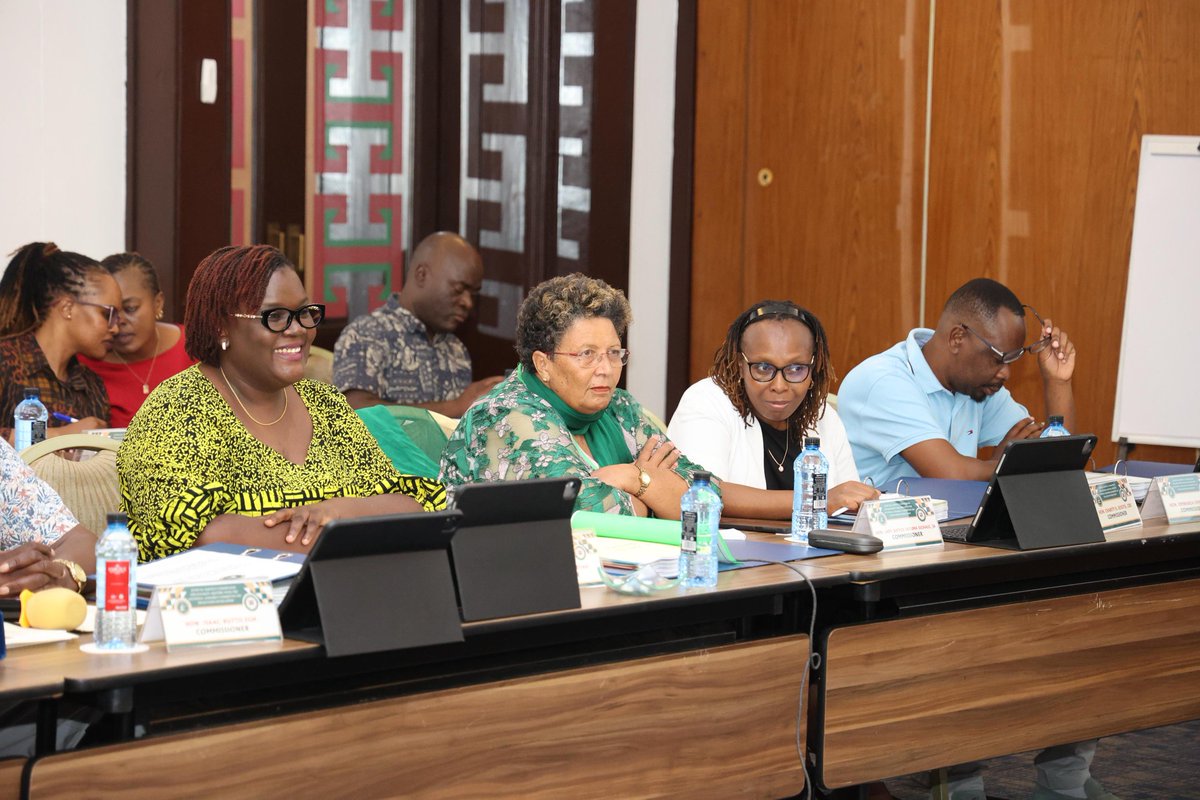
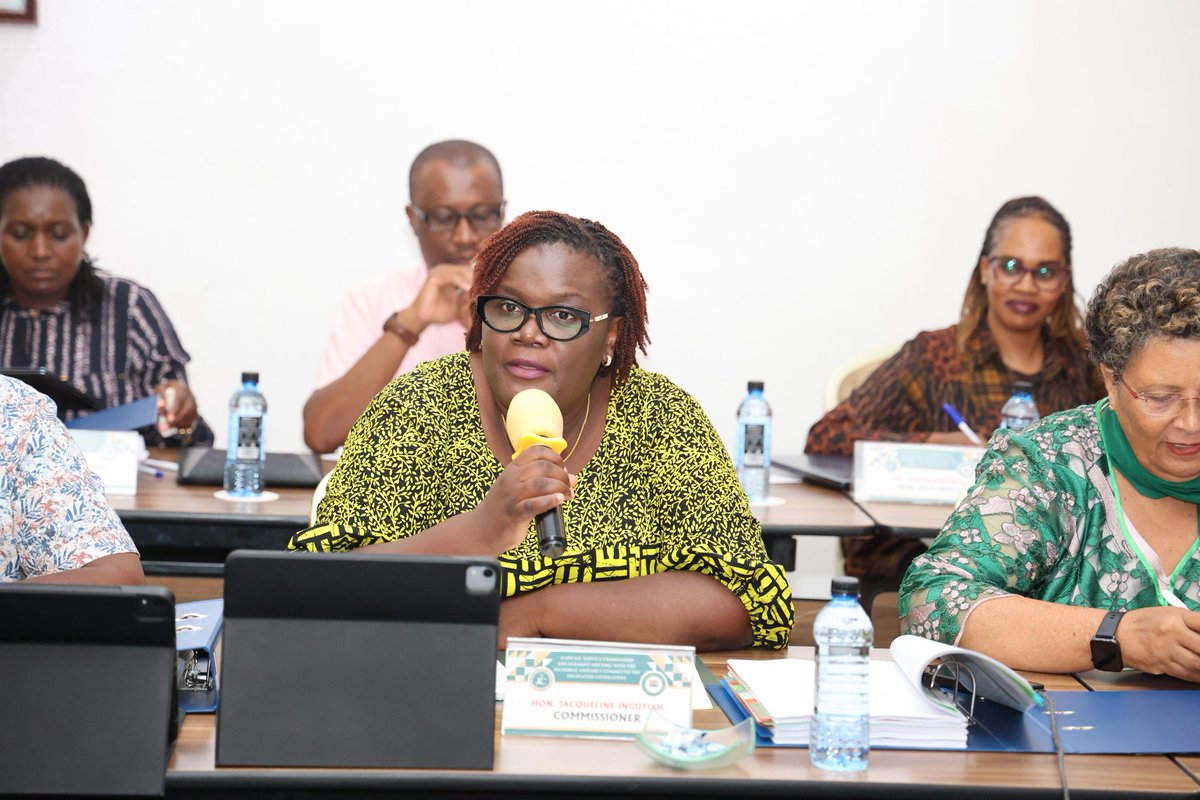
Last week as Chair of the Committee on Administration of Justice, I led colleagues from JSC during an engagement with the National Assembly Committee on Delegated Legislation for a pre-publication scrutiny of the Draft Judicial Service (Petition for Removal of a Judge) (Procedure) Regulations, 2026.
The proposed Regulations seek to establish a clear, fair, transparent and predictable framework for handling petitions and Commission initiated (suo moto) proceedings for the removal of judges from office.
This marks an important milestone as the regulations were developed after extensive public participation and stakeholder engagement involving members of the public, institutions, the @lawsocietykenya, individual practitioners, judges and other stakeholders.
We received constructive feedback from members of the Committee ( majority of whom are members of the Law Society of Kenya). The feedback will go a long way in refining and strengthening the Regulations before gazettement.
@BuyanziS
💎 *2 DAYS. ONE CHOICE.* 💎
One unwavering commitment: *G.E.M* ; Golden Practice. Enriched Wellness. Mobilization of Resources.
This is present, servant leadership backed by track record.
✅Vote Samin Abigael for Vice Chair, 8th May 2026.
Warm regards,
If you’re buying land, involve an advocate. Every time.
Legal fees may feel expensive in the moment but they are nothing compared to the cost of losing your hard-earned money to fraud, forged titles, or irregular transactions.
LSK Council, you have the institutional profile of LSK- use it to raise upto Kshs. 100 m and purpose to train upto 2000 lawyers on mediation as part of the broad and dominant strategy to weed out quacks in formal ADR [ court annexed mediation]. In the meantime, adopt a hard-line approach. Use Trumpian tactics to protect our space. Cut to size the tails of these folks who failed to join the LLB programme and now want to assert dominance on legal issues. Advocates- you be a fool of the first order of magnitude - if after that gruelling reading- you appear before a nurse, a plumber, etc to mediate your court disputes. Resist to the maximum. Mediation is here to stay but it must be done by qualified lawyers. Not these hucksters I see around !
A financial institution sacked a client of mine. The MD is cocky, self-centered, and 'superior.' He sneered at my demand letter and called me a caricature of derision-exhibiting neolithic incompence. He thinks he owns the law. I picked up the case, diligently, with focus on the details. Now, the Court has awarded my client some millions. Now, it is my turn to be cocky, self-centered, and 'own ' the law. 🤣🤣.
Because we attended a course known as 'accounting for lawyers' at Kenya School of Law- we should open up accounting firms and start offering services- is this what they are saying ? That despite being trained lawyers we can open up private schools, pick up the marker and start teaching history and English? Isnt teaching and accounting the preserve of skilled folks? Tuheshimiane !
Concerns are rising regarding the legality of marketing for legal services disguised as mediation. The use of the Court Annexed Mediation Programme to lend credibility to questionable practices raises significant issues. It is crucial for legal professionals to recognize the potential threats to our profession.
While I operate at a level of legal practice that minimizes competition from unqualified individuals, I am deeply concerned about the impact on our colleagues. Many new entrants to the legal field aspire to serve rural areas and decentralized centers, tapping into an underserved market. However, unqualified individuals are establishing Alternative Dispute Resolution (ADR) offices near law firms, advertising 'legal services' and redirecting clients with promises of 'affordable ADR services,' which undermines legitimate law practices.
Last year, I engaged with Deans of Law Schools who highlighted the pressing need for more lawyers in Kenya. However, we must question the rationale behind training more lawyers when the market is being encroached upon by non-qualified practitioners.
It is imperative for the Law Society of Kenya (LSK) branches and chapters to take decisive action against these practices. We must work together to eliminate these unqualified operations and protect the integrity of our profession.
Today’s impeachment proceedings against Rigathi Gachagua may go down as more than just political theatre. They could mark the first real judicial stress test of Article 145 of the Constitution.
My key takeaways:
1. Article 145 is finally being litigated in substance: For the first time, the High Court is being invited not just to review process, but to confront the architecture of presidential/DP impeachment itself . Importantly, it has to answer what “gross violation” actually means in practice.
2. Procedural compliance is no longer the only battleground. Today signals a shift: can a process be procedurally sound yet constitutionally insufficient?
3. The Senate’s role is under sharper scrutiny: The Senate does not just vote in impeachment proceedings. It exercises a quasi-judicial mandate. That raises the bar on evidence, reasoning, and record.
4. The “political question” doctrine is being tested: Will the courts continue their hands-off approach, or will they define minimum substantive thresholds under Article 145? That line is now thinner than ever.
5. Precedent in the making: Whatever the outcome, this moment will shape how future impeachments are conducted not just politically, but constitutionally.
Court Annexed Mediation (CAM) is a critical topic, especially in light of the Chief Justice's directive to make it mandatory for burial and family disputes. Here are some key observations regarding this approach:
(a) It's important to note that cases filed in court often follow attempts at Alternative Dispute Resolution (ADR). Parties typically engage in negotiations, informal mediation, and correspondence before involving legal counsel. The assumption that litigants are unaware of or resistant to ADR is inaccurate.
(b) Most contractual agreements include ADR clauses, primarily for mediation or arbitration, which are legally enforceable. The presence of a case in court indicates significant issues requiring judicial expertise, suggesting that mediation may not always be appropriate.
(c) The right to access the court is a constitutional guarantee under Article 48, which emphasizes the right to justice. The Judiciary serves as a constitutional arbiter, and it is crucial to maintain this role rather than relying solely on lay mediators for dispute resolution.
(d) While the Constitution promotes ADR mechanisms in Article 159, it does not mandate them. Making mediation compulsory for all cases could contradict constitutional provisions.
(e) Alternative Justice Systems (AJS), including mediation, have successfully resolved numerous cases. However, the quality of some settlements is concerning, as lay mediators may lack the necessary expertise to handle complex legal issues. Advocates, trained in law and procedures, are better suited to serve as mediators.
(f) Mediator training typically requires a minimum of 40 hours, equating to just four days. This raises concerns when non-advocate mediators are tasked with mediating cases that involve pleadings drafted by qualified legal professionals who have undergone extensive training.
(g) The legal profession is highly regulated, and allowing non-advocate mediators to oversee court-filed matters risks undermining this regulation and exposing the process to unqualified individuals.
These observations highlight the complexities and potential challenges of implementing mandatory mediation in certain disputes.
The lack of a unified position by LSK regarding the exclusion of non-qualified individuals as mediators raises significant concerns. In the formal context, the adjudication of disputes is solely the responsibility of the judiciary. A directive from the Chief Justice indicating that certain disputes will not undergo judicial adjudication presents various challenges and complexities. This situation warrants careful consideration and discussion among stakeholders to address the implications it may have on the integrity of the mediation process and the justice system as a whole.