EDG is now open source
For roughly 30 years, its C++ front end has powered compilers, security products and developer tools. Now the code is public, with the C++ Alliance supporting its next chapter 🧵👇
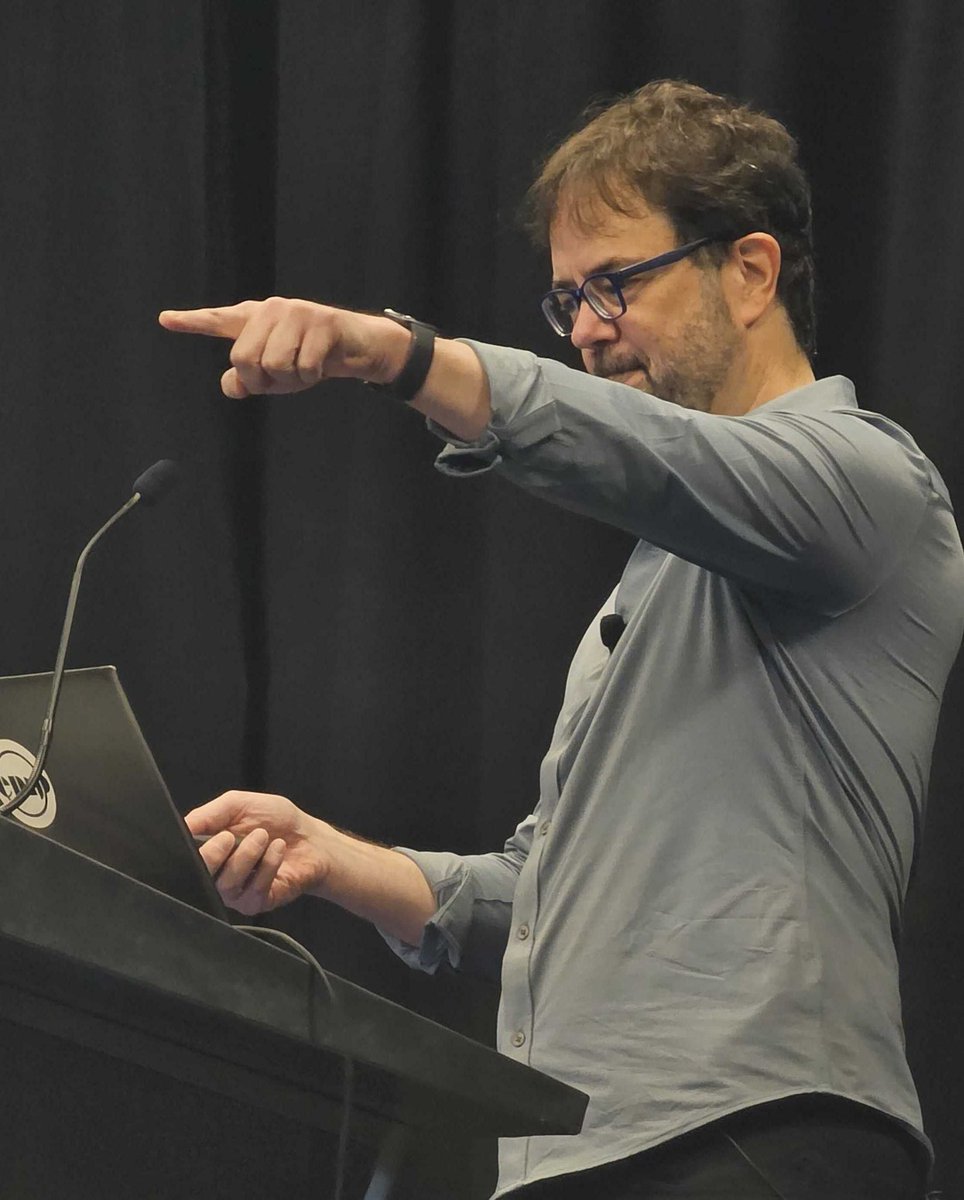
At CppCon today, C++ Alliance CEO Harry Bott made the case that Boost is a guild for our time
Not just a code library. A place where engineers learn the craft from the people who built it 🧵👇
Elon, saw your post on the Starlink C/C++ stack. I'm CEO of the C++ Alliance. We fund full time engineers upstream on Clang and GCC, and the EDG front end goes open source under our sponsorship this month. We hope NVIDIA, Microsoft and other major C++ players will continue to help steer that work. SpaceX should have a seat. Worth a quick conversation?
Harry Bott, CEO, C++ Alliance
How do you simulate heat moving through an oven?
One approach: a five-point stencil. 🌡️
Each grid cell is updated using its current temperature and the temperatures of its surrounding neighbours. Repeat the process, swap the grids, and watch the heat propagate.
See the C++ implementation
▶️ https://t.co/ovvpirZIy4
#CPP #CUDA #NumericalMethods #GPU
Boost.OpenMethod is a C++17 library that gets sharper on C++26
With reflection, a single BOOST_OPENMETHOD_REGISTER_CLASSES() replaces the hand kept class list, even the subclasses no overrider mentions
Boost moves with the standard 🧵👇
The ISS passes over a ground station for a few minutes at a time. Your cognitive radio engine has that window to transmit and to learn. How do you preserve neural network state across orbital passes in C++? 🧵👇
If you're still using finite differences to compute gradients in C++, you're losing precision and performance. There's a better way now, thanks to a Boost contributor 🧵👇
🚀 NEWS UPDATE: @Google Quantum AI's Tesseract decoder uses Boost.DynamicBitset and Boost.ContainerHash to accelerate quantum error correction, achieving up to 5× speedup on the most demanding configurations.
By replacing custom hashing with boost::hash_value and leveraging hardware-accelerated bitwise ops, the team eliminated a key decoding bottleneck across Surface Codes, Color Codes, Bivariate Bicycle Codes & more.
The result? Consistent ~2× speedups across code families, with peak gains over 5× – making fault-tolerant quantum computing more practical.
Great example of how Boost libraries power cutting-edge research. 🔗
#cpp #OpenSource
Greetings @InquerityStudio! I am writing on behalf of a colleague who isn't on Twitter to ask your permission to use some screenshots from one of your videos in a conference lecture next week. Please DM me for details.