My hottest take is that brand marketing is going to be THE major differentiator and one of the most prized assets for a company going forward.
And, I’m not talking about launch videos or pouring money primarily for “aesthetics” simply to pump the valuation. You still need retention before attention.
I’m talking about thinking through what a company stands for and understanding the “vibe” of what’s happening in the market. Being relentless on the long term goal while also thinking through how to showcase the company in the short term. And doing it every week.
Especially if you think agents become the primary user for most products, then to get the attention of a rapidly attention deficit audience (aka humans) you’ll need to stand out consistently in how you present the company.
These folks primary have been given tier 2 roles and passed up for CMOs many many times. I think this will finally invert in the next 10 years where you’ll hire these folks as cofounders or at least give them a big seat at the table.
Normally the design centric CEO tends to be this, but those are rare and you’ll need to learn how to hire for this role. Just like a good product marketer, these are exceptionally rare so you have one hold them close!!
The Myth of “Love Learning”
People often ask me how to get better at chess. My answer is almost the opposite of what people expect.
You don’t have to love learning.
In fact, if you wait until you love the process, you’ll probably never become very good.
We romanticize improvement. We imagine great players waking up excited to study endgames, analyze losses, or memorize opening lines. Sometimes that’s true. Most of the time it isn’t.
Improvement is often boring.
The difference between an amateur and a professional isn’t that the professional enjoys every minute. It’s that they keep going when they don’t.
People say children are fearless learners. I’m not so sure.
Children quit things constantly. Piano. Swimming. Languages. Football. Chess. They usually continue only because someone else insists they do. Parents. Teachers. Coaches.
Discipline often comes before passion, not after.
The same is true for adults.
We tell people to “follow your curiosity.” That’s wonderful advice if curiosity happens to last. Usually it doesn’t.
Every meaningful skill has a point where curiosity runs out and routine takes over.
That’s where improvement actually begins.
Chess certainly did not always feel like play to me.
There were tournaments where the last thing I wanted to do after six hours of defending a miserable endgame was analyze another five hours.
There were openings I studied not because they fascinated me, but because my opponents forced me to.
There were positions I analyzed simply because they were objectively important.
Not because they were fun.
Because they needed to be done.
People often criticize schools for asking the wrong questions.
But there’s another side to that story.
If everyone only studied the questions they found interesting, most people would develop huge blind spots.
Sometimes someone else knows what you need to learn before you do.
Nobody is naturally curious about tax law before becoming an accountant. Or anatomy before becoming a surgeon. Or rook endings before losing enough of them.
External structure isn’t always the enemy of learning.
Often it’s the bridge that gets you to the point where genuine curiosity develops.
The biggest obstacle isn’t fear of looking stupid.
It’s our addiction to doing only what feels rewarding today.
Modern life gives us endless opportunities to switch the moment something becomes difficult.
A new opening.
A new productivity system.
A new app.
A new hobby.
Very few people simply keep doing the same useful thing for years.
That’s the superpower.
So when people ask how to improve at chess, I don’t tell them to fall in love with learning.
Love helps.
Curiosity helps.
Being willing to fail helps.
But none of those are reliable.
Build habits that survive the days when none of those feelings are there.
Because mastery isn’t built on motivation.
It’s built on showing up after motivation has left the room.
AI Videos are ALL slop.
AI should be making you a content machine.
Introducing Riverside 2.0, the first AI Producer that creates authentic content while you sleep:
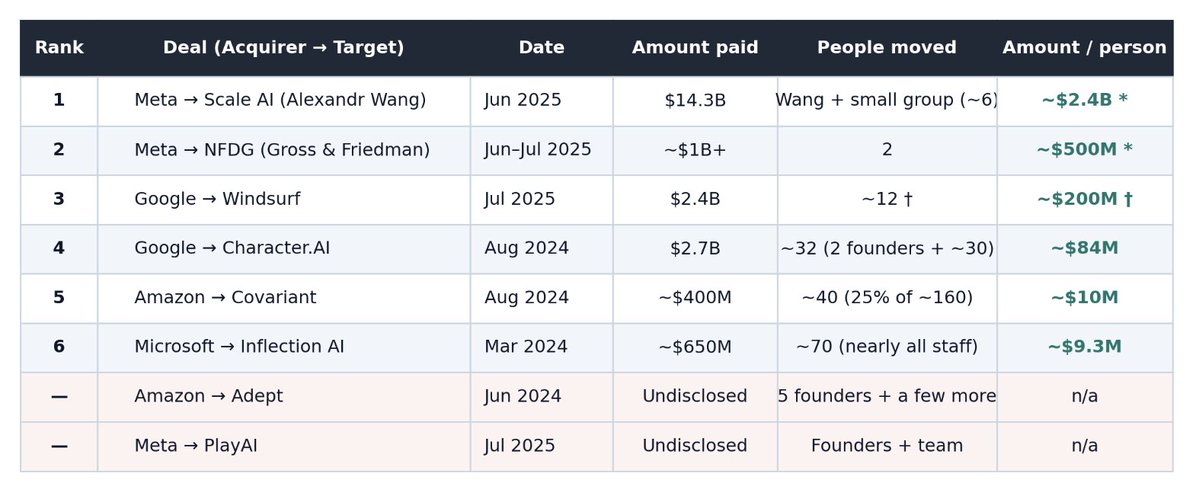
The $900M invested by Meta into CRED for the privilege of hiring @kunalb11 is the first such deal focused on acquiring product taste, judgment and leadership, versus prior deals that purely focused on AI researchers / engineering (Noam Shazeer, Alex Wang, etc).
It ranks very highly on the "Amount paid per person" leaderboard, second only to Meta's hiring of Alex Wang, where they invested $14B to hire a small team.
Full leaderboard below (excludes CRED) of such deals over the past few years.
We've been hearing / saying for the past several quarters on X that the scarce resource in AI is increasingly taste and judgment. This is the first tangible move made by a leading company (with real dollars behind it) that's a proof point of this.
Used Illustrator Turntable and ChatGPT to make these Lottie things in desperate attempt to be relevant. Hoping for 7 likes on the right wing twitter and probably 3 at best on the lefty butterfly one, #design
Uniqlo India grossed 1200 cr in revenue with 15% PAT with just 18 stores!!
Growing aggressively, almost 2x rate of zara, h&m. Their strategy globally as well revolves around influencers and ambassadors, so nothing new.
Globally it does $20 billion revenue, equalling H&M group.
Jane Street posted an operating profit of $35 B last year
Quant firm employing 3,500 has the operating profit of SBI + HDFC + ICICI, which employ 5.7L or 170x JS' base
Profit per employee has been maximised to the moon by incentivising talented people to seek profit