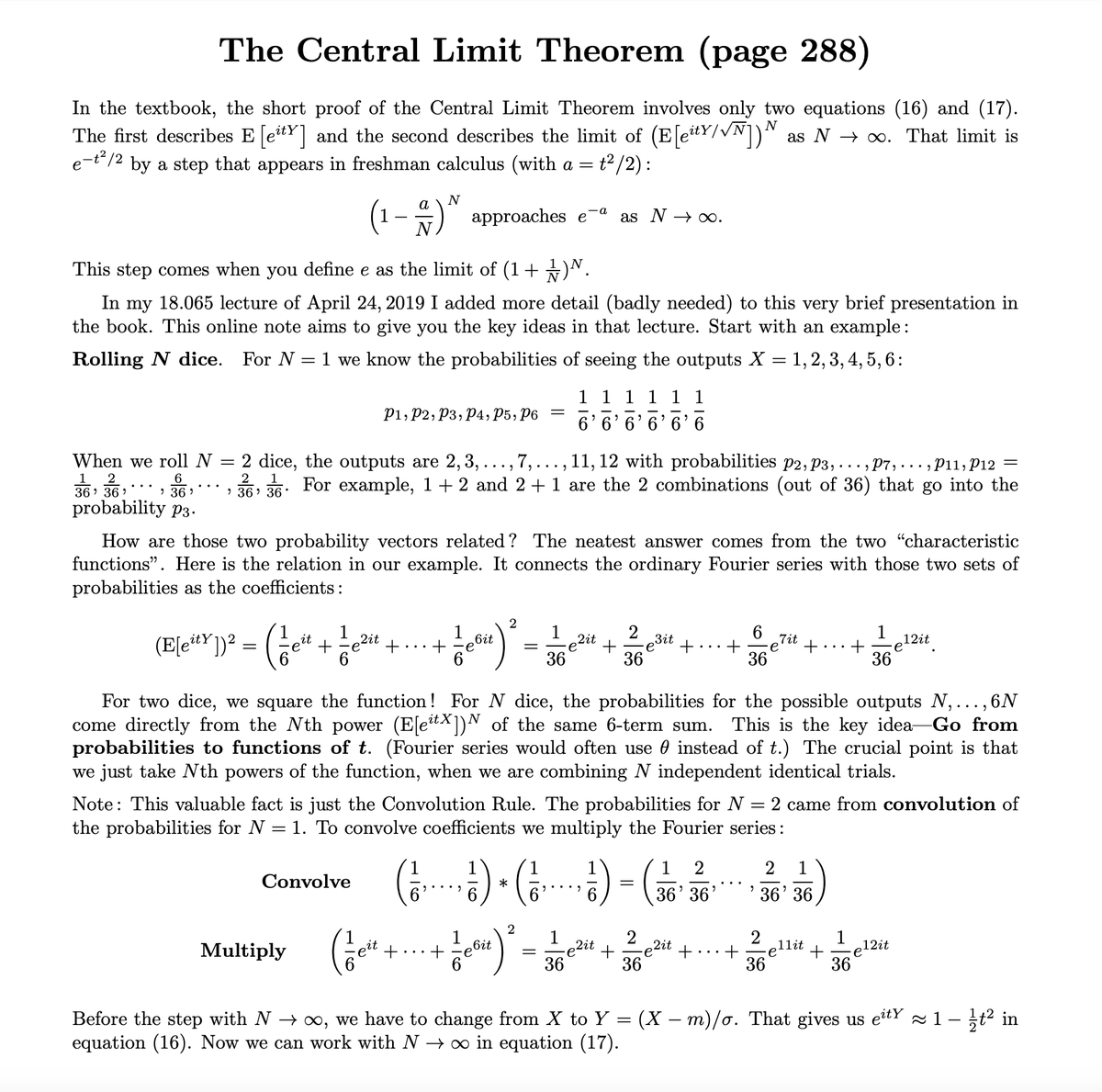
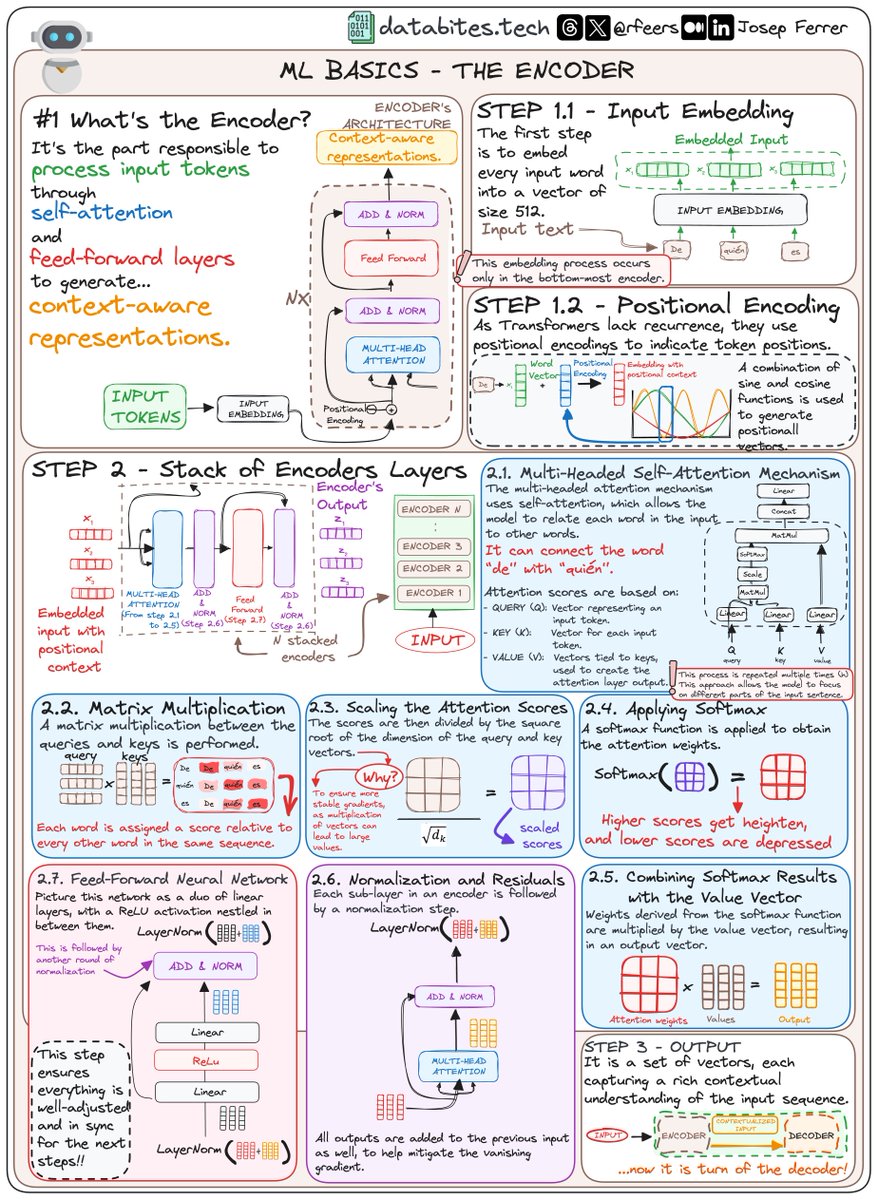
I transformed hand-written notes from the other two courses I've taught into web lecture notes.
Intro to optimization: https://t.co/cZVz7J3LMU
Advanced optimization: https://t.co/1tjpuxmq7g
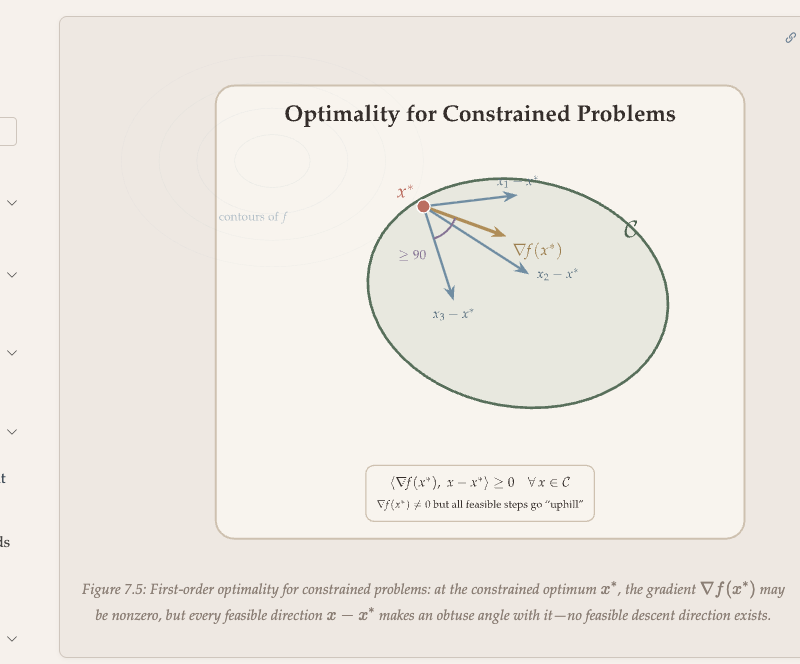
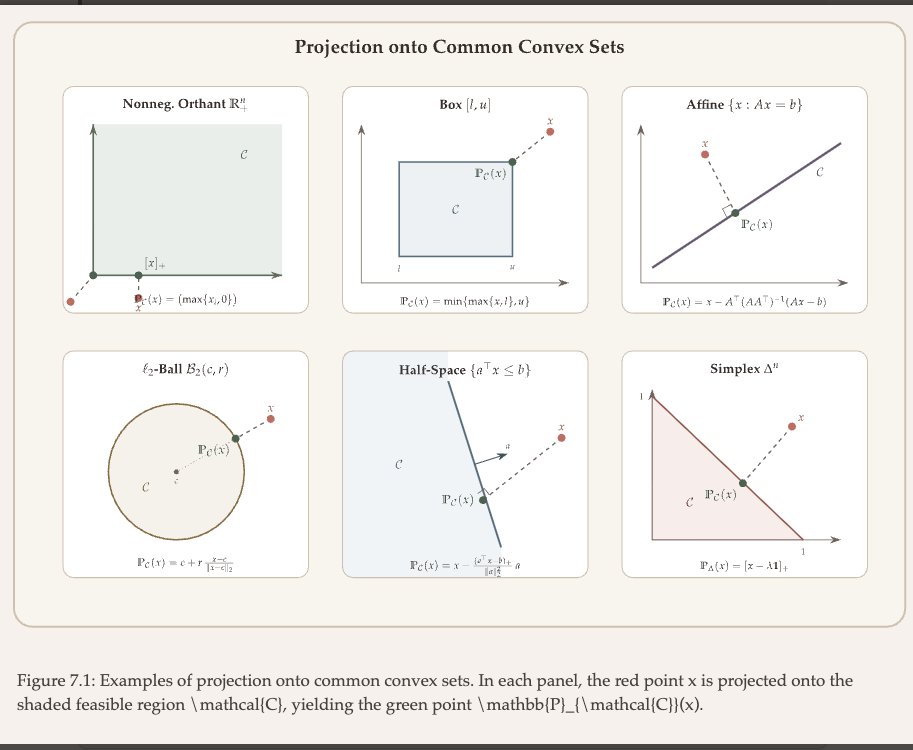
AI-generated figures still need careful human review — titles overlapping plots, perpendicular lines that aren't actually perpendicular, etc. But Claude can finally get things right after a few trials.
And it can simple interactive demos on webpages, e.g., comparing convergence of first-order methods on Beale Function.
Video lectures, Purdue ECE 695 Optimization for Deep Learning (OPT4DL) fall 2025, by Abolfazl Hashemi
https://t.co/gZuJ463qiK
https://t.co/kffhjghI3S
.
🚀MIT Flow Matching and Diffusion Lecture 2026 Released (https://t.co/bKgs2wghvY)!
We just released our new MIT 2026 course on flow matching and diffusion models! We teach the full stack of modern AI image, video, protein generators - theory and practice. We include:
📺 Videos: Step-by-step derivations.
📝 Notes: Mathematically self-contained lecture notes
💻 Coding: Hands-on exercises for every component
We fully improved last years’ iteration and added new topics: latent spaces, diffusion transformers, building language models with discrete diffusion models.
Everything is available here: https://t.co/bKgs2wghvY
A huge thanks to Tommi Jaakkola for his support in making this class possible and Ashay Athalye (MIT SOUL) for the incredible production! Was fun to do this with @RShprints!
#MachineLearning #GenerativeAI #MIT #DiffusionModels #AI
📢 @CVPR 2026 Tutorial
We’re turning our book 《The Principles of Diffusion Models》 into a live tutorial at #CVPR2026!
Part I · Continuous Diffusion — by me 👋
🎯 First-principles & intuitive view of diffusion
🎯 Fast generators & flow maps
🎯 Audio-visual content creation & protection — by @mittu1204
🔗 Link to our book: https://t.co/BRjPh6eF8q
Part II · Discrete Diffusion — by @ssahoo_
🎯 The first tutorial crafted for discrete diffusion
Co-organizers: @StefanoErmon@DrYangSong@gimdong58085414
Full schedule + details 👇
Entropy is one of those formulas that many of us learn, swallow whole, and even use regularly without really understanding.
(E.g., where does that “log” come from? Are there other possible formulas?)
Yet there's an intuitive & almost inevitable way to arrive at this expression.
AI is physics. As someone who has been working on AI+Science before it was considered even possible it is fulfilling to see the Nobel prize committee highlight the impact to scientific domains. We built the first high-resolution AI-based weather models with Neural Operators. It lays a foundation for learning multiscale phenomena.
Two great books that I recommend on information theory:
* "Information theory, inference and learning algorithms" by Sir MacKay
Available at: https://t.co/wc62Wli1y3
* "Information Theory: From Coding to Learning" by Y. Polyanskiy and Y. Wu
Available at:
https://t.co/M9g5AAuAK4
To help explain the weirdness of LLM Tokenization I thought it could be amusing to translate every token to a unique emoji. This is a lot closer to truth - each token is basically its own little hieroglyph and the LLM has to learn (from scratch) what it all means based on training data statistics.
So have some empathy the next time you ask an LLM how many letters 'r' there are in the word 'strawberry', because your question looks like this:
👩🏿❤️💋👨🏻🧔🏼🤾🏻♀️🙍♀️🧑🦼➡️🧑🏾🦼➡️🤙🏻✌🏿🈴🧙🏽♀️📏🙍♀️🧑🦽🧎♀🍏💂
Play with it here :)
https://t.co/pFQGZIAW1k