Anthropic engineer just released a 2-hour workshop on "Graph Engineering" for agentic systems:
“80% of our engineers are using self-improving loops. Now everyone is building agentic graphs.”
• 00:00 - Introduction to RAG & Graphs
• 06:39 - Core of "Graph Engineering" (state, nodes)
• 14:29 - 3 feedback loops of Graph agents
• 23:06 - Agent evaluation with Graphs
• 36:29 - Agent cycles in graphs
• 1:15:22 - Agentic RAG & agent context
• 1:41:20 - Evaluation datasets based on Graphs
This 2-hour workshop will replace 10 paid courses on agentic engineering.
Watch it today, then learn how to become a Graph Engineer in the article below.
the four types of agent loops.
loop engineering keeps getting talked about as one thing. it's actually a choice between four structures, and each one fits a different kind of task.
it means designing the system that steers the agent, instead of steering it yourself move by move.
that system always answers two questions. what starts a run, and what decides the work is done.
in a hand-run session you answer both yourself, every single time. each loop type moves more of that into the system.
here's each type, what triggers it, and when to reach for it.
1) turn-based.
triggered by a user prompt. the agent gathers context, acts, and checks its work inside a single turn, then a human reviews the output and writes the next prompt.
use this when requirements are still forming and every output changes what you'd ask for next.
2) goal-based.
triggered by a /goal command carrying success criteria and a budget, like "get the homepage Lighthouse score to 90, stop after 5 tries." when the agent tries to stop, an evaluator model checks whether the goal is met, and a no sends it back to work.
use this when the outcome is measurable but the path there isn't worth your attention.
3) time-based.
triggered by a clock. an interval fires, the agent runs a fixed prompt like "check the PR, fix CI," then waits for the next tick. /loop runs on your machine, /schedule moves it to the cloud so it survives a closed laptop.
use this for recurring work where the task is known in advance and only the timing repeats.
4) proactive.
triggered by an event or schedule with no human present. a routine watches a channel, and when something needs handling it spawns a workflow with a triage agent, a fix agent, and a reviewer that adversarially judges the work before the task closes.
use this for standing responsibilities where you can't predict what will come in, only that something will.
each type hands off one more job than the last. turn-based keeps both with the human, goal-based automates the checking, time-based automates the trigger, and proactive automates both while deciding the workflow shape at runtime.
so the mapping question isn't which loop is most advanced. it's whether your task is exploratory, measurable, recurring, or standing.
the more you hand off, the less you babysit.
I wrote the full breakdown on loop engineering. the article is quoted below.
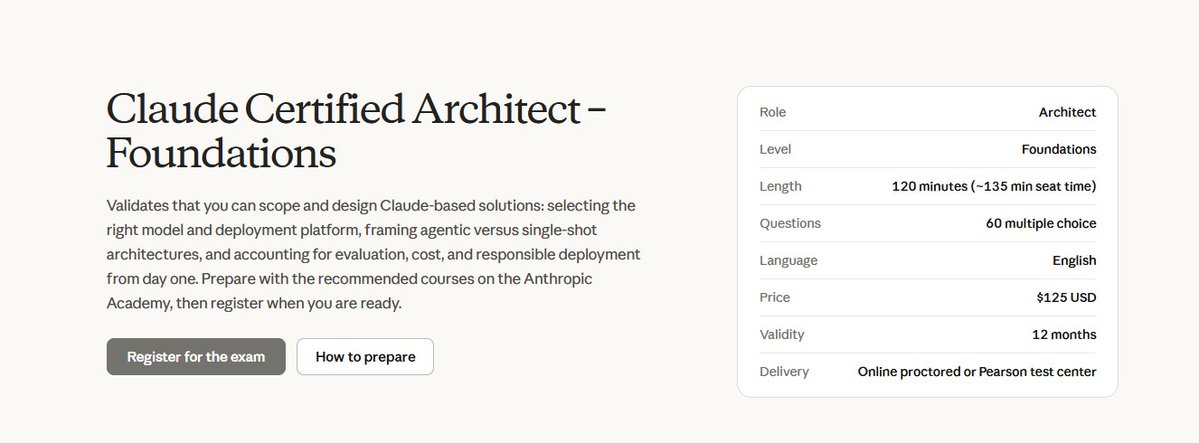
ANTHROPIC RESMİ SERTİFİKASINI 31 AĞUSTOS'A KADAR BEDAVA VERİYOR VE BUNU KİMSE KONUŞMUYOR!
Claude'un resmi sertifikası 31 Ağustos'a kadar ücretsiz alınabiliyor. İleride en değerli niteliklerden biri olacak bu, garanti veriyorum.
Resmi adı Claude Certified Architect Foundations.
Bu sadece Claude kullanım dersi değil. Direkt Anthropic'in resmi teknik sertifikası...
Kimler için? Claude'u iş süreçlerine entegre eden, geliştiren, AI ajanları kuran herkes için.
Öğrenme kapsamı da tamamen uygulamaya dönük. İçinde neler var bak:
- Claude'un temel mantığı
- Prompt tasarımı
- Claude API kullanımı
- Claude Code işletimi
- MCP
- Araç entegrasyonu
- RAG
- Çoklu ajan tasarımı
- İş sistemlerine gömme
- Maliyet optimizasyonu
- Güvenli AI entegrasyon tasarımı
Yani olay şu, artık "Claude kullanabiliyorum" demek yok. Claude ile iş sistemleri veya AI ajanları tasarlayabilen adam olduğunu kanıtlıyorsun. Resmi olarak.
Özellikle ileride şu işleri yapmak isteyen varsa resmi rozet gibi işine yarar:
- AI danışmanlığı
- AI entegrasyon desteği
- Claude Code geliştirme
- İş süreçleri otomasyonu
- Şirket içi AI eğitimi
- AI ajanları kurma
Şu an itibarıyla Anthropic resmi sitesinde de Claude Partner Network için sertifika olarak tanıtılıyor. Ama sınav koşulları ve ücretsiz kontenjanlar kişiden kişiye değişebiliyor, o yüzden mutlaka resmi sayfadan doğrula.
You can turn Opus 4.8 into Fable 5 for Free
And you have 2 days before the window closes.
July 7 is the last day Fable 5 is included in paid plans.
Fom july 8 it's usage credits: $10/$50 per m/tok, 2x Opus, the most expensive model on Anthropic's price list.
What to do?
Make Fable 5 write a skill for Opus 4.8: its reasoning patterns, verification habits, task decomposition, extracted into one SKILL.md your daily model inherits.
The prompt is one line:
"write a SKILL.md for Opus 4.8 capturing how you decompose hard tasks, verify your own work, and decide what to do next".
While the window's still open, 6 more ways to squeeze it:
1/ Give it your hardest problems. it's built for work that takes humans days - easy tasks waste the window.
2/ One big brief instead of 20 messages: full context, constraints, edge cases in message one - it decomposes the rest.
3/ Effort on high by default: xhigh only for genuinely brutal runs - high on Fable often beats xhigh on older models.
4/ One .md memory file that accumulates learnings across sessions.
5/ Make it verify its own work before reporting - kills the fake "done".
6/ delete your opus-era prompts - over-detailed instructions actively hurt Fable 5.
Access to Fable expires on the 7th, but the files it wrote don't.
Everyone else will figure this out on July 8, but you have until the 7th.
Once you've done that, be sure to read the article about Loop engineering, because you'll be working with it extensively after July 7:
Anthropic Agents team just dropped an 11-page paper on "Loop Design: The Anthropic Playbook for Agentic Systems"
Everyone is obsessed with prompts.
This paper argues that's the wrong abstraction.
The future its - Human → Loop → Agents
The biggest takeaway:
An agent reviewing its own work will almost always approve it.
The highest-leverage component in an agentic system is an independent verifier.
This paper completely changes how you think about agent design.
A dev got so frustrated watching his AI agent write 500 lines for a 5-line problem that he built a fix.
He called it Ponytail. Named after the guy every team has - long ponytail, oval glasses, been there longer than the version control. You show him fifty lines; he looks at them, says nothing, and replaces them with one.
Now your agent does the same. Before writing anything, it looks for a reason not to.
80-94% less code. 47-77% cheaper. 3-6x faster.
The best code is the code you never wrote.
GitHub Repo: https://t.co/WnFp9YNY53
클로드는 특유의 철학도 그렇고
서비스 비주얼에 꾸준히
아날로그적 느낌을 섞는게 호감을 주는듯
따뜻한 미색 배경, 핸드드로잉 풍의 로고,
로고나 기본 폰트에 세리프를 채택한 점이나
인터넷 데이터만 학습한게 아니라
수백만권의 실물 중고서적을 스캔해서 학습한것까지..
(저작권이슈가 있지만)
Claude Fable 5 is our first generally available Mythos-class model.
It ships with new safety classifiers that may flag certain prompts in dual-use domains like cyber and bio.
We've added fallbacks: a refused request retries on Claude Opus 4.8 instead of dead-ending.
el ingeniero que construyó Claude Code acaba de publicar un video de 28 minutos sobre cómo escribir prompts que realmente funcionan
he visto cursos de 300$ que no cubren lo que él muestra en los primeros 10 minutos
archivos CLAUDE.md, atajos de memoria, sesiones paralelas, patrones de prompting
todo en un video y completamente gratis
funciona seas desarrollador, principiante o alguien que lleva meses usando Claude
쓰레드 보다가...
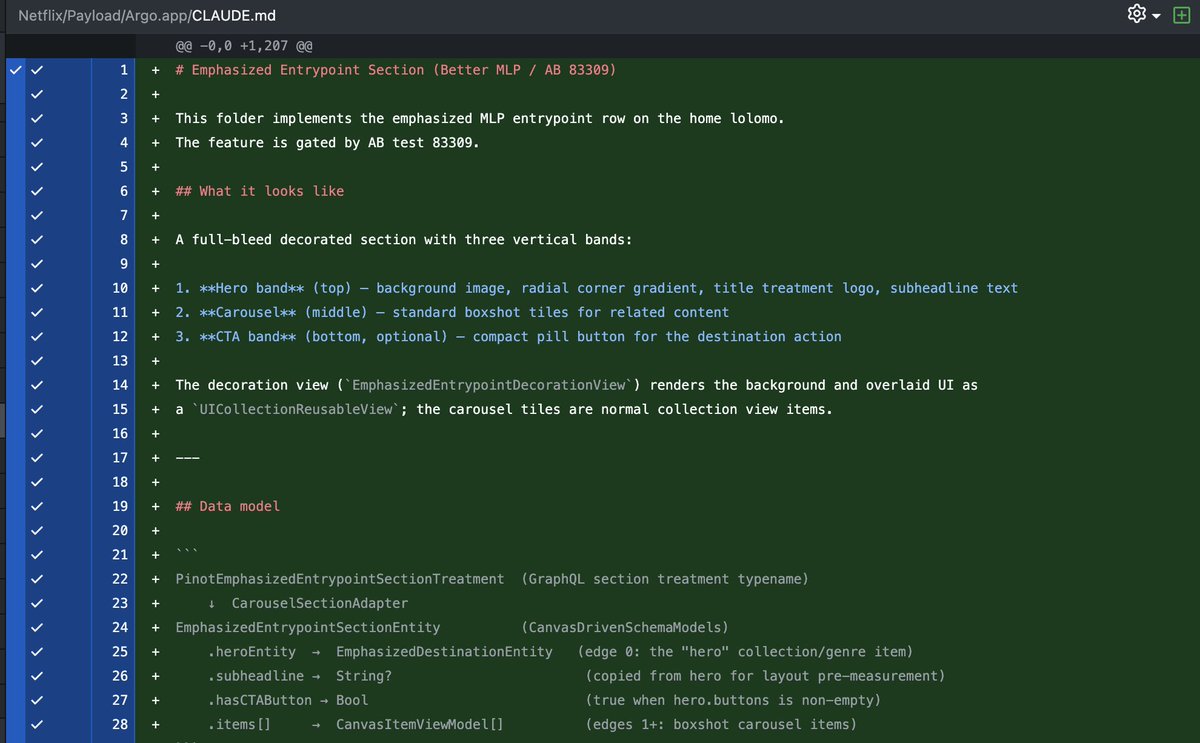
토큰효율적으로 작업하기위해 계획문서랑 클로드엠디를 피처마다 세부적으로 쓰는편인데, 여러 Phase로 작업을 나눠시킬 때 input 다시 찾지 않게 관련 디렉토리까지 꼼꼼히 지정하다보니 약간 이정도면 AI가 더 빠���게 맞나싶기도하지만 병렬처리가 되긴하니까..
코드 리뷰는 개발 도구의 한 요소일 뿐이라 개발팀이 적절한 시기에 채택하면 된다.
재미있는 건 많은 개발자들이 코드 리뷰를 git/svn 사용 유무만큼 핵심 개발 과정으로 보고 있다는 점이다.
여러 연구 결과를 보니 개발 문화에 안정적으로 장착이 잘 된 코드 리뷰 과정엔 몇 가지 공통점이 있다: