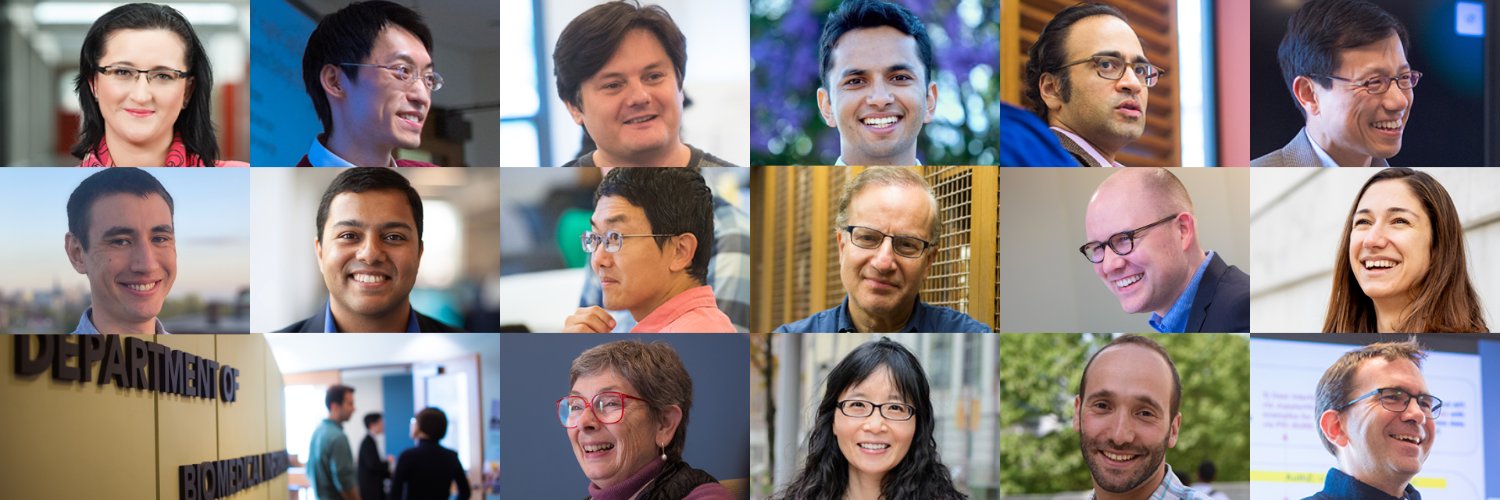
Department of Biomedical Informatics at @Harvard/@harvardmed: #datascience- & #AI/#ML-powered models of clinical care to advance human health. Chair @zakkohane.
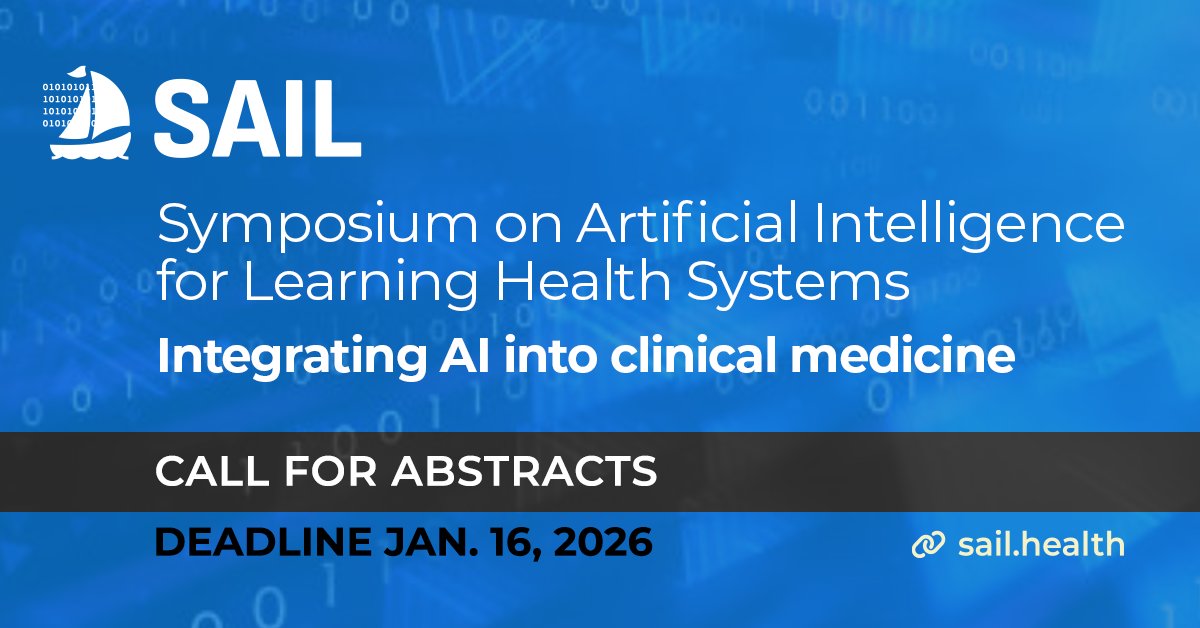
CALL FOR ABSTRACTS | SAIL 2026 on May 5–8 in Río Grande, Puerto Rico! In-person attendance limited to those with accepted work. Apply by 1/16/26. Oral presentation invitations & @NEJM_AI-sponsored travel awards go to the top abstract submissions. #SAILhealth26 - https://t.co/qYEVM7PdR1
Pump'd with this move. Indeed, something related we are actively studying with **People Heart Study**, where people self-evaluate their risk of developing cholesterol related heart disease.
@HarvardDBMI @PeoplePowerMed
Wednesday, June 4, 2025—Biomedical Informatics Entrepreneurs Salon #BIES hosted by @zakkohane w/@HarvardTechXfer
🍕🍪🍺 4:30pm In-person food/drink/network at HMS
🗣️🧠💡5:00–6:00pm (Zoom option) Iya Khalil PhD, VP and Head of Data, AI & Genome Sciences @Merck
Register: https://t.co/jE8dB5jPox
We just added a major new experiment to our o1 study, comparing o1 and attending physicians at key diagnostic touchpoints on REAL cases from the BIDMC ER
Stellar work led by @tabuckley_ and @PeterBrodeurMD as part of a rapidly growing @HarvardDBMI and @BIDMChealth collab 🚀
The latest work from my lab, Phage Disco, a method @EllieRand3 developed for targeted discovery of bacteriophages based on the bacterial receptor, defense system, or other component they interact with, is now live in mSystems
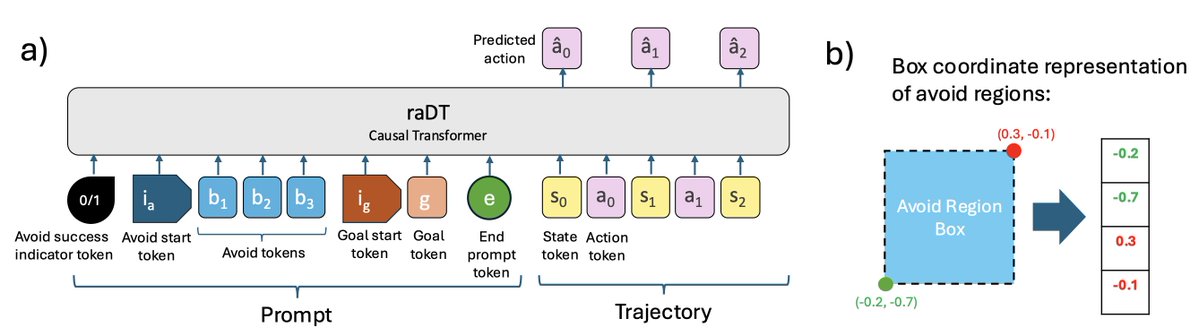
📢 🧬 New paper drop: "Prompting Decision Transformers for Zero-Shot Reach-Avoid Policies" by stellar PhD student Kevin Li @MIT@HarvardDBMI@harvardmed
https://t.co/jAV3pyLQKz
Imagine an agent that can reach any goal while avoiding danger, without retraining, even when the hazards change. That's the reach-avoid challenge.
Think self-driving cars dodging new construction or cell therapies steering clear of tumorigenic states.
Most RL methods hardwire the danger zones during training. Want to avoid something new? Retrain. Want to scale to new configurations? Retrain. But what if you could just tell the model what to avoid, on the fly?
Enter RADT: Reach-Avoid Decision Transformer.
It learns from suboptimal data.
It uses no rewards or costs.
It encodes goals and avoid regions as prompt tokens.
And it generalizes zero-shot to new goals and hazards.
🧵👇
At @meshincubator 2025, @harvardmed’s @zakkohane shared a striking case: GPT-4 recommended treatment to a patient when assessing from the perspective of a doctor—but denied treatment as an insurer. Same patient, same facts, different values.
#Harvard
https://t.co/aep8iD17Gp
"The AI Revolution in Medicine, Revisited" podcast looks into the reality of AI in healthcare. With coauthors @goldbergcarey@zakkohane, we dissect what we've learned so far in my conversations with doctors, techies, patients, researchers, and policy thinkers.
Thank you @CancerGrand for your support of the tissue specificity project over the last 5 years! It was a privilege to be collaborating with many wonderful colleagues on the question of tissue specificty of cancer driver mutations, as well summarized in this magazine.
Since the Undiagnosed Diseases Network’s inception in 2014, researchers have discovered nearly 100 new conditions and diagnosed 855 individuals with previously unknown diseases. https://t.co/kfR7WyMTR0
The largest dataset of chest X-rays (> 100K patients) in the world is now available on @huggingface.
Really liking this trend of OS medical models and datasets. Time to build 🔧!
That's a wrap on our graduate course in Biomedical AI!
We have made materials publicly available for others to benefit from them and to support learning in this fast-moving field
https://t.co/YZlXFVperF
@HarvardDBMI@harvardmed@KempnerInst@broadinstitute
To find a comprehensive set of somatic variants accurately, an individual-specific genome assembly is needed. Glad to be collaborating with @ChengChhy and @lh3lh3 for this new version of hifiasm; Flora Qu in the lab did extensive benchmarking.
Delighted to see my MIT graduate student Yifan
@yifnzhao give a terrific thesis defense. She developed an algorithm for identifying CNVs in single cells (coming out in Nat Comm) and applied it to brain development (under review at Nat).
Excited to share that Ajay's paper is now out @NatureGenet :
Transcriptome-wide analysis of differential expression in perturbation atlases
https://t.co/1PaN98PD7M
Phylogenetic compression achieves performant and lossless compression of massive collections of microbial genomes, facilitating fast BLAST-like search and versatile alignment tasks. @KarelBrinda@Baym@inria@HarvardDBMI
https://t.co/6GhBs7ZmCn
In this issue find an overview of MiniPhy, a tool for Efficient and robust search of microbial genomes via phylogenetic compression started in the @baym lab @harvardmed by @KarelBrinda, with @ZaminIqbal and Leandro Lima.
https://t.co/DwWlTtrFsr
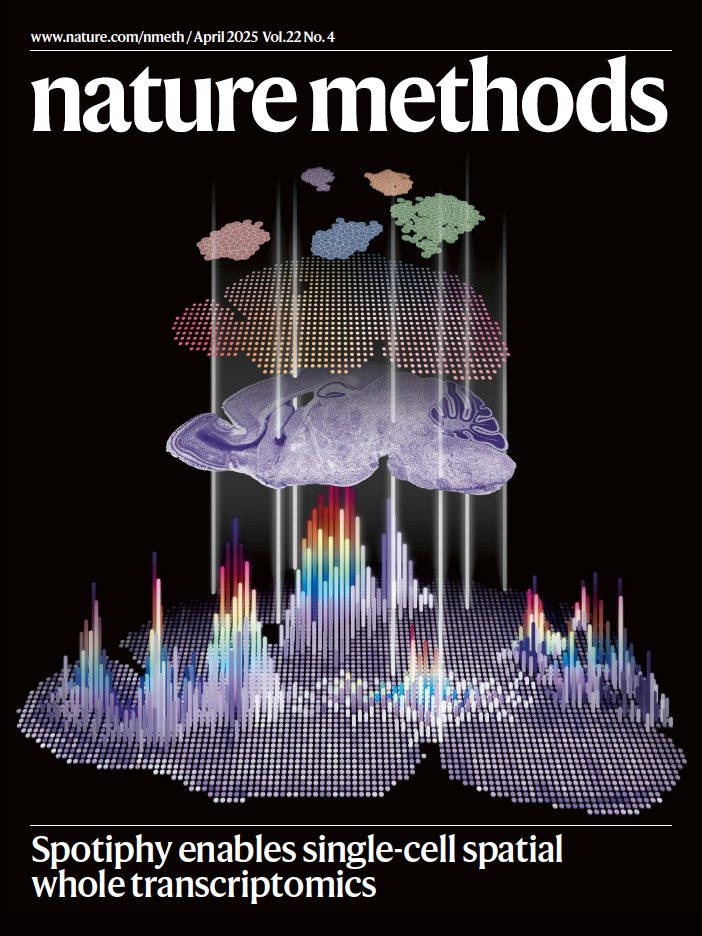
Our April issue is live! 🌧️🌷
https://t.co/CODWvNGhf4
On the cover, Spotiphy projects scRNA-seq and histological image data onto the spatial transcriptome. Artwork by Jiyuan Yang @StJudeResearch.
Paper: https://t.co/Jd5Qu2XHPr