☀️ Solar energy is more than power—it's a pathway to a cleaner, greener, and more sustainable future. Reduce energy costs, lower carbon emissions, and achieve reliable electricity with smart solar solutions. Together, let's build a world powered by renewable energy. @SirajEnergy
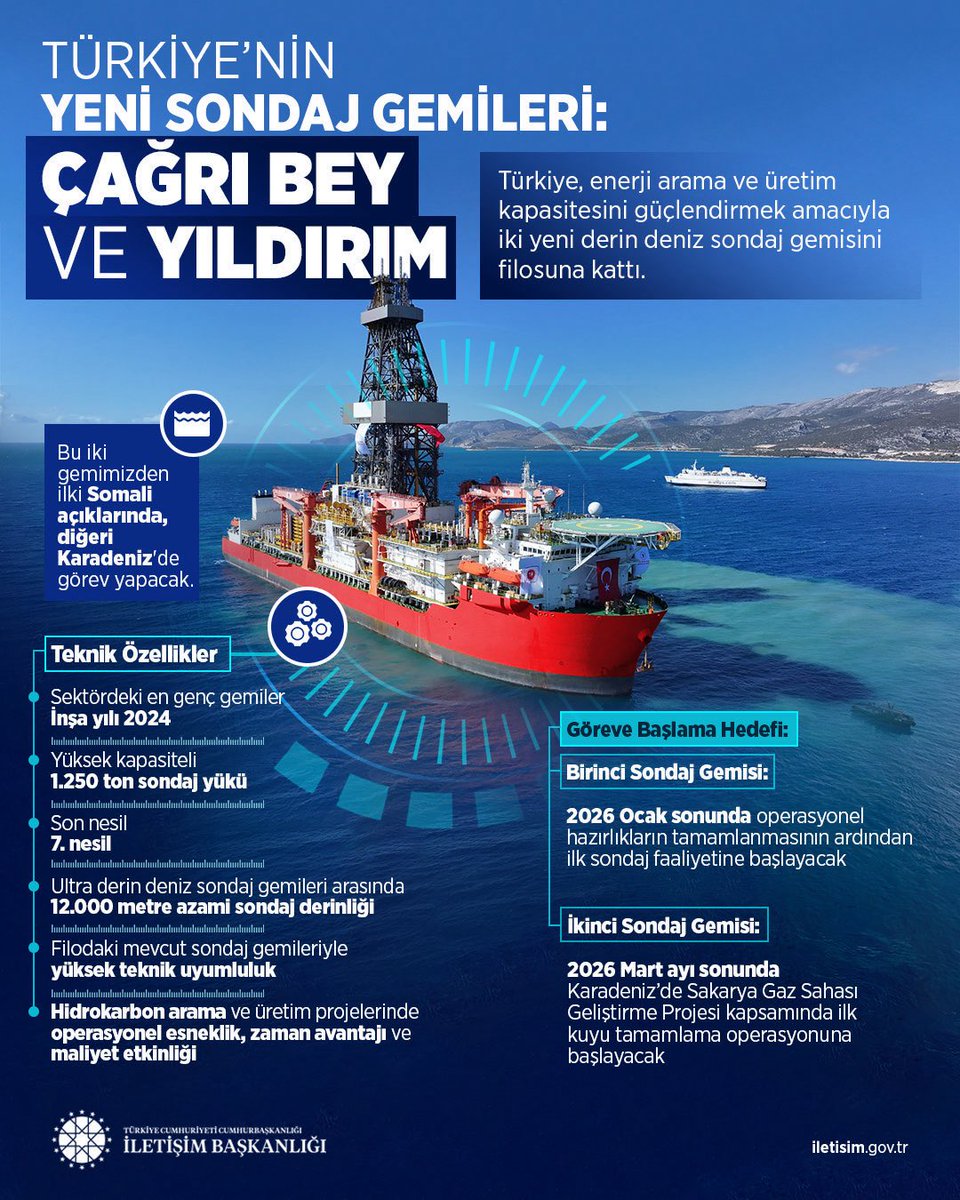
🇸🇴🇹🇷 The arrival of the Çağrı Bey drillship, operated by Turkish Petroleum Corporation, in Mogadishu on April 10 marks a significant step in Türkiye–Somalia energy cooperation, with offshore drilling set to begin soon and potential natural gas production anticipated by summer.
We're going around the Moon. Come watch with us. Artemis II's four-astronaut crew is lifting off from @NASAKennedy on an approximately 10-day mission that will bring us closer to living on the Moon and Mars. The launch window opens at 6:24pm ET (2224 UTC). https://t.co/X27QJejNDt
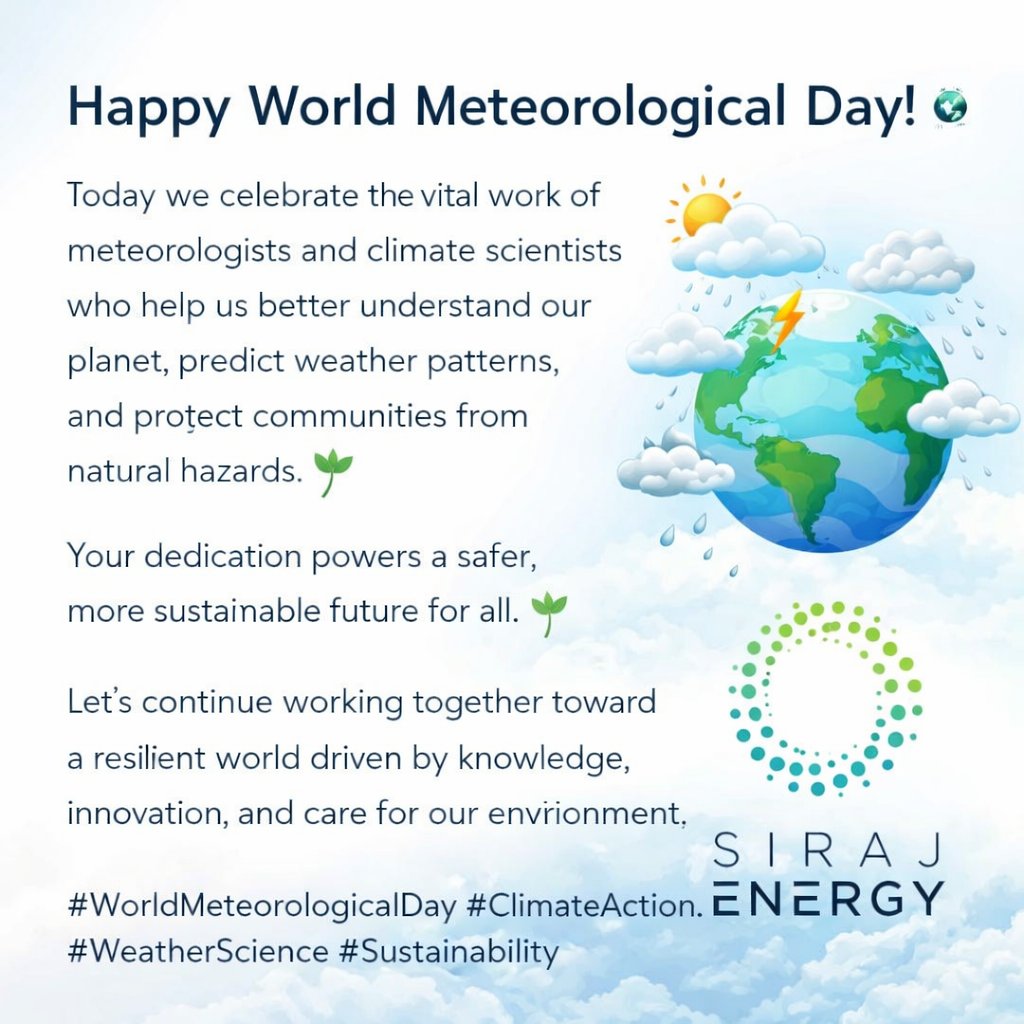
On World Meteorological Day (23 March), we highlight the importance of meteorology in advancing climate understanding, improving forecasts, and supporting resilient, sustainable societies. @SirajEnergy#WorldMeteorologicalDay
Energy is now a strategic pillar. 🇹🇷🇸🇦 The Türkiye–Saudi Arabia G2G deal, with a $2B investment in a 2 GW solar project in Sivas Karaman, supports Türkiye’s COP29 goal of 120 GW renewables by 2035. Comparable to 2 nuclear reactors, it shows the rising power of utility-scale solar
Türkiye’s drilling vessels Yıldırım in the Black Sea and Çağrı Bey off Somalia will undertake first-time drilling operations, signaling a strategic expansion of offshore energy exploration and maritime cooperation. @TCEnerji@aBayraktar1 🇹🇷🇸🇴
🎓 Türkiye Scholarships 2026 OPEN! 🇹🇷
Apply: 10 Jan – 20 Feb 2026
✅ Fully funded (tuition, stipend, housing, insurance, flight)
🌍 Open to all countries
🔗 https://t.co/TLrP2vv6e6
#StudyInTurkey#Scholarship2026#Opportunity2026
Energy-efficient and dependable machine learning systems are fundamental to responsible innovation. Rigor in design, robustness in performance, and sustainability in computation must guide the future of AI research and deployment. @SirajEnergy
Toward 2026, the Türkiye–Somalia energy partnership shows real progress—seismic surveys completed, drilling ahead—strengthening Somalia’s energy future and Türkiye’s strategic vision through shared growth 🇹🇷🇸🇴 @TCEnerji
2026’ya girerken Türkiye–Somali enerji ortaklığı güçlü bir şekilde ilerliyor 🇹🇷🇸🇴
Sismik araştırmalar tamamlandı, sondaj sürecine geçiliyor. Bu iş birliği, Somali’nin refahını ve Türkiye’nin enerji vizyonunu pekiştiriyor — ortak büyüme, istikrar ve umut ufuktadır.
Energy Automation & Sustainable Engineering constitute a transformative academic framework that responds to the dual challenges of rising global energy demand and environmental degradation. By integrating advanced automation technologies—such as intelligent control systems, real-time monitoring, artificial intelligence, and data-driven optimization—energy systems can operate with greater precision, reliability, and efficiency. Automation enables the seamless coordination of generation, storage, and consumption, particularly in complex systems with high penetration of renewable energy sources. This technological intelligence is essential for reducing energy losses, enhancing system resilience, and supporting informed decision-making in modern power networks.
From the perspective of sustainable engineering, energy automation is not merely a technical advancement but a strategic tool for achieving long-term environmental and socio-economic sustainability. Automated energy systems facilitate the efficient use of natural resources, lower carbon emissions, and promote the transition toward clean and renewable energy infrastructures. By embedding sustainability principles into system design, operation, and lifecycle management, this interdisciplinary field supports climate mitigation, energy equity, and sustainable development goals. As such, Energy Automation and Sustainable Engineering stand at the core of future-oriented energy research, policy formulation, and innovative engineering practice.
Key Challenges Facing Energy Companies in Somalia
1. Weak National Grid and Limited Infrastructure
Somalia lacks a unified national electricity grid. Most areas rely on isolated, privately owned mini-grids. This fragmentation makes large-scale investment, grid stability, and power distribution extremely difficult.
2. High Cost of Electricity Production
Energy companies depend heavily on diesel generators, which are expensive to operate due to fuel prices, transport costs, and insecurity. As a result, Somalia has one of the highest electricity tariffs in the world (often $0.50–$1 per kWh).
3. Lack of Government Regulation and Clear Policy
For years, the energy sector operated without unified national regulations. Although progress has been made, many companies still face uncertainties related to licensing, tariffs, safety standards, and contractual frameworks.
4. Security and Operational Risks
Armed conflict, instability in certain regions, and safety concerns increase operational costs. This affects the transport of equipment, fuel, and maintenance teams, discouraging foreign investment.
5. Financing Challenges
Access to capital is limited. Banks offer high interest rates and require strong collaterals. International investors also hesitate due to political risk, reducing opportunities for renewable energy expansion.
6. Limited Technical Capacity
The sector lacks sufficient trained engineers, technicians, and renewable energy specialists. This slows down the adoption of modern solar, wind, and hybrid systems.
7. Fragmented Market and Competition
Many private companies operate small grids with no coordination. This leads to:
Unstable quality of service
Overlapping networks
Difficulty in expanding to rural areas
No economies of scale
8. High Electricity Losses and Inefficiency
Old equipment, unplanned networks, and poor-quality cabling cause high technical losses and system inefficiencies.
9. Rural Electrification Gap
Most rural areas remain off-grid. Private companies often avoid these regions because the population density is low and the payback period is long.
10. Slow Integration of Renewable Energy
Even though Somalia has strong potential for solar (6–7 kWh/m²/day) and wind, the transition is slow due to:
High initial capital costs
Lack of incentives
Limited awareness and technical expertise
Happy Teachers’ Day to all dedicated educators whose guidance, patience, and passion continue to shape the minds and character of future generations. Your commitment goes far beyond teaching lessons — you inspire confidence, open doors to opportunity, and plant seeds of knowledge that grow throughout a lifetime. Thank you for your invaluable role in building a more enlightened, compassionate, and successful society. Our Prof. Dr Ramazan Çağlar @itu1773@ProfDrKoyuncu
Somalia celebrates a historic milestone as Omar Abdulkadir Artan is named the 2025 CAF Referee of the Year—a proud moment for our nation and for African football. Artan’s exceptional journey, marked by his leadership in major tournaments such as the #CAF Champions League final and the FIFA U-20 World Cup, showcases the rising standards of Somali refereeing on the continental stage.
His professionalism, integrity, and consistency on the field have earned him admiration across Africa and inspired a new generation of Somali referees. Congratulations to Omar Abdulkadir Artan for this remarkable and well-deserved achievement—your success is a victory for Somali football and a symbol of our growing presence in the world of sports.
Congratulations to my nephew on successfully defending his postgraduate thesis in Internal Medicine! *Dr Fuad Abdirashid* Omar
Your dedication, research, and perseverance have led you to this remarkable achievement. The medical field needs passionate and skilled doctors like you — many patients are waiting for your knowledge, compassion, and service. Your hard work today will heal lives tomorrow. 👏🩺🎓
Türkiye Cumhuriyeti’nin 102. kuruluş yıl dönümünü gurur ve sevinçle kutluyor, Türk halkına huzur, birlik ve refah diliyoruz.
🇹🇷 29 Ekim Cumhuriyet Bayramı Kutlu Olsun 🇹🇷 #Türkiye
🌍 Energy Planning and Management
Energy Planning is the process of forecasting future energy demand and determining the optimal mix of energy sources and technologies to meet that demand efficiently and sustainably.
Energy Management, on the other hand, focuses on monitoring, controlling, and optimizing how energy is generated, distributed, and consumed — with the goal of reducing costs, improving efficiency, and minimizing environmental impact.
Together, these two fields form the foundation of a sustainable energy future, ensuring that societies can meet their growing energy needs while protecting the planet. They are key tools in achieving energy security, climate goals, and economic development through renewable and efficient systems.
@SirajEnergy
#EnergyPlanning #EnergyManagement #Sustainability #RenewableEnergy #ClimateAction #EnergyEfficiency
🇸🇴🇹🇷 At the Zero Waste Forum, Turkish Minister of Environment, Urbanization and Climate Change Murat Kurum met with Somali Minister of Environment and Climate Change @BashirMJ Bashir Mohamed Jama. The discussion focused on enhancing cooperation in environmental protection, climate adaptation, renewable energy, and sustainable waste management. A strong partnership for a greener and more resilient future. 🌍🤝♻️ #ClimateAction #Sustainability #ZeroWaste #Türkiye #Somalia
Somalia at the Equator: Geography, Climate, and Historical Tourism 🇸🇴 Somalia is one of the few African nations directly intersected by the Equator, passing south of Kismayo (approx. latitude 0.36°S). This geographical position endows the country with a tropical climate, consistent solar radiation, and diverse ecosystems along its 3,333 km Indian Ocean coastline the longest in mainland Africa.🌍
Before the civil war of the early 1990s, Somalia was a notable tourism hub in East Africa. Its equatorial beaches in Mogadishu, Kismayo, and Berbera, combined with archaeological sites such as Laas Geel and the ancient Islamic port cities of Zeila and Marka, drew visitors from around the world. The nation was rightly known as “the Pearl of the Indian Ocean.”
Today, Somalia’s equatorial geography presents renewed potential for sustainable tourism, marine biodiversity research, and solar energy development, aligning with global climate resilience and renewable energy goals.
#Somalia #Equator #Geography #Sustainability #Tourism #RenewableEnergy #EastAfrica #ClimateResearch