HashPort takes a key step forward!
HPA has launched and graduated on TapeHub, and will serve as a core functional token in the future HashPort container ecosystem, carrying important roles such as usage, circulation, and ecosystem collaboration!
HashPort will also work together with TapeOut to co-build a more open on-chain container ecosystem, allowing more projects, assets, and communities to connect, operate, and grow within it
HPA
CA: 0x0Df25a91A6d7A7af201bCfdC721aA9CbE7611010
Making tape become HTTP takes more than a protocol
It also takes an entry point that truly brings developers in
This is the role HashPort wants to take on
To become the publishing layer of DeWEB,
making websites and application frontends readable, verifiable, and manageable objects on-chain
Therefore, we have decided to eliminate monthly service fees and DNS binding service fees
Developers will still need to pay public-chain Gas fees to upload files
We are lowering the barrier because we believe
verifiable frontends should become a fundamental capability of the internet
TapeOut provides on-chain containers
HashPort enables developers to publish websites into them
TapeKit handles reading and verification
Today, this means publishing an on-chain website
In the future, we hope it will become a starting point for more developers to build verifiable web services
From “trust this URL,”
to “verify this content”
This is how HashPort is helping build the next generation of the internet
Yes After talk with@Blonskr To better serve everyone, we don’t charge any monthly service fees or DNS binding fees
We warmly welcome everyone to experience HashPort and help spread the idea that frontends can be trusted further across the ecosystem
The infrastructure of DeWEB is gradually taking shape
TapeOut provides on chain containers
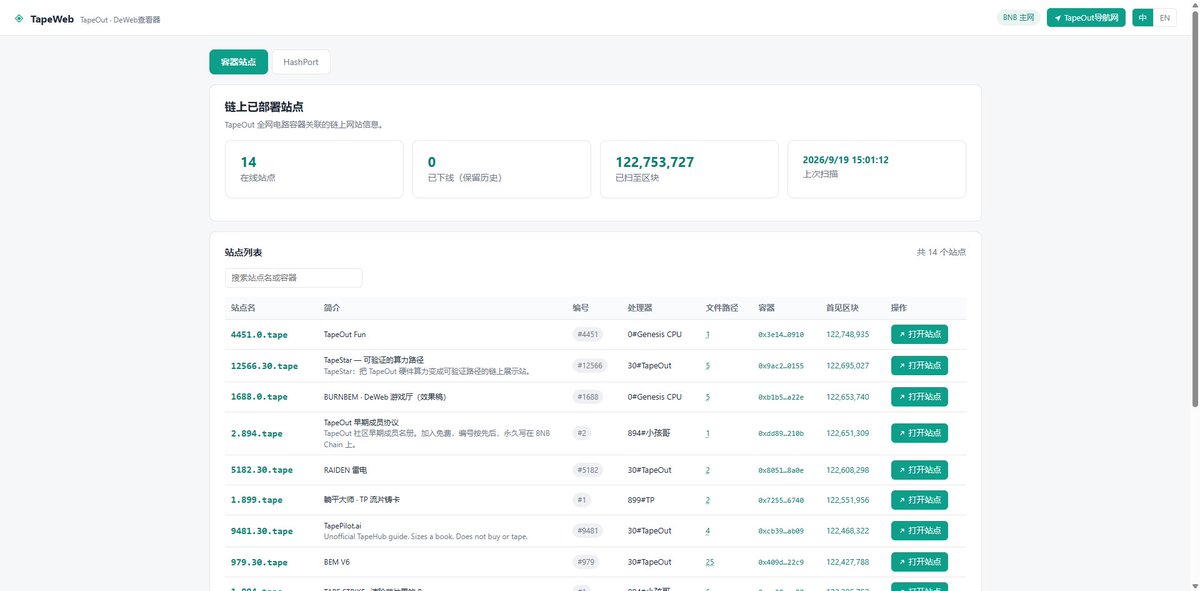
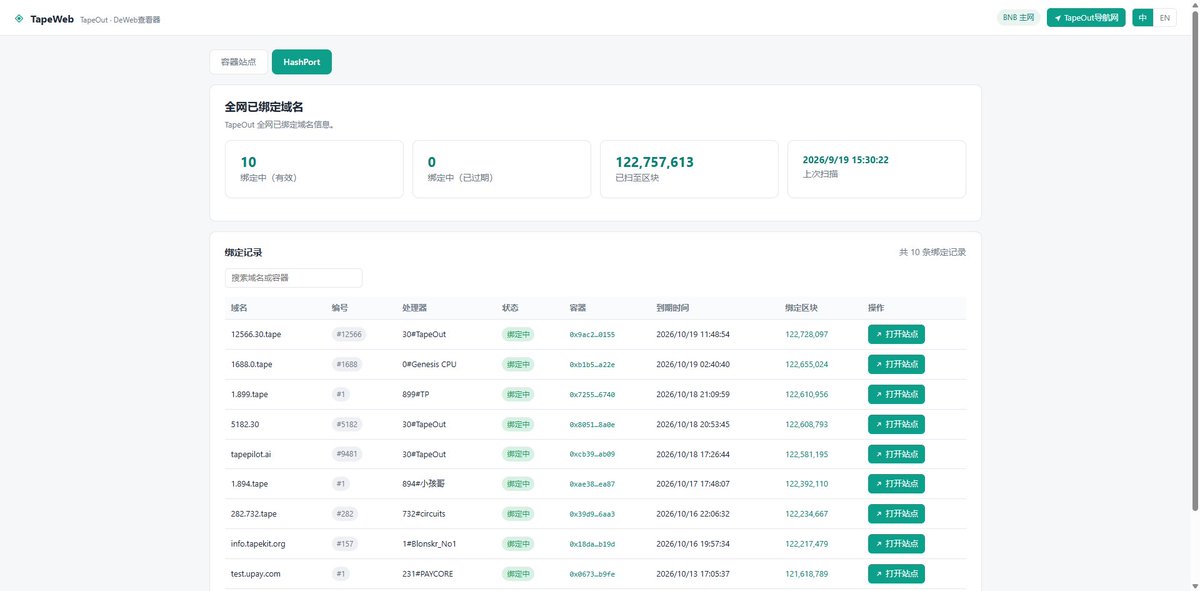
HashPort deploys website frontends on chain and connects users to on chain websites through domains
TapWeb.DeWEB Viewer makes these websites easier to discover and access
From Circuit, to Container, to Domain and Website
HashPort keeps building
The infrastructure of DeWEB is gradually taking shape
TapeOut provides on-chain containers.
HashPort deploys website frontends on-chain and connects users to on-chain websites through domains
TapWeb.DeWEB Viewer makes these websites easier to discover and access
From Circuit, to Container, to Domain and Website
HashPort keeps building
@JennieSats Well said
Blockchain can leverage its inherent strengths to constrain AI training data, prevent data poisoning, and introduce verifiable constraints around AI behavior and assets
And in the future, the entities we interact with most may well be AI Agents
As AI applications continue to expand, being verifiable, traceable, and tamper-resistant may become increasingly important
That’s part of what HashPort hopes to bring together with TapOut
Making the frontend itself a verifiable part of the stack
Less black box
More transparency
@Blonskr is great at storytelling and has a strong drive to keep exploring and building deeper
As builders in the TapOut ecosystem, we’re genuinely excited to see more and more creativity from @Blonskr We believe that will also bring more vitality to HashPort
@Yuanshan0626 Observation is important, of course But one thing is already clear TapOut is already strong enough What we’re looking forward to even more is seeing more powerful applications come together and grow within the ecosystem
Don’t let users sign transactions through a black-box frontend
Put the frontend on-chain
Let the hash be verified
Expose the risks before the signature
Traditional websites ask
Is the server still online?
Is the DNS working properly?
Is the CDN still running?
DeWEB asks
Does the on chain file hash match?
That’s the difference
The difference between HashPort and TapeKit is
HashPort solves the question How can developers publish websites on chain?
TapeKit solves the question How can users read on chain websites and verify whether the content is correct?