

Top Tweets for #30DaysStudyChallenge

Day 17 #30DaysStudyChallenge
Today was my rest and reflection day, but I still made it productive.
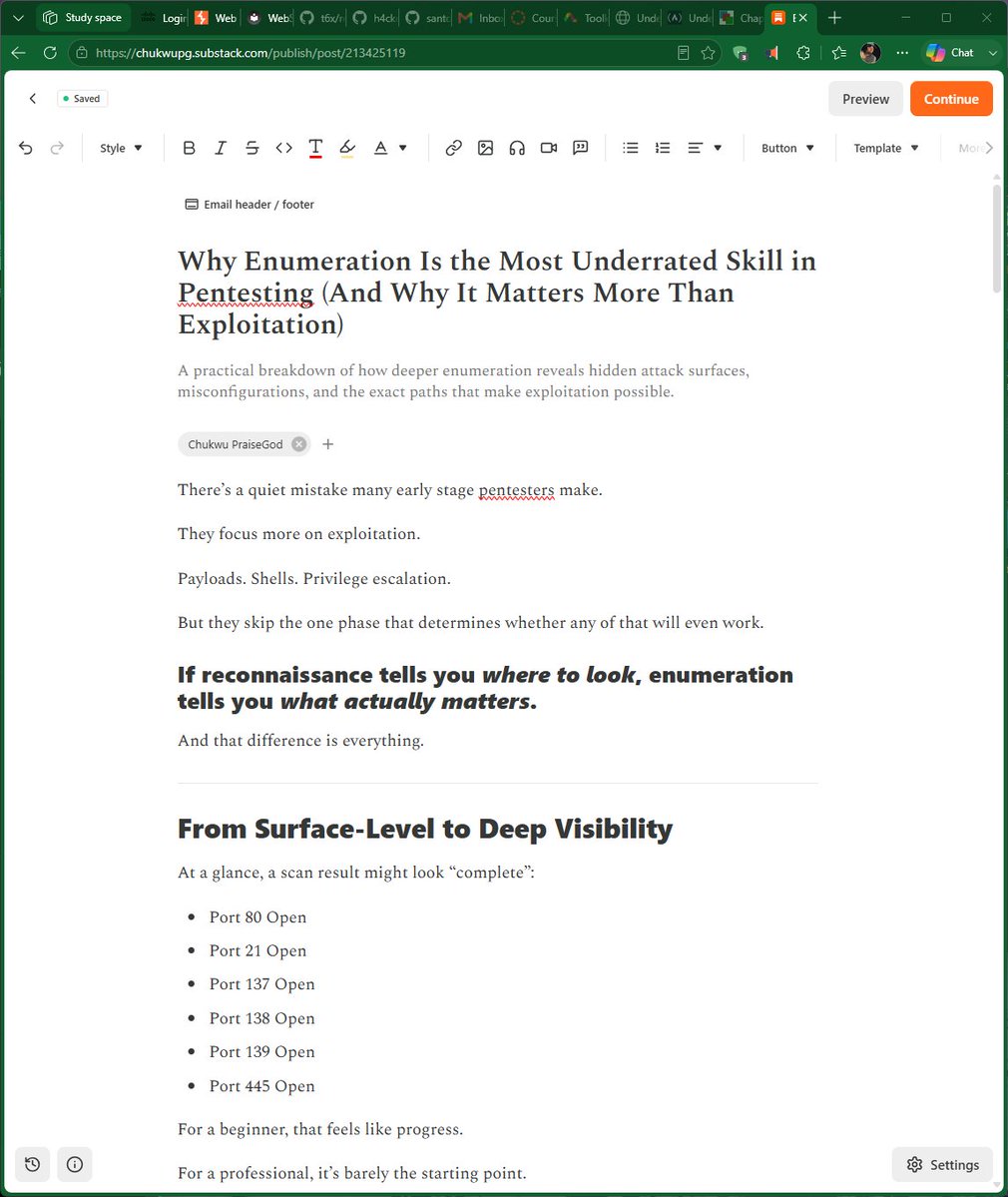
I started drafting a new Substack article (still rough, but coming together) and updated my portfolio to include a link to my Substack, so all my write-ups are now easier to access in one place.
Lately, I’ve noticed a shift in how I approach this journey, my study strategy is evolving, while I am learning how to filter noise from what actually matters, and I’m becoming more intentional about how I position myself long-term.
I don’t have everything figured out yet, but I’m learning to trust the process, adapt when needed, and keep putting in the work.
#Cybersecurity #LearningInPublic #Growth #InfoSec #30DaysStudyChallenge

Day 16 #30DaysStudyChallenge
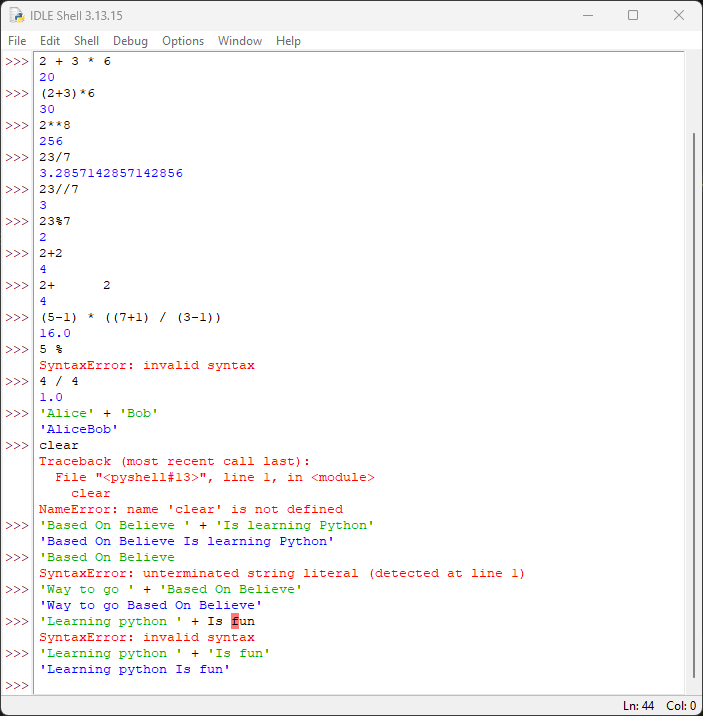
My focus today was on string operations and variables in Python.
I learned how operators behave differently depending on data types. For example, + performs addition with numbers but acts as a concatenation operator with strings, while * can replicate strings when combined with integers. It also highlighted a common pitfall, trying to combine strings and integers directly leads to type errors.
I also explored variables, how values are stored, initialized, and overwritten in memory. Understanding assignment statements made it clearer how programs keep track of data during execution.
Another important area was naming conventions and rules. Writing clean, descriptive variable names (preferably in snake_case) improves readability and makes code easier to maintain, especially as scripts grow more complex.
It’s still foundational, but this is the layer that everything else like automation, scripting, and tooling will be built on.
#Cybersecurity #Python #LearningInPublic #Automation #30DaysStudyChallenge


Day 16 #30DaysStudyChallenge
My focus today was on string operations and variables in Python.
I learned how operators behave differently depending on data types. For example, + performs addition with numbers but acts as a concatenation operator with strings, while * can replicate strings when combined with integers. It also highlighted a common pitfall, trying to combine strings and integers directly leads to type errors.
I also explored variables, how values are stored, initialized, and overwritten in memory. Understanding assignment statements made it clearer how programs keep track of data during execution.
Another important area was naming conventions and rules. Writing clean, descriptive variable names (preferably in snake_case) improves readability and makes code easier to maintain, especially as scripts grow more complex.
It’s still foundational, but this is the layer that everything else like automation, scripting, and tooling will be built on.
#Cybersecurity #Python #LearningInPublic #Automation #30DaysStudyChallenge
Day 15 #30DaysStudyChallenge
Still building my Python foundation, my focus today focus was on data types.
I learned the differences between integers (whole numbers), floating-point numbers (decimals), and strings (text). One key detail is how Python handles operations between data types, for example, combining an int and a float always evaluates to a float, and division with / always results in a float.
I also understood how strings work in Python, including proper use of quotes and common errors like unterminated string literals.
To make my learning more practical, I have decided to combine Automate the Boring Stuff with Python with the FreeCodeCamp Python curriculum, which offers a more hands-on approach with questions, workshops, and projects to test understanding as I go.
My focus is beyond understanding concepts, but to apply them as well.
#Cybersecurity #Python #LearningInPublic #Automation #30DaysStudyChallenge



1/6 🚀☁️
Day 15–17 of #30DaysStudyChallenge
Three days of revisiting AWS fundamentals, stepping into a real SOC environment, and exploring the connection between Cloud Security and DevOps.
Here’s the journey 👇🏽


1/6 🚀☁️🔐
Day 12–14 of #30DaysStudyChallenge
The past 3 days brought course completion, new learning, hands-on labs, and some really good news.
Here's a quick recap of the journey 👇🏽


Day 15 and 16 #30DaysStudyChallenge
Today, I continued the Introduction to Web Applications module on Hack The Box.
I’m revisiting the building blocks of the web, HTML, CSS, browsers, servers, and how everything connects behind a webpage.
Before testing web apps, you need to understand how they work.
#30DaysStudyChallenge #WebSecurity #HackTheBox

Day 14 #30DaysStudyChallenge
I have just completed the Web Requests module on HTB Academy! https://t.co/OyIOhPd0Sv #hackthebox #htbacademy #cybersecurity
Day 14 #30DaysStudyChallenge
Today, I continued my Python journey with the fundamentals...
Starting with expressions and operators.
I learned that expressions are the building blocks of Python, combinations of values and operators that always evaluate to a single result. I explored core math operators like exponentiation, modulus, integer division, and standard arithmetic operations.
I also covered operator precedence, understanding how Python evaluates expressions (PEMDAS logic), and how parentheses can be used to control execution order.
It might seem basic, but getting comfortable with how Python evaluates expressions is critical, especially when writing scripts for automation where small logic errors can break entire workflows.
The goal is to build a solid foundation now so I can apply it later to scripting and security automation.
#Cybersecurity #Python #LearningInPublic #Automation #30DaysStudyChallenge

Day 13 #30DaysStudyChallenge
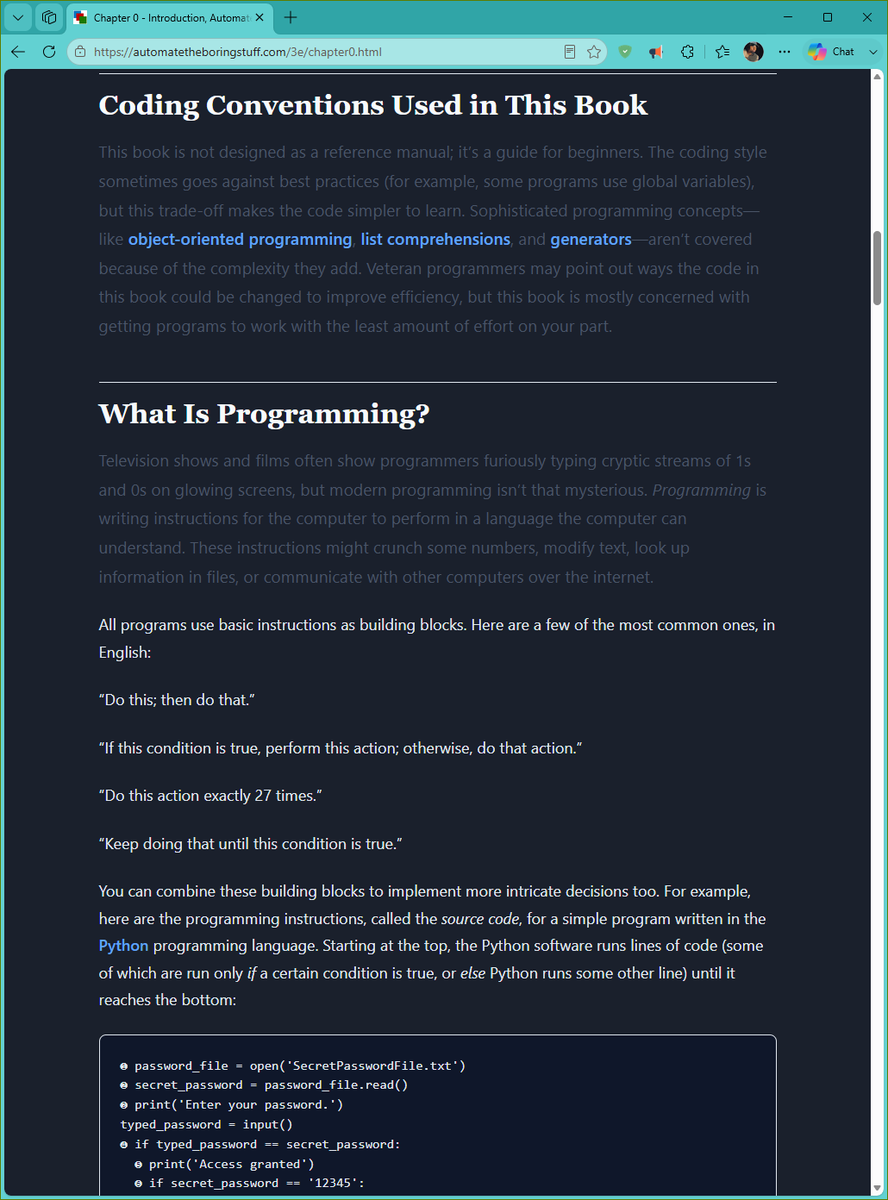
I started reading Automate the Boring Stuff with Python by Al Sweigart.
I’ve come to accept something important in my journey: to become a solid penetration tester, knowing tools isn’t enough, you need scripting and automation skills to truly scale your effectiveness.
While I’m comfortable working in terminals and using different tools, I’ve identified gaps in my ability to automate workflows and build small scripts that make tasks faster and more efficient. That’s what I’m aiming to fix.
This book looks right because it focuses on practical automation; things like file handling, web scraping, and scripting repetitive tasks, which aligns directly with real-world cybersecurity workflows.
My goal is simple:
learn Python, apply it to my security workflows, automate repetitive tasks, become more efficient.
If you have any resources (courses, labs, or practice ideas) that helped you learn Python for cybersecurity, or enhanced your scripting and automation skills, I’d really appreciate the recommendations.
@ireteeh @RedHatPentester
#Cybersecurity #Python #LearningInPublic #Automation #30DaysStudyChallenge

Day 14 #30DaysStudyChallenge
I have just completed the Web Requests module on HTB Academy! https://t.co/OyIOhPd0Sv #hackthebox #htbacademy #cybersecurity
1/6 🚀☁️🔐
Day 12–14 of #30DaysStudyChallenge
The past 3 days brought course completion, new learning, hands-on labs, and some really good news.
Here's a quick recap of the journey 👇🏽
1/6 🚀☁️
Day 10 & 11 of #30DaysStudyChallenge
The past few days have tested my consistency, discipline, and ability to keep showing up even when life gets hectic.
Day 10 was focused on completing my AWS Cloud Architecting labs before the deadline.
👇🏽


Day 13 #30DaysStudyChallenge
I started reading Automate the Boring Stuff with Python by Al Sweigart.
I’ve come to accept something important in my journey: to become a solid penetration tester, knowing tools isn’t enough, you need scripting and automation skills to truly scale your effectiveness.
While I’m comfortable working in terminals and using different tools, I’ve identified gaps in my ability to automate workflows and build small scripts that make tasks faster and more efficient. That’s what I’m aiming to fix.
This book looks right because it focuses on practical automation; things like file handling, web scraping, and scripting repetitive tasks, which aligns directly with real-world cybersecurity workflows.
My goal is simple:
learn Python, apply it to my security workflows, automate repetitive tasks, become more efficient.
If you have any resources (courses, labs, or practice ideas) that helped you learn Python for cybersecurity, or enhanced your scripting and automation skills, I’d really appreciate the recommendations.
@ireteeh @RedHatPentester
#Cybersecurity #Python #LearningInPublic #Automation #30DaysStudyChallenge
Day 12 #30DaysStudyChallenge
Wrapped up my web application penetration testing assessment by writing a full professional pentest report for https://t.co/fZcf7DlIhJ.
The report covers the complete engagement lifecycle: Executive Summary, Scope, Methodology, command log, enumeration summary, vulnerability analysis, findings with severity ratings, and clear remediation recommendations, ending with a final conclusion.
This phase has taught me that technical skills alone aren’t enough as a penetration tester, being able to document, structure, and communicate your findings clearly is what makes the work valuable.
You can review the full report here:
https://t.co/djgsu2B4Gh
I also published a new Substack article:
“The Day My Lab Broke: Debugging a Network That Refused to Work”
In it, I documented how I diagnosed and resolved a routing issue in my multi-machine pentesting lab setup (two systems on the same LAN using VMware).
Read here:
https://t.co/bddSuA1GRn
Building, breaking, fixing, and documenting, that’s the process. 💪
#Cybersecurity #Pentesting #TechnicalWriting #LearningInPublic #InfoSec


Day 12 & 13 : Learnt some of the basic commands of metasploit and the very first exploit on discovered vulnerabilities.
Looked at deeper exploits using metasploit and learned to use software to create a payload, test it and verify it works 🤧🤲🏾.
#30DaysStudyChallenge

Day 10(yesterday) & Day 11: Still learnt more about scanning since it's on a mkre deeper level than reconnaissance and learnt to use tools like "net discover" for number of active hosts and their individual ips.
Dived into the 3rd part of penetration testing
#30DaysStudyChallenge

Day 12/13✅ #30DaysStudyChallenge
I’m continuing my Web Application Penetration Testing journey, this time with @hackthebox_eu
I’ve practised on TryHackMe before; now I’m building on that foundation with more focused web-security learning.
#30DaysStudyChallenge #WebSecurity

Day 12 #30DaysStudyChallenge
Wrapped up my web application penetration testing assessment by writing a full professional pentest report for https://t.co/fZcf7DlIhJ.
The report covers the complete engagement lifecycle: Executive Summary, Scope, Methodology, command log, enumeration summary, vulnerability analysis, findings with severity ratings, and clear remediation recommendations, ending with a final conclusion.
This phase has taught me that technical skills alone aren’t enough as a penetration tester, being able to document, structure, and communicate your findings clearly is what makes the work valuable.
You can review the full report here:
https://t.co/djgsu2B4Gh
I also published a new Substack article:
“The Day My Lab Broke: Debugging a Network That Refused to Work”
In it, I documented how I diagnosed and resolved a routing issue in my multi-machine pentesting lab setup (two systems on the same LAN using VMware).
Read here:
https://t.co/bddSuA1GRn
Building, breaking, fixing, and documenting, that’s the process. 💪
#Cybersecurity #Pentesting #TechnicalWriting #LearningInPublic #InfoSec
Day 11 #30DaysStudyChallenge
Today’s focus was a full vulnerability analysis and exploitation exercise as part of my ongoing penetration testing assessment on the https://t.co/fZcf7DlIhJ web application.
The assessment revealed multiple security issues across different severity levels, starting with a critical SQL Injection vulnerability that allowed authentication bypass. I also identified a reflected XSS vulnerability where unsanitized input was executed in the browser, confirming improper input validation.
On the configuration side, the application exposed several weaknesses including plaintext credential transmission due to lack of HTTPS, missing security headers (such as CSP, HSTS, X-Content-Type-Options, and Referrer-Policy), and session cookies without the HttpOnly flag.
Additional findings included internal IP disclosure, information leakage through _vti_cnf, and exposure of DB.asp, which could reveal backend logic. I also tested the TRACE method but it returned as not implemented, ruling out a previously suspected attack vector (XST).
From the exploitation phase, I used SQL injection to successfully bypass authentication, and XSS payload execution confirmed that the webapp is susceptible to client-side script injection. Network traffic analysis also revealed plain text credential exposure during transmission.
In summary, this exercise demonstrates how multiple low-to-medium misconfigurations can combine to create a significant attack surface.
Next, I will be compiling all findings into a structured, professional penetration testing report with executive summary, scope, methodology, and remediation guidance.
#Cybersecurity #Pentesting #WebSecurity #InfoSec #LearningInPublic


Day 11 #30DaysStudyChallenge
Today’s focus was a full vulnerability analysis and exploitation exercise as part of my ongoing penetration testing assessment on the https://t.co/fZcf7DlIhJ web application.
The assessment revealed multiple security issues across different severity levels, starting with a critical SQL Injection vulnerability that allowed authentication bypass. I also identified a reflected XSS vulnerability where unsanitized input was executed in the browser, confirming improper input validation.
On the configuration side, the application exposed several weaknesses including plaintext credential transmission due to lack of HTTPS, missing security headers (such as CSP, HSTS, X-Content-Type-Options, and Referrer-Policy), and session cookies without the HttpOnly flag.
Additional findings included internal IP disclosure, information leakage through _vti_cnf, and exposure of DB.asp, which could reveal backend logic. I also tested the TRACE method but it returned as not implemented, ruling out a previously suspected attack vector (XST).
From the exploitation phase, I used SQL injection to successfully bypass authentication, and XSS payload execution confirmed that the webapp is susceptible to client-side script injection. Network traffic analysis also revealed plain text credential exposure during transmission.
In summary, this exercise demonstrates how multiple low-to-medium misconfigurations can combine to create a significant attack surface.
Next, I will be compiling all findings into a structured, professional penetration testing report with executive summary, scope, methodology, and remediation guidance.
#Cybersecurity #Pentesting #WebSecurity #InfoSec #LearningInPublic
Day 10 #30DaysStudyChallenge
Today being my rest and reflection day,
I attended a session by my community, @CyberRealm_HQ focused on the title “Getting Hired in Cybersecurity, The Skills, Strategy, and Mindset That Actually Get You the Job.” facilitated by @AleroLacherie
One thing became very clear: working in Cybersecurity is a combination of technical competence, how well you communicate your skills, and the strategy behind your job search.
Employers are not just looking for people who can use tools and run commands, they want individuals with proof of work, individuals who understand problems, think critically, document clearly, and can align their skills with real business needs.
Another key lesson was mindset.
Consistency, patience, intentional learning and the strategy you use in learning matter just as much as technical ability. It’s easy to feel like you’re not doing enough, but progress compounds when you stay focused and keep building.
Finally, It's a marathon not a sprint.
Today reminded me that the goal goes beyond learning cybersecurity, to becoming someone who can actually deliver value in the field.
Thank you so much, ma @AleroLacherie, for such a wonderful and impactful session. Your journey truly inspired me, and the lessons you shared have given me greater clarity and direction as I continue on my own cybersecurity journey.
#Cybersecurity #LearningInPublic #CareerGrowth #InfoSec #30DaysStudyChallenge


Day 10(yesterday) & Day 11: Still learnt more about scanning since it's on a mkre deeper level than reconnaissance and learnt to use tools like "net discover" for number of active hosts and their individual ips.
Dived into the 3rd part of penetration testing
#30DaysStudyChallenge
Day 9: Learnt to use more tools for reconnaissance like what web for js libraries, web servers and so on.Learnt to use another website to gather emails
Got into the 2nd stage of penetration testing scanning. Got more notes on UDP & TCP as necessary protocols
#30DaysStudyChallenge


Day 11/30 ✅ #30DaysStudyChallenge
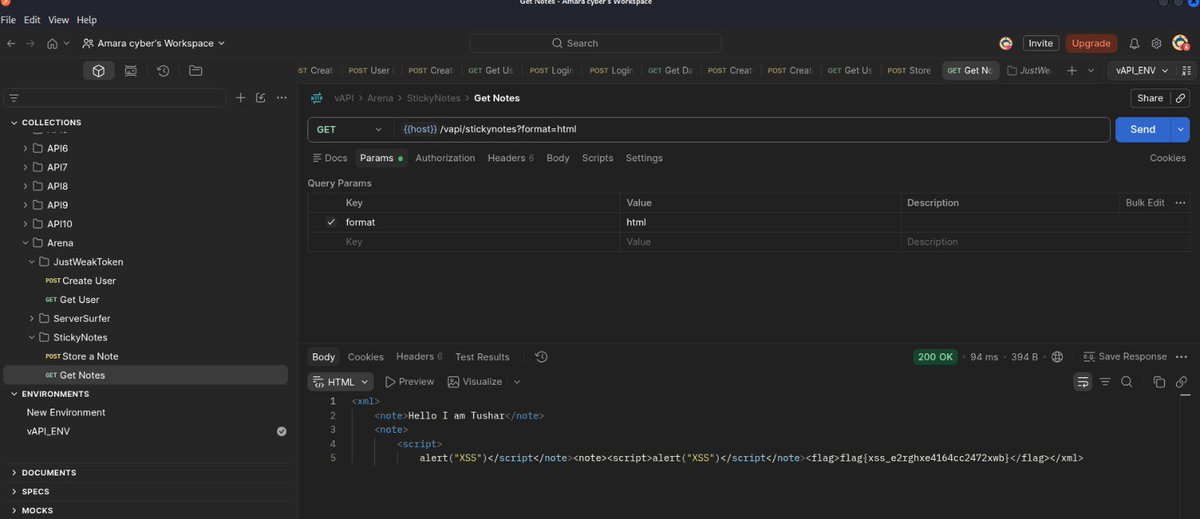
vAPI Arena challenges:
• JustWeakToken — weak JWT validation
• ServerSurfer — SSRF
• StickyNotes — Stored XSS
Different challenges, same lesson: never blindly trust tokens, URLs, or user input.
#30DaysStudyChallenge #APISecurity


Day 10/30 ✅ #30DaysStudyChallenge
vAPI APIs 8–10 show how different security practices work together:
API8: prevent unsafe input.
API9: don’t leave old or weaker API versions exposed.
API10: make sure attacks are logged, monitored, and detected.
Secure the code. Secure every version. Monitor everything.
#30DaysStudyChallenge #APISecurity


Day 10 #30DaysStudyChallenge
Today being my rest and reflection day,
I attended a session by my community, @CyberRealm_HQ focused on the title “Getting Hired in Cybersecurity, The Skills, Strategy, and Mindset That Actually Get You the Job.” facilitated by @AleroLacherie
One thing became very clear: working in Cybersecurity is a combination of technical competence, how well you communicate your skills, and the strategy behind your job search.
Employers are not just looking for people who can use tools and run commands, they want individuals with proof of work, individuals who understand problems, think critically, document clearly, and can align their skills with real business needs.
Another key lesson was mindset.
Consistency, patience, intentional learning and the strategy you use in learning matter just as much as technical ability. It’s easy to feel like you’re not doing enough, but progress compounds when you stay focused and keep building.
Finally, It's a marathon not a sprint.
Today reminded me that the goal goes beyond learning cybersecurity, to becoming someone who can actually deliver value in the field.
Thank you so much, ma @AleroLacherie, for such a wonderful and impactful session. Your journey truly inspired me, and the lessons you shared have given me greater clarity and direction as I continue on my own cybersecurity journey.
#Cybersecurity #LearningInPublic #CareerGrowth #InfoSec #30DaysStudyChallenge
Day 9 #30DaysStudyChallenge
Continuing my penetration testing assessment of a vulnerable web application https://t.co/fZcf7Dlasb
Day 7, I started the enumeration phase with directory brute-forcing.
Today, I concluded the enumeration phase by focusing on deeper HTTP analysis, specifically identifying supported methods, extracting headers, and understanding server-side configurations.
From the response headers, I identified that the server is running Microsoft IIS 8.5 with an https://t.co/Cfg6JSPQdk backend. This helps narrow down the technology stack and guides more targeted testing approaches.
I enumerated the supported HTTP methods and observed that the TRACE method is enabled. This is a potential security risk, as it may expose the application to Cross-Site Tracing (XST) attacks.
Using curl, I attempted accessing one of the discovered endpoints /robot.txt and observed that the application does not attempt to limit automated discovery, and that it supports unrestricted enumeration by scanning tools.
Lesson learned
Each step like this builds context, understanding the server behavior and configuration is key to uncovering deeper vulnerabilities.
Next: I would perform vulnerability assessment before moving into exploitation.
#Cybersecurity #Pentesting #WebSecurity #InfoSec #LearningInPublic

1/6 🚀☁️
Day 10 & 11 of #30DaysStudyChallenge
The past few days have tested my consistency, discipline, and ability to keep showing up even when life gets hectic.
Day 10 was focused on completing my AWS Cloud Architecting labs before the deadline.
👇🏽
Day 9 #30DaysStudyChallenge
Continuing my penetration testing assessment of a vulnerable web application https://t.co/fZcf7Dlasb
Day 7, I started the enumeration phase with directory brute-forcing.
Today, I concluded the enumeration phase by focusing on deeper HTTP analysis, specifically identifying supported methods, extracting headers, and understanding server-side configurations.
From the response headers, I identified that the server is running Microsoft IIS 8.5 with an https://t.co/Cfg6JSPQdk backend. This helps narrow down the technology stack and guides more targeted testing approaches.
I enumerated the supported HTTP methods and observed that the TRACE method is enabled. This is a potential security risk, as it may expose the application to Cross-Site Tracing (XST) attacks.
Using curl, I attempted accessing one of the discovered endpoints /robot.txt and observed that the application does not attempt to limit automated discovery, and that it supports unrestricted enumeration by scanning tools.
Lesson learned
Each step like this builds context, understanding the server behavior and configuration is key to uncovering deeper vulnerabilities.
Next: I would perform vulnerability assessment before moving into exploitation.
#Cybersecurity #Pentesting #WebSecurity #InfoSec #LearningInPublic
Day 8 #30DaysStudyChallenge
Today was all about refinement and attention to detail.
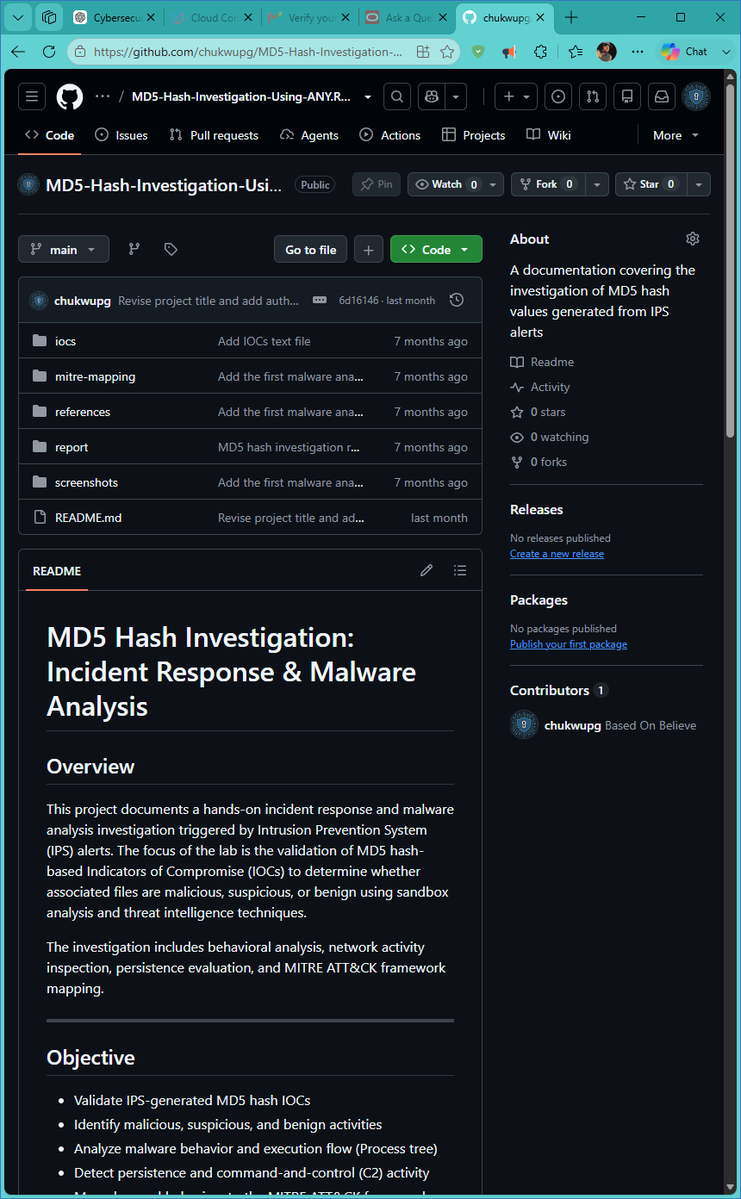
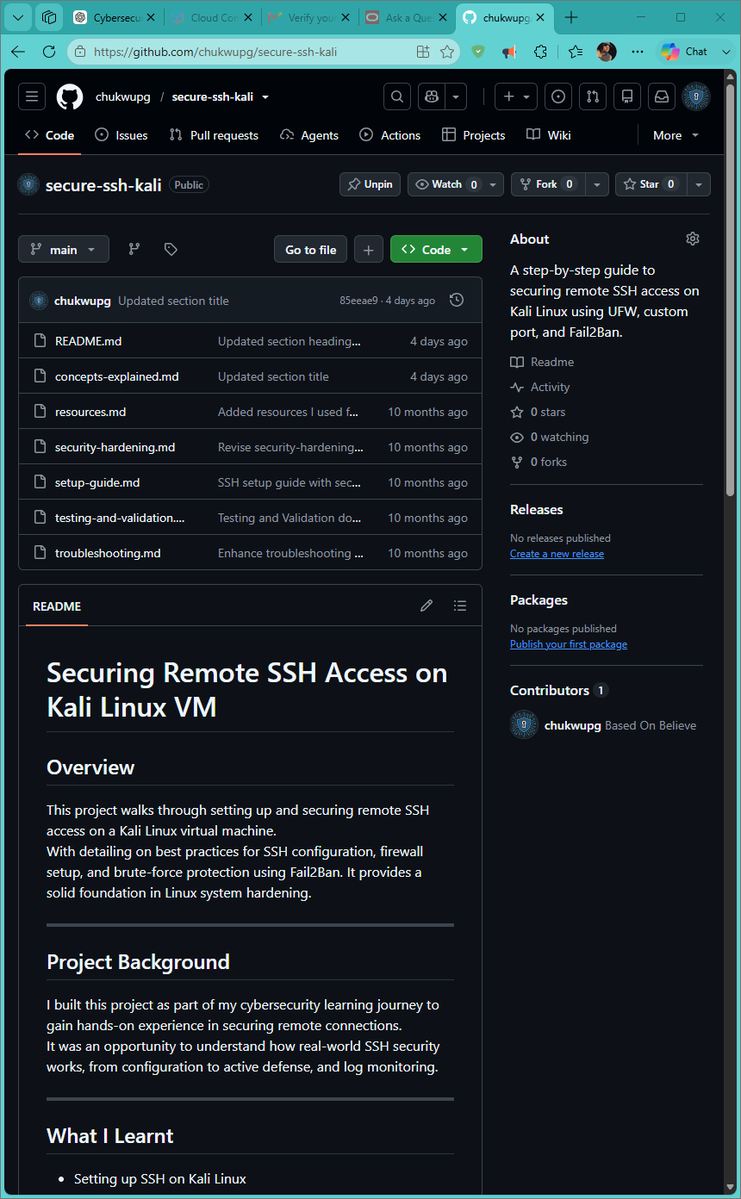
I reviewed the documentation of my previous projects on GitHub, identifying issues like broken file links, formatting inconsistencies, and areas that needed clearer explanations.
It’s easy to focus on building projects, but poorly documented work can reduce its impact. Clean, structured, and accurate documentation makes projects easier to understand, reuse, and evaluate, especially for recruiters and collaborators.
Small improvements, but they go a long way in presenting your work professionally.
#Cybersecurity #LearningInPublic #Documentation #GitHub #InfoSec

Day 8 #30DaysStudyChallenge
Today was all about refinement and attention to detail.
I reviewed the documentation of my previous projects on GitHub, identifying issues like broken file links, formatting inconsistencies, and areas that needed clearer explanations.
It’s easy to focus on building projects, but poorly documented work can reduce its impact. Clean, structured, and accurate documentation makes projects easier to understand, reuse, and evaluate, especially for recruiters and collaborators.
Small improvements, but they go a long way in presenting your work professionally.
#Cybersecurity #LearningInPublic #Documentation #GitHub #InfoSec
Day 7 #30DaysStudyChallenge
Continuing my penetration testing assessment of a vulnerable web application.
Today, I started the enumeration phase with directory bruteforcing, with the objective of identifying hidden directories and files that could expose additional attack surfaces beyond the application's normal navigation.
So far, I identified several interesting endpoints, including authentication pages such as /Login.asp, /register.asp, and /logout.asp, as well as application functionality like /Search.asp and /showthread.asp.
I also came across potentially sensitive files such as /DB.asp, which returned an empty response but may still warrant further investigation, and /robots.txt, which did not contain any restricted paths.
The next step is to analyze these endpoints more deeply and determine whether any of the discovered functionality or files introduce exploitable vulnerabilities.
Another step forward in learning how structured enumeration helps turn a broad attack surface into specific areas for vulnerability analysis.
#Cybersecurity #Pentesting #WebSecurity #InfoSec #LearningInPublic

1/5 🚀
Day 8 & 9 of #30DaysStudyChallenge
The past two days have been a mix of deep technical learning and stepping outside my comfort zone.
Day 8 was all about Check Point CCSA training, hands-on labs, and putting theory into practice.
👇🏽


https://t.co/8jnvh30wi7
Day 8/30 ✅ #30DaysStudyChallenge
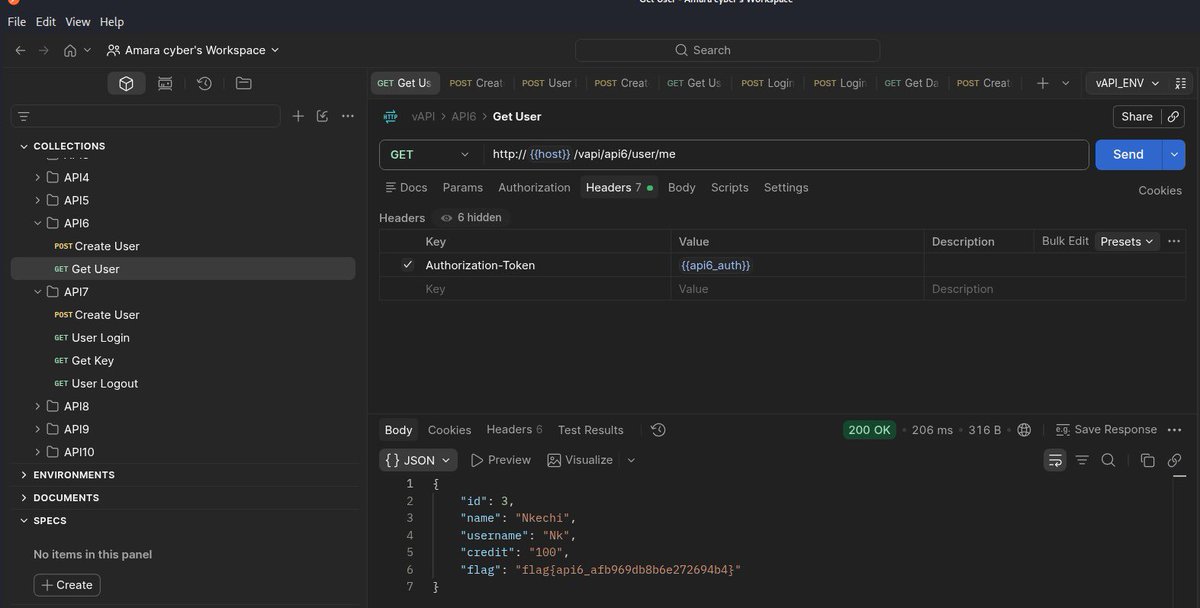
Today’s API6 lesson on vapi: not every field a user sends in a request should be trusted.
I added a credit value while creating an account, even though it should only be controlled by the system and the API accepted it.
#30DaysStudyChallenge #APISecurity
Day 7/30 ✅ #30DaysStudyChallenge
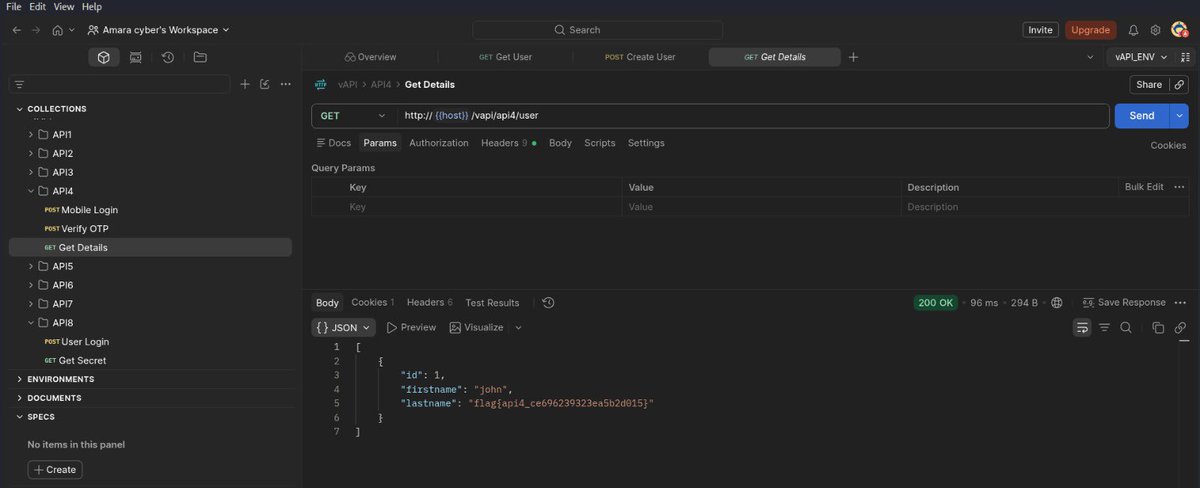
Completed API5 in vAPI.
Using a normal user token, I accessed Get All Users and received every user record, including the admin record and flag.
Lesson: A valid token is not enough—APIs must check user roles too.
#30DaysStudyChallenge #APISecurity
Last Seen Hashtags on Sotwe
Trends for you
Most Popular Users

Elon Musk 
@elonmusk
241.5M followers

Barack Obama
@barackobama
119M followers

Cristiano Ronaldo
@cristiano
113.9M followers

Donald J. Trump
@realdonaldtrump
111.8M followers

Narendra Modi
@narendramodi
107.2M followers

Rihanna
@rihanna
98.6M followers

NASA
@nasa
92.4M followers

Justin Bieber
@justinbieber
91.8M followers

KATY PERRY
@katyperry
89.7M followers

Taylor Swift
@taylorswift13
83.7M followers

Lady Gaga
@ladygaga
75.1M followers

Virat Kohli
@imvkohli
72.9M followers

Kim Kardashian
@kimkardashian
70.8M followers

YouTube
@youtube
68.8M followers

Neymar Jr
@neymarjr
65.9M followers

Bill Gates
@billgates
64.9M followers

Selena Gomez
@selenagomez
62.8M followers

The Ellen Show
@theellenshow
62.3M followers

CNN
@cnn
61.8M followers

X
@x
60.7M followers