

Top Tweets for #7Takeaways

1/
Recommended talk on Saudi Arabia’s Vision 2030
#7takeaways
1. Despite Vision 2030's goal of reducing oil dependence, Saudi Arabia has actually become more dependent on oil since 2016, requiring higher oil prices (around $93-108 per barrel) to balance its budget compared to 2016 levels.
2. Saudi government spending has outpaced oil revenue growth since 2016, even though oil revenues have more than doubled. This increased spending has contributed to greater oil dependence rather than reducing it.
3. Three main factors have hindered diversification:
- High government spending and ambitious mega-projects
- Political institutions and social contracts that encourage spending
- Regional competition (with multiple Gulf countries pursuing similar diversification strategies like financial centers and tourism)
4. The non-oil economy in Saudi Arabia remains heavily dependent on government spending, which is ultimately funded by oil revenues. When oil prices drop, non-oil sectors also contract, showing the deep interconnection.
5. Saudi Arabia faces a fundamental labor market challenge: 83% of private sector workers are expatriates, and there's tension between "Saudization" goals (increasing Saudi employment) and economic diversification, as higher Saudi wages can make industries less competitive.
6. Some positive developments have occurred since 2016:
- Female labor force participation has nearly doubled from 18% to 36%
- Government revenues have more than doubled
- Data quality and transparency have improved significantly
7. The country faces competing policy objectives that often work against each other: diversification, fiscal balance, short-term growth, and Saudization. Success in one area can make achieving the others more difficult.


Here's a recording of my talk last week on Saudi Vision 2030 at @HarvardGrwthLab
https://t.co/7eBIGYgLHp
1/
Podcast recommendation-
The India Opportunity: Growth, Risks & AI Revolution according to Aswath Damodaran
https://t.co/oZhWExaiwF
----
#7Takeaways
1. On India's Future & Challenges:
- While India has tremendous potential for the next decade, there are significant structural challenges that need addressing - particularly the slow legal system, bureaucratic inefficiencies, and infrastructure limitations
- Rather than trying to replicate China's model, India needs to craft its own development story and make incremental progress on reforms during good times rather than waiting for crises
2. On Technology & Innovation:
- Much recent innovation has been "shallow tech" built on smartphones rather than deep technological breakthroughs
- The real test of India's tech progress will be when Indian companies emerge among the world's largest by creating truly innovative solutions, not just by being manufacturing outsourcers
- Winner-takes-all dynamics in tech are driven by network effects and economies of scale, leading to natural consolidation
3. On AI & Future of Work:
- AI will most significantly impact mechanical and rule-based jobs first, including coding and white-collar work
- The key to remaining relevant is developing skills AI cannot easily replicate: imagination, making unexpected connections, and utilizing both analytical and creative thinking
- We may be making ourselves more vulnerable to AI disruption by becoming more mechanical and rule-based in our work
4. On Life & Career Choices:
- Finding your "moment of grace" - that insight about what you truly want to do - is crucial, but requires being open and not constantly distracted
- Don't over-plan life decades in advance - take it day by day while avoiding irreversible mistakes
- Teaching turned out to be his pivotal life decision, showing how one choice can shape everything that follows
5. On Parenting:
- Use a "light touch" approach - children come with their own personalities and need guidance without over-direction
- Focus on preventing irreversible harm rather than trying to control every decision
- Let children make their own choices and mistakes while providing support
6. On Investing Philosophy:
- Never invest money that, if lost, would change your way of life
- Investing shouldn't be the center of your universe - it's about preserving and growing wealth, not getting rich quick
- Pain and market downturns are inevitable teachers for young investors - no amount of advice can replace that experience
7. On Thinking & Creativity:
- We read too much and think too little - some of the best insights come from letting your mind wander
- Having "idle mind" moments without constant smartphone distraction allows for creative connections
- Writing down thoughts and feelings in real-time helps capture insights and learn from experiences
1/ Recommended Podcast
MONTEK SINGH AHLUWALIA PODCAST: Top Economist Explains India’s High Growth Years
https://t.co/fJa4ERfK0l
#India
---
#7Takeaways
1. The 1991 Economic Reforms:
- Were not solely driven by the IMF crisis, but rather the culmination of a gradual realization during the 1980s that India's economic policies weren't delivering
- Comprehensive changes in trade policy, industrial policy, and financial markets were India's own decisions, not IMF prescriptions
- The reforms were implemented quickly when key decision-makers (like PM Narasimha Rao and Finance Minister Manmohan Singh) worked together with clear vision
2. Import Licensing System's Flaws:
- The pre-1991 licensing system was extremely bureaucratic and inefficient
- Example: Narayana Murthy's Infosys story showed how import licensing delayed business by months simply because of model number changes
- The system gave excessive power to bureaucrats who often didn't understand the technical aspects of what they were regulating
3. Exchange Rate Misconceptions:
- Politicians often wrongly view strong exchange rates as a sign of economic strength
- A strong exchange rate should be the result of a strong economy, not artificially maintained
- Import controls effectively act as a tax on exports, hurting overall economic growth
4. Public Sector Reform Needs:
- Ahluwalia believes most public sector enterprises should be privatized except for very specific areas
- Public sector presence in areas like hotels and pharmaceuticals is unnecessary
- Political resistance to privatization often comes from those who benefit from controlling these enterprises
5. State-Level Reforms:
- Too much focus is on central government reforms while state-level reforms are crucial
- States need to improve ease of doing business and reduce regulatory burdens
- Decentralization should happen not just from center to states, but within states to local levels
6. Future Growth Prospects:
- India can easily achieve 6% growth but needs to aim for 7.5% over the next decade
- Current policies may not be sufficient to achieve developed country status by 2047
- Need for structural changes and better implementation of "minimum government, maximum governance"
7. Reform Implementation Approach:
- Need for multiple expert committees rather than just internal government committees
- Important to involve outside expertise, including Indians working globally
- Reforms should be implemented faster - what took 30 years could have been done in 15 years with better execution

1/ Book Talk recommendation
Motivation and Purpose in the Public Sector
https://t.co/StAfcCFMip
#7takeaways
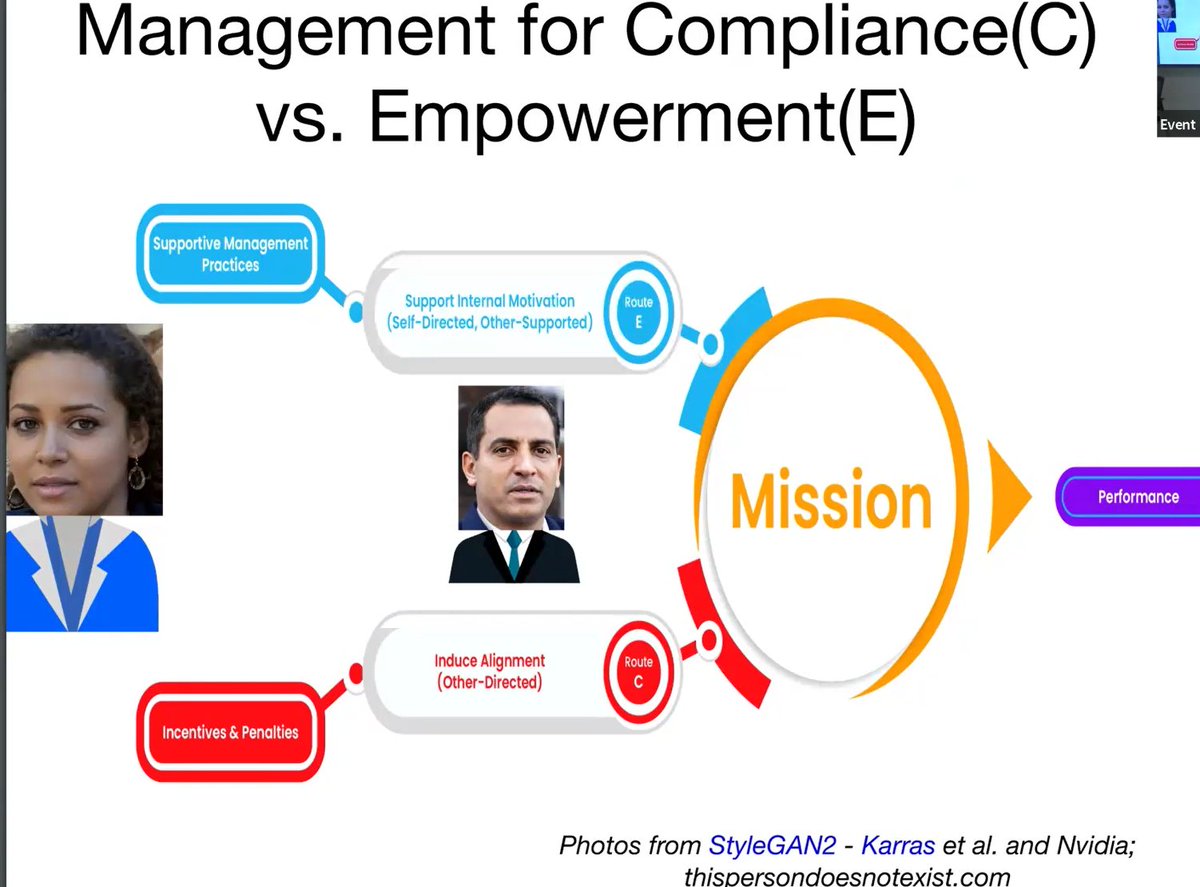
1. Management affects motivation - People's motivation isn't fixed but changes in response to how they are managed. When managers use supportive, empowering practices rather than pure compliance-based approaches, employees show higher motivation and better performance.
2. The compliance vs. empowerment balance matters - While some compliance is necessary, many government organizations are over-indexed on compliance at the expense of empowerment. The optimal balance depends on the type of work - easily monitored tasks may need more compliance, while complex work benefits from more empowerment.
3. Mission-driven people leave fastest under heavy compliance - Research shows that employees who are most motivated by the mission tend to leave organizations fastest when faced with overly compliance-heavy management that prevents them from effectively pursuing that mission (example given of Detroit child protective services).
4. Fear of failure drives over-compliance - Leaders often default to compliance-heavy approaches because they fear the consequences of empowerment leading to even a small number of failures or misuses, even if the majority leads to better outcomes (example given of school principals where 96/100 might succeed but focus is on the 4 who don't).
5. Empowerment and good pay are complements, not substitutes - The narrative that workers must choose between purpose/autonomy and good compensation is false. Public sector organizations should provide both good wages and empowering management to attract and retain talent.
6. Change is possible without systemic overhaul - Organizations don't need to completely transform overnight. Leaders can start making improvements within existing constraints by taking small steps, building momentum, and demonstrating success.
7. Trust is fundamental - The relationship between citizens and government, between different levels of bureaucracy, and between managers and employees all depend on trust. Current compliance-heavy systems often reflect and reinforce low trust, but rebuilding trust through empowering approaches can create positive cycles.
#DOGE

1/
Recommended podcast
#oneworldlearn
Inside How Perplexity is Disrupting Online Search
https://t.co/wDLX6z0WMC
#7takeaways
1. Product Development Philosophy:
- Rather than having formal product review meetings, Arun gives immediate feedback as a user
- Believes feedback from authority figures often comes with ulterior motives
- Encourages fast iteration and bug fixes over formal presentations
2. Organizational Structure:
- Teams operate independently in parallel for different features
- Each team has a standard composition (designer, frontend engineer, backend engineer, AI engineer, etc.)
- This structure enables faster shipping across multiple projects simultaneously
3. Growth Strategy:
- Prioritizes queries per day as their north star metric
- Grew from 3,000 to 3 million to 16 million queries per day
- Major growth channels include Twitter, LinkedIn, newsletters, and organic sharing through WhatsApp/messages
4. User Retention Metrics:
- Focuses on getting users to complete their first 10 questions
- Once users ask 100 questions, they rarely churn
- Three key dimensions: accuracy, latency, and readability of answers
5. Hiring Philosophy:
- Values potential over past credentials
- Looks for people with "chip on their shoulder" who haven't had their big break yet
- Experience at failed startups can be valuable if the person showed strong work ethic
6. Monetization Approach:
- Deliberately generous with free tier (4 pro searches every 4 hours)
- Prioritizes user growth over immediate revenue
- Successfully got millions of paid subscribers despite skepticism
7. Future of Search Advertising:
- Plans to replace traditional link-based ads with sponsored questions at bottom of answers
- Aims to integrate product catalogs directly into answers for seamless transactions
- Believes influencers and brands can provide sponsored multimedia content without corrupting answer quality
1/
Podcast recommendation
Scott Aaronson — Quantumania
https://t.co/UrrSJSlCt6
---
#7takeaways
1. Quantum Computing Limitations: Quantum computers are not magical devices that speed up everything - they provide advantages only for specific types of problems, primarily quantum mechanics simulation and breaking current encryption. Many everyday computing tasks wouldn't benefit from quantum computers.
2. Human vs AI Differences: One fundamental difference between humans and AI is that AI systems can be perfectly copied, rewound, and reset, while humans make irreversible choices that can't be undone. This "ephemerality" of human decisions might actually be a strength rather than a weakness.
3. Quantum Computing Timeline: While there has been significant progress in quantum computing (reaching 99.9% accuracy in controlling two qubits), aggressive development timelines should be viewed skeptically. The field is approaching but hasn't yet reached the crucial "fault tolerance threshold" where error correction becomes net positive.
4. Hype vs Reality: In both quantum computing and AI, there's a significant challenge in disambiguating legitimate advances from hype. The existence of real, testable products (like ChatGPT) helps ground AI discussions, while quantum computing claims are harder to verify for non-experts.
5. Cryptography Concerns: Quantum computers pose a significant threat to current encryption methods, but work is already underway on "post-quantum encryption" systems. The challenge isn't just developing these systems but implementing them across all internet infrastructure.
6. Human Security Weakness: Even with advanced technology like quantum computing, human behavior remains the weakest link in security systems. Social engineering and human error continue to be major vulnerabilities that technology alone can't fix.
7. The Future of Computing: While quantum computers will likely be transformative for specific applications (like simulating chemical reactions for fertilizer production or drug development), they'll likely remain specialized tools accessed through cloud services rather than personal devices.


"Once there is money involved, then there are hucksters."
~Scott Aaronson
1/ Highly recommended podcast
https://t.co/Q5eEu1LXPw
#7takeaways
1. Historical Growth Perspective
- Summers estimates that 2/3 of all human GDP was produced during his lifetime, looking at big history perspective
- The next 50 years could produce 3x more GDP than all of human history to date
- He views technology as the primary driver of major historical inflection points
2. AI's Unique Potential
- Summers believes AI could be more transformative than previous technologies because it's self-improving
- Unlike previous innovations (fire, electricity), "AI has the capacity to be self-improving"
- He's skeptical of 10x growth acceleration but believes "substantial acceleration is possible"
3. Near-term Bottlenecks
- Compute and chip access are the most immediate constraints on AI development
- Energy constraints may become more significant in the longer term
- Novel ideas and scientific breakthroughs remain crucial bottlenecks
4. Economic Growth Dynamics
- Sectors with rapid productivity growth often see falling prices and become smaller parts of the economy (like agriculture and manufacturing)
- Some activities (like human interactions) have inherent time constraints that can't be accelerated
- This pattern may limit the potential for ever-increasing growth rates
5. AI's Impact on Development
- AI could accelerate development by making knowledge more easily transferable globally
- Summers draws parallel to historical challenges (like US learning British textile manufacturing)
- Better knowledge transmission could improve policy decisions in developing countries
6. Policy and Governance
- Summers is cautious about nationalization as a solution for AI governance
- He favors an evolutionary rather than revolutionary approach to regulation
- Suggests multiple policy channels and a "portfolio approach" rather than a single structure
7. Economic Forecasting
- AI could improve economic forecasting, similar to how weather forecasting has improved
- However, economic forecasting is uniquely challenging because forecasts affect outcomes
- More accurate forecasting could lead to better stabilization policies and crisis prevention

Larry Summers says the implications of AI are greater than any past technology: "fire doesn't make more fire; electricity doesn't make more electricity; but AI has the capacity to be self-improving"
1/
Podcast of the Day
Decoding Google Gemini with Jeff Dean
https://t.co/4RIlqOraxD
#7takeaways
1. Evolution of Google: Jeff Dean joined Google in its early startup days when it was focused solely on search. He witnessed and contributed to its growth from a small company to a multinational corporation, expanding beyond search into various products and services. This growth was driven by Google's focus on providing high-quality search results quickly, which resonated with users and led to rapidly increasing traffic.
2. Importance of Transformers: The development of Transformer architecture at Google Brain was a significant breakthrough in natural language processing and machine learning. Transformers allowed for more efficient parallel processing of sequences, making them 10 to 100 times more efficient than previous recurrent models. This architecture has become fundamental to many modern AI systems, including large language models.
3. Emergence of conceptual understanding in AI: Through training on vast amounts of data, AI models have developed surprising capabilities for conceptual understanding. For example, early word representation models showed that words with similar meanings clustered together in high-dimensional space, and even grammatical concepts like verb tenses emerged as consistent directional relationships between words.
4. Multimodal AI integration: Gemini represents a shift towards multimodal AI systems that can process and integrate information from various sources (text, images, audio, video) in a unified way. This approach allows for more human-like understanding and reasoning across different types of input, potentially leading to more versatile and capable AI assistants.
5. Balancing factuality and utility: Google has had to navigate the transition from purely factual search results to probabilistic language model outputs. While striving for factuality remains important, the company has recognized that these models can be highly useful even when not 100% accurate. This has led to a shift in approach, focusing on making models as accurate as possible while also educating users about their limitations.
6. Potential of AI in education: Jeff Dean envisions AI, particularly systems like Gemini, revolutionizing education by providing personalized, one-on-one tutoring experiences. These systems could adapt to individual learning styles, assess understanding, and guide students through complex topics, potentially bridging the gap between traditional classroom teaching and personalized tutoring.
7. Future directions for AI development: Dean highlighted several areas for future development, including:
a) Extending context windows to allow models to reason over larger amounts of information
b) Developing more personalized AI assistants that understand individual user contexts and preferences
c) Integrating AI with robotics for real-world tasks
d) Exploring new modalities beyond human senses (e.g., temperature data, genetic sequences)
e) Enhancing models' ability to perform complex, multi-step reasoning tasks
f) Combining language models with simulation and experimentation capabilities for tasks like design and engineering
These developments point towards increasingly capable and versatile AI systems that could significantly augment human capabilities across various domains.
1/ Recommended podcast for the #chesspunks
#7Takeaways
1. Finding a chess community is crucial for improvement and motivation. Solveig struggled initially to connect with other chess players, but eventually found the online chess community through platforms like Twitter and the Chess Punks community.
2. Balancing opening study with tactics and playing is important. She initially focused too much on memorizing openings, but later realized that tactics and playing more games would have been more beneficial for improvement.
3. As an educator, Solveig emphasizes the importance of learning in a community setting rather than in isolation. This insight influenced her approach to creating chess content and fostering a sense of community among her course students.
4. Solveig created the "Breaking 1000" course on Chessable to bridge the gap for complete beginners, explaining the "why" behind chess concepts in a beginner-friendly way. The course includes a study plan and tips on how to analyze games and solve tactics.
5. Solveig experience as a newcomer to chess in her 30s gives her a unique perspective on adult improvement. She went from a complete beginner to a 1570 Fide rated player in about two years while working a full-time job.
6. Streaming on Twitch has become an important part of Solveig's chess journey, allowing her to learn from titled players and share knowledge with her audience. She focuses on educational content rather than purely entertainment-based streams.
7. Solveig advocates for addressing issues women face in chess, but emphasizes the need to strike a balance in discussions to avoid deterring potential female players while still promoting positive change. She also highlights the importance of supportive men in the chess community speaking up on these issues.

Finding the #chesspunks community was an important step in my chess improvement journey. I've made so many friends. ☺️ I talked a bit with @Bennyficial1 about why community and collaboration is important and how it can propel your learning.
1/
"Mission-Driven Bureaucrats": Conversation with Dan Honig
#7takeaways
1. Compliance-based management often undermines performance in public bureaucracies by stifling innovation, autonomy, and enthusiasm. Instead, creating empowering cultures that reward intrinsic motivation tends to be more effective.
2. Management style significantly affects recruitment, retention, and development of mission-driven bureaucrats. People are more likely to join, stay, and perform well in organizations where they feel valued and empowered.
3. When monitoring is challenging, the mission motivation of employees becomes even more crucial for performance. In many public sector roles, it's difficult to monitor every aspect of work, so cultivating intrinsic motivation is key.
4. There's often more variation in management practices within countries than across countries. This suggests that individual agencies and managers have significant influence over creating empowering cultures, regardless of national context.
5. Empowering management doesn't mean lack of accountability. Rather, it involves active management that helps employees do their jobs effectively instead of policing their every move.
6. Public trust in institutions and bureaucrats' sense of efficacy are interlinked. Empowering management can help rebuild trust by allowing bureaucrats to better serve citizens.
7. Technology can be a double-edged sword in management. While it enables better monitoring, overreliance on compliance-based technological solutions without considering human motivations can be counterproductive. The key is using technology in ways that support empowerment.
https://t.co/V9rdX1cB7A
1/
#7takeaways from Andrej Karpathy's talk:
https://t.co/aODWSBoZbE
1. The scale and popularity of AI has grown dramatically over the past 15 years, transforming from a niche academic field to a major industry.
2. We are entering a new computing paradigm centered around large language models, which Karpathy likens to a new type of "operating system" or central processing unit.
3. Small projects and ideas can snowball into major innovations. Karpathy gives examples from his own career and OpenAI's development of GPT models.
4. The "10,000 hour rule" applies in AI/tech - developing expertise through repeated practice over years is crucial for success.
5. Previous experience, even from failed projects, accumulates and allows you to work more efficiently and confidently on new projects.
6. Working on end-to-end projects provides valuable depth-wise learning that complements the breadth-wise learning from classes.
7. Publishing your work publicly can be motivating and improve quality, as it raises your own standards and provides rewards through external recognition and collaboration.
2/
The Odd Lots episode was a fascinating take on the rise of China as an economic power house, and their is more to it that Deng's reforms.
#7Takeaways
1. The US-China trade relationship wasn't inevitable. Other countries like India could have become major US trade partners instead. The specific relationship with China developed due to deliberate choices and circumstances.
2. The 1970s were a crucial period for establishing US-China trade, even before Deng Xiaoping's reforms. Early importers like Veronica Yap played an important role in introducing Chinese goods to American consumers.
3. The US was undergoing significant economic changes in the 1970s, including ending the Bretton Woods system and high inflation, which influenced its approach to trade with China.
4. There was a shift in perspective from seeing China as a potential consumer market (the "400 million customers" idea) to viewing it as a source of cheap labor and manufacturing.
5. US policymakers initially saw trade as a tool to improve diplomatic relations with China, while Chinese leaders were more focused on using trade concessions as leverage for diplomatic goals.
6. The Trade Act of 1974 increased the US president's power over trade decisions, which has had long-lasting effects on trade policy, including tariffs imposed by Presidents Trump and Biden.
7. The concept of "Made in [Country]" labeling originated in the late 19th century and is somewhat outdated given the complexity of modern global supply chains, yet it still heavily influences trade rhetoric and policy.
https://t.co/qZt3FPuV7j

1/
#7takeaways
1. Early experiences shape intellectual interests: Growing up in Gary, Indiana gave Stiglitz empathy for those not starting at the top and sparked his interest in inequality and development economics.
2. Diverse experiences enrich thinking: Stiglitz's time in many different places (Gary, Amherst, MIT, Kenya, Yale, Cambridge, etc.) greatly influenced his perspectives and economic theories.
3. Collaboration fuels innovation: Stiglitz's numerous co-authorships with other prominent economists led to many influential ideas and papers throughout his career.
4. Information and incentives are crucial: Many of Stiglitz's key contributions revolve around how imperfect information and incentives shape economic behavior and outcomes.
5. Market imperfections matter: Stiglitz has consistently emphasized how real-world market imperfections (like information asymmetries) challenge standard economic models and lead to different policy implications.
6. Climate change is a critical issue: Stiglitz strongly supports the World Bank's focus on climate change, viewing it as essential for developing countries' long-term interests and growth.
7. Gradual reform can be effective: Stiglitz argues that Poland's economic success stems not from "shock therapy" but from gradual reforms and institutional development after an initial shock period.

New episode! @JosephEStiglitz joined @tylercowen for a discussion that weaves through Joe’s career and key contributions, including what he learned from giving an eight-hour lecture in Japan, how being a debater influenced his intellectual development, why he tried to abolish fraternities at Amherst, how studying Kenyan sharecropping led to one of his most influential papers, what he thinks today of Georgism and the YIMBY movement, why he was too right-wing for Cambridge, why he left Gary, Indiana, the biggest difference between him and @PaulKrugman, what working in Washington, DC taught him about hierarchies, what he’ll do next, and more.
Here's Joe on what it was like having Joan Robinson as a tutor and why he was too right-wing for Cambridge:
1/
AI for everyone, Hassan Sawaf’s journey to a no-code AI @louloukhazen
https://t.co/knl3gi0jtg
#7Takeaways
1. AI is evolving rapidly, with 8-10 new large language models being released daily. This rapid pace of innovation makes it challenging even for experts to keep up.
2. The real innovation in ChatGPT was not the core technology, but making AI accessible to everyone, allowing people to directly interact with and use AI.
3. Explain aims to democratize AI by allowing users to brainstorm ideas with an AI agent (Bellis Spree) and build solutions without needing deep technical expertise.
4. Hassan believes AI will not necessarily replace jobs, but rather augment human capabilities. He gives an example of how machine translation created more jobs for human translators.
5. Education needs to evolve to teach higher-level thinking skills and how to learn, rather than just memorizing facts, to prepare people for an AI-driven world.
6. Hassan sees great potential for AI in healthcare, from assisting doctors to personalized medicine and drug discovery.
7. For entrepreneurs and investors in AI startups, Hassan advises focusing on solving real problems rather than just building technology for its own sake. He encourages prototyping and iteration, and says there's still plenty of room for innovation in the AI space.
https://t.co/osODUO0Mwx
#MinistryofAI


Last Seen Hashtags on Sotwe
Most Popular Users

Elon Musk 
@elonmusk
240.7M followers

Barack Obama
@barackobama
118.7M followers

Cristiano Ronaldo
@cristiano
114.5M followers

Donald J. Trump
@realdonaldtrump
111.9M followers

Narendra Modi
@narendramodi
107M followers

Rihanna
@rihanna
98.7M followers

NASA
@nasa
92.2M followers

Justin Bieber
@justinbieber
91.8M followers

KATY PERRY
@katyperry
90M followers

Taylor Swift
@taylorswift13
84M followers

Lady Gaga
@ladygaga
75.5M followers

Virat Kohli
@imvkohli
73.4M followers

Kim Kardashian
@kimkardashian
70.8M followers

YouTube
@youtube
68.7M followers

Neymar Jr
@neymarjr
66.4M followers

Bill Gates
@billgates
65.2M followers

Selena Gomez
@selenagomez
63.1M followers

The Ellen Show
@theellenshow
62.1M followers

CNN
@cnn
61.7M followers

X
@x
60.6M followers