

Top Tweets for #ARCHAEA


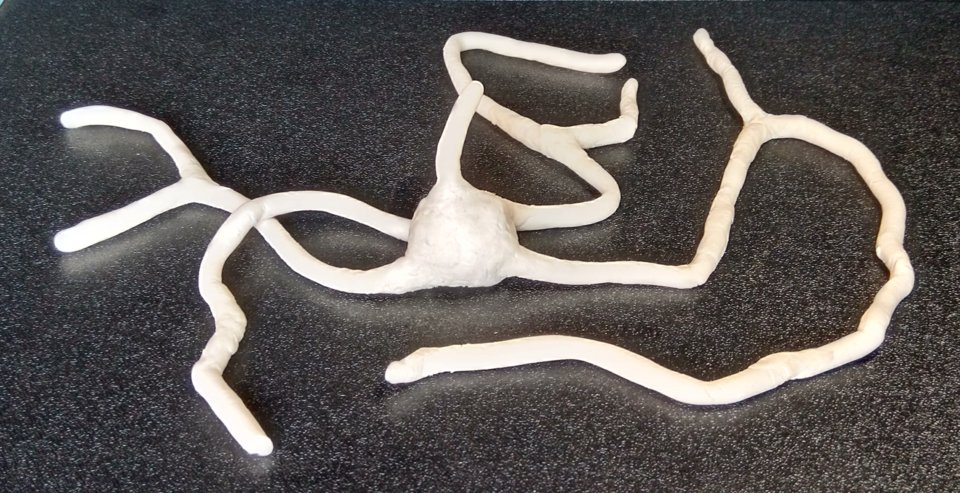
Dynamic protrusions mediate crawling motility in Asgard archaea
#Archaea #Eukaryotes #Evolution
@Nature
https://t.co/IaLX994oHh

My #article addresses the latest scientific findings regarding the structure of the #cellwall in #Archaea. It also explores #evolutionary #scenarios that led to the emergence of #eukaryotes.
A particularly significant evolutionary achievement of eukaryotes is the possession of #mitochondria, the cell's "power stations", which supply the cellular metabolism with free energy in the form of #ATP.
Approximately 1.6 to 1.8 billion years ago, an event known as #eukaryogenesis occurred. The world of living organisms, at that time confined to #anaerobicconditions in the #oceans, underwent a dramatic transformation within a relatively short period. This shift had profound consequences for the previously dominant unicellular organisms: the #archaea and the #bacteria.
The so-called #GreatOxidationEvent
approximately 2.4 to 2.1 billion years ago pushed archaea into sediment layers where largely anaerobic conditions still prevailed. There, they coexisted with metabolically flexible #alphaproteobacteria.
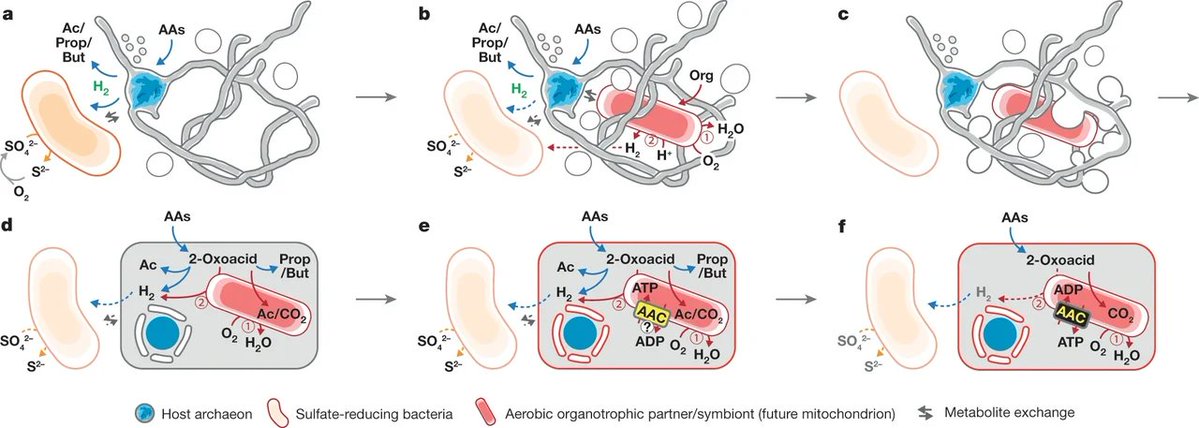
Within the Archaea, the #Asgard archaea are the #sistergroup to the Eukaryota. They had already lost the cell wall found in other archaea, a state that persisted in early eukaryotes. This loss of the cell wall was the prerequisite for an important case of #endosymbiosis, specifically, the incorporation of alphaproteobacteria, the later mitochondria. It is no longer believed that true #phagocytosis of the bacteria occurred; instead, the bacteria were initially held in place by #armlike #projections formed from the archaea's flexible membrane. Over the course of evolution, these projections fused together, thereby enclosing the bacterium. Initially, the incorporated bacterium enabled a #syntrophic #exchange of substances between #host and #endosymbiont (e.g., hydrogen transfer between the Asgard host and the alphaproteobacterium); The bacterium was able to break down organic substances much more efficiently with the help of #oxygen.
The Asgard host provided metabolic products and was protected from direct contact with oxygen by the bacterium, which was helpful given the rising oxygen content in the water and the resulting steep physical and chemical gradients, so-called #oxyclines.
Later, this arrangement evolved into an innovation for generating large amounts of energy.
R. Smith et al. (2026) investigated the cell wall structure of the archaeon #Methanobrevibacter #smithii, a member of the human gut microbiome. They discovered that the cell wall contains a previously unknown sugar, which the researchers named N-acetylarmosamine (#ArmNAc). This finding is remarkable because the prevailing scientific consensus had previously assumed the presence of the sugar building block N-acetyltalosaminuronic acid (#TalNAc) instead. Furthermore, the researchers identified the #enzyme #ArmA, a hydrolase that acts as #molecularscissors to locally cleave the rigid ArmNAc sugar armor. This grants the underlying #membrane greater mobility and #flexibility, a crucial factor during cell division. The insights into cell envelope regulation in archaea gained through this research will also pave the way for understanding membrane flexibility in the cell-wall-lacking Asgard archaea, a factor of great significance regarding the eukaryogenesis. However, this does not directly imply that they used ArmA, but rather that #enzymemediated #regulation of cell envelope modification is a deeply rooted archaeal trait.
©#StefanFWirth, October 2026, Berlin
Please support my science writing efforts: ko-fi link 👇 in my first reply.
Reference:
R. Smith et al. (2026):
DOI: 10.1038/s41586-026-11028-y 👇 link in my first reply.
#Images:
1) Eukaryogenesis.
Authors H. Imachi et al. (2020), under which the Creative Commons License 4.0 international. 👇link in my first answer
2) #Protheoarchaeum #syntrophicum, artistic recreation in plasticine.
Author Maulucioni, 2020,
under the Creative Commons Attribution-ShareAlike License 4.0 international 👇 link in my first answer
Evolutionary diversification and metabolic adaptations of ANME-1 archaea
#archaea #evolution #microbiome
@MicrobiomeJ
https://t.co/kpk7Erf7Yz
Unraveling the coastal marine plastisphere archaeome
#microbiology #plastic #archaea
@NatureComms
https://t.co/tcdjKweRbZ
Comparative analysis of adhesin-like proteins from Methanobacteriales species
#microbiology #archaea #methanogens #methane
@FrontMicrobiol
https://t.co/EP5F5r874T

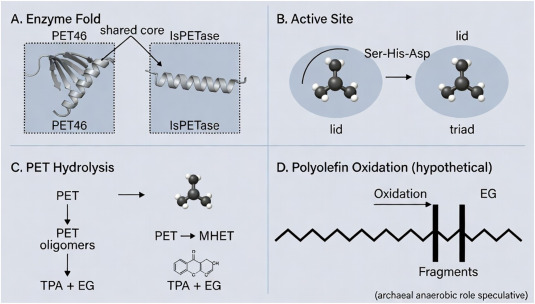
Can extremophile archaea help tackle persistent plastics? This review examines archaeal bioremediation of polyolefins and polyesters in extreme environments. #BioDesignResearch #Bioremediation #Archaea
DOI: https://t.co/1Z7t7BEkO9
New #research findings demonstrate that prokaryotic Earth #Archaea could likely survive on #Saturn's #moon #Enceladus.
And about why Enceladus compared to other Jupiter and Saturn moons is the best candidate for #extraterrestrial primitive #life forms.
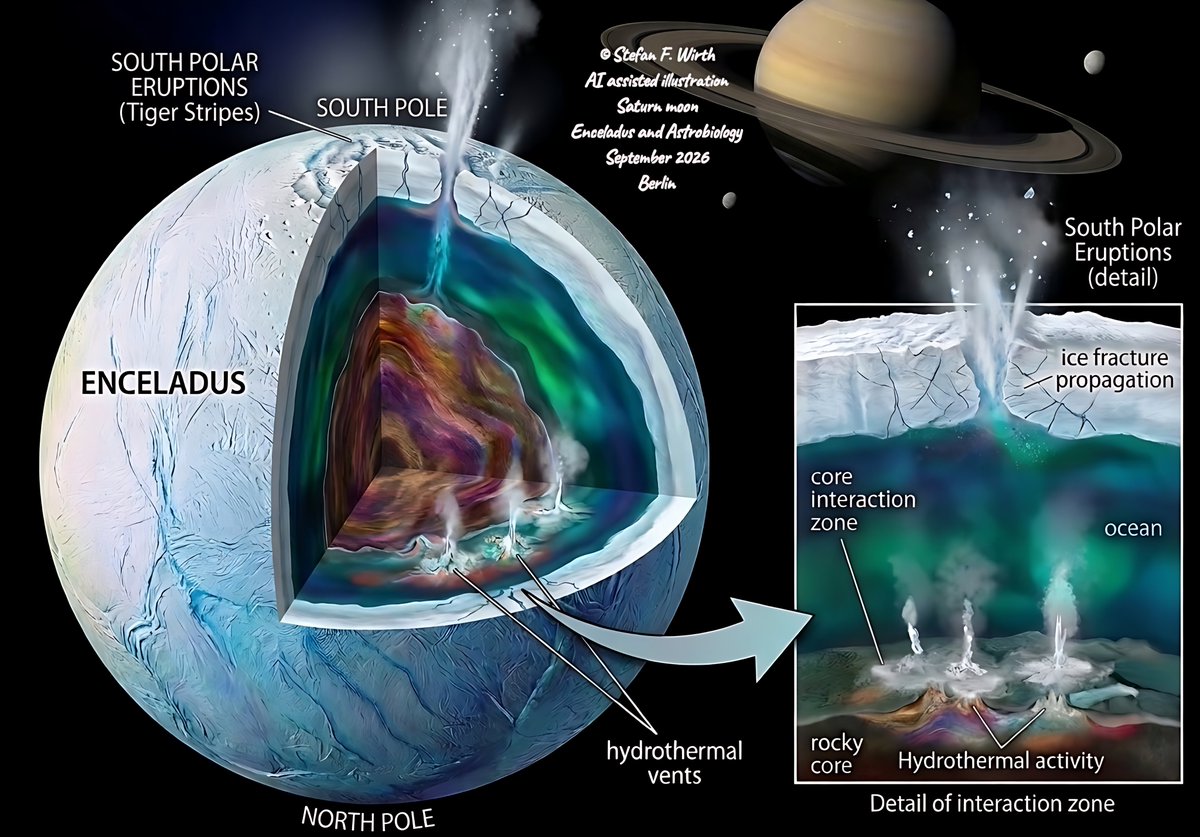
Saturn's moon Enceladus is considered the most promising celestial body in our solar system for the potential existence of (primitive) life. Other known candidates include Saturn's moon #Titan and #Jupiter's moon #Europa. What makes Enceladus so special? For one thing, it is better suited for scientific sampling than the other two moons. While all three share the characteristic of having oceans located deep beneath their surfaces, only Enceladus offers particularly easy access for sampling and analysis by human-made instruments: at its south pole, massive #geysers (area known as "#TigerStripes") continuously spew #oceanwater kilometers into space. A space probe could fly past and collect particles from these giant plumes, effectively gaining unobstructed access to the ocean lying beneath the ice shell.
Titan and Enceladus are significantly more favorable than Europa.
However, these moons differ in other parameters regarding their habitability for (primitive) life forms. In the case of Titan, the liquid water ocean lies at such a #greatdepth, approximately 100 to 400 kilometers beneath the surface, that immense #pressure is exerted on the water; this is compounded by the moon's colossal size, as it is nearly as large as the planet Mars. Consequently, despite the heat prevailing at those depths, the ocean water freezes in places into what is known as #highpressureice. Much of the ocean is thus effectively "sandwiched" between layers of ice, surrounded from above and partly from below, and may therefore be largely isolated from the chemical processes biochemically necessary for primitive life.
Unlike the other two moons Enceladus meets many of the conditions that contributed to the evolution of life on Earth: it is highly #alkaline (pH 9–11) and maintains continuous contact with the #rockycore, allowing #hydrothermal #reactions (such as #serpentinization) to occur throughout. Moreover, compared to the others, it is the only ocean known to contain dissolved #phosphate, a crucial building block for biological #membranes. Finally, complex #macromolecules, such as #aminoacid #precursors and #cycliccompounds, have so far been detected only in the ocean of Enceladus, while #methane was found as anothee organic source, which is for example also present on Titan's surface.
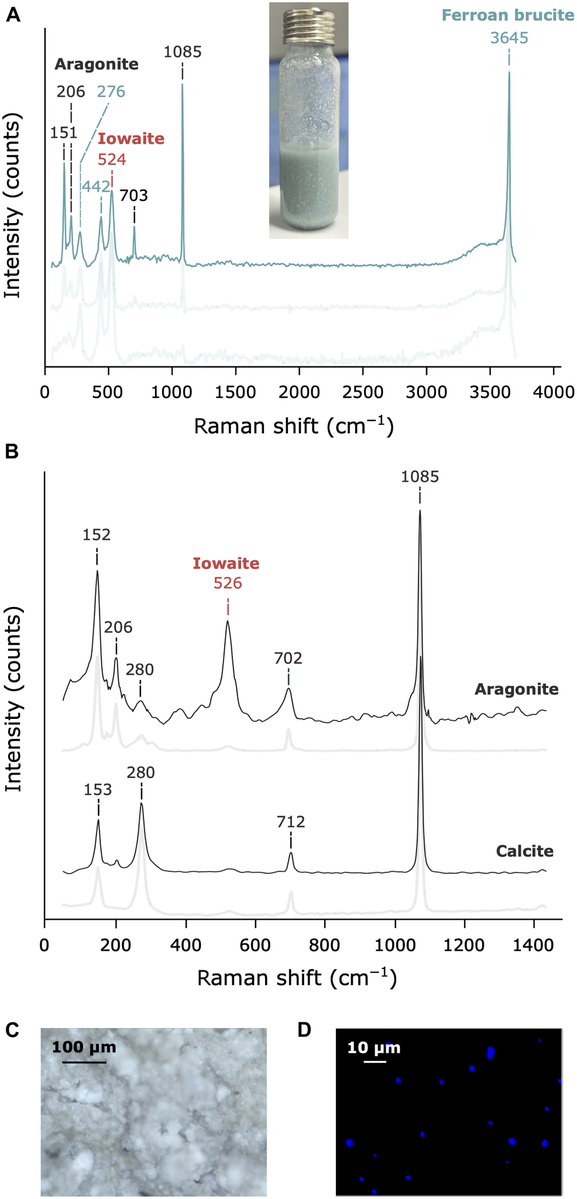
V. Helmbrecht et al. (2026) recreated the ocean conditions found on Enceladus for an experiment using terrestrial primordial-type #Archaea: an oxygen level 10,000 times lower than that of Earth's atmosphere, highly alkaline pH levels, and contact with rocky material. Under these #simulated #Enceladusocean conditions, the researchers tested the Archaeon #Methanothermococcus #okinawensis (#Methanobacteriia, Archaea) to see if it could survive there. The experiment was a complete success; the primordial-type prokaryotic organism thrived, specifically, in the absence of both sunlight and oxygen. This is because the bacterium employs a method of energy production considered primitive on Earth: #methanogenesis.
© #StefanFWirth, September 2026, Berlin
Please support my science communication: ko-fi 👇 Link see my first answer
reference:
V. Helmbrecht et al. (2026)
DOI: 10.1126/sciadv.aei0167 👇 Link see my first answer
#Illustration:
© Stefan F. Wirth, AI assisted artistic Illustration, based on my hand-drawn sketches: Enceladus, core, ocean, ice shield
#Figure:
Mineral precipitates and viable cells in Enceladus #simulantexperiments.
(D) #Fluorescencemicroscopy image of intact M. okinawensis cells (blue) in the Enceladus simulant after 48 hours.
By V. Helmbrecht et al. (2026), licensed under creative commons Attribution NonCommercial License 4.0 (CC BY-NC)., 👇 Link see my first answer
A methanogen hydrolase reveals the structure of archaeal peptidoglycan
#Archaea #Methanogens #methane #GutMicrobiota #Microbiome
@Nature
https://t.co/jlPdLLbIan
Cyclic di-GMP in Archaea?
Archaeal Genes Code for GGDEF Domain Proteins With Diguanylate Cyclase Activity
#microbiology #archaea
https://t.co/bmGWWXHCiw

💥NEW in Environmental Science & Technology💥
Nonlinear Responses of Anaerobic #Methane Oxidation to #Water Table Drawdown in #Peatlands
https://t.co/G4N6lGuNuy
#soil #Roots #CH4 #soilbacteria #archaea #ClimateChange #GlobalWarming #global
#landuse #13Clabeling #isotopes


🌟 Excited to share the Editor’s Choice Paper: Simplified Anaerobic Cultivation of Acetivibrio cellulolyticus and Methanosarcina barkeri: Implications for Lignocellulosic Biomethane Research 👉 https://t.co/fiiPmTbjop
#anaerobes #lignocellulose #biomass #archaea #gas_production

I'm excited to start the academic year with @ScienceAdvances focus article led by @SibelEbruYalcin about the gigantic machinery that assembles electron-conducting #nanowires in #methane-producing #archaea by @bonnie_j_murphy @MPIbp @YaleMBB @YaleWestCampus
https://t.co/KZPNA7W50k
Group II Mcr-encoding archaea exhibit methane-cycling potential in geothermal springs
#microbiology #methanogens #archaea #methane
@BioMedCentral
https://t.co/Wfl6RTwKsp
An integrated culturomic and genomic database and analysis platform for methanogenic archaea
#microbiology #bioinformatics #archaea #methanogens
https://t.co/zpWmI64Sh7
Expanding the substrate range of methanogenesis: thermophilic methanogenic Archaeoglobi produce methane from long-chain fatty acids!🤓🧫🔥
#methanogens #methane #archaea
@NatureMicrobiol
https://t.co/oZsFcy3D5q
Branched-chain amino acid assimilation enables mixotrophy of ammonia-oxidizing archaeal sponge symbionts
#microbiology #archaea #sponges
@ScienceAdvances
https://t.co/tENUCLJdOy
Phylogeny-guided curation reveals widespread misannotation of Asgard archaeal 16S rRNA gene sequences in public databases
#microbiology #archaea #Asgard
@ISMEComms @ISME_microbes
https://t.co/FnaqGOcVmq
Infirmifilum tikiterense sp. nov., a novel free-living hyperthermophilic anaerobic heterotrophic archaeon isolated from a New Zealand hot spring, emendation of the genus Infirmifilum
#microbiology #archaea #NewSpecies #taxonomy
@MicrobioSoc
https://t.co/bXieGRFl3H
Last Seen Hashtags on Sotwe
Trends for you
Most Popular Users

Elon Musk 
@elonmusk
241.7M followers

Barack Obama
@barackobama
119M followers

Cristiano Ronaldo
@cristiano
114.6M followers

Donald J. Trump
@realdonaldtrump
111.9M followers

Narendra Modi
@narendramodi
107.2M followers

Rihanna
@rihanna
98.7M followers

NASA
@nasa
92.4M followers

Justin Bieber
@justinbieber
91.8M followers

KATY PERRY
@katyperry
90.1M followers

Taylor Swift
@taylorswift13
84M followers

Lady Gaga
@ladygaga
75.5M followers

Virat Kohli
@imvkohli
73.5M followers

Kim Kardashian
@kimkardashian
70.9M followers

YouTube
@youtube
68.8M followers

Neymar Jr
@neymarjr
66.5M followers

Bill Gates
@billgates
65.2M followers

Selena Gomez
@selenagomez
63.1M followers

The Ellen Show
@theellenshow
62.3M followers

CNN
@cnn
61.8M followers

X
@x
60.7M followers