

Top Tweets for #AutoDoc

@InversorRiesgo Buscando en autodoc (recambista genérico)
Filtro Mahle KL911 70€ ≠120
Filtro aceite ELH429 10≠ 15
Aceite Castrol Titanium Edge 5w30 75€ ≠ 90€
Si lo haces tú te ahorras 70€ + mano de obra.
No merece la pena, no te han robado en absoluto.

@0xkvyb hey ! I love open source projects very much , this is great idea actually to manage inbound leads .more over I am working on a project called autodocs - you just write code agent will write docs for your and raise PR for review - focus on just shipping
Indie hackers & solo devs
Tired of wasting hours writing docs that go stale anyway?
AutoDocs auto-generates beautiful, always-up-to-date
documentation from your code & APIs in seconds.
No more markdown hell. Just ship. Try it free → Just hit DM
#IndieHackers #BuildInPublic #SaaS #DevTools

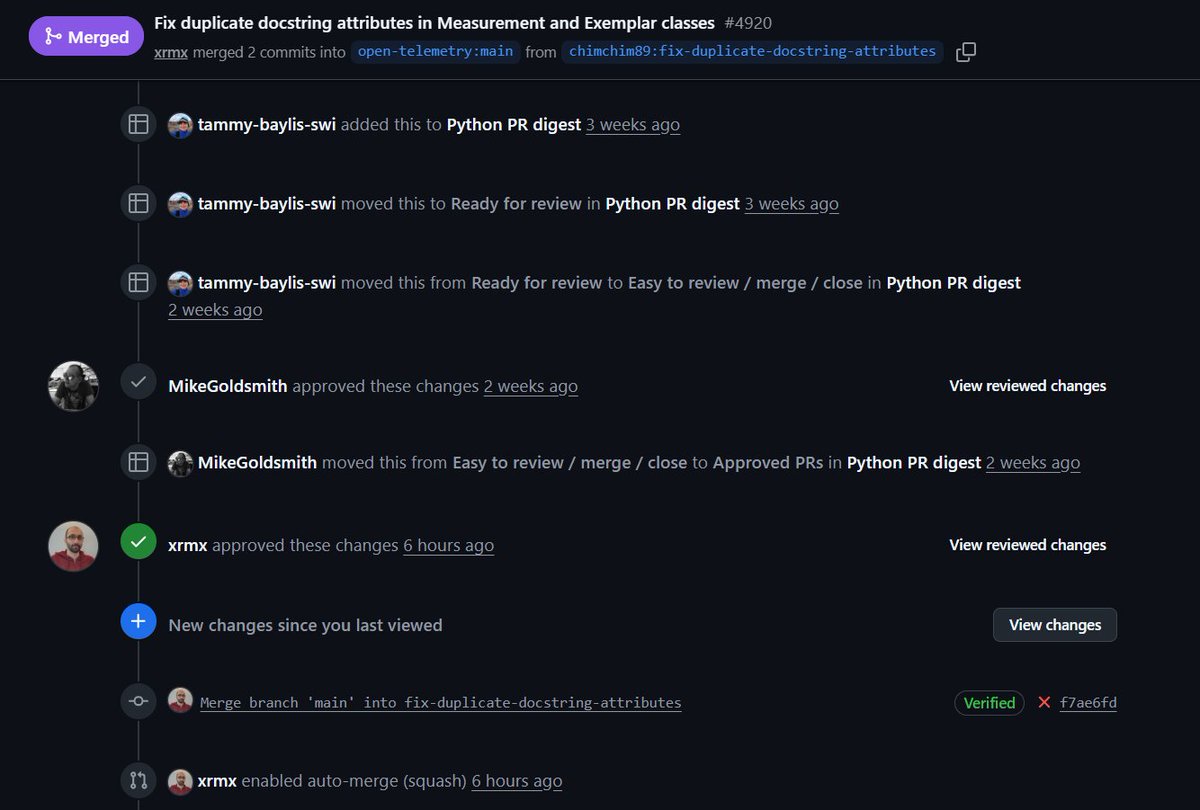
two PRs got merged into @opentelemetry today!
> fixed duplicate attribute documentation caused by both sphinx napoleon and autodoc processing the same attributes sections
> improved MeterProvider docs by adding a PeriodicExportingMetricReader example for push based metric export


@Autodocta yeah, would need another admin for it

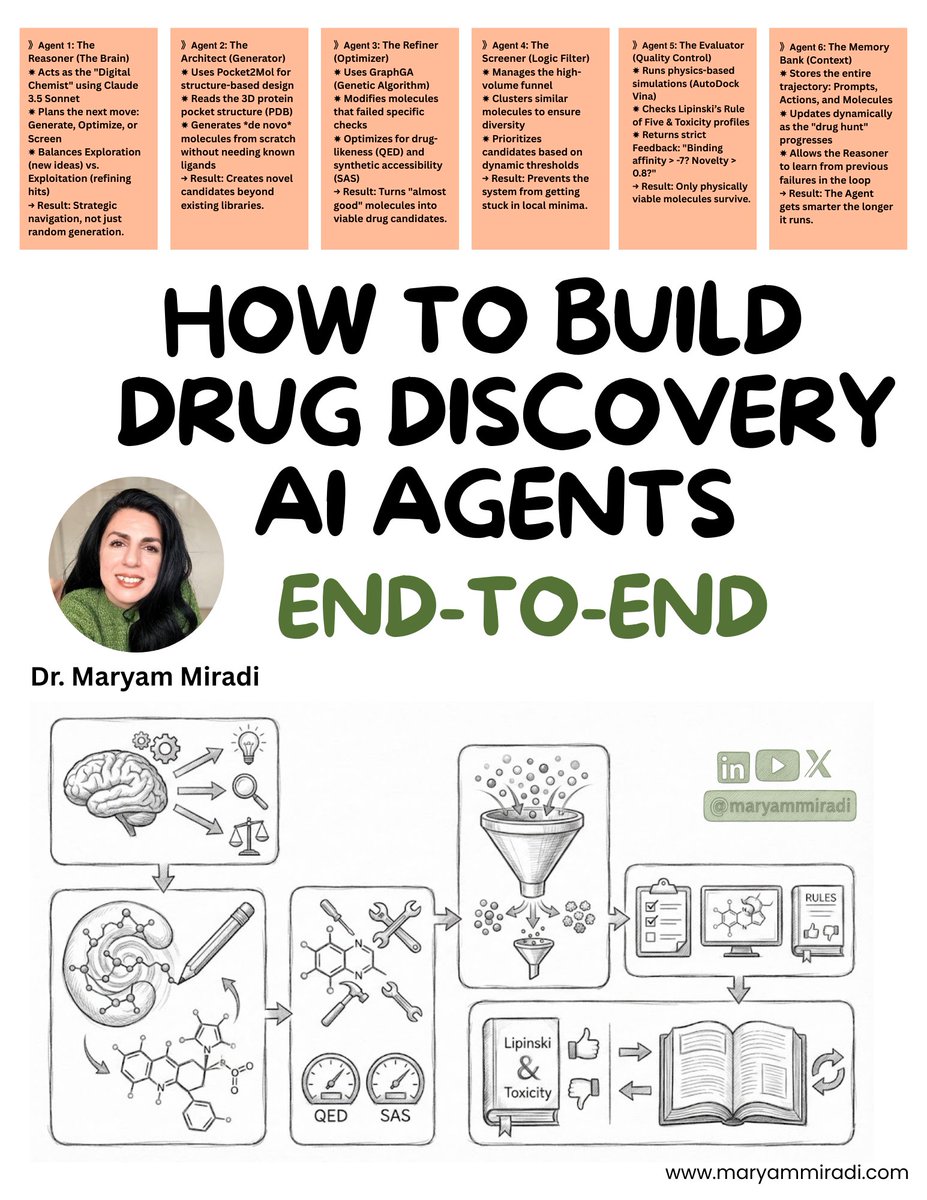
Pharma spends $𝟮𝗕 per new medicine, yet 𝟵𝟬% of candidates fail.
LIDDIA paper introduces a multi-agent "Digital Chemist" to flip those odds.
I rebuilt their 𝟲-𝗔𝗜 𝗔𝗴𝗲𝗻𝘁 architecture using LangGraph. 👇
𝗔𝗴𝗲𝗻𝘁 𝟭: The Reasoner (The Brain)
✸ Acts as the "Digital Chemist" using Claude 4.6 Sonnet
✸ Plans the next move: Generate, Optimize, or Screen
✸ Balances Exploration (new ideas) vs. Exploitation (refining hits)
→ Result: Strategic navigation, not just random generation.
𝗔𝗴𝗲𝗻𝘁 𝟮: The Architect (Generator)
✸ Uses Pocket2Mol for structure-based design
✸ Reads the 3D protein pocket structure (PDB)
✸ Generates *de novo* molecules from scratch without needing known ligands
→ Result: Creates novel candidates beyond existing libraries.
𝗔𝗴𝗲𝗻𝘁 𝟯: The Refiner (Optimizer)
✸ Uses GraphGA (Genetic Algorithm)
✸ Modifies molecules that failed specific checks
✸ Optimizes for drug-likeness (QED) and synthetic accessibility (SAS)
→ Result: Turns "almost good" molecules into viable drug candidates.
𝗔𝗴𝗲𝗻𝘁 𝟰: The Screener (Logic Filter)
✸ Manages the high-volume funnel
✸ Clusters similar molecules to ensure diversity
✸ Prioritizes candidates based on dynamic thresholds
→ Result: Prevents the system from getting stuck in local minima.
𝗔𝗴𝗲𝗻𝘁 𝟱: The Evaluator (Quality Control)
✸ Runs physics-based simulations (AutoDock Vina)
✸ Checks Lipinski’s Rule of Five & Toxicity profiles
✸ Returns strict Feedback: "Binding affinity > -7? Novelty > 0.8?"
→ Result: Only physically viable molecules survive.
𝗔𝗴𝗲𝗻𝘁 𝟲: The Memory Bank (Context)
✸ Stores the entire trajectory: Prompts, Actions, and Molecules
✸ Updates dynamically as the "drug hunt" progresses
✸ Allows the Reasoner to learn from previous failures in the loop
→ Result: The Agent gets smarter the longer it runs.
In the Paper they 𝗧𝗲𝘀𝘁𝗲𝗱 on Real Disease Targets:
✸ Prostate/Breast Cancer (AR/NR3C4): Found a novel candidate better than approved drugs.
✸ Lung Cancer (EGFR): Generated molecules surpassing native ligands.
✸ Alzheimer’s (CDK5): Navigated complex brain targets.
𝗧𝗲𝗰𝗵 Used:
Claude 4.6 Sonnet ·
Pocket2Mol ·
AutoDock Vina ·
RDKit ·
LangGraph
https://t.co/5mLJ2uV6Dw
————————————-
Join 46,000+ developers in my 𝗙𝗥𝗘𝗘 𝗧𝗥𝗔𝗜𝗡𝗜𝗡𝗚
𝗛𝗼𝘄 𝘁𝗼 𝗕𝘂𝗶𝗹𝗱 𝗥𝗲𝗮𝗹-𝗪𝗼𝗿𝗹𝗱 𝗔𝗜 𝗔𝗴𝗲𝗻𝘁𝘀 𝗶𝗻 𝟯𝟬 𝗠𝗶𝗻𝘂𝘁𝗲𝘀 𝗭𝗲𝗿𝗼 𝘁𝗼 𝗛𝗲𝗿𝗼 𝗗𝗲𝗲𝗽 𝗗𝗶𝘃𝗲 👇
https://t.co/tIQgG42sm8

18/02/2026: work + life logs
> explored @opentelemetry -python
> working on fixing a docstring duplication issue caused by napoleon and autodoc
What if AI actually discovered the 𝗰𝘂𝗿𝗲?
Here is how to build an Autonomous Drug Discovery Agent pipeline. ⬇️
Most AI drug discovery dies in the lab. Why?
+ Chemists don't trust black-box generative models.
+ Generative AI hallucinates invalid molecules.
+ Optimization is a nonlinear, multi-objective nightmare.
While
- Pharma spends $𝟮𝗕 per new drug.
- BUT Ends up with 𝟵𝟬% failure rates in clinical trials.
This paper (LIDDIA) solves it with an agentic framework that mimics a medicinal chemist. I rebuilt the logic with Python using LangGraph.
Here's how it works:
》𝗔𝗴𝗲𝗻𝘁 𝟭: The Reasoner (The Brain)
✸ Acts as the "Digital Chemist" using Claude 3.5 Sonnet
✸ Plans the next move: Generate, Optimize, or Screen
✸ Balances Exploration (new ideas) vs. Exploitation (refining hits)
→ Result: Strategic navigation, not just random generation.
》𝗔𝗴𝗲𝗻𝘁 𝟮: The Architect (Generator)
✸ Uses Pocket2Mol for structure-based design
✸ Reads the 3D protein pocket structure (PDB)
✸ Generates *de novo* molecules from scratch without needing known ligands
→ Result: Creates novel candidates beyond existing libraries.
》𝗔𝗴𝗲𝗻𝘁 𝟯: The Refiner (Optimizer)
✸ Uses GraphGA (Genetic Algorithm)
✸ Modifies molecules that failed specific checks
✸ Optimizes for drug-likeness (QED) and synthetic accessibility (SAS)
→ Result: Turns "almost good" molecules into viable drug candidates.
》𝗔𝗴𝗲𝗻𝘁 𝟰: The Screener (Logic Filter)
✸ Manages the high-volume funnel
✸ Clusters similar molecules to ensure diversity
✸ Prioritizes candidates based on dynamic thresholds
→ Result: Prevents the system from getting stuck in local minima.
》𝗔𝗴𝗲𝗻𝘁 𝟱: The Evaluator (Quality Control)
✸ Runs physics-based simulations (AutoDock Vina)
✸ Checks Lipinski’s Rule of Five & Toxicity profiles
✸ Returns strict Feedback: "Binding affinity > -7? Novelty > 0.8?"
→ Result: Only physically viable molecules survive.
》𝗔𝗴𝗲𝗻𝘁 𝟲: The Memory Bank (Context)
✸ Stores the entire trajectory: Prompts, Actions, and Molecules
✸ Updates dynamically as the "drug hunt" progresses
✸ Allows the Reasoner to learn from previous failures in the loop
→ Result: The Agent gets smarter the longer it runs.
》𝗧𝗲𝘀𝘁𝗲𝗱 on Real Disease Targets:
✸ Prostate/Breast Cancer (AR/NR3C4): Found a novel candidate better than approved drugs.
✸ Lung Cancer (EGFR): Generated molecules surpassing native ligands.
✸ Alzheimer’s (CDK5): Navigated complex brain targets.
》𝗧𝗲𝗰𝗵𝗻𝗼𝗹𝗼𝗴𝘆 Used:
Claude 3.5 Sonnet ·
Pocket2Mol ·
AutoDock Vina ·
RDKit ·
LangGraph ·
Python
≣≣≣≣≣≣≣≣≣≣≣≣≣≣≣≣≣≣≣≣≣≣≣
⫸ꆛ My 2,300 students build real-world AI agents.
𝘙𝘦𝘢𝘥𝘺 𝘵𝘰 𝘫𝘰𝘪𝘯 𝘵𝘩𝘦𝘮?
𝗔𝗜 𝗔𝗴𝗲𝗻𝘁𝘀 𝗠𝗮𝘀𝘁𝗲𝗿𝘆 (𝟱-𝗶𝗻-𝟭):
➠ 11 REAL-WORLD Projects. Full code. 100% hands-on
➠ MCP, LangGraph, PydanticAI, CrewAI, OpenAI Swarm
➠ Lifetime access + updates ⭒ Build from scratch to deployment
𝟱𝟲% 𝗼𝗳𝗳 ⭒ 𝗟𝗶𝗺𝗶𝘁𝗲𝗱 𝘁𝗶𝗺𝗲 ↓
https://t.co/Vo64tBmfyH

@Autodocta Yup people can’t find community 😂

Comparative Assessment of the Utility of Co-Folding and Docking for Small-Molecule Drug Design
1. This study evaluates the effectiveness of co-folding and docking methods in predicting protein-ligand interactions, highlighting that physics-based docking algorithms outperform co-folding methods for novel complexes with low similarity to training data. This finding is crucial for advancing small-molecule drug design.
2. The research uses the Runs N'Poses benchmark set, which includes 2,600 protein-ligand systems, to demonstrate that co-folding models like AlphaFold 3 excel when complexes are similar to training data but struggle with novel cases. In contrast, docking methods provide better generalizability.
3. The study introduces a filtered subset, RNP-F, to improve the quality and balance of the benchmark set. This subset removes problematic cases with poorly defined electron density and overrepresented ligands, making it a more reliable tool for evaluating docking and co-folding methods.
4. Detailed docking results show that success rates depend on ligand properties such as flexibility, burial, and density fit. The Attracting Cavities algorithm outperforms AutoDock Vina and its derivatives, demonstrating the importance of thorough sampling and scoring functions in docking.
5. The analysis also reveals a high rate of scoring failures in co-folding and docking methods, often due to issues in the PDB structural models. This highlights the need for better validation of experimental data in drug design projects.
6. Logistic regression models indicate that co-folding success is strongly correlated with similarity to training data, while docking success is influenced by physical properties of the ligand. This suggests that combining co-folding and docking could be a promising approach for future drug discovery efforts.
📜Paper: https://t.co/vIAv5M2hKY
#DrugDesign #CoFoldingVsDocking #ProteinLigandInteractions #Benchmarking #SmallMoleculeDiscovery


@Autodocta Tried multiple times bro, made a solid community, paid $199×2 thats $398 if you all had stood with me when i tried before we could've made it.

@SrinivasValekar have you tried autodoc?
If yes what did you like about it.
In the case of gem, this is more about the discovery of the repo on the bigger picture (not in bigger details). But with a social component of the messaging app
This was a demo for example

@HaroldHers94068 @BioProtocol bro, practical workflows win. point to the page that autodocs data provenance and reproducible science

@Autodocta Jewish shake out

@Autodocta No kol has found it yet and people don’t bid obvious plays lmao

@hakan_I_diyar @thekaramanid Autodoc uygulaması var Avrupanın bilinen yedek parça sitesi. Teslimatı bg yaparsın oraya gelir. En azından bakarsın parça var mı diye. Reklam degil
PlasmoDocking: A User-Friendly Open-Source Web Tool for Virtual Screening Targeting Plasmodium falciparum Enzymes
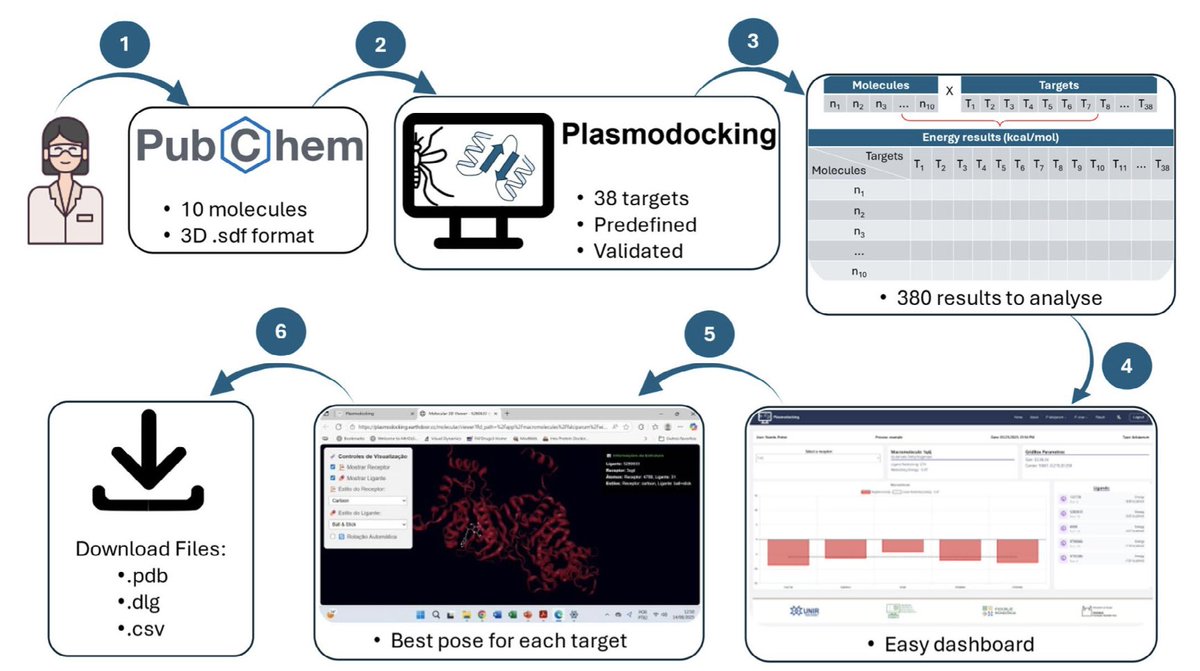
1. PlasmoDocking is a novel web-based platform designed to simplify and accelerate the process of virtual screening for potential antimalarial compounds. It leverages the power of AutodockGPU to automate molecular docking simulations against 38 pre-configured Plasmodium falciparum targets, making it an invaluable tool for researchers in the field of malaria drug discovery.
2. One of the key innovations of PlasmoDocking is its user-friendly interface. Researchers can submit up to 10 molecular structures in .sdf format and perform multi-target docking simulations without needing to prepare receptors or validate screening parameters. This automation significantly reduces the complexity and time required for virtual screening experiments.
3. The platform is built using Python and Next.js, ensuring robustness and scalability. It also supports simultaneous multi-target docking simulations within a single experimental framework, enabling systematic comparison of binding energies with co-crystallized ligands. This feature is particularly useful for identifying new molecular targets and inhibitors.
4. PlasmoDocking includes a comprehensive dashboard that allows users to easily analyze and visualize the results of their docking experiments. The dashboard provides detailed information on binding energies and the best poses for each ligand against the targets, facilitating quick and informed decision-making in drug discovery.
5. The validation of PlasmoDocking is thorough, with redocking experiments conducted for 38 crystallized ligands. The platform achieves RMSD values equal to or less than 2.00 Å for most targets, ensuring high accuracy and reliability in its docking simulations.
6. The open-source nature of PlasmoDocking is a significant advantage. The source code is freely available on GitHub, allowing researchers to adapt and extend the platform to suit their specific needs. This collaborative approach fosters innovation and accelerates the development of new antimalarial drugs.
7. PlasmoDocking is accessible at https://plasmodocking-unir.ecotechamahttps://t.co/CoMq8TfP9q, and the open-source codebase can be found on GitHub. The platform is supported by a team of experts in bioinformatics and medicinal chemistry, ensuring continuous updates and improvements.
💻Code: https://t.co/9vuJq3ZUiO
📜Paper: https://t.co/qgbHhpFxH6
#PlasmoDocking #VirtualScreening #Malaria #DrugDiscovery #OpenSource #WebTool #AutodockGPU #Bioinformatics

@Autodocta @realrollyroll they forked a few repos but didnt really change anything. their MIR-20-Token repo contains only 4 files, two of which is basically the same🤔

@Autodocta Can you share it?
Guided docking using solvent structure information improves the prediction of protein-glycans complexes
1. A new study has made significant strides in predicting the structure of protein-carbohydrate complexes, a challenge due to the flexibility of glycans and their shallow, hydrophilic binding sites. The research introduces a guided docking protocol leveraging Crystallographic Water Sites (CWS) to enhance glycan pose prediction using AutoDock Vina (ADV).
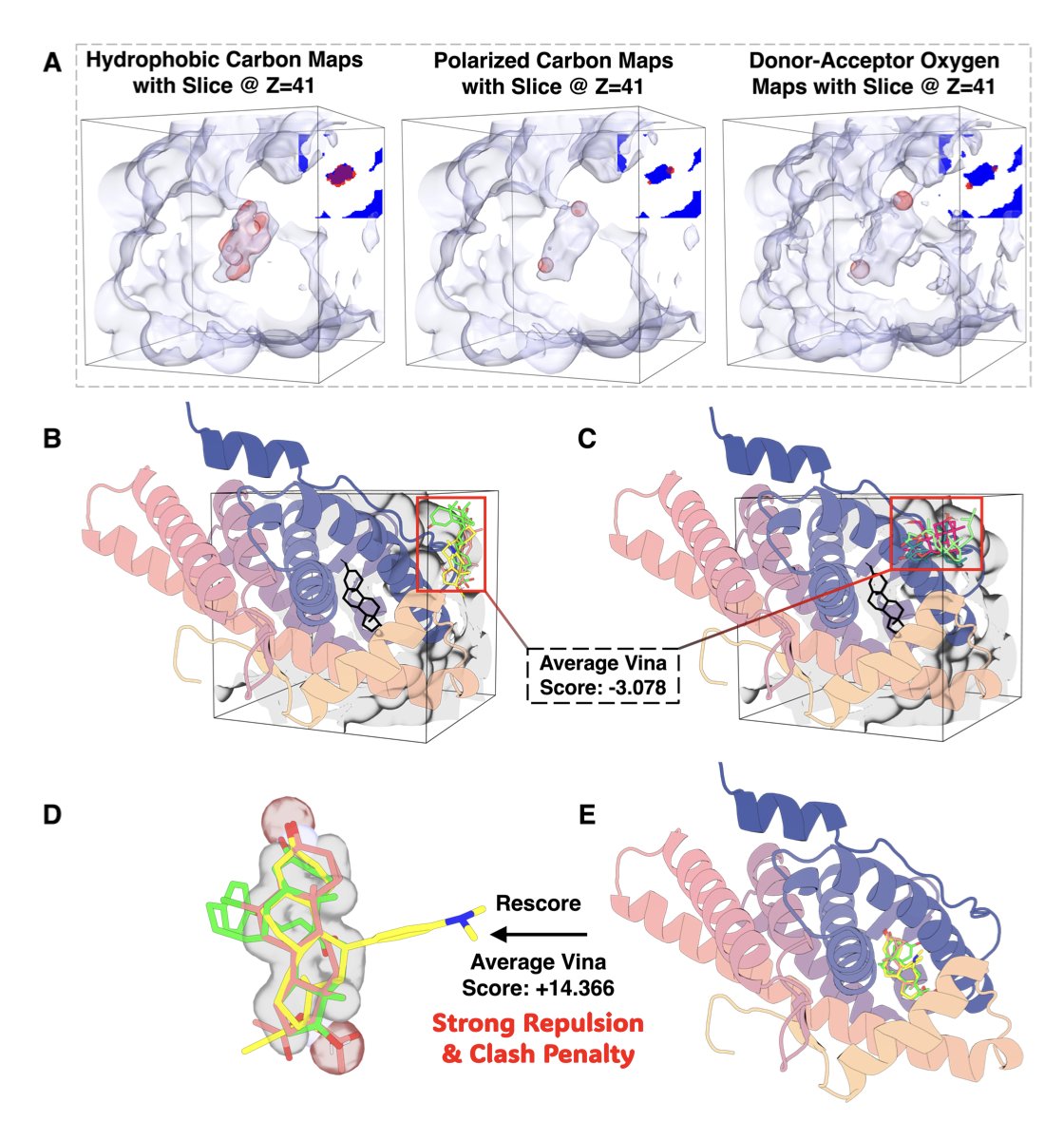
2. The core innovation lies in defining Waters Ideal Interactions (WII) derived from water molecules in apo structures. These WIIs serve as interaction hotspots that systematically reward chemically meaningful receptor-ligand contacts during docking simulations, improving pose prediction accuracy.
3. The WII Guided Approach (WIIGA) was benchmarked against a curated dataset of 30 high-quality protein–oligosaccharide complexes, outperforming conventional methods like ADV, Vina Carb (VC), and GlycoTorch Vina (GTV). Notably, WIIGA proved robust even in the absence of holo structures and was effective in cross-docking drug-like glycomimetics.
4. The study highlights the importance of solvent-derived information in improving docking accuracy. By using the solvent structure at the carbohydrate-binding site, the protocol can reliably identify true interactions and filter out irrelevant ones, enhancing the overall docking performance.
5. The 3D-score, a metric combining energy and population parameters, was used to rank docking poses. This approach not only improves pose selection but also aids in identifying outliers, offering a more reliable framework for docking simulations.
6. The research underscores the limitations of receptor conformation in docking simulations. While holo structures provided the best results, apo forms and AlphaFold3 models showed decreased accuracy, highlighting the need for structural ensembles or experimental refinement for systems with high conformational plasticity.
7. The guided docking protocol was also tested for glycomimetics, demonstrating its applicability in predicting binding poses for drug-like molecules targeting carbohydrate-binding sites. This supports the broader use of guided docking in glyco-ligand modeling and structure-based drug design.
📜Paper: https://t.co/SpWY2uvfGH
#glycobiology #molecularDocking #proteinCarbohydrateComplexes #dockingSimulation #glycanPrediction

UniDock-Pro: A Unified GPU-Accelerated Platform for High-Throughput Structure-Based, Ligand-Based, and Synergistic Hybrid Virtual Screening
1. UniDock-Pro introduces a groundbreaking unified platform for virtual screening that integrates structure-based (SBVS), ligand-based (LBVS), and a novel hybrid virtual screening mode, achieving massive throughput gains by leveraging GPU acceleration.
2. The platform significantly enhances the LBVS methodology by implementing a smooth, Lennard-Jones-like potential optimized for gradient-based search, resulting in a 2.45-fold improvement in early enrichment (EF1%) over legacy tools on the DUDE-Z benchmark.
3. The hybrid mode synergizes orthogonal information by combining receptor- and ligand-derived grid maps on-the-fly during the conformational search, consistently achieving the highest overall enrichment across diverse benchmarks.
4. UniDock-Pro demonstrates remarkable computational efficiency, processing millions of compounds per day on a single GPU, with a 43-fold acceleration over AutoDock-GPU and a 37-fold acceleration over AutoDock-SS in LBVS mode.
5. The platform maintains high accuracy in virtual screening, with the hybrid mode showing statistically significant improvements in early enrichment on both DUDE-Z and VSDS-vd TrueDecoys datasets, highlighting its robustness and versatility.
6. The authors introduce Force Field Complementarity Analysis (FFCA) to elucidate the mechanisms underlying the synergy in the hybrid mode, providing insights into the spatial alignment between receptor and ligand force fields.
7. UniDock-Pro addresses the limitations of previous tools by maximizing GPU occupancy and optimizing the energy landscape for gradient-based optimization, making it a powerful tool for accelerating drug discovery campaigns across vast chemical spaces.
📜Paper: https://t.co/qRoTotea5a
#UniDockPro #GPUDocking #VirtualScreening #DrugDiscovery #ComputationalBiology #HighThroughputScreening


@Autodocta Docta 🤝
Trends for you
Most Popular Users

Elon Musk 
@elonmusk
240.1M followers

Barack Obama
@barackobama
118.6M followers

Cristiano Ronaldo
@cristiano
114.4M followers

Donald J. Trump
@realdonaldtrump
111.8M followers

Narendra Modi
@narendramodi
106.9M followers

Rihanna
@rihanna
98.6M followers

NASA
@nasa
92.1M followers

Justin Bieber
@justinbieber
91.7M followers

KATY PERRY
@katyperry
89.9M followers

Taylor Swift
@taylorswift13
83.9M followers

Lady Gaga
@ladygaga
75.4M followers

Virat Kohli
@imvkohli
73.3M followers

Kim Kardashian
@kimkardashian
70.8M followers

YouTube
@youtube
68.6M followers

Neymar Jr
@neymarjr
66.3M followers

Bill Gates
@billgates
65.2M followers

Selena Gomez
@selenagomez
63M followers

The Ellen Show
@theellenshow
62.1M followers

CNN
@cnn
61.7M followers

X
@x
60.6M followers