

Top Tweets for #CFAprogram

Yes, register now for the CFA Society Nigeria Support & Strategy Session! Having a well-planned strategy is key!
All the best with your Level III CFA exam prep!
#CFAexam #CFA #CFAprogram

It is 2 days to the Level III support and strategy session.
This event is designed to help you go into the exam with a clearer sense of what lies ahead.
Register here: https://t.co/EKqajB9VIJ
#CFANaija


The answer is B below.
If you answered incorrectly, consider learning and applying CFA concepts better with Chalk & Board's prep videos and mocks! Stop worrying about pass rates and join our winning team: https://t.co/8npudySBmH.
#cfa #cfaexam #cfaprogram
Another CFA® exam trivia question for CFA candidates.
A fixed income analyst states that for two bonds with identical yields and maturities, the bond with the higher coupon will always exhibit greater price sensitivity to changes in interest rates. A colleague disagrees.
Which of the following best evaluates the analyst's statement?
A. The analyst is correct. Higher coupon bonds receive larger periodic cash flows, increasing the bond's sensitivity to discount rate changes since more value is at risk when rates move.
B. The analyst is correct for bonds trading at a premium but incorrect for bonds trading at a discount. The relationship between coupon rate and price sensitivity reverses depending on whether the bond trades above or below par.
C. The analyst is incorrect. A higher coupon bond has a shorter Macaulay duration because more of its total value is received sooner through larger periodic payments — a lower-coupon bond, with relatively more value concentrated in the distant par repayment, has greater price sensitivity to yield changes.
Vote in comments below! Answer posted Friday! For specialized CFA prep materials to pass confidently and avoid retakes, join Chalk & Board's winning team: https://t.co/X9BK3F1bOk.
#cfa #cfaexam #cfaexamstrategy


A strong standard matters most when the answer is not black and white.
Emily Barlow, CFA, shares her journey and how the #CFAProgram helped shape the way she approaches complex decisions, from private wealth to responsible investing.
Learn more here: https://t.co/B98CYdXrQo


The CFA® journey is about understanding, not memorizing.
📍 London Classes
💻 Live Online
🎥 Self-Paced Learning
Learn smarter with Wale-Kesh Learning.
🔗 https://t.co/6S5Zw5XaNR
#CFAProgram #FinanceEducation #CFACandidates #WaleKeshLearning

Studying hard isn't always enough.
Discover the common CFA® Level I mistakes that cost candidates the most marks and how to avoid them.
Read the blog: https://t.co/IOZHy2pYqE
#CFAProgram #CFALevel1 #CFACandidates #FinanceEducation #WaleKeshLearning


Congratulations to our Accelerate Scholarship Awardees.
We look forward to welcoming you into the Society.
If you would like to help us support the next generation of finance professionals, consider giving to the Endowment Fund: https://t.co/fAiPNrKABp
#CFANaija #CFAProgram

The answer is B below.
If you answered incorrectly, consider learning and applying CFA concepts better with Chalk & Board's prep videos and mocks! Stop worrying about pass rates and join our winning team: https://t.co/8npudySBmH.
#cfa #cfaexam #cfaprogram
Another CFA® exam trivia question for CFA candidates.
A fixed income analyst observes that investment-grade corporate bond spreads have widened significantly over the past month while government bond yields have fallen sharply. A colleague argues this is a compelling entry point for increasing high-yield bond allocations to capture the attractive spreads.
Which of the following best assesses the colleague's recommendation?
A. The colleague is correct. Spread widening combined with falling government yields creates an unusually attractive risk-adjusted entry point, as investors are being compensated above historical averages for taking on credit risk.
B. The colleague's logic is flawed. Simultaneous spread widening and falling government yields is a classic flight-to-quality pattern reflecting rising risk aversion, a condition that historically precedes further spread widening and credit deterioration, making aggressive high-yield addition premature.
C. The recommendation is appropriate only if the portfolio's duration target is being met. When government yields are falling, duration management takes precedence over credit quality considerations in fixed income portfolio construction.
Vote in comments below! Answer posted Friday! For specialized CFA prep materials to pass confidently and avoid retakes, join Chalk & Board's winning team: https://t.co/X9BK3F1bOk.
#cfa #cfaexam #cfaexamstrategy

The answer is C below.
If you answered incorrectly, consider learning and applying CFA concepts better with Chalk & Board's prep videos and mocks! Stop worrying about pass rates and join our winning team: https://t.co/8npudySBmH.
#cfa #cfaexam #cfaprogram
Another CFA® exam trivia question for CFA candidates.
A firm is evaluating a new project requiring external equity financing. The CFO proposes incorporating flotation costs by adjusting upward the cost of equity used in the WACC calculation. The junior analyst argues instead that flotation costs should be treated as an initial cash outflow in the NPV analysis. A third colleague suggests that the WACC adjustment approach, while theoretically inferior, is widely used in practice because it is simpler to apply consistently across multiple projects.
Which of the following best describes the correct treatment of flotation costs?
A. The CFO's approach is correct; flotation costs represent a permanent increase in the firm's cost of equity and should be reflected in the discount rate applied to all future cash flows
B. Both approaches yield identical NPV outcomes as long as the flotation cost percentage remains constant, making the choice between them a matter of convenience
C. The analyst's approach is theoretically preferred; flotation costs are a one-time transaction cost that should reduce initial proceeds in the NPV calculation, not be embedded in the discount rate
Vote in comments below! Answer posted Friday! For specialized CFA prep materials to pass confidently and avoid retakes, join Chalk & Board's winning team.
#cfa #cfaexam #cfainstitute

The answer is B below.
If you answered incorrectly, consider learning and applying CFA concepts better with Chalk & Board's prep videos and mocks! Stop worrying about pass rates and join our winning team: https://t.co/8npudySBmH.
#cfa #cfaexam #cfaprogram
Another CFA® exam trivia question for CFA candidates.
Aurora Private Wealth manages a portfolio for a high-net-worth client with the following profile:
- Primary objective: long-term capital growth with tax efficiency over a 25+ year horizon
- Risk tolerance: moderate, with an explicit drawdown ceiling of 15% over any 12-month period
- Tax status: taxable account; equity positions carry a cost basis averaging 18% of current market value
- Estate planning: the client intends to bequeath the majority of the portfolio to heirs, who would receive a stepped-up cost basis at death
- Liquidity needs: modest; no scheduled withdrawals for at least 5 years
The strategic allocation is 60% global equities, 30% fixed income, and 10% alternatives. Following a prolonged equity rally, equities have drifted to 68%. The alternatives allocation consists entirely of illiquid private equity commitments that cannot be rebalanced. Forward equity return expectations have declined, fixed income yields have risen materially, and realized volatility has reached the 80th percentile of its 10-year range. Several positions elsewhere in the portfolio carry unrealized losses that could be harvested against future gains.
The portfolio manager is evaluating how to respond to the equity drift.
Which course of action is most consistent with the client's objectives and current circumstances?
A. Partially rebalance by trimming the highest-gain equity positions first, gradually reducing drift while managing the tax impact; the drawdown constraint is binding and cannot be deferred, and the estate planning consideration is too uncertain to override a near-term risk management obligation.
B. Defer rebalancing and use available loss harvesting to manage near-term risk exposure; the stepped-up basis at death permanently eliminates embedded gains, making realization an irreversible destruction of after-tax wealth that is inconsistent with the client's primary objective and 25+ year horizon.
C. Fully rebalance to target weights immediately, funding the tax liability from the fixed income allocation; the binding drawdown constraint and declining equity return expectations make restoring the strategic risk profile the overriding priority.
Vote in comments below! Answer posted Friday! For specialized CFA prep materials to pass confidently and avoid retakes, join Chalk & Board's winning team: https://t.co/X9BK3F1bOk.
#cfa #cfaexam #cfainstitute

You did it!
Congratulations to all candidates who have successfully passed CFA Level III. Your discipline, sacrifice, early mornings, late nights, and unwavering commitment have paid off.
Tag a CFA Level III candidate who has received the good news.
#CFANaija #CFAProgram




The answer is A below.
If you answered incorrectly, consider learning and applying CFA concepts better with Chalk & Board's prep videos and mocks! Stop worrying about pass rates and join our winning team: https://t.co/8npudySBmH.
#cfa #cfaexam #cfaprogram
Another CFA® exam trivia question for CFA candidates.
Helios Private Wealth manages a portfolio for a retired client with the following profile:
- Primary objective: stable income and capital preservation over a 15+ year horizon
- Risk tolerance: moderate to low, with strong aversion to drawdowns exceeding 12% in any 12-month period
- Liquidity needs: 5% annual withdrawals funded entirely from the portfolio
- Tax status: taxable account; long-term capital gains rate applies to positions held over 12 months; several equity positions have appreciated significantly and carry large embedded gains
The strategic allocation is 55% global equities, 25% investment-grade bonds, and 20% private market investments. Following a sustained equity rally, equities have drifted to 62% of the portfolio. Private investments remain illiquid and cannot be rebalanced. Bond yields have risen 90 bps since the IPS was last reviewed, materially improving forward income from fixed income but also increasing duration risk on any new allocations.
The portfolio manager is evaluating how to rebalance toward the strategic allocation.
Which course of action is most consistent with the client's IPS and current market conditions?
A. Rebalance toward fixed income by trimming equity positions with the lowest embedded gains first, accepting modest duration risk from higher-yield bonds as a deliberate trade-off that improves income generation and reduces equity drift, both consistent with the client's objectives.
B. Delay rebalancing and fund the 5% withdrawal entirely from the overweight equity allocation; this reduces equity drift gradually without triggering capital gains, and avoids locking in duration risk at a point of elevated yields.
C. Rebalance fully to the 55% equity target immediately regardless of tax consequences; the binding drawdown constraint makes restoring the strategic risk profile the overriding priority, and duration risk is secondary to equity tail risk for this client.
Vote in comments below! Answer posted Friday! For specialized CFA prep materials to pass confidently and avoid retakes, join Chalk & Board's winning team: https://t.co/X9BK3F1bOk.
#cfa #cfaexam #cfainstitute


Cleared CFA Level III.
From formulas to failures to finally finishing the journey — this one hits different.
#CFA #CFALevel3 #CFAProgram #Finance #Investing #CareerMilestone #HardWorkPaysOff #DoneAndDusted

Congratulations to everyone who passed the February 2026 CFA Level I exam. You have taken an important step toward earning the CFA charter. Tag someone you know who passed in the comments and celebrate their achievement.
#CFANaija #CFAProgram #FinanceProfessionals



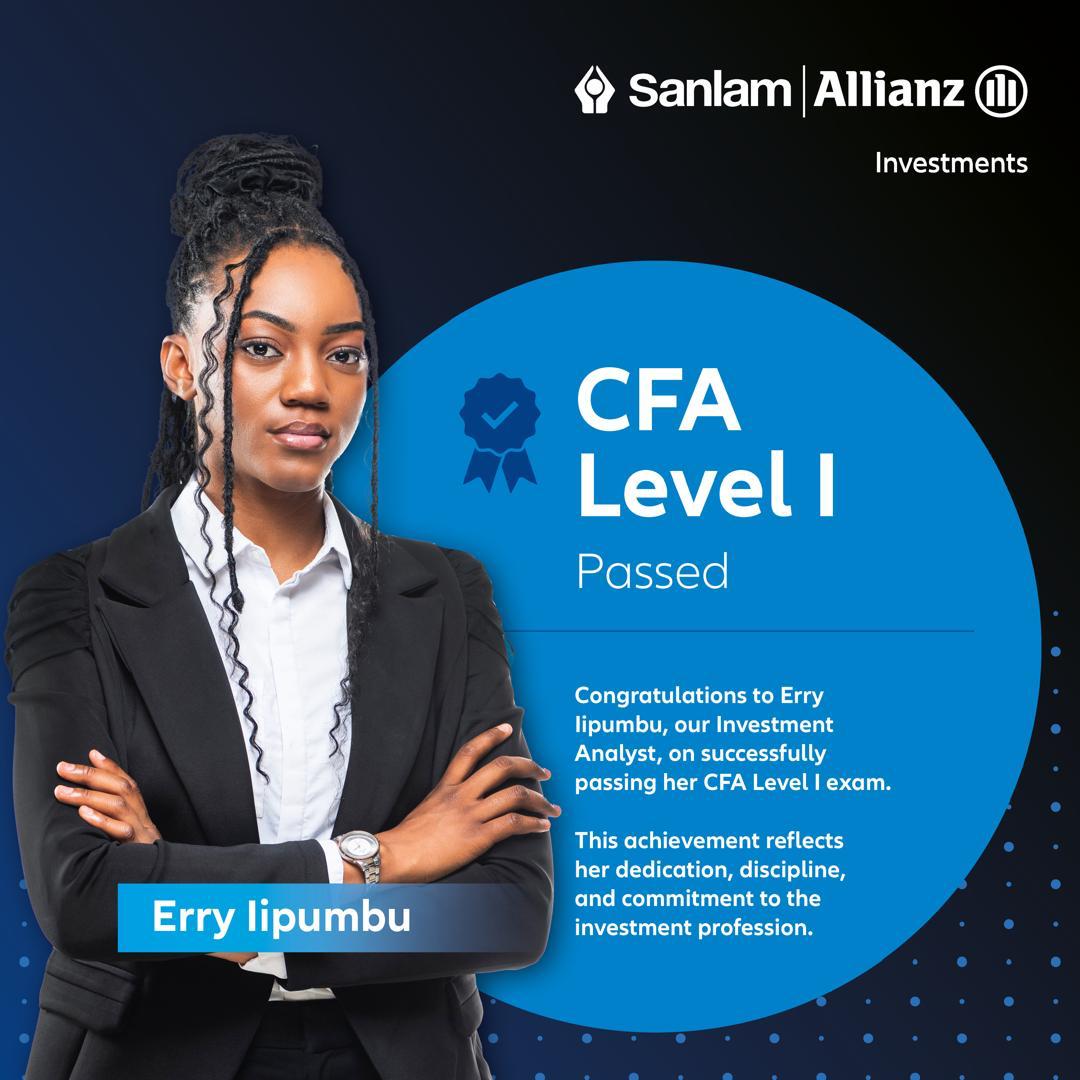
Celebrating a great milestone. Well done, Erry Iipumbu, on passing CFA Level I. Your hard work and commitment truly reflect the standard of excellence we stand for.
#CFAInstitute #CFAProgram #CFALevelI #FinanceCareer #ProudMoment #Excellence
The answer is A below.
If you answered incorrectly, consider learning and applying CFA concepts better with Chalk & Board's prep videos and mocks! Stop worrying about pass rates and join our winning team: https://t.co/8npudySBmH.
#cfa #cfaexam #cfaprogram
Another CFA® exam trivia question for CFA candidates.
Ardent Wealth Partners manages balanced portfolios for high-net-worth clients. Over the past year, U.S. equities significantly outperformed fixed income. As a result, equity allocations in most client portfolios have drifted well above their strategic targets.
The CIO decides not to rebalance back to target weights. She argues that equities have strong momentum, and selling them now could “cut off upside.” She also notes that clients are pleased with recent performance and may react negatively if equity exposure is reduced.
The firm’s risk committee questions whether this decision is consistent with disciplined portfolio management.
Which interpretation is most accurate?
A. The decision likely reflects behavioral bias, specifically extrapolation and loss aversion, rather than adherence to a disciplined rebalancing policy.
B. The decision is justified because momentum effects invalidate the need for periodic rebalancing.
C. The decision is appropriate since client satisfaction should take priority over strict allocation targets.
Vote in comments below! Answer posted Friday! For specialized CFA prep materials to pass confidently and avoid retakes, join Chalk & Board's winning team: https://t.co/X9BK3F1bOk.
#cfa #cfaexam #cfaprogram

The CFA Institute Access Scholarship for 2026 is now open.
If you have been considering the CFA Program, this is your opportunity to take that step with meaningful financial support.
Start your application today: https://t.co/t6Q8QTdbEL
#CFAProgram #AccessScholarship #CFANaija


Introducing the CFA® Program at UIBFS. Registration opens 11 Feb 2026, with classes starting 16 Feb 2026 at Plot 10 Buganda Road, 5:30pm.
Enrollment for Level I and II is ongoing. Take the next step in your finance career.
#CFAProgram #UIBFS

The answer is B below.
If you answered incorrectly, consider learning and applying CFA concepts better with Chalk & Board's prep videos and mocks! Stop worrying about pass rates and join our winning team: https://t.co/8npudyT9cf.
#cfa #cfaexam #cfaprogram
Another CFA® exam trivia question for CFA candidates.
Continuing with the Atlas Core Equity Fund, managed by Julia Weber, CFA:
- Active strategy: highly concentrated stock selection
- Actual tracking error: 5.2%
- Observed Information Ratio: low but positive
During the performance review, the investment committee debates whether the fund’s modest risk-adjusted performance reflects weak forecasting skill or structural limitations in the investment process.
Julia explains that the research process is designed to identify high-conviction ideas, but portfolio construction deliberately limits the number of independent positions to control turnover and implementation costs.
Which interpretation is most consistent with the Fundamental Law of Active Management?
A. Reducing the number of active positions improves the Information Ratio by increasing conviction and lowering noise.
B. The fund’s low Information Ratio is most likely driven by limited breadth, even if the manager’s forecasting skill is positive.
C. A low Information Ratio implies that the manager’s information coefficient (IC) must be close to zero.
Vote in comments below! Answer posted Friday! For specialized CFA prep materials to pass confidently and avoid retakes, join Chalk & Board's winning team: https://t.co/X9BK3F1bOk.
#cfa #cfaexam #cfaprogram
The answer is A below.
If you answered incorrectly, consider learning and applying CFA concepts better with Chalk & Board's prep videos and mocks! Stop worrying about pass rates and join our winning team: https://t.co/8npudySBmH.
#cfa #cfaexam #cfaprogram
Another CFA® exam trivia question for CFA candidates.
Ironclad Industries has outstanding 7-year corporate bonds trading at a spread of +180 bps over government bonds.
Over the past quarter, the bond’s spread widened to +260 bps, even though:
- Revenue and EBITDA margins remained stable,
- Leverage ratios are unchanged,
- The company met all debt covenants,
- No rating downgrade has occurred.
During the same period, broader credit markets experienced increased volatility amid recession concerns.
As a fixed-income analyst, you must assess the most likely driver of the spread widening.
Which explanation is most accurate?
A. The spread widening reflects increased systematic credit risk and higher required compensation for bearing credit risk, despite unchanged issuer fundamentals.
B. The spread widening indicates a deterioration in the issuer’s idiosyncratic credit quality, which has not yet been recognized by rating agencies.
C. The spread widening suggests market mispricing, since stable fundamentals imply that credit spreads should not change materially.
Vote in comments below! Answer posted Friday! For specialized CFA prep materials to pass confidently and avoid retakes, join Chalk & Board's winning team: https://t.co/X9BK3F1bOk.
#cfa #cfaexam #cfaprogram
Last Seen Hashtags on Sotwe
beyzaifşa
Seen from Germany
leakedvideoviral
Seen from Singapore
omegle
Seen from Chile
HappyStPatricksDay
Seen from Spain
finansalköle
Seen from Turkey
Edirne
Seen from Turkey
momson nolimit()
Seen from United Kingdom
momson filter:videos
Seen from Germany
成人短剧
nolimit() or #momson
Seen from Poland
Most Popular Users

Elon Musk 
@elonmusk
241.1M followers

Barack Obama
@barackobama
119.1M followers

Cristiano Ronaldo
@cristiano
112.5M followers

Donald J. Trump
@realdonaldtrump
111.8M followers

Narendra Modi
@narendramodi
107.1M followers

Rihanna
@rihanna
98.2M followers

NASA
@nasa
92.2M followers

Justin Bieber
@justinbieber
91.4M followers

KATY PERRY
@katyperry
88.8M followers

Taylor Swift
@taylorswift13
82.6M followers

Lady Gaga
@ladygaga
74.1M followers

Virat Kohli
@imvkohli
71.6M followers

Kim Kardashian
@kimkardashian
70.3M followers

YouTube
@youtube
68.7M followers

Bill Gates
@billgates
64.5M followers

Neymar Jr
@neymarjr
64.5M followers

The Ellen Show
@theellenshow
62.4M followers

CNN
@cnn
61.8M followers

Selena Gomez
@selenagomez
61.8M followers

X
@x
60.8M followers