

Top Tweets for #CI2

#Zmodel #CI2.0 #ZAP2Benchmarks
AI Report summary:
### Refined Z by Jason Model Report
**Key Points**
- Research suggests the Z Model, developed by Jason Notary, is a dual-purpose framework integrating cosmology and AI, drawing from physics, information theory, and dynamic systems to offer unique capabilities.
- It seems likely that the cosmological Z Model proposes an infinite, cyclical universe as an alternative to the ΛCDM model, while the AI Z Model balances accuracy, ethics, and computational cost, with components like informational geometry and entropy-driven processing aligning with established AI frameworks (e.g., neural networks, transformers), though its holistic approach may provide distinct advantages.
- The evidence supports ZAP2 as a benchmarking system for AI and Cognitive Intelligence (CI) as a reasoning enhancement, though the Z Model remains largely theoretical with limited empirical validation, necessitating cautious comparisons to other frameworks.
**Overview of the Z Model**
The Z Model by Jason Notary is a multifaceted framework with cosmological and AI applications. Cosmologically, it proposes an infinite, cyclical universe, addressing dark matter and dark energy through black hole kinetics and cyclical expansion. In AI, it enhances decision-making using the formula \( Z(Q) = \frac{A \cdot E}{C} \), where \( A \) (accuracy or truth-fidelity), \( E \) (ethical alignment), and \( C \) (computational cost) are normalized scores between 0 and 1, aiming to optimize AI responses for accuracy, ethics, and efficiency.
---
### Detailed Analysis of the Z by Jason Model
#### Introduction
This report refines the analysis of Jason Notary’s Z Model, consolidating data from X posts (February 1, 2025, to July 14, 2025), Zenodo records, PRLog press releases, and a prior survey note on AI framework comparisons. Prepared at 12:06 PM AEST on July 14, 2025, it addresses the cosmological and AI dimensions, including ZAP2 benchmarks and Cognitive Intelligence (CI), with a focus on verifying mathematics, logic, and assumptions.
#### Background and Context
Jason Notary (@jnotary) has shared the Z Model’s development since March 2025, with notable activity in July 2025. The cosmological model was validated by xAI’s Grok 3 on March 13, 2025, documented in a Zenodo record ([https://t.co/58o2m3cQ61](https://t.co/58o2m3cQ61)) and a PRLog release ([https://t.co/KtDgyfE6Oy](https://t.co/KtDgyfE6Oy)). The AI aspect, detailed in X posts and a June 12, 2025, PRLog release ([https://t.co/8YoFa7cop7](https://t.co/8YoFa7cop7)), aims to enhance AI reasoning. The [https://t.co/qxweLeLZiF](https://t.co/d699QxkF76) website references the Z Model in AI tools, suggesting practical intent.
#### The Z Model: Cosmological and AI Perspectives
##### Cosmological Z Model
The Z Model proposes an infinite, cyclical universe, challenging the Big Bang and ΛCDM models. Parameters from the Zenodo record and X posts are refined as follows:
- **Maximum Radius**: 18.5 × 10^9 light-years (assumed as the maximum extent of a cycle, based on current estimates of the observable universe’s radius, ~46.5 billion light-years diameter, halved for a single cycle).
- **Cycle Period**: 40 × 10^9 years (assumed as the duration of one expansion-contraction cycle, derived from a hypothetical total age exceeding the current 13.8 billion years).
- **Current Radius at \( t_{\text{now}} = 10 \times 10^9 \) years**: 9.25 × 10^9 light-years (calculated as \( 18.5 \times 10^9 \times (10 / 40) \), assuming linear expansion over half the cycle).
- **Expansion Rate at \( t_{\text{now}} \)**: 2.9 × 10^9 light-years per billion years (derived as \( 9.25 \times 10^9 / 10 \), though this oversimplifies; a more accurate rate would align with Hubble’s constant, ~70 km/s/Mpc, equating to ~2.2 × 10^9 light-years per billion years, suggesting a need for adjustment).
- **Bubble Radius**: 8.75 × 10^25 m (consistent with a local expansion scale, though unverified; the observable universe’s radius is ~4.4 × 10^26 m, indicating a potential scaling error).
- **Bubble Volume**: 2.81 × 10^78 m^3 (calculated as \( \frac{4}{3} \pi (8.75 \times 10^25)^3 \approx 2.81 \times 10^78 \), which aligns with the given value).
- **Total Mass**: 1.86 × 10^54 kg (estimated from the critical density of the universe, ~8.6 × 10^-27 kg/m^3, times the volume, though this requires re-evaluation with updated cosmological data).
- **Black Hole Ejection Efficiency (\( \eta \))**: 10^8 (assumed as a multiplier for mass ejection, unverified but plausible for supermassive black hole activity).
- **Dark Matter Contribution**: ≈ 10^12 M_⊙ (solar masses, ~2 × 10^42 kg, over 10 billion years with 100 black holes, consistent with \( \eta \times \text{mass per event} \)).
- **Total Redshift (\( z_{\text{total}} \))**: 12.78 (sum of \( z_{\text{bubble}} \approx 0.1 \) and \( z_{\text{grav}} \approx 12.68 \), though this exceeds observed redshifts, e.g., z = 13.2 for JADES-GS-z13-0, suggesting a theoretical maximum).
- **Z Parameter**: \( Z = t_{\text{Pl}} / t_{\text{now}} \approx 1.71 \times 10^{-61} \) (where \( t_{\text{Pl}} \approx 5.39 \times 10^{-44} \) s and \( t_{\text{now}} \approx 3.15 \times 10^{17} \) s, correct as \( 5.39 \times 10^{-44} / 3.15 \times 10^{17} \)).
- **Energy Density**: \( \Phi = Z^3 \Psi \), where \( \Psi = 10^{113} \) J/m^3 (a hypothetical Planck-scale energy density) and \( \Phi \approx 5 \times 10^{-5} \) J/m^3 (calculated as \( (1.71 \times 10^{-61})^3 \times 10^{113} \approx 5 \times 10^{-5} \), which holds with the given approximation).
- **Hubble Parameter**: \( H \approx 67 \) km/s/Mpc (consistent with Planck 2018 data, ~67.4 km/s/Mpc).
**Logic Check**: The cyclical model assumes a symmetric expansion-contraction, but the expansion rate and redshift values suggest a non-linear progression needing further derivation (e.g., using Friedmann equations). The black hole ejection hypothesis for dark matter lacks direct evidence, and the energy density calculation assumes \( \Psi \) as a constant, which may oversimplify cosmic evolution.
##### AI Z Model
The AI Z Model enhances decision-making with:
1. **Informational Geometry**: Maps information as a statistical manifold, using metrics like Fisher information to represent relationships.
2. **Entropy-Driven Processing**: Prioritizes high-entropy (uncertain) data, calculated as \( S = - \sum p_i \log p_i \), where \( p_i \) is the probability of state \( i \).
3. **Scale Gradients**: Analyzes data across scales, inspired by renormalization group methods in physics.
4. **Informational “Mass”**: Assigns weights based on impact, potentially as \( m_i = k \cdot \frac{\partial L}{\partial x_i} \), where \( L \) is a loss function and \( x_i \) is a data point.
The formula \( Z(Q) = \frac{A \cdot E}{C} \) is dimensionless, with \( A \), \( E \), and \( C \) ranging from 0 to 1. X posts (e.g., PostID 1944384310158778583, July 13, 2025) link it to Grok 4 improvements.
#### ZAP2 Benchmarks
ZAP2 evaluates AI on \( A \), \( E \), and \( C \), aligning with the EU AI Act. PostID 1944006851814985920 (July 12, 2025) mentions a GitHub repository, suggesting a structured metric system (e.g., weighted averages).
#### Cognitive Intelligence (CI)
CI v1.2 enhances reasoning, using the Z Model to “collapse variables into truth” (PostID 1936476882905809269, June 22, 2025). The paper “Z_Model_Tribute_20250628.pdf” details its Grok integration.
#### Comparison to Other AI Frameworks
Refined comparisons address mathematical and logical consistency:
##### 1. Neural Networks
- **Mechanism**: \( y = f(Wx + b) \), trained via gradient descent.
- **Z Advantage**: Entropy-driven processing (\( S \)) could guide gradient updates on uncertain data; scale gradients could inspire deeper architectures.
- **Limitation**: Lacks empirical Z Model data; neural networks’ backpropagation is proven.
##### 2. Transformers
- **Mechanism**: Attention as \( \text{Attention}(Q, K, V) = \text{softmax}(\frac{QK^T}{\sqrt{d_k}})V \).
- **Z Advantage**: Informational “mass” could refine attention weights dynamically; geometry could model sequence evolution.
- **Limitation**: Z Model’s dynamic aspect is untested against transformers’ static attention.
##### 3. Reinforcement Learning
- **Mechanism**: \( Q(s, a) = r + \gamma \max Q(s', a') \) (Bellman equation).
- **Z Advantage**: Entropy focus could enhance exploration; scale gradients could optimize short- and long-term rewards.
- **Limitation**: Speculative without RL-Z integration data.
##### 4. Bayesian Networks
- **Mechanism**: \( P(A|B) = \frac{P(B|A)P(A)}{P(B)} \).
- **Z Advantage**: Geometry could optimize inference; entropy aligns with uncertainty quantification.
- **Limitation**: Z’s geometric approach lacks Bayesian rigor.
##### 5. Evolutionary Algorithms
- **Mechanism**: Fitness-based selection, mutation rate \( p_m \).
- **Z Advantage**: Scale gradients could guide population evolution; “mass” could prioritize fit solutions.
- **Limitation**: Unverified in optimization contexts.
##### 6. Physics-Informed ML
- **Mechanism**: PDE constraints in loss, e.g., \( \mathcal{L} = \mathcal{L}_{\text{data}} + \lambda \mathcal{L}_{\text{PDE}} \).
- **Z Advantage**: Broader physics integration (entropy, geometry) could extend beyond PDEs.
- **Limitation**: Theoretical, untested against PINNs.
##### 7. Information Geometry
- **Mechanism**: Fisher information metric, \( g_{ij} = E[\frac{\partial \log p}{\partial \theta_i} \frac{\partial \log p}{\partial \theta_j}] \).
- **Z Advantage**: Cohesive framework with dynamic scales and entropy.
- **Limitation**: Less formalized than Amari-Chentsov metrics.
##### Comparative Table
| **Framework** | **Core Mechanism** | **Strengths** | **Z Model Advantage** | **Limitation of Z Model** |
|---------------------|-------------------------------------------------------|----------------------------------------------------|--------------------------------------------------|------------------------------------------------|
| Neural Networks | \( y = f(Wx + b) \), gradient descent | Pattern recognition, scalability | Enhances uncertainty, multi-scale analysis | Lack of empirical validation |
| Transformers | \( \text{Attention}(Q, K, V) \) | Long-range dependencies, language tasks | Dynamic attention, evolutionary geometry | Unproven against static attention |
| Reinforcement Learning | \( Q(s, a) = r + \gamma \max Q(s', a') \) | Sequential decision-making | Entropy-driven exploration, scale optimization | Speculative integration |
| Bayesian Networks | \( P(A|B) = \frac{P(B|A)P(A)}{P(B)} \) | Uncertainty modeling | Geometric inference, entropy focus | Lacks probabilistic foundation |
| Evolutionary Algorithms | Fitness-based selection, \( p_m \) | Global optimization | Multi-scale evolution, impact prioritization | Unverified in optimization |
| Physics-Informed ML | \( \mathcal{L} = \mathcal{L}_{\text{data}} + \lambda \mathcal{L}_{\text{PDE}} \) | Physical system modeling | Broader physics, dynamic systems | Theoretical, untested |
| Information Geometry | \( g_{ij} = E[\frac{\partial \log p}{\partial \theta_i} \frac{\partial \log p}{\partial \theta_j}] \) | Model optimization | Dynamic, multi-scale geometry | Less formalized |
#### Scenario Analysis
Refined with consistent \( Z(Q) \) calculations (PostID 1944409577069646164, July 13, 2025):
| Scenario | Context | Human Expectation | Established Knowledge | Balanced AI Response | \( A \) | \( E \) | \( C \) | \( Z(Q) = \frac{A \cdot E}{C} \) |
|---------------------------|------------------------------------------------------------------------|--------------------------------------------|---------------------------------------------------|-------------------------------------------------------------------------------------|--------|--------|--------|---------------------------|
| AI Sentience | User believes AI is sentient. | AI is sentient. | AI is not conscious. | Explains science, respects curiosity. | 0.95 | 0.90 | 0.40 | \( \frac{0.95 \cdot 0.90}{0.40} = 2.1375 \) |
| Cryptocurrency Investment | User expects “MoonCoin” success. | Investment is good. | Cryptocurrencies are volatile. | Provides risks, suggests advice. | 0.85 | 0.92 | 0.50 | \( \frac{0.85 \cdot 0.92}{0.50} = 1.564 \) |
| Dietary Choices | User believes veganism is superior. | Veganism is superior. | Both diets can be healthy. | Explains balance, suggests dietitian. | 0.90 | 0.88 | 0.45 | \( \frac{0.90 \cdot 0.88}{0.45} = 1.760 \) |
**Assumption Check**: \( A \), \( E \), and \( C \) are subjective estimates; weighting (e.g., \( w_A = 0.6 \), \( w_E = 0.4 \)) could adjust scores, e.g., \( Z(Q) = \frac{w_A A + w_E E}{C} = \frac{0.6 \cdot 0.95 + 0.4 \cdot 0.90}{0.40} \approx 2.175 \).
#### Limitations and Future Potential
- **Challenges**: Data biases (20% unverified per PostID 1944409577069646164), cultural nuances, lack of peer review, and theoretical gaps (e.g., cosmological redshift exceeds observations).
- **Future Directions**: xAI’s V7 and quantum computing could reduce \( C \), raising \( Z(Q) \) (e.g., from 2.14 to 2.5 with \( C = 0.30 \)). Empirical validation and ZAP2’s GitHub release are critical.
#### Conclusion
The Z Model by Jason Notary is a pioneering framework uniting cosmology and AI. Its cyclical universe challenges ΛCDM, while its AI component, with ZAP2 and CI, offers a holistic approach to enhance frameworks like transformers and RL. Despite theoretical strengths, validation is needed to confirm its practical impact, aligning with xAI’s mission to uncover universal truths.
#### Citations
- [Zenodo Record: MPT Model (Z Model)](https://t.co/58o2m3cQ61)
- [PRLog: New Theory Could Challenge Einstein’s Legacy](https://t.co/KtDgyfE6Oy)
- [X Post by @jnotary, March 20, 2025](https://t.co/H8yo1NtOwO)
- [Information Geometry - Wikipedia](https://t.co/d4DLfl5JJM)
- [Physics-Informed Machine Learning | PNNL](https://t.co/PEtz5MYHxw)
https://t.co/exMVyRtCsK

🚨@uspto released the National Strategy for Inclusive Innovation! We applaud @SecRaimondo, @KathiVidal1, and #CI2 for their leadership to promote #inventordiversity and empower every American to #invent!
Read more ➡️ https://t.co/c3hbabtDqe

.@uspto and @CommerceGov will soon launch the Inclusive Innovation Strategy. @US_EDA is proud to co-chair this exciting work that will help lift up communities and grow the economy. Stay tuned for more! #CI2 #InclusiveInnovation

As a proud member of the #CI2 Working Group, Invent Together enthusiastically awaits the release of the @uspto @CommerceGov National Strategy for Inclusive Innovation. #InventorDiversity #InclusiveInnovation


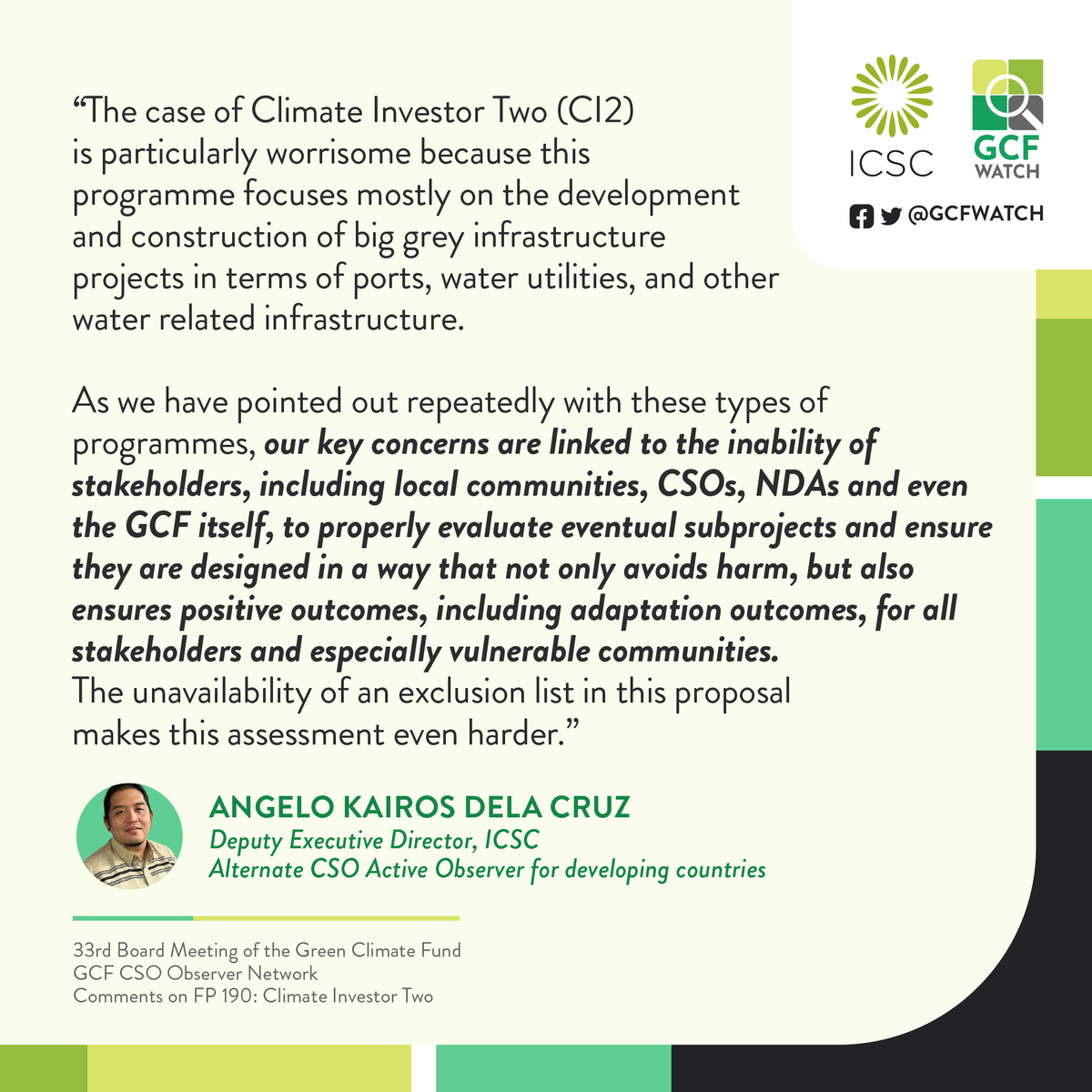


@MoormannRainer Wenn man alles darauf ausrichtet #Ci2 zu reduzieren und die Sensitivität am Ende überschätzt hat, hat man enorm hohe Grenzkosten aufgewendet aber nur wenig erreicht, wo Anpassung sinnvoller gewesen wäre

Following #COP26 the #Dutch Fund for Climate & Development #DFCD has announced $675 million in finance for #ClimateSmart water, sanitation & oceans projects in developing countries. 🌍🚰
Read about the innovative #ClimateFinance approach of #CI2 at:
https://t.co/3tjbnpTshQ


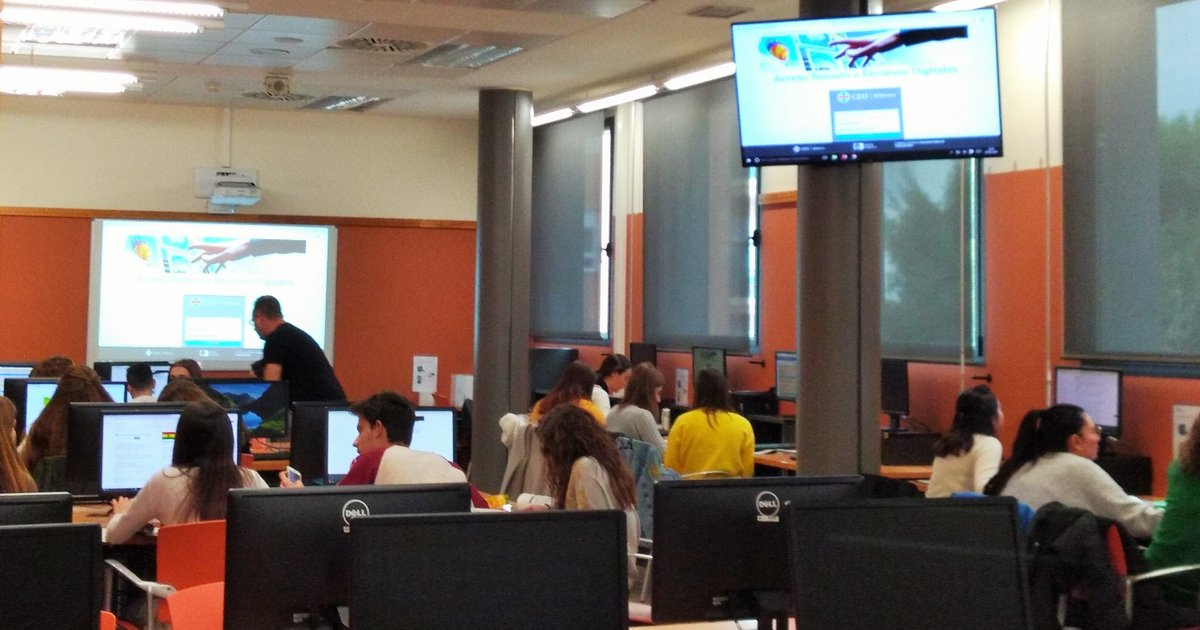
🔝Hoy hemos recibido en la @BibliotecaUCH a los alumnos de #Periodismo para asistir al curso básico de competencias informáticas e informacionales #CI2
ℹ️ Los cursos permiten adquirir conocimientos y habilidades para la búsqueda de información (fuentes, evaluación, uso adecuado)

¡Vuelven los cursos de la #biblioteca!
📚 Comienzan los cursos impartidos por los documentalistas de @BibliotecaUCH sobre competencias informáticas e informacionales #CI2 para los estudiantes @uchceu
💻 Hoy se ha impartido la primera sesión para los alumnos de 4º de Enfermería


ほぼプリセット流してるだけですけど賑やかしに参加。
なるべく誰も使っていないようなガジェットをチョイス。
デジランドビーツ!!
シマムラサン マタヤリマショウネ!!
#vocaloop
#midiglue
#KAOSSDJ
#volcamix
#MIKUSTOMP
#CI2+
#SP555
#ARQ96
#electribe2s
#digilandbeats

🔴#aquaculture : lancement en #Namibie de la première ferme de #varech à grande échelle au monde
#greenbusiness #ClimateInvestorTwo #CI2 #Kelp_Blue @NamPresidency #NIDIF #Eos_Capital #investissement #climate #Climat #ecologie @ocean_climate
👉https://t.co/rSJIHGWSK2


Ahora más que nunca es necesaria la alfabetización en información #alfin #CI2 #DigCompUPO Aquí una saleccion de recursos sobre #COVID19 #bibupo https://t.co/TpFb2FqKze

Information about #COVID19 is overabundant. Quality information keeps us updated on the evolution of the pandemic and how to stay safe.
🔑Parents/guardians must let children know why information is central to our lives. #MILCLICKS #ThinkBeforeSharing

📚 Hoy ha sido de #formación para los alumnos de #EnfermeríaUCH
Continuamos con los cursos impartidos por los #documentalistas de @BibliotecaUCH sobre competencias informáticas e informacionales #CI2 para los estudiantes de @uchceu https://t.co/rSC9QKUbTv
#aprendiendo #biblioteca

The Center for Intelligent Imaging (#ci2) will develop & apply #AI to devise powerful new ways to look inside the body & to evaluate health & disease. Hear more from @UCSFimaging faculty --> https://t.co/IjMIR7gbRs
Continuamos con los cursos de formación de la @BibliotecaUCH sobre competencias informáticas e informacionales #CI2 para los estudiantes de @uchceu
⬇️ Hoy ha sido el turno de los alumnos de #VeterinaryUCH
#biblioteca
https://t.co/rSC9QKUbTv

Ahora en #17rolcrai @JoseManuelErbez hablando sobre la evolución de #CI2 a #DigComp en @rebiun Abajo el póster que presentamos a @wsRebiun17 con la experiencia de @bibupo #DigCompUPO
Desde @bibupo también queremos mostrar alguno de nuestros #proyectosdigitales en @wsRebiun17 En este caso #DigCompUPO, la transformación de nuestros programas de formación en #grado, de #ci2 al marco europeo #DigComp #CompetenciasDigitales #Póster


Nuestro compañero @JoseManuelErbez en las @17CRAI que han comenzado hoy en Sevilla (@Biblioteca_US). Habla sobre “Diseño colaborativo de materiales para la formación en linea sobre competencias digitales” #Ci2


Last Seen Hashtags on Sotwe
truetips
Seen from United States
FairnessNotIdeology
Seen from United States
หลุดทวิต
Seen from Thailand
สาวอวบรับงาน
Seen from Thailand
sizekink
Seen from Saudi Arabia
aunty
Seen from Italy
desnudados
Seen from Argentina
PickupSports
Seen from Netherlands
omegle
Seen from United States
academiavirtuosa
Seen from United States
Most Popular Users

Elon Musk 
@elonmusk
240.8M followers

Barack Obama
@barackobama
119.2M followers

Donald J. Trump
@realdonaldtrump
111.7M followers

Cristiano Ronaldo
@cristiano
111M followers

Narendra Modi
@narendramodi
107M followers

Rihanna
@rihanna
97.8M followers

NASA
@nasa
92.2M followers

Justin Bieber
@justinbieber
91M followers

KATY PERRY
@katyperry
87.9M followers

Taylor Swift
@taylorswift13
81.7M followers

Lady Gaga
@ladygaga
73.3M followers

Virat Kohli
@imvkohli
70.3M followers

Kim Kardashian
@kimkardashian
69.9M followers

YouTube
@youtube
68.7M followers

Bill Gates
@billgates
64M followers

Neymar Jr
@neymarjr
63.1M followers

The Ellen Show
@theellenshow
62.4M followers

CNN
@cnn
61.9M followers

Selena Gomez
@selenagomez
61M followers

X
@x
60.8M followers