

Top Tweets for #ChipMaking

Intel is making a $2.3 billion move into quantum computing by acquiring Classiq, combining quantum software with its chipmaking expertise.
The race for next-generation computing is expanding beyond traditional chips, and companies are positioning themselves for what comes next.

Today, we announced that @intel has entered into an agreement to acquire @ClassiqTech, a recognized pioneer in quantum computing software and algorithms, based in Tel Aviv, Israel. This marks a transformational moment for Intel’s quantum computing group, as we establish a new Quantum Computing Business. With Classiq, Intel will become a full-stack quantum solutions provider and add QPUs to our already diverse compute platform portfolio spanning CPUs, GPUs and ASICs.
Super excited to welcome Nir Minerbi, Amir Naveh, Yehuda Naveh, and the talented Classiq team to Intel!
https://t.co/p6M3WhroFy


Tesla and SpaceX are reportedly starting construction on Terafab in Texas — a planned 100M sq. ft. chip factory designed to bring chipmaking under one roof.
#tesla #spacex #terafab #chips #technology
Disclaimer: Credit to the respective source.

ASML’s next-gen High-NA EUV machines cost around $400M each.
Yet TSMC, Samsung, SK Hynix and Intel are lining up anyway.
AI is making the world’s most expensive chipmaking tools look like infrastructure.

Lee Jae Myung wants South Korea’s defense ministry to move Gwangju’s airbase by mid-2028.
Reuters says he wants its functions shifted to another base, clearing the site for a chipmaking cluster.
Worth over $576 billion, it involves Samsung Electronics and SK hynix; the 8.3-million-square-meter airfield has level land and transport links.
Faster fabs are the goal, but relocation affects defense planning; U.S. forces in Korea cite “important” military interests.
U.S. security concerns remain, so the speed of military and local approvals will decide whether the 2028 deadline is realistic.


The US is investing $500 million to use AI for semiconductor materials discovery.
The next breakthrough in chipmaking may come from AI itself.
#AI #Semiconductors #Innovation #Technews


US-China Tensions & Tech/Trade
• US concerned about ASML chip tool in China: US Commerce Secretary Howard Lutnick told ASML that Washington suspects one of its advanced chipmaking machines reached China, violating export controls. This highlights ongoing efforts to curb China’s semiconductor advances.
• EU weighs tougher measures on China trade imbalance: Leaders discuss actions to address subsidized Chinese exports and protect European industries.
• China imposes extra 55% tariff on Australian beef: Starting June 20, after quota thresholds, signaling trade pushback.
• Broader context: US lists firms like BYD, Alibaba, and Baidu as “Chinese military companies”; China criticizes such moves. Consumer spending in China fell for the first time since COVID (May retail sales down 0.6%).


🍎 Apple and Intel just signed a preliminary chipmaking deal. The AI angle is the real story.
→ Reported May 8, finalized in recent months after over a year of talks
→ Apple abandoned Intel in 2020 when it moved Macs to in house Apple Silicon
→ The catalyst: the US government became Intel's largest shareholder in 2025
→ Intel stock reaction Friday: +14%
→ Likely Intel scope: lower end M series chips for iPads and entry level Macs, not the flagship A series
AI demand at TSMC is so intense that Apple's diversifying its supply chain for the first time since 2020. Tim Cook flagged capacity constraints on the last two earnings calls, and NVIDIA, AMD, and AI customers are willing to pay more per wafer than Apple. TSMC is rationing its 3nm and 2nm capacity to the highest bidder. The Trump administration's Intel stake gave Washington the leverage to broker a domestic alternative. Bloomberg first reported the talks Tuesday. The Wall Street Journal confirmed the deal Friday.


#BREAKING: 🇨🇳🇮🇷 China's top chipmaker SMIC has supplied chipmaking tech to Iran, Reuters reports.
Follow @GeoPoliticlc
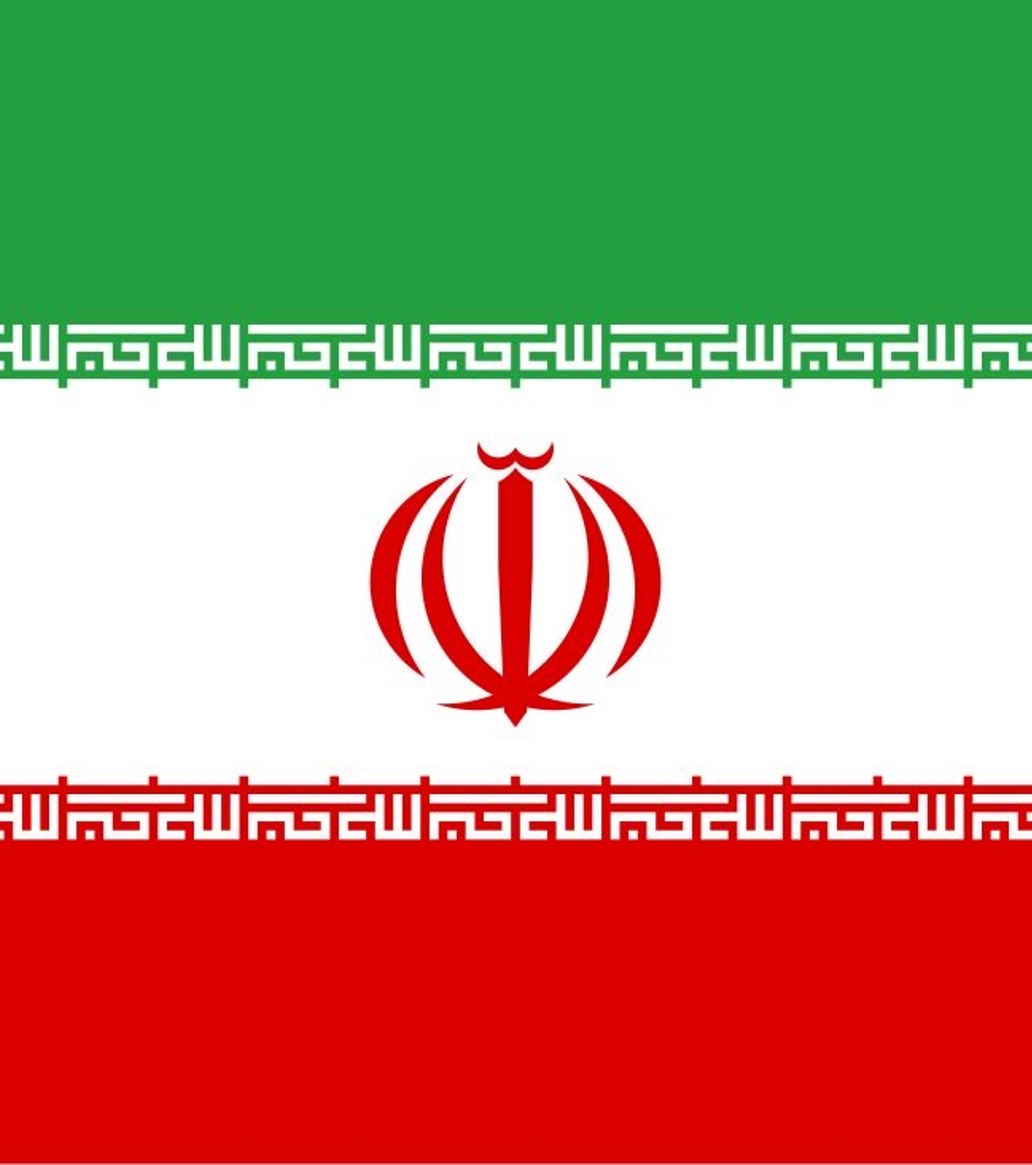
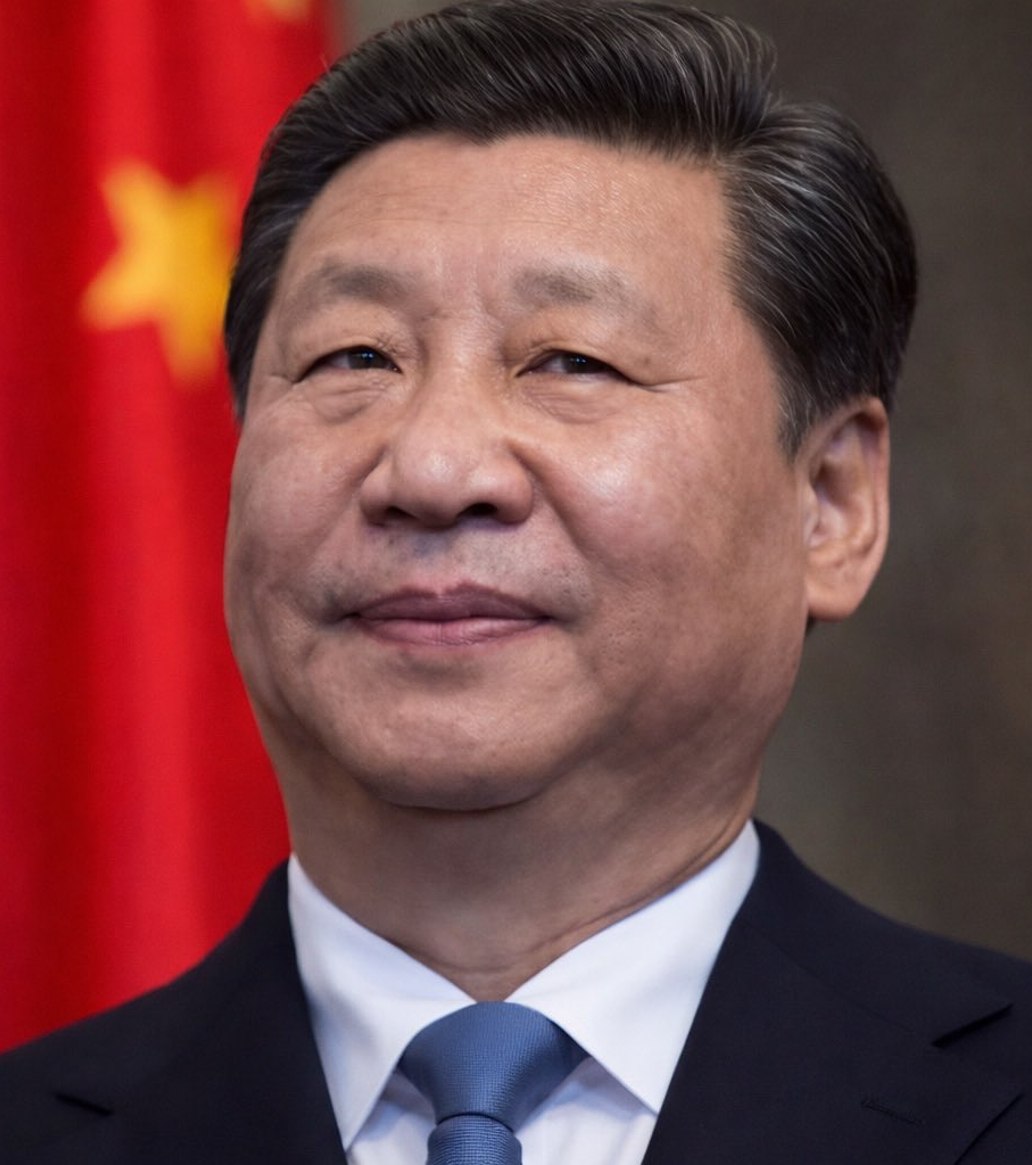
BREAKING: 🇨🇳🇮🇷 China's top chipmaker SMCI has supplied chipmaking tech to Iran, Reuters reports.
Follow @GeoPoliticlc

This goes beyond just the energy sector, the $LNG crisis is causing effects in the chipmaking, space, medical & other sectors. We are 2-3 days in and the narrative is only getting bigger.

Iran’s strikes on Qatar’s Ras Laffan LNG hub halt output and threaten a prolonged global helium shortage while squeezing chipmaking, space and medical industries https://t.co/Gm6EfqNBcc

Bezos just dropped a $100 BILLION bomb on the manufacturing world
Jeff Bezos is reportedly raising a staggering $100B to acquire and 'AI-ify' traditional industrial sectors, from chipmaking to defense. This isn't just about Amazon anymore; it's about a total industrial overhaul. Could this ignite a new era of automated production, or are we looking at mass job displacement?

📈 Finance News 🚀
ASML Hits Record High
ASML Holding surged to a new all-time high, reaching 1434.22.
The rally reflects strong investor confidence in chipmaking and AI demand.


I was very surprised seeing how many people don't know about this amazing company, ASML.
Everyone was shocked after reading my post I made on it recently. I personally loves and have been following this company updates and progress since when I was 18 yrs old.
ASML’s EUV machines are basically the reason transistors could shrink below 10 nm instead of Moore’s Law stalling out around 2015.
They switched chipmaking from 193 nm deep‑UV light to 13.5 nm extreme ultraviolet, which meant building a system that works entirely in vacuum with multi‑layer mirrors polished to near‑atomic smoothness instead of normal lenses.
Inside, a high‑power laser hits tens of thousands of microscopic tin droplets every second, turning each one into a tiny plasma “sun” hotter than the surface of the real sun to generate EUV light at exactly the right wavelength.
That light then bounces through a chain of ultra‑precise mirrors, off a reflective mask, and onto a photoresist‑coated wafer, stacking tens to hundreds of layers with alignment errors of just a few atoms.recapio+1
What blows people away is that this wasn’t a straightforward upgrade but a 30‑year bet most of the industry said would never work, involving breakthroughs in plasma physics, mirror fabrication, vacuum engineering, and thermal control just to keep the optics clean and stable while the machine runs 24/7.
Now, a single company’s “impossible” machine quietly underpins almost every advanced CPU, GPU and AI accelerator in the world.
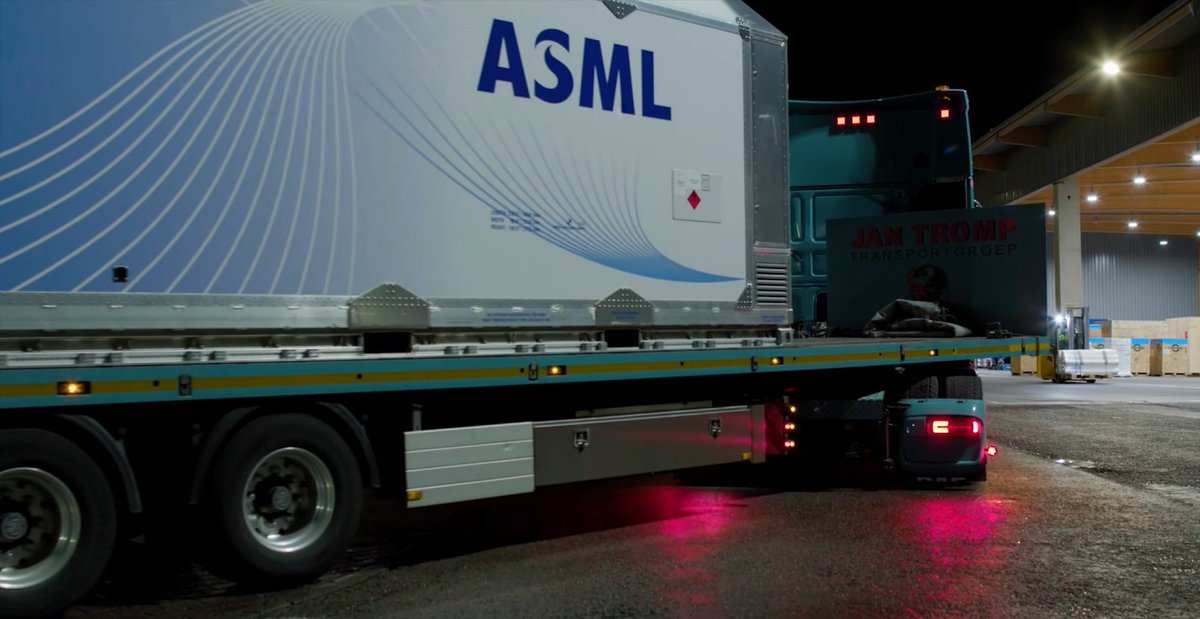


Did you know you can request lists on a subject for Grokipedia to get the best order and coverage of a subject? You can do this with any area you’re interested in. Here is an example.
### Grokipedia: Essential Reading Path for Computer Chip Manufacturing
If Grokipedia is your *only* source of information, here's a carefully sequenced "must-read" list of articles. These form a complete learning path—from absolute basics to advanced topics and real-world context. Read them in this order for the best understanding.
1. **How Computer Chips Are Made: From Sand to Silicon Powerhouse**
(The article I wrote for you earlier)
Your starting point. Gives the full end-to-end overview of the manufacturing process in one accessible piece.
2. **Silicon Wafers: The Foundation of Every Chip**
Deep dive into raw material purification, Czochralski crystal growth, ingot slicing, and wafer polishing. Explains why 300mm wafers became standard.
3. **Photolithography: Printing Circuits at the Nanoscale**
Core article on the heart of chipmaking—photoresist, masks, alignment, resolution limits, and the shift from DUV to EUV.
4. **Extreme Ultraviolet (EUV) Lithography Explained**
Must-read follow-up. Covers ASML's EUV machines, light source (laser-produced plasma), multi-layer mirrors, pellicles, and why EUV enabled 7nm and below.
5. **Transistors: From Planar to FinFET to GAA (Gate-All-Around)**
Evolution of the basic building block—how 3D structures (FinFET, nanosheets) allowed continued scaling after Moore's Law seemed to stall.
6. **Semiconductor Nodes: What "3nm" and "2nm" Actually Mean**
Clarifies marketing vs. reality—transistor density, contact gate pitch, and why node names are no longer literal sizes.
7. **Advanced Packaging: Chiplets, 3D Stacking, and CoWoS/InFO**
The new frontier. Explains why companies like AMD and Apple use chiplets, TSMC's CoWoS and InFO, and how packaging now drives performance gains.
8. **TSMC: The World's Most Important Company You've Never Heard Of**
Biography of Morris Chang, the foundry model invention, and why TSMC dominates advanced manufacturing.
9. **The Global Semiconductor Supply Chain and Geopolitical Risks**
Taiwan's dominance, U.S. CHIPS Act, Europe's efforts, China's ambitions, and earthquake/volcano risks to the industry.
10. **Moore's Law: Is It Dead or Just Evolving?**
Historical context, economic and physical limits, and how 3D integration, new materials (e.g., 2D materials, carbon nanotubes), and specialized architectures are extending it.
### Bonus Recommended (for completionists)
- **Cleanrooms: Building Factories Cleaner Than Operating Rooms**
- **Yield, Defects, and the Economics of Chipmaking**
- **High-NA EUV: The Next Leap After 2025**
- **AI Chips: Why NVIDIA, Google TPUs, and Groq Need Specialized Designs**
Reading just the top 10 in order will give you a thorough, expert-level understanding of how chips are designed, made, and why the industry looks the way it does in late 2025. Everything builds on the previous article—no gaps, no external sources needed.
Happy exploring Grokipedia! 🚀


🤷♂️India's Big Mistake: The Pax Silica Exclusion
In December 2025, the US launched "Pax Silica"—a tech alliance with Japan, South Korea, the UK, Singapore, Australia, Israel, the Netherlands, and the UAE—to control semiconductor and rare metal supply chains powering AI. India wasn't invited.
Despite having a billion people, vast mineral reserves, and talented engineers, America questioned India's reliability.
Prime Minister Modi pursued "strategic autonomy"—partnering with the US while buying Russian oil, staying friendly with China, and hedging all bets.
This worked under Biden, but Trump demanded full commitment. When Modi refused to credit Trump for ending a May 2025 Pakistan conflict, Trump retaliated with 50% tariffs on Indian goods—among the highest he imposed globally.
The real issue isn't capability. India's chip industry does design work but can't manufacture advanced AI chips.
China processes India's rare earth minerals, giving Beijing leverage. But the Netherlands is in Pax Silica not as a tech powerhouse but because it controls chipmaking equipment. Singapore joined for supply chain reliability. Australia for mineral trustworthiness.
The core problem: exclusive tech alliances require undivided loyalty. India tried keeping options open with Russia and China while partnering with America—and failed.
Locked out of coordinated investment in chip factories and AI data centers, Indian companies face global disadvantages.
The gap widens yearly, making re-entry harder. Modi's Bangladesh failure illustrates his broader problem: he controls rather than partners. Sheikh Hasina's 2024 overthrow caught India's intelligence completely off-guard because India relied on one person instead of building real relationships.
Technology is now the competition frontier. You're either inside the trusted coalition or outside—there's no middle ground. China built Belt and Road making nations dependent on its tech. America is doing the same with Pax Silica. Countries inside chose exclusive partnership over independence because membership is worth more.
India must reduce Russian oil dependence, make clear partnership choices, and genuinely invest in technology. Most importantly: reliability matters more than flexibility when technology determines national power.
Modi gambled he could partner with
everyone without committing to anyone. He lost. India is now locked out of institutions shaping the future economy—a strategic failure potentially taking years to reverse.
https://t.co/yrMBDUJ34v
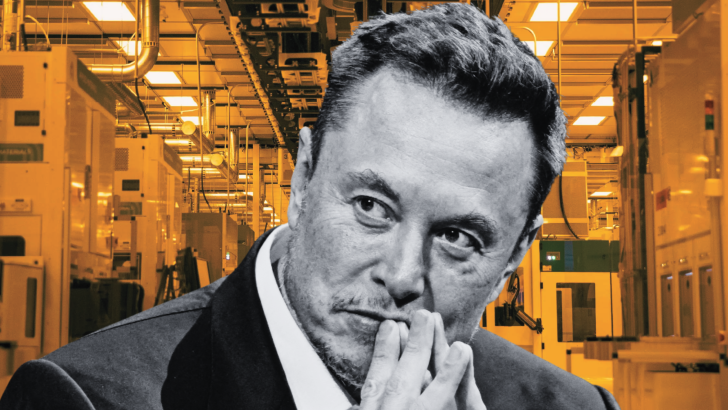
Elon Musk is moving into Samsung's house. Yes, really. 🏭
Elon Musk is taking a personal office at Samsung's US chip facility to directly oversee production lines, highlighting Tesla's push to prioritize in-house chipmaking speed and feedback loops. When the CEO moves into the factory, you know chips are mission-critical. Is this the future of tech supply chain management?

🇹🇼🇺🇸🇨🇳🇯🇵🇩🇪
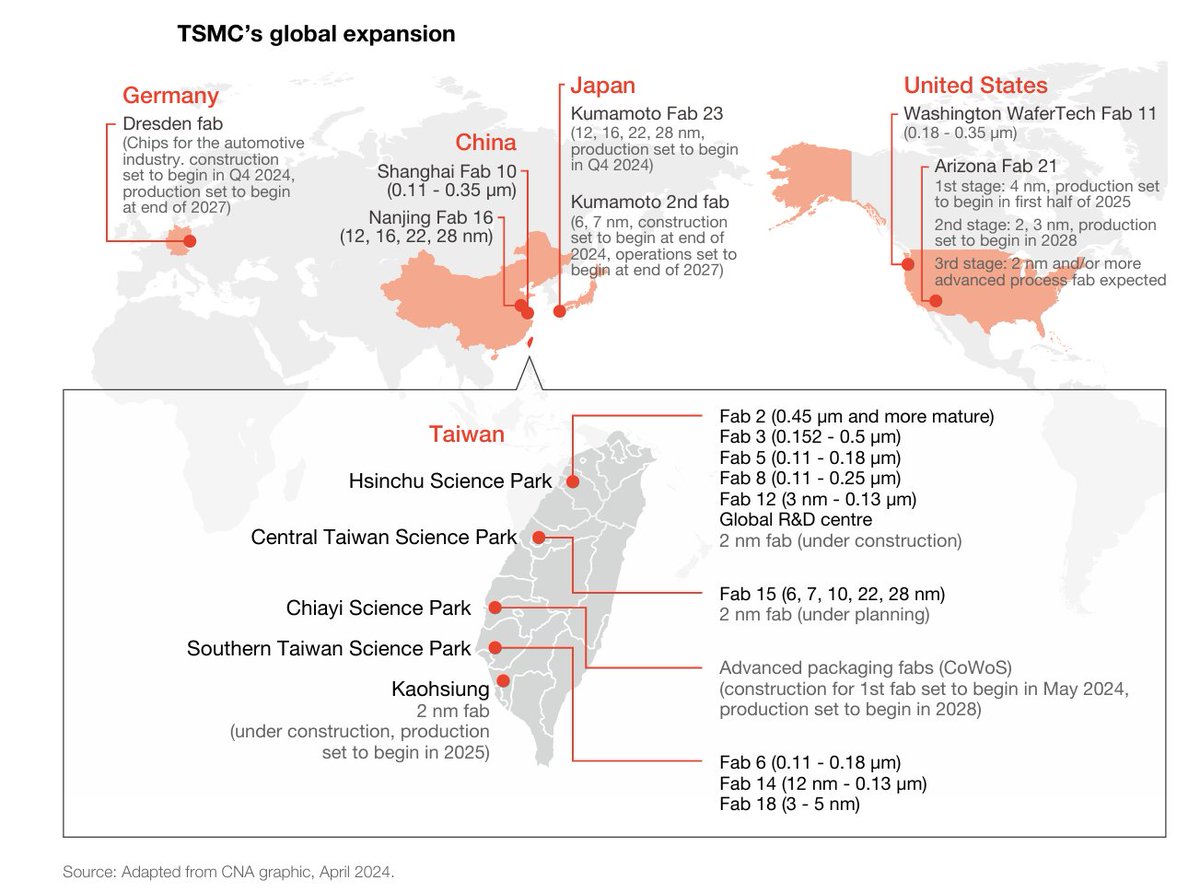
TSMC’s global Expansion: The future of chipmaking is going worldwide
(TSMC, Taiwan Semiconductor Manufacturing Company)
🇹🇼 #Taiwan – The core of advanced nodes
🔬 Home to #TSMC’s most advanced fabs (3 nm → 2 nm under construction)
🏭 Major hubs: #Hsinchu, Central Taiwan, Southern Taiwan, #Kaohsiung
🚀 2 nm fabs planned and under construction
📦 Advanced packaging (#CoWoS) capacity expanding rapidly
🇯🇵 #Japan – The fastest-growing hub
🆕 #Kumamoto Fab 23: 12–28 nm, production starts Q4 2024
🏗️ Second Kumamoto fab: 6–7 nm, operations begin end-2027
🤝 Strong TSMC–#Sony–#Denso partnership
🇺🇸 #UnitedStates – High-end chips moving west
🏭 #Arizona Fab 21:
* Stage 1 → 4 nm production in 2025
* Stage 2 → 3 nm in 2028
🧪 #Washington WaferTech: 0.18–0.35 μm mature processes
🇺🇸 Third advanced-node fab expected
🇨🇳 #China – Limited but strategic presence
🏭 #Shanghai Fab 10: 0.11–0.35 μm
🏭 #Nanjing Fab 16: 12–28 nm
⚖️ Operations remain focused on mature nodes due to export controls
🇩🇪 #Germany – New European automotive hub
🚗 #Dresden fab for auto chips
🏗️Construction starts Q4 2024
⚙️ Production expected end-2027
Source: @PwC
🇹🇼 🏭🧪🧵🔧
Taiwan’s semiconductor industry: Key indicators (2020–2024)
📌A snapshot of growth, scale, and R&D intensity
🏭 Number of companies: 288 → 321
💰 Industry revenue: NT$3.22 tn → NT$5.11 tn
📈 Annual growth: From 20–27% boom years → recovery after 2023 slowdown
🧪 #RD employees: 47,107 → 62,920
🧵 Average #revenue per employee: NT$12.6m → NT$15.1m
Five insights that stand out
1️⃣ Revenue re-acceleration in 2024
* After a –10.2% contraction in 2023, the sector rebounds with +17.7% growth in 2024(e).
* Driven by #AI chips, advanced packaging, and 3nm/2nm node transitions.
2️⃣ Strong value-added structure
* Value-added jumps from NT$1.82 tn → NT$3.11 tn.
* #Valueadded rate remains high: 56–61%, highlighting the industry’s depth and high-margin processes.
3️⃣ R&D firepower intensifies
* R&D spending rises from NT$317bn → NT$546.1bn (x1.7).
* #Taiwan maintains one of the world’s highest R&D-to-revenue ratios → 10–11%.
* Reinforced by TSMC, MediaTek, and ASE Group.
4️⃣ Talent base expands rapidly
* Total employees: 256,526 → 339,314
* R&D workforce increases by +34%, reflecting stronger competition for engineers, especially in advanced packaging & design.
5️⃣ Output efficiency keeps rising
* Revenue per employee grows from NT$12.6m → NT$15.1m.
Suggests productivity gains through:
* AI-driven automation,
* Equipment upgrades,
* Higher share of advanced nodes.
🔧 Why this matters
* Taiwan continues to strengthen its position as the global center of leading-edge chipmaking, even as 2023 brought a global electronics downturn.
By 2024, the data shows:
* Faster recovery than peers,
* Massive R&D scaling,
* Growing technical workforce,
* High structural profitability.

💧🔌💻 🌎⚠️
The hidden water cost of AI & Semiconductors: A growing sustainability challenge
💦 Data centres consume massive water volumes: a 100-MW facility uses up to 2M liters/day - equal to 6,500 households.
🍼 One #ChatGPT prompt ≈ one bottle of water, illustrating the invisible cost of digital activity.
🏭 #Semiconductor fabs are even more water-intensive: around 10M gallons/day, equal to 33,000 US homes.
🔁 #Ultrapure water (#UPW) is highly wasteful: producing 1,000 gallons requires 1,400–1,600 gallons, wasting ~500 gallons.
🌏 Global chip factories use water comparable to #HongKong’s daily consumption, putting pressure on regional supplies.
⚗️ #UPW production is energy-heavy: contaminants must be near-zero, making purification extremely resource-intensive.
☣️ #Chipmaking produces hazardous waste, including heavy metals & acidic effluents, threatening local ecosystems.
♻️ Solutions:
🔬 Replace wet steps with dry (gas-based) processes to cut water use.
🔄 Expand #wastewater #recycling - TSMC used 12% reclaimed water in 2023.
🏗️ TSMC’s #Phoenix recycling plant (operational 2028) will cut demand from 4.75M → 1.2M gallons/day.
Source: @VerdictUK

GOOD NEWS 🚨 Melius Research has designated $TSLA a "MUST OWN", citing Tesla's advancements in autonomy and CEO Elon Musk’s emphasis on their chipmaking progress 💥
"One of the reasons we called Tesla a 'must own' in our recent launch — despite all the obvious risks �� is that the world is about to change, dramatically.
Autonomy is coming very soon, and it will change everything about the driving ecosystem … We believe the next five years will see hundreds of billions in value shift, from a collection of soon to be struggling or even obsolete companies, to Tesla."


Big ambition for India's semiconductor journey! 🇮🇳
Tech Minister Ashwini Vaishnaw says India's chipmaking will be at par with major producers by 2032 Choice.
Three chip facilities start commercial production early next year. Micron already operational in Gujarat, Tata among 10 producers building domestic fabrication Choice.
India has deployed a $10 billion fund to fuel the semiconductor program, attracting designers and manufacturers Choice. The goal? Create a level playing field in global chip race.
From importing to manufacturing - India's making its move in the chip game 💻📈
#Semiconductors #MakeInIndia #AshwiniVaishnaw


Domestic advanced DUV2, NIL and future EUV in parallel with the litho chipmaking tools are doing the work
#Huawei
Last Seen Hashtags on Sotwe
Most Popular Users

Elon Musk 
@elonmusk
239.7M followers

Barack Obama
@barackobama
118.6M followers

Cristiano Ronaldo
@cristiano
114.3M followers

Donald J. Trump
@realdonaldtrump
111.7M followers

Narendra Modi
@narendramodi
106.9M followers

Rihanna
@rihanna
98.6M followers

NASA
@nasa
92.1M followers

Justin Bieber
@justinbieber
91.7M followers

KATY PERRY
@katyperry
89.9M followers

Taylor Swift
@taylorswift13
83.9M followers

Lady Gaga
@ladygaga
75.4M followers

Virat Kohli
@imvkohli
73.3M followers

Kim Kardashian
@kimkardashian
70.8M followers

YouTube
@youtube
68.6M followers

Neymar Jr
@neymarjr
66.3M followers

Bill Gates
@billgates
65.1M followers

Selena Gomez
@selenagomez
63M followers

The Ellen Show
@theellenshow
62.1M followers

CNN
@cnn
61.7M followers

X
@x
60.6M followers