

Top Tweets for #CollectiveLearning


Today, the promises of transhumanism and posthumanism are multiplying. These are ideological currents according to which, sooner or later, technology will eliminate all disease and pain, as well as aging and even death itself. Precisely because scientific progress is a supreme achievement of human intelligence, it must not be confused with a privilege reserved for millionaires seeking immortality, while entire peoples suffer from poverty and oppression. In the face of this mirage, which promotes the illusion of human beings perfected by cybernetics and biotechnology, Christian anthropology reminds us that a limitation is not a manufacturing defect, but rather the very condition of human grandeur. #ApostolicJourney #Peru #MagnificaHumanitas https://t.co/wOXDtgnSi5

Chemist here. 👋
Let me show you how fear is manufactured using a real example.
Step 1: Take a real scientific fact.
Step 2: Remove the context.
Step 3: Exaggerate the danger.
Step 4: Make people believe they’re being poisoned.
Step 5: Tell them the government is hiding it.
Step 6: Invent a conspiracy to explain everything.
Congratulations.
You’ve turned a legitimate scientific question into a terrifying story.
No exposure data.
No dose-response.
No proper risk assessment.
No evidence of a conspiracy.
Just fear.
And here’s the clever part. If you question the story, you’re accused of defending the conspiracy.
That’s not science communication.
That’s fear marketing.
Science asks: What’s the evidence?
Fear asks: What if they’re trying to kill you?
Learn to recognise the difference.
We used to fear diseases.
Then science defeated many of them.
Now we fear the science.
What a strange circle.

New research indicates that consciousness is present in plants, slime moulds and other organisms that have no brains.
For centuries the scientific consensus has been firmly brain-centred, treating subjective experience as a privilege reserved for complex nervous systems. A growing network of researchers is taking that view apart by showing that organisms without a single neuron can think and learn.
In pioneering facilities such as Spain’s Minimal Intelligence Laboratory (MINT Lab), scientists are showing that brainless organisms such as slime moulds and plants can find their way through mazes, adjust to risk, and even respond to anaesthetics.
These findings suggest that the capacity to experience the present is not a late evolutionary extra but an ancient and widespread feature of life itself.
This change of framework recasts what a mind can be. If a central nervous system is not required for consciousness, the usual tools used to measure intelligence, which were built in our own image, must be redesigned. The work pushes past scientific chauvinism and confronts a picture in which forests, gardens and cellular neighbours are not only passive biological machines. They may instead be active, feeling participants in their surroundings, moving through the world with a form of awareness that is only beginning to be understood.
[Lawrence, N. (2026). New studies suggest consciousness exists in organisms without brains. IAI News]


El Niño is a natural climate phenomenon.
But Africa is entering an increasingly dangerous era where natural variability meets a human-heated planet.
A stronger El Niño can intensify drought, heat, floods and food insecurity across parts of Africa, while climate change raises the baseline temperature from which these extremes occur.
For millions of Africans, this is not an abstract climate debate. It is;
~Crops failing.
~Pastoralists losing livestock.
~Water sources shrinking.
~Food prices rising.
~Children facing malnutrition.
~Communities being pushed deeper into poverty.
And the cruel irony?
Africa contributes relatively little to historical global emissions, yet remains among the continents most exposed to climate impacts.
El Niño may be natural.
But the vulnerability is not.
It is shaped by poverty, weak infrastructure, conflict, inequality, poor land management and decades of underinvestment in adaptation.
Africa cannot afford to simply respond to each climate shock.
We must build resilience before the next one arrives.
#ClimateActionNow

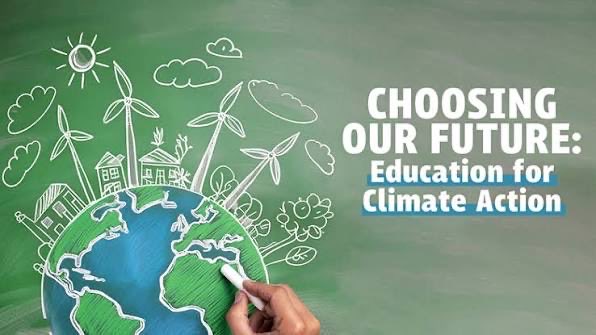
We have profoundly educated societies that are remarkably uneducated about Climate Change.
People with degrees still dismiss climate science.
Professionals still confuse weather with climate.
Decision-makers still treat adaptation as an afterthought.
And citizens still mistake misinformation for expertise.
The climate crisis is brazenly exposing a climate-literacy crisis.
Perhaps Climate Change education deserves to be treated as foundational education, not an optional subject.
#ClimateActionNow
#SharedFacts from #HealthScience via #PersonalNetworks with #TransitiveTrust for #CollectiveLearning informing #HumanReasoning #CollectiveBehavior for #CommunityProsperity

"There are no Amish with autism"
There are
"Vaccines aren't tested against placebo"
They are
"MMR has never been studied as a possible cause of autism"
It has. It's not the cause.
I apparently need to say this stuff over and over and over and over again.
And again.
Decades #SemanticManipulation undermine science, scientific knowledge, scientists
#PoliticalGameTheory #LiesAreViruses
#EducationIsTheVaccine #SharedFacts via #PersonalNetworks #TransitiveTrust
#CollectiveLearning #HumanReasoning #CollectiveBehavior #CommunityProsperity
The belief that synthetic means dangerous and “natural” means safe may be one of the most successful scientific misconceptions of the modern era.
We have spent decades being told to fear the origin of a chemical instead of understanding its dose, exposure and risk.

#collectivelearning
#smartlearning
#thoughtfullplanning
Together we don't just learn more-we learn better..💫 Constructive use of time.....Meaningful use of resources.
A collective session planned for all sections of class 9 Science...
@Dir_Education
@LetsTalkEdun
@ciet_ncert
#VaccineScience and #CounterfactualReasoning
#VaccinesWork so well that people don't know about the harms and deaths the prevented diseases cause
Then rare vaccine side effects can be used to scare people about vaccines
#CausalityCrisis
#SharedFacts for #CollectiveLearning
Vaccines are one of the greatest inventions in human history
Period

Fun Fact:
When Trump assumed the presidency on January 20, 2025, former president Biden left him a 2.9% inflation.

Furthermore, consider #GeneralSemantics from #AlfredKorzybski book #ScienceAndSanity
#WordsAreUnitsOfBrainFunction
#SharedFacts for #CollectiveLearning and #HumanReasoning

@SketchesbyBoze Reading is freedom. It opens worlds that might otherwise remain closed. Imho opinion, I believe that the lack of basic knowledge ( easily acquired through books) is the source of much of the problems in today's world. They don't have to erase history. No one sees the point.

A Persian scholar finished a single math book in 9th century Baghdad that quietly became the foundation for every line of code running on Earth today.
I started reading about him at midnight and could not believe how many things in my daily life trace back to one man.
His name was Muhammad ibn Musa al-Khwarizmi. The book is called The Compendious Book on Calculation by Completion and Balancing.
Every time you say the word algebra, you are saying his book title. Every time someone says the word algorithm, they are saying his name. Both English words come from him. Both are Latin transliterations of Arabic and of his own identity. The man did not just contribute to mathematics. He named it.
Here is the part almost nobody tells you.
Al-Khwarizmi was born around 780 CE in Khwarazm, in what is now Uzbekistan. He moved to Baghdad and worked at a research institution called the House of Wisdom, which during the Islamic Golden Age was the single most important center of learning on the planet. The caliph al-Mamun hired the best mathematicians, astronomers, and philosophers from across three continents and put them in one building with one job. Translate, study, and produce new knowledge.
Al-Khwarizmi finished his book on algebra around 820 CE. The Arabic title contained the word al-jabr, which referred to one of the two operations he used to solve equations. When the book was translated into Latin in the 12th century, the Latin world did not have a word for what he had built. So they kept his Arabic word. Al-jabr became algebra. The discipline was named after a single Arabic word in the title of a single book by a single man.
The deeper insight is what he actually changed about how humans think.
Before al-Khwarizmi, mathematical problems were solved geometrically. You drew shapes. You measured them. You compared areas. The Greeks had built an entire mathematical tradition on visual proofs and physical constructions. It was beautiful and limited. You could not solve a problem you could not draw.
Al-Khwarizmi did something nobody had done before him at this scale. He said you could solve any problem using abstract symbols and rules. You did not need a shape. You needed a procedure. You moved terms across the equation. You cancelled like terms on both sides. You isolated the unknown. He invented the idea that mathematics is a manipulation of symbols according to rules, not a study of physical figures.
That single shift made everything that came afterward possible. Calculus. Differential equations. Linear algebra. Quantum mechanics. None of it works if math is locked inside geometry. He pulled it out.
The second thing he did is the one that changed how the world counted forever. He took the Hindu numeral system from Indian mathematics, refined it, and wrote a book introducing it to the Arab world. That system included the concept of zero as a placeholder, and a positional notation where the value of a digit depends on its location. Roman numerals could not do complex calculation. Hindu-Arabic numerals could.
When his book on numerals was translated into Latin as Algoritmi de numero Indorum, the word Algoritmi was just the Latin spelling of his own name. Europeans started calling the new method "doing algorism," then "running an algorithm." The word for the most important concept in computer science is literally his name in Latin.
The third thing he did is the part that should haunt anyone who works in tech.
His method of solving problems was systematic. Step one, do this. Step two, check that. Step three, if condition A, then do X, otherwise do Y. He wrote down procedures that could be followed by anyone, anywhere, who knew how to read. The procedure did not depend on intuition or genius. It worked because the steps worked.
That is exactly what an algorithm is. A finite, deterministic procedure for solving a problem. He did not just give us the word. He gave us the entire concept of programming a thousand years before there was anything to program.
When Alan Turing built the first abstract model of computation in 1936, when John von Neumann designed the first stored-program computer in 1945, when every engineer at Google, OpenAI, Anthropic, and DeepMind writes code in 2026, they are working in a paradigm that started with one man in Baghdad twelve centuries ago.
The strangest part is what happens when you walk into any tech office in San Francisco or Bangalore or Lahore today. Engineers say the words algebra and algorithm hundreds of times a day. They do not know whose name they are saying. Almost nobody can spell al-Khwarizmi correctly on the first try.
His original Arabic manuscript is preserved at Oxford. His book on Hindu numerals survives only in Latin translation. The Latin version was the textbook that taught medieval Europe how to count.
The man who built the foundation of the AI revolution did not live to see a calculator. He died around 850 CE, a thousand years before the first electric current was sent through a wire. The civilization he built mathematics for collapsed. The library he wrote in burned. His own grave is unmarked.
But every algorithm running on every machine on Earth right now still answers to his name.

#Persia represents #FiveMillenia of #CollectiveLearning and #CulturalDepth
#TimeBinding #SharedFacts

We Iranians have finally shown the world that we are not Arab, we are not Muslim! We are Persian, with 5,000 years of civilization 🦁👑
#IranRevolution2026

From institutional reform and governance to innovation, education, and communities, Day 2 continues the conversations that began on Day 1. Explore the lineup and plan your sessions for the day.
#PPPF2026 #IdeasInAction #CollectiveLearning #Pune


The 50s was one of the worst times to be alive.
Let's stop celebrating that decade and instead, learn about it.
(Fin)
X didn’t liberate speech.
It monetized disinformation.
X is about to show where people post from,
so I’ll just say it myself: I live in France.
I’m Simon, PhD in organic chemistry.
Science belongs at the table, not just in the lab.
My goal here is simple:
Bring science back into everyday life.
Drop a Hi if you want to learn more.


Smaller models hallucinate less when connected — and so do communities. 🧠
Truth thrives through collaboration. That’s why we share data, ideas, and power openly. We don’t need leaders — we need links. 🔗💬
#AISwarm #CollectiveLearning #CryptoCommunity #DeFi #Transparency #Web3 #CryptoInnovation #AIRevolution #CommunityLed #OpenSource
Last Seen Hashtags on Sotwe
cockless
Seen from United States
รับงานศรีราชา
Seen from Thailand
نور_موسى_زوجين_متحررين_من_مصر
Seen from Italy
MujerLatina
Seen from Mexico
เย็ดในป่า
Seen from Thailand
snapchat (*****) filter:videos
Seen from Turkey
snapchatttt
Seen from United States
keerthyhot
Seen from India
diyarbakırtravesti
Seen from Turkey
MineRePurposing
Seen from United States
Most Popular Users

Elon Musk 
@elonmusk
240.5M followers

Barack Obama
@barackobama
118.7M followers

Cristiano Ronaldo
@cristiano
114.4M followers

Donald J. Trump
@realdonaldtrump
111.8M followers

Narendra Modi
@narendramodi
107M followers

Rihanna
@rihanna
98.7M followers

NASA
@nasa
92.2M followers

Justin Bieber
@justinbieber
91.8M followers

KATY PERRY
@katyperry
90M followers

Taylor Swift
@taylorswift13
84M followers

Lady Gaga
@ladygaga
75.5M followers

Virat Kohli
@imvkohli
73.4M followers

Kim Kardashian
@kimkardashian
70.8M followers

YouTube
@youtube
68.7M followers

Neymar Jr
@neymarjr
66.4M followers

Bill Gates
@billgates
65.2M followers

Selena Gomez
@selenagomez
63M followers

The Ellen Show
@theellenshow
62.1M followers

CNN
@cnn
61.7M followers

X
@x
60.6M followers