

Top Tweets for #CounterPointChina


Benjamin Netanyahu murió el día 9 de marzo. En el mismo ataque murieron su hermano menor, Iddo Netanyahu, y el Jefe del M0SSAD David Barnea. Todos ellos, junto a varios funcionarios y militares israelíes. Es la razón por la cual Donald Trump se veía tan desbastado hace unos dias.
Ever since I bought a condo on the beach way back in 2002 on Hainan Island the govt has been working its way more & more toward creating remarkable economic developments on the island #China #Hainan #CounterPointChina

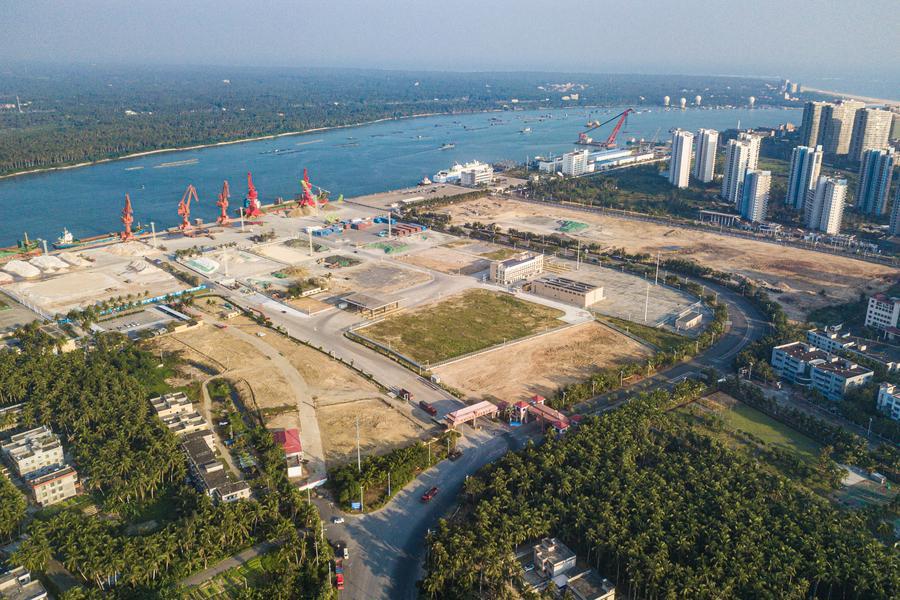
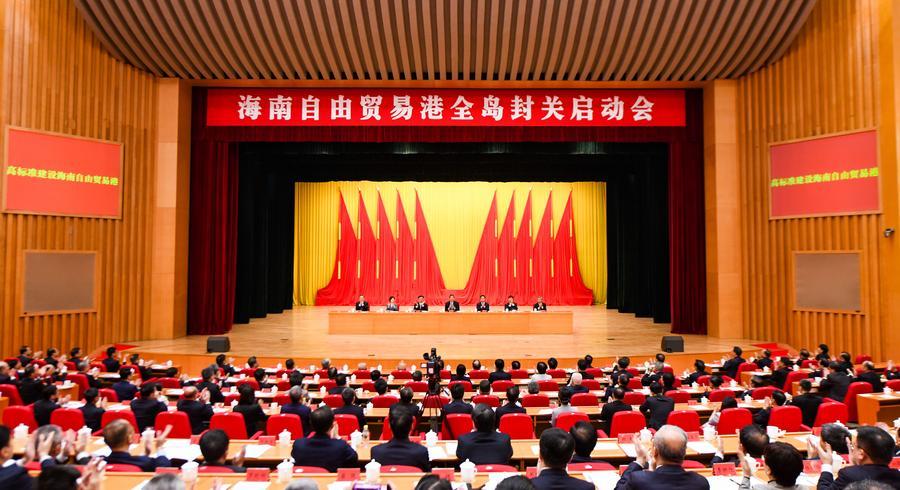
China on Thursday launched island-wide special customs operations in the Hainan Free Trade Port (FTP), the world's largest FTP by area, allowing freer entry of overseas goods, expanded zero-tariff coverage and more business-friendly measures. https://t.co/yZhXX0533v


"Face of the democracy movement"
as the WSJ puts it really means
"face of CIA / NED covert actions to undermine & create instability in other countries including violence & funding"
Jimmy Lai in the Slammer for 20 is justice well served
#China #JimmyLai #CounterPointChina

Hong Kong’s Jimmy Lai Given 20-Year Sentence, Adding Friction to U.S.-China Ties—World leaders have called for release of 78-year-old who became face of democracy movement
@austinramzy
https://t.co/I2TXBXXEMF
https://t.co/I2TXBXXEMF
Tibet became part of China
...during the Yuan Dynasty
That's a really really long time ago
#China #tibet #CounterPointChina #CounterPointGlobal

I've seen pro-China westerners talking about the liberation of Tibet, but they'll use language like "before Tibet became a part of China." This is another instance of them unknowingly carrying water for separatists. Tibet became a part of China during the Yuan Dynasty.

Many American leaders (Kellogg, Graham, Romney etc.) say very openly that they can use Ukrainians to knock out Russia from the ranks of great powers, and then the US can focus its resources on confronting China. Beijing is paying attention

Um excuse me Dalai Lama...sorry the CIA doesn't get to buy out China from the process of choosing your successor
#Tibet #DalaiLamaSuccessor #China #CounterPointChina
In his own letters to Chairman Mao, the "Dalai Lama referred to him as "the sun that shines on all" and "a compassionate mother who protects us." After fleeing Tibet, Dalai Lama himself admitted that he felt like "a son to Chairman Mao," recalling how Mao would ask him to sit beside him at meals and personally serve him food."
As usual the U.S. govt interferes and lies....

Who decides the reincarnation of a senior Tibetan lama-the Buddha, the monasteries, or the state?
In recent years, and even in recent days, the 14th Dalai Lama has made a series of striking public statements about his next life, including the possibility of being reborn as a woman, a bee, or not at all. These claims have stirred global media attention-but do they align with centuries of religious tradition and precedent?
I am a historian on China and a scholar of international relations. 15 years ago, while studying at Cornell, I devoted an entire semester in a 4000-level seminar to the study of Xizang, or Tibet. In 2018, I traveled to Xizang in person-from Lhasa to Shigatse, and onward to the Everest Base Camp-conducting field research on Tibetan religion, history, and contemporary society,
although my physical condition is not well-suited to low-oxygen environments. Over the years, I have also maintained contact and constructive dialogue with many of China's leading experts on Tibetan studies.
As a scholar, I seek to continue in my tradition of objective, evidence-based inquiry. My aim is to provide a clear and well-documented explanation of what the reincarnated "Living Buddha" system in Tibetan Buddhism actually entails, and whether the Dalai Lama's poetic, progressive claims align with doctrinal teachings and historical precedent. Though the topic is intricate, I will strive to present it in a manner that is accessible yet substantive, so that you can return to the facts themselves and form you own informed judgments.
The concept of the Reincarnated Living Buddha is a highly distinctive phenomenon that emerged after Buddhism was transmitted into Tibet. According to Buddhist belief, individuals undergo cycles of rebirth; after death, the soul continues its journey by reincarnating in a new body. When a spiritual leader passes away, a ritual process is undertaken to identify potential successors. Among these, one child, after being recognized, is deemed the reincarnation of the previous master and inherits not only the title but also the religious and, at times, political authority attached.
During the Yuan dynasty (1271–1368), Tibet came under the administration of the central Chinese government for the first time. The 3rd Karmapa, Rangjung Dorje, born in 1284, is considered the first reincarnated Living Buddha in Tibet. This practice was soon emulated across various Tibetan Buddhist sects. In the Qing dynasty (1644–1911), the Dalai Lama and the Panchen Lama, who served as the top religious figures in Xizang, also established their legitimacy through the reincarnation system.
Take the Dalai Lama as an example. During the Ming dynasty (1368–1644), Xizang was fragmented, and leaders of different sects took pride in being officially recognized by the Ming emperors. The Ming court, for its part, adopted a relatively loose model of indirect rule over Xizang. The 5th Dalai Lama, still regarded as the most powerful Dalai Lama in Tibetan history, successfully unified Tibet and established a theocratic government. Around this time, the newly established Qing emperor Shunzhi (顺治) extended several invitations to the Dalai Lama to visit the imperial court. In my view, motivated by a range of strategic considerations, including a desire for the protection of the central government, the 5th Dalai Lama ultimately spent nine month travelling to Beijing. He met Shunzhi in 1653, when the Dalai Lama was 36 years old and the emperor 15.
Some have cited murals in Xizang that depict the Dalai Lama and Shunzhi seated side-by-side and roughly equal in size, interpreting this as evidence of an "equal" meeting between the two. I find this interpretation unconvincing. First, the Dalai Lama received multiple official titles from the Shunzhi Emperor during his stay in Beijing. Second, archival records clearly indicate that at their first meeting, Shunzhi was seated in the center while the Dalai Lama was positioned to the side at a lower level. When the emperor offered him tea, the Dalai Lama declined by saying "how dare I", signaling clear awareness of hierarchy. Third, the visual portrayal of the two figures at the same scale is likely an artistic convention or perhaps a reflection of Shunzhi's young age at the time, not reliable evidence of equal status.
The 6th Dalai Lama was summoned to Beijing for failing to seek timely approval from the central government upon assuming his position, as well as for his overly romantic private life. This episode further underscores the central government's authority in the recognition and regulation of reincarnated lamas.
So, starting with the 5th Dalai Lama, it became established precedent that the reincarnation of Dalai Lama must receive formal approval from the central government. The reincarnation process involves a series of intricate and sacred steps, including:
Interpretation of omens; Divination consultations; Viewing visions in sacred lakes; Revelatory dreams; On-site investigations; Relic recognition.
However, due to the emergence of irregularities in certain reincarnation cases, such as favoritism toward relatives and backroom dealings, the Qianlong Emperor introduced a system in 1783 known as the Golden Urn Lot-Drawing System (金瓶掣签). To prevent individuals from manipulation and to preserve the sanctity of the tradition, this system required that when multiple candidates were identified, the final selection would be determined through a lot-drawing ritual held in front of the Buddha statue. This draw was to be conducted in the presence of central government representatives, ensuring both transparency and divine legitimacy. The names of the selected kids, written on ivory slips, were drawn from the Golden Urn, and the chosen name would be reported to the central government for final approval.
Even in cases where only one candidate was identified, the exemption from the lot-drawing process still required formal approval from the central authorities.
Historically, the 9th, 13th, and 14th Dalai Lamas were exempted from the golden urn lot-drawing process by special approval of the central government, while the 10th, 11th, and 12th Dalai Lamas were recognized through the golden urn lot-drawing ceremony. In all cases, final confirmation came from the central government. And there has never been a case where the decision was made solely by the reincarnated individual.
The 14th Dalai Lama has repeatedly made statements regarding his potential reincarnation, such as:
The next reincarnation could occur in the "free world"
It could be a woman
It could even be a bee
The reincarnation system could be terminated
Reincarnation is purely an internal affair and should be decided by the himself...
These remarks fundamentally contradict the centuries-old rituals and institutional norms established within Tibetan Buddhism. And reincarnation is certainly not his personal business-this reflects a broader synthesis of national sovereignty, state authority, religious tradition, and the spiritual trust of the Tibetan people.
His predecessor, the 13th Dalai Lama, once sought British and Russian support, expelled central govt troops, and treaded dangerously close to separatism. Despite all the terrible records, the recognition of the current 14th Dalai Lama was still completed in 1940 with the participation of representatives dispatched by the central government.
To use a modern analogy: imagine a US president bypassing a national election, appointing his own replacement, and proclaiming that the successor could be foreign-born, or even an animal, justifying with "Please respect my inspiration."
Americans would mostly respond with "insane" and "no way."
In October 1951, at the age of 26, the 14th Dalai Lama wrote to Chairman Mao, expressing his support for the central government. In March 1959, he fled to India, where he has lived ever since. What happened during those eight intervening years? My research suggests that he was treated with considerable respect and accorded extraordinary honors.
In 1953, he was named Honorary President of the Chinese Buddhist Association, making him the most revered figure in Chinese Buddhism, even before the age of 30. In 1954, he traveled to Beijing with the Panchen Lama, met Chairman Mao for the first time (top left), and participated in the First National People's Congress, where he was elected Vice Chairman of the National People's Congress Standing Committee-a position equivalent to a vice head of state. At just 29 years old, he had already reached the highest level of political and religious authority ever attained by a Tibetan leader.
As my mentor at the Palace Museum once told me, in preparation for the Dalai Lama's visit to Beijing, the central government even issued a special order authorizing the use of imperial silk from the Forbidden City's storerooms to sew a custom quilt for him. Small details like this speak volumes about the level of ceremonial respect and material privilege he enjoyed.
Archival records reveal numerous letters sent by Chairman Mao to the 14th Dalai Lama (top right). Here are a few selected excerpts:
"Under the unified leadership of the Central People's Government, [Xizang] will forever be free from the shackles of imperialism and the oppression of alien peoples, and will stand up to work for the cause of the Tibetan people themselves."
"I have received your letter dated August 19, 1952, along with your photograph. Your deep affection for the motherland and the Central People's Government, as well as your determination to work for the well-being of both the lay and monastic Tibetan people in all aspects, brings me great comfort. On the road of striving for the interests of our motherland and the Tibetan people, you, Mr. Dalai Lama, along with Mr. Panchen and the Tibetan clergy and laypeople, will always have the support of the CCP and the Central People's Government."
"Whatever support is needed for building a new Xizang, the central government will do its best to provide, as long as it is within our means. However, due to transportation difficulties, some matters cannot be resolved immediately and shall wait for the future."
"Today's policy is to protect religion, and the same policy will apply in the future. As for land redistribution in Xizang, it is not under discussion at the moment; whether it should happen in the future is up to you to decide, and if it is to be done, you will do it yourselves-we will not do it on your behalf."
"It delighted me so much to receive your letter dated July 6, 1955. I often think of you and recall the pleasant times we spent together during your stay in Beijing. When will we meet again? Perhaps in three years, when the Second National People's Congress is held-you may come then…Xizang is progressing. Of course, one should not be impatient; some progress each year is enough. I hope you take good care of your health. Things are going well here. We've made some mistakes, which we are working to criticize and correct. China is a large country, but it is not yet wealthy or strong. We hope that through the joint efforts of all ethnic groups, after a few Five-Year Plans, it will become both prosperous and powerful. Xizang has great potential. May you all continue your good work. I was pleased to receive the fresh Tibetan flowers you included in your letter. I am enclosing one in return for you."
"Can you read this letter? My handwriting is still quite cursive and hard to change quickly, though perhaps slightly better than last time."
In his own letters to Mao, Dalai Lama referred to him as "the sun that shines on all" and "a compassionate mother who protects us." After fleeing Tibet, Dalai Lama himself admitted that he felt like "a son to Chairman Mao," recalling how Mao would ask him to sit beside him at meals and personally serve him food.
The Dalai Lama's flight from China is often framed as a result of "repression," but the historical truth is far more different. At the time, land reform was being carried out in Tibetan-populated areas outside of the Xizang Autonomous Region. Under the previous serfdom system, Tibetan peasants had virtually no status and were often subjected to arbitrary abuse. Before the PLA entered these regions, it was not uncommon for serfs to be tortured or even killed at will, with their skulls fashioned into "ritual instruments."
These reforms naturally provoked fierce resentment among the Tibetan aristocracy. Yet the Dalai Lama chose to side with a small group of entrenched elites, rather than with the vast majority of ordinary Tibetans, who struggled.
As we can see, Chairman Mao corresponded with the Dalai Lama on this issue on multiple occasions, and honored his commitment not to initiate reforms immediately within Xizang itself-even though the serfdom system was brutal, unjust, and profoundly regressive. Nevertheless, the Dalai Lama chose to flee in 1959. And it may surprise you, but China retained his position as Vice Chairman of the National People’s Congress until 1964-five years after his departure. Such tolerance toward someone who betrayed is virtually unparalleled anywhere in the world.
In 2018, I visited the Norbulingka Palace (罗布林卡) on the outskirts of Lhasa, the traditional summer residence of successive Dalai Lamas. It was from here, in 1959, that the 14th Dalai Lama fled China. The villa built specifically for him in 1954 was unbelievably lavish-its furnishings were among the finest available at the time (bottom left and right). To be frank, it was way way way more luxurious than any residence I've seen that belonged to Chairman Mao or Premier Zhou.
One object in particular stood out: a radio gifted by the central government. I remember standing there with a middle-aged visitor, both of us visibly struck by the quality of the device. I turned to this stranger and asked, "Do you think the Dalai Lama is ungrateful?" He paused in silence for a moment, then nodded and said, "Yes."
The central government did not betray him. On the contrary, it extended respect, resources, and restraint. And yet, regrettably, he chose to defend a deeply unjust social hierarchy, to flee, and to promote narratives about Tibetan independence that have sown misunderstanding abroad and division within Xizang itself.
In three days, the 14th Dalai Lama will turn ninety. Such an age ought to be marked by wisdom and humility-not by distortion and manipulation. True reverence for religion begins with respect for history and respect for institutional order. That is the most fundamental form of piety.
![ZhaiXiang5's tweet photo. Who decides the reincarnation of a senior Tibetan lama-the Buddha, the monasteries, or the state?
In recent years, and even in recent days, the 14th Dalai Lama has made a series of striking public statements about his next life, including the possibility of being reborn as a woman, a bee, or not at all. These claims have stirred global media attention-but do they align with centuries of religious tradition and precedent?
I am a historian on China and a scholar of international relations. 15 years ago, while studying at Cornell, I devoted an entire semester in a 4000-level seminar to the study of Xizang, or Tibet. In 2018, I traveled to Xizang in person-from Lhasa to Shigatse, and onward to the Everest Base Camp-conducting field research on Tibetan religion, history, and contemporary society,
although my physical condition is not well-suited to low-oxygen environments. Over the years, I have also maintained contact and constructive dialogue with many of China's leading experts on Tibetan studies.
As a scholar, I seek to continue in my tradition of objective, evidence-based inquiry. My aim is to provide a clear and well-documented explanation of what the reincarnated "Living Buddha" system in Tibetan Buddhism actually entails, and whether the Dalai Lama's poetic, progressive claims align with doctrinal teachings and historical precedent. Though the topic is intricate, I will strive to present it in a manner that is accessible yet substantive, so that you can return to the facts themselves and form you own informed judgments.
The concept of the Reincarnated Living Buddha is a highly distinctive phenomenon that emerged after Buddhism was transmitted into Tibet. According to Buddhist belief, individuals undergo cycles of rebirth; after death, the soul continues its journey by reincarnating in a new body. When a spiritual leader passes away, a ritual process is undertaken to identify potential successors. Among these, one child, after being recognized, is deemed the reincarnation of the previous master and inherits not only the title but also the religious and, at times, political authority attached.
During the Yuan dynasty (1271–1368), Tibet came under the administration of the central Chinese government for the first time. The 3rd Karmapa, Rangjung Dorje, born in 1284, is considered the first reincarnated Living Buddha in Tibet. This practice was soon emulated across various Tibetan Buddhist sects. In the Qing dynasty (1644–1911), the Dalai Lama and the Panchen Lama, who served as the top religious figures in Xizang, also established their legitimacy through the reincarnation system.
Take the Dalai Lama as an example. During the Ming dynasty (1368–1644), Xizang was fragmented, and leaders of different sects took pride in being officially recognized by the Ming emperors. The Ming court, for its part, adopted a relatively loose model of indirect rule over Xizang. The 5th Dalai Lama, still regarded as the most powerful Dalai Lama in Tibetan history, successfully unified Tibet and established a theocratic government. Around this time, the newly established Qing emperor Shunzhi (顺治) extended several invitations to the Dalai Lama to visit the imperial court. In my view, motivated by a range of strategic considerations, including a desire for the protection of the central government, the 5th Dalai Lama ultimately spent nine month travelling to Beijing. He met Shunzhi in 1653, when the Dalai Lama was 36 years old and the emperor 15.
Some have cited murals in Xizang that depict the Dalai Lama and Shunzhi seated side-by-side and roughly equal in size, interpreting this as evidence of an "equal" meeting between the two. I find this interpretation unconvincing. First, the Dalai Lama received multiple official titles from the Shunzhi Emperor during his stay in Beijing. Second, archival records clearly indicate that at their first meeting, Shunzhi was seated in the center while the Dalai Lama was positioned to the side at a lower level. When the emperor offered him tea, the Dalai Lama declined by saying "how dare I", signaling clear awareness of hierarchy. Third, the visual portrayal of the two figures at the same scale is likely an artistic convention or perhaps a reflection of Shunzhi's young age at the time, not reliable evidence of equal status.
The 6th Dalai Lama was summoned to Beijing for failing to seek timely approval from the central government upon assuming his position, as well as for his overly romantic private life. This episode further underscores the central government's authority in the recognition and regulation of reincarnated lamas.
So, starting with the 5th Dalai Lama, it became established precedent that the reincarnation of Dalai Lama must receive formal approval from the central government. The reincarnation process involves a series of intricate and sacred steps, including:
Interpretation of omens; Divination consultations; Viewing visions in sacred lakes; Revelatory dreams; On-site investigations; Relic recognition.
However, due to the emergence of irregularities in certain reincarnation cases, such as favoritism toward relatives and backroom dealings, the Qianlong Emperor introduced a system in 1783 known as the Golden Urn Lot-Drawing System (金瓶掣签). To prevent individuals from manipulation and to preserve the sanctity of the tradition, this system required that when multiple candidates were identified, the final selection would be determined through a lot-drawing ritual held in front of the Buddha statue. This draw was to be conducted in the presence of central government representatives, ensuring both transparency and divine legitimacy. The names of the selected kids, written on ivory slips, were drawn from the Golden Urn, and the chosen name would be reported to the central government for final approval.
Even in cases where only one candidate was identified, the exemption from the lot-drawing process still required formal approval from the central authorities.
Historically, the 9th, 13th, and 14th Dalai Lamas were exempted from the golden urn lot-drawing process by special approval of the central government, while the 10th, 11th, and 12th Dalai Lamas were recognized through the golden urn lot-drawing ceremony. In all cases, final confirmation came from the central government. And there has never been a case where the decision was made solely by the reincarnated individual.
The 14th Dalai Lama has repeatedly made statements regarding his potential reincarnation, such as:
The next reincarnation could occur in the "free world"
It could be a woman
It could even be a bee
The reincarnation system could be terminated
Reincarnation is purely an internal affair and should be decided by the himself...
These remarks fundamentally contradict the centuries-old rituals and institutional norms established within Tibetan Buddhism. And reincarnation is certainly not his personal business-this reflects a broader synthesis of national sovereignty, state authority, religious tradition, and the spiritual trust of the Tibetan people.
His predecessor, the 13th Dalai Lama, once sought British and Russian support, expelled central govt troops, and treaded dangerously close to separatism. Despite all the terrible records, the recognition of the current 14th Dalai Lama was still completed in 1940 with the participation of representatives dispatched by the central government.
To use a modern analogy: imagine a US president bypassing a national election, appointing his own replacement, and proclaiming that the successor could be foreign-born, or even an animal, justifying with "Please respect my inspiration."
Americans would mostly respond with "insane" and "no way."
In October 1951, at the age of 26, the 14th Dalai Lama wrote to Chairman Mao, expressing his support for the central government. In March 1959, he fled to India, where he has lived ever since. What happened during those eight intervening years? My research suggests that he was treated with considerable respect and accorded extraordinary honors.
In 1953, he was named Honorary President of the Chinese Buddhist Association, making him the most revered figure in Chinese Buddhism, even before the age of 30. In 1954, he traveled to Beijing with the Panchen Lama, met Chairman Mao for the first time (top left), and participated in the First National People's Congress, where he was elected Vice Chairman of the National People's Congress Standing Committee-a position equivalent to a vice head of state. At just 29 years old, he had already reached the highest level of political and religious authority ever attained by a Tibetan leader.
As my mentor at the Palace Museum once told me, in preparation for the Dalai Lama's visit to Beijing, the central government even issued a special order authorizing the use of imperial silk from the Forbidden City's storerooms to sew a custom quilt for him. Small details like this speak volumes about the level of ceremonial respect and material privilege he enjoyed.
Archival records reveal numerous letters sent by Chairman Mao to the 14th Dalai Lama (top right). Here are a few selected excerpts:
"Under the unified leadership of the Central People's Government, [Xizang] will forever be free from the shackles of imperialism and the oppression of alien peoples, and will stand up to work for the cause of the Tibetan people themselves."
"I have received your letter dated August 19, 1952, along with your photograph. Your deep affection for the motherland and the Central People's Government, as well as your determination to work for the well-being of both the lay and monastic Tibetan people in all aspects, brings me great comfort. On the road of striving for the interests of our motherland and the Tibetan people, you, Mr. Dalai Lama, along with Mr. Panchen and the Tibetan clergy and laypeople, will always have the support of the CCP and the Central People's Government."
"Whatever support is needed for building a new Xizang, the central government will do its best to provide, as long as it is within our means. However, due to transportation difficulties, some matters cannot be resolved immediately and shall wait for the future."
"Today's policy is to protect religion, and the same policy will apply in the future. As for land redistribution in Xizang, it is not under discussion at the moment; whether it should happen in the future is up to you to decide, and if it is to be done, you will do it yourselves-we will not do it on your behalf."
"It delighted me so much to receive your letter dated July 6, 1955. I often think of you and recall the pleasant times we spent together during your stay in Beijing. When will we meet again? Perhaps in three years, when the Second National People's Congress is held-you may come then…Xizang is progressing. Of course, one should not be impatient; some progress each year is enough. I hope you take good care of your health. Things are going well here. We've made some mistakes, which we are working to criticize and correct. China is a large country, but it is not yet wealthy or strong. We hope that through the joint efforts of all ethnic groups, after a few Five-Year Plans, it will become both prosperous and powerful. Xizang has great potential. May you all continue your good work. I was pleased to receive the fresh Tibetan flowers you included in your letter. I am enclosing one in return for you."
"Can you read this letter? My handwriting is still quite cursive and hard to change quickly, though perhaps slightly better than last time."
In his own letters to Mao, Dalai Lama referred to him as "the sun that shines on all" and "a compassionate mother who protects us." After fleeing Tibet, Dalai Lama himself admitted that he felt like "a son to Chairman Mao," recalling how Mao would ask him to sit beside him at meals and personally serve him food.
The Dalai Lama's flight from China is often framed as a result of "repression," but the historical truth is far more different. At the time, land reform was being carried out in Tibetan-populated areas outside of the Xizang Autonomous Region. Under the previous serfdom system, Tibetan peasants had virtually no status and were often subjected to arbitrary abuse. Before the PLA entered these regions, it was not uncommon for serfs to be tortured or even killed at will, with their skulls fashioned into "ritual instruments."
These reforms naturally provoked fierce resentment among the Tibetan aristocracy. Yet the Dalai Lama chose to side with a small group of entrenched elites, rather than with the vast majority of ordinary Tibetans, who struggled.
As we can see, Chairman Mao corresponded with the Dalai Lama on this issue on multiple occasions, and honored his commitment not to initiate reforms immediately within Xizang itself-even though the serfdom system was brutal, unjust, and profoundly regressive. Nevertheless, the Dalai Lama chose to flee in 1959. And it may surprise you, but China retained his position as Vice Chairman of the National People’s Congress until 1964-five years after his departure. Such tolerance toward someone who betrayed is virtually unparalleled anywhere in the world.
In 2018, I visited the Norbulingka Palace (罗布林卡) on the outskirts of Lhasa, the traditional summer residence of successive Dalai Lamas. It was from here, in 1959, that the 14th Dalai Lama fled China. The villa built specifically for him in 1954 was unbelievably lavish-its furnishings were among the finest available at the time (bottom left and right). To be frank, it was way way way more luxurious than any residence I've seen that belonged to Chairman Mao or Premier Zhou.
One object in particular stood out: a radio gifted by the central government. I remember standing there with a middle-aged visitor, both of us visibly struck by the quality of the device. I turned to this stranger and asked, "Do you think the Dalai Lama is ungrateful?" He paused in silence for a moment, then nodded and said, "Yes."
The central government did not betray him. On the contrary, it extended respect, resources, and restraint. And yet, regrettably, he chose to defend a deeply unjust social hierarchy, to flee, and to promote narratives about Tibetan independence that have sown misunderstanding abroad and division within Xizang itself.
In three days, the 14th Dalai Lama will turn ninety. Such an age ought to be marked by wisdom and humility-not by distortion and manipulation. True reverence for religion begins with respect for history and respect for institutional order. That is the most fundamental form of piety.](https://pbs.twimg.com/media/Gu3xTlwWMAAvbj-.jpg)
![ZhaiXiang5's tweet photo. Who decides the reincarnation of a senior Tibetan lama-the Buddha, the monasteries, or the state?
In recent years, and even in recent days, the 14th Dalai Lama has made a series of striking public statements about his next life, including the possibility of being reborn as a woman, a bee, or not at all. These claims have stirred global media attention-but do they align with centuries of religious tradition and precedent?
I am a historian on China and a scholar of international relations. 15 years ago, while studying at Cornell, I devoted an entire semester in a 4000-level seminar to the study of Xizang, or Tibet. In 2018, I traveled to Xizang in person-from Lhasa to Shigatse, and onward to the Everest Base Camp-conducting field research on Tibetan religion, history, and contemporary society,
although my physical condition is not well-suited to low-oxygen environments. Over the years, I have also maintained contact and constructive dialogue with many of China's leading experts on Tibetan studies.
As a scholar, I seek to continue in my tradition of objective, evidence-based inquiry. My aim is to provide a clear and well-documented explanation of what the reincarnated "Living Buddha" system in Tibetan Buddhism actually entails, and whether the Dalai Lama's poetic, progressive claims align with doctrinal teachings and historical precedent. Though the topic is intricate, I will strive to present it in a manner that is accessible yet substantive, so that you can return to the facts themselves and form you own informed judgments.
The concept of the Reincarnated Living Buddha is a highly distinctive phenomenon that emerged after Buddhism was transmitted into Tibet. According to Buddhist belief, individuals undergo cycles of rebirth; after death, the soul continues its journey by reincarnating in a new body. When a spiritual leader passes away, a ritual process is undertaken to identify potential successors. Among these, one child, after being recognized, is deemed the reincarnation of the previous master and inherits not only the title but also the religious and, at times, political authority attached.
During the Yuan dynasty (1271–1368), Tibet came under the administration of the central Chinese government for the first time. The 3rd Karmapa, Rangjung Dorje, born in 1284, is considered the first reincarnated Living Buddha in Tibet. This practice was soon emulated across various Tibetan Buddhist sects. In the Qing dynasty (1644–1911), the Dalai Lama and the Panchen Lama, who served as the top religious figures in Xizang, also established their legitimacy through the reincarnation system.
Take the Dalai Lama as an example. During the Ming dynasty (1368–1644), Xizang was fragmented, and leaders of different sects took pride in being officially recognized by the Ming emperors. The Ming court, for its part, adopted a relatively loose model of indirect rule over Xizang. The 5th Dalai Lama, still regarded as the most powerful Dalai Lama in Tibetan history, successfully unified Tibet and established a theocratic government. Around this time, the newly established Qing emperor Shunzhi (顺治) extended several invitations to the Dalai Lama to visit the imperial court. In my view, motivated by a range of strategic considerations, including a desire for the protection of the central government, the 5th Dalai Lama ultimately spent nine month travelling to Beijing. He met Shunzhi in 1653, when the Dalai Lama was 36 years old and the emperor 15.
Some have cited murals in Xizang that depict the Dalai Lama and Shunzhi seated side-by-side and roughly equal in size, interpreting this as evidence of an "equal" meeting between the two. I find this interpretation unconvincing. First, the Dalai Lama received multiple official titles from the Shunzhi Emperor during his stay in Beijing. Second, archival records clearly indicate that at their first meeting, Shunzhi was seated in the center while the Dalai Lama was positioned to the side at a lower level. When the emperor offered him tea, the Dalai Lama declined by saying "how dare I", signaling clear awareness of hierarchy. Third, the visual portrayal of the two figures at the same scale is likely an artistic convention or perhaps a reflection of Shunzhi's young age at the time, not reliable evidence of equal status.
The 6th Dalai Lama was summoned to Beijing for failing to seek timely approval from the central government upon assuming his position, as well as for his overly romantic private life. This episode further underscores the central government's authority in the recognition and regulation of reincarnated lamas.
So, starting with the 5th Dalai Lama, it became established precedent that the reincarnation of Dalai Lama must receive formal approval from the central government. The reincarnation process involves a series of intricate and sacred steps, including:
Interpretation of omens; Divination consultations; Viewing visions in sacred lakes; Revelatory dreams; On-site investigations; Relic recognition.
However, due to the emergence of irregularities in certain reincarnation cases, such as favoritism toward relatives and backroom dealings, the Qianlong Emperor introduced a system in 1783 known as the Golden Urn Lot-Drawing System (金瓶掣签). To prevent individuals from manipulation and to preserve the sanctity of the tradition, this system required that when multiple candidates were identified, the final selection would be determined through a lot-drawing ritual held in front of the Buddha statue. This draw was to be conducted in the presence of central government representatives, ensuring both transparency and divine legitimacy. The names of the selected kids, written on ivory slips, were drawn from the Golden Urn, and the chosen name would be reported to the central government for final approval.
Even in cases where only one candidate was identified, the exemption from the lot-drawing process still required formal approval from the central authorities.
Historically, the 9th, 13th, and 14th Dalai Lamas were exempted from the golden urn lot-drawing process by special approval of the central government, while the 10th, 11th, and 12th Dalai Lamas were recognized through the golden urn lot-drawing ceremony. In all cases, final confirmation came from the central government. And there has never been a case where the decision was made solely by the reincarnated individual.
The 14th Dalai Lama has repeatedly made statements regarding his potential reincarnation, such as:
The next reincarnation could occur in the "free world"
It could be a woman
It could even be a bee
The reincarnation system could be terminated
Reincarnation is purely an internal affair and should be decided by the himself...
These remarks fundamentally contradict the centuries-old rituals and institutional norms established within Tibetan Buddhism. And reincarnation is certainly not his personal business-this reflects a broader synthesis of national sovereignty, state authority, religious tradition, and the spiritual trust of the Tibetan people.
His predecessor, the 13th Dalai Lama, once sought British and Russian support, expelled central govt troops, and treaded dangerously close to separatism. Despite all the terrible records, the recognition of the current 14th Dalai Lama was still completed in 1940 with the participation of representatives dispatched by the central government.
To use a modern analogy: imagine a US president bypassing a national election, appointing his own replacement, and proclaiming that the successor could be foreign-born, or even an animal, justifying with "Please respect my inspiration."
Americans would mostly respond with "insane" and "no way."
In October 1951, at the age of 26, the 14th Dalai Lama wrote to Chairman Mao, expressing his support for the central government. In March 1959, he fled to India, where he has lived ever since. What happened during those eight intervening years? My research suggests that he was treated with considerable respect and accorded extraordinary honors.
In 1953, he was named Honorary President of the Chinese Buddhist Association, making him the most revered figure in Chinese Buddhism, even before the age of 30. In 1954, he traveled to Beijing with the Panchen Lama, met Chairman Mao for the first time (top left), and participated in the First National People's Congress, where he was elected Vice Chairman of the National People's Congress Standing Committee-a position equivalent to a vice head of state. At just 29 years old, he had already reached the highest level of political and religious authority ever attained by a Tibetan leader.
As my mentor at the Palace Museum once told me, in preparation for the Dalai Lama's visit to Beijing, the central government even issued a special order authorizing the use of imperial silk from the Forbidden City's storerooms to sew a custom quilt for him. Small details like this speak volumes about the level of ceremonial respect and material privilege he enjoyed.
Archival records reveal numerous letters sent by Chairman Mao to the 14th Dalai Lama (top right). Here are a few selected excerpts:
"Under the unified leadership of the Central People's Government, [Xizang] will forever be free from the shackles of imperialism and the oppression of alien peoples, and will stand up to work for the cause of the Tibetan people themselves."
"I have received your letter dated August 19, 1952, along with your photograph. Your deep affection for the motherland and the Central People's Government, as well as your determination to work for the well-being of both the lay and monastic Tibetan people in all aspects, brings me great comfort. On the road of striving for the interests of our motherland and the Tibetan people, you, Mr. Dalai Lama, along with Mr. Panchen and the Tibetan clergy and laypeople, will always have the support of the CCP and the Central People's Government."
"Whatever support is needed for building a new Xizang, the central government will do its best to provide, as long as it is within our means. However, due to transportation difficulties, some matters cannot be resolved immediately and shall wait for the future."
"Today's policy is to protect religion, and the same policy will apply in the future. As for land redistribution in Xizang, it is not under discussion at the moment; whether it should happen in the future is up to you to decide, and if it is to be done, you will do it yourselves-we will not do it on your behalf."
"It delighted me so much to receive your letter dated July 6, 1955. I often think of you and recall the pleasant times we spent together during your stay in Beijing. When will we meet again? Perhaps in three years, when the Second National People's Congress is held-you may come then…Xizang is progressing. Of course, one should not be impatient; some progress each year is enough. I hope you take good care of your health. Things are going well here. We've made some mistakes, which we are working to criticize and correct. China is a large country, but it is not yet wealthy or strong. We hope that through the joint efforts of all ethnic groups, after a few Five-Year Plans, it will become both prosperous and powerful. Xizang has great potential. May you all continue your good work. I was pleased to receive the fresh Tibetan flowers you included in your letter. I am enclosing one in return for you."
"Can you read this letter? My handwriting is still quite cursive and hard to change quickly, though perhaps slightly better than last time."
In his own letters to Mao, Dalai Lama referred to him as "the sun that shines on all" and "a compassionate mother who protects us." After fleeing Tibet, Dalai Lama himself admitted that he felt like "a son to Chairman Mao," recalling how Mao would ask him to sit beside him at meals and personally serve him food.
The Dalai Lama's flight from China is often framed as a result of "repression," but the historical truth is far more different. At the time, land reform was being carried out in Tibetan-populated areas outside of the Xizang Autonomous Region. Under the previous serfdom system, Tibetan peasants had virtually no status and were often subjected to arbitrary abuse. Before the PLA entered these regions, it was not uncommon for serfs to be tortured or even killed at will, with their skulls fashioned into "ritual instruments."
These reforms naturally provoked fierce resentment among the Tibetan aristocracy. Yet the Dalai Lama chose to side with a small group of entrenched elites, rather than with the vast majority of ordinary Tibetans, who struggled.
As we can see, Chairman Mao corresponded with the Dalai Lama on this issue on multiple occasions, and honored his commitment not to initiate reforms immediately within Xizang itself-even though the serfdom system was brutal, unjust, and profoundly regressive. Nevertheless, the Dalai Lama chose to flee in 1959. And it may surprise you, but China retained his position as Vice Chairman of the National People’s Congress until 1964-five years after his departure. Such tolerance toward someone who betrayed is virtually unparalleled anywhere in the world.
In 2018, I visited the Norbulingka Palace (罗布林卡) on the outskirts of Lhasa, the traditional summer residence of successive Dalai Lamas. It was from here, in 1959, that the 14th Dalai Lama fled China. The villa built specifically for him in 1954 was unbelievably lavish-its furnishings were among the finest available at the time (bottom left and right). To be frank, it was way way way more luxurious than any residence I've seen that belonged to Chairman Mao or Premier Zhou.
One object in particular stood out: a radio gifted by the central government. I remember standing there with a middle-aged visitor, both of us visibly struck by the quality of the device. I turned to this stranger and asked, "Do you think the Dalai Lama is ungrateful?" He paused in silence for a moment, then nodded and said, "Yes."
The central government did not betray him. On the contrary, it extended respect, resources, and restraint. And yet, regrettably, he chose to defend a deeply unjust social hierarchy, to flee, and to promote narratives about Tibetan independence that have sown misunderstanding abroad and division within Xizang itself.
In three days, the 14th Dalai Lama will turn ninety. Such an age ought to be marked by wisdom and humility-not by distortion and manipulation. True reverence for religion begins with respect for history and respect for institutional order. That is the most fundamental form of piety.](https://pbs.twimg.com/media/Gu3xRRUXYAInYna.jpg)
![ZhaiXiang5's tweet photo. Who decides the reincarnation of a senior Tibetan lama-the Buddha, the monasteries, or the state?
In recent years, and even in recent days, the 14th Dalai Lama has made a series of striking public statements about his next life, including the possibility of being reborn as a woman, a bee, or not at all. These claims have stirred global media attention-but do they align with centuries of religious tradition and precedent?
I am a historian on China and a scholar of international relations. 15 years ago, while studying at Cornell, I devoted an entire semester in a 4000-level seminar to the study of Xizang, or Tibet. In 2018, I traveled to Xizang in person-from Lhasa to Shigatse, and onward to the Everest Base Camp-conducting field research on Tibetan religion, history, and contemporary society,
although my physical condition is not well-suited to low-oxygen environments. Over the years, I have also maintained contact and constructive dialogue with many of China's leading experts on Tibetan studies.
As a scholar, I seek to continue in my tradition of objective, evidence-based inquiry. My aim is to provide a clear and well-documented explanation of what the reincarnated "Living Buddha" system in Tibetan Buddhism actually entails, and whether the Dalai Lama's poetic, progressive claims align with doctrinal teachings and historical precedent. Though the topic is intricate, I will strive to present it in a manner that is accessible yet substantive, so that you can return to the facts themselves and form you own informed judgments.
The concept of the Reincarnated Living Buddha is a highly distinctive phenomenon that emerged after Buddhism was transmitted into Tibet. According to Buddhist belief, individuals undergo cycles of rebirth; after death, the soul continues its journey by reincarnating in a new body. When a spiritual leader passes away, a ritual process is undertaken to identify potential successors. Among these, one child, after being recognized, is deemed the reincarnation of the previous master and inherits not only the title but also the religious and, at times, political authority attached.
During the Yuan dynasty (1271–1368), Tibet came under the administration of the central Chinese government for the first time. The 3rd Karmapa, Rangjung Dorje, born in 1284, is considered the first reincarnated Living Buddha in Tibet. This practice was soon emulated across various Tibetan Buddhist sects. In the Qing dynasty (1644–1911), the Dalai Lama and the Panchen Lama, who served as the top religious figures in Xizang, also established their legitimacy through the reincarnation system.
Take the Dalai Lama as an example. During the Ming dynasty (1368–1644), Xizang was fragmented, and leaders of different sects took pride in being officially recognized by the Ming emperors. The Ming court, for its part, adopted a relatively loose model of indirect rule over Xizang. The 5th Dalai Lama, still regarded as the most powerful Dalai Lama in Tibetan history, successfully unified Tibet and established a theocratic government. Around this time, the newly established Qing emperor Shunzhi (顺治) extended several invitations to the Dalai Lama to visit the imperial court. In my view, motivated by a range of strategic considerations, including a desire for the protection of the central government, the 5th Dalai Lama ultimately spent nine month travelling to Beijing. He met Shunzhi in 1653, when the Dalai Lama was 36 years old and the emperor 15.
Some have cited murals in Xizang that depict the Dalai Lama and Shunzhi seated side-by-side and roughly equal in size, interpreting this as evidence of an "equal" meeting between the two. I find this interpretation unconvincing. First, the Dalai Lama received multiple official titles from the Shunzhi Emperor during his stay in Beijing. Second, archival records clearly indicate that at their first meeting, Shunzhi was seated in the center while the Dalai Lama was positioned to the side at a lower level. When the emperor offered him tea, the Dalai Lama declined by saying "how dare I", signaling clear awareness of hierarchy. Third, the visual portrayal of the two figures at the same scale is likely an artistic convention or perhaps a reflection of Shunzhi's young age at the time, not reliable evidence of equal status.
The 6th Dalai Lama was summoned to Beijing for failing to seek timely approval from the central government upon assuming his position, as well as for his overly romantic private life. This episode further underscores the central government's authority in the recognition and regulation of reincarnated lamas.
So, starting with the 5th Dalai Lama, it became established precedent that the reincarnation of Dalai Lama must receive formal approval from the central government. The reincarnation process involves a series of intricate and sacred steps, including:
Interpretation of omens; Divination consultations; Viewing visions in sacred lakes; Revelatory dreams; On-site investigations; Relic recognition.
However, due to the emergence of irregularities in certain reincarnation cases, such as favoritism toward relatives and backroom dealings, the Qianlong Emperor introduced a system in 1783 known as the Golden Urn Lot-Drawing System (金瓶掣签). To prevent individuals from manipulation and to preserve the sanctity of the tradition, this system required that when multiple candidates were identified, the final selection would be determined through a lot-drawing ritual held in front of the Buddha statue. This draw was to be conducted in the presence of central government representatives, ensuring both transparency and divine legitimacy. The names of the selected kids, written on ivory slips, were drawn from the Golden Urn, and the chosen name would be reported to the central government for final approval.
Even in cases where only one candidate was identified, the exemption from the lot-drawing process still required formal approval from the central authorities.
Historically, the 9th, 13th, and 14th Dalai Lamas were exempted from the golden urn lot-drawing process by special approval of the central government, while the 10th, 11th, and 12th Dalai Lamas were recognized through the golden urn lot-drawing ceremony. In all cases, final confirmation came from the central government. And there has never been a case where the decision was made solely by the reincarnated individual.
The 14th Dalai Lama has repeatedly made statements regarding his potential reincarnation, such as:
The next reincarnation could occur in the "free world"
It could be a woman
It could even be a bee
The reincarnation system could be terminated
Reincarnation is purely an internal affair and should be decided by the himself...
These remarks fundamentally contradict the centuries-old rituals and institutional norms established within Tibetan Buddhism. And reincarnation is certainly not his personal business-this reflects a broader synthesis of national sovereignty, state authority, religious tradition, and the spiritual trust of the Tibetan people.
His predecessor, the 13th Dalai Lama, once sought British and Russian support, expelled central govt troops, and treaded dangerously close to separatism. Despite all the terrible records, the recognition of the current 14th Dalai Lama was still completed in 1940 with the participation of representatives dispatched by the central government.
To use a modern analogy: imagine a US president bypassing a national election, appointing his own replacement, and proclaiming that the successor could be foreign-born, or even an animal, justifying with "Please respect my inspiration."
Americans would mostly respond with "insane" and "no way."
In October 1951, at the age of 26, the 14th Dalai Lama wrote to Chairman Mao, expressing his support for the central government. In March 1959, he fled to India, where he has lived ever since. What happened during those eight intervening years? My research suggests that he was treated with considerable respect and accorded extraordinary honors.
In 1953, he was named Honorary President of the Chinese Buddhist Association, making him the most revered figure in Chinese Buddhism, even before the age of 30. In 1954, he traveled to Beijing with the Panchen Lama, met Chairman Mao for the first time (top left), and participated in the First National People's Congress, where he was elected Vice Chairman of the National People's Congress Standing Committee-a position equivalent to a vice head of state. At just 29 years old, he had already reached the highest level of political and religious authority ever attained by a Tibetan leader.
As my mentor at the Palace Museum once told me, in preparation for the Dalai Lama's visit to Beijing, the central government even issued a special order authorizing the use of imperial silk from the Forbidden City's storerooms to sew a custom quilt for him. Small details like this speak volumes about the level of ceremonial respect and material privilege he enjoyed.
Archival records reveal numerous letters sent by Chairman Mao to the 14th Dalai Lama (top right). Here are a few selected excerpts:
"Under the unified leadership of the Central People's Government, [Xizang] will forever be free from the shackles of imperialism and the oppression of alien peoples, and will stand up to work for the cause of the Tibetan people themselves."
"I have received your letter dated August 19, 1952, along with your photograph. Your deep affection for the motherland and the Central People's Government, as well as your determination to work for the well-being of both the lay and monastic Tibetan people in all aspects, brings me great comfort. On the road of striving for the interests of our motherland and the Tibetan people, you, Mr. Dalai Lama, along with Mr. Panchen and the Tibetan clergy and laypeople, will always have the support of the CCP and the Central People's Government."
"Whatever support is needed for building a new Xizang, the central government will do its best to provide, as long as it is within our means. However, due to transportation difficulties, some matters cannot be resolved immediately and shall wait for the future."
"Today's policy is to protect religion, and the same policy will apply in the future. As for land redistribution in Xizang, it is not under discussion at the moment; whether it should happen in the future is up to you to decide, and if it is to be done, you will do it yourselves-we will not do it on your behalf."
"It delighted me so much to receive your letter dated July 6, 1955. I often think of you and recall the pleasant times we spent together during your stay in Beijing. When will we meet again? Perhaps in three years, when the Second National People's Congress is held-you may come then…Xizang is progressing. Of course, one should not be impatient; some progress each year is enough. I hope you take good care of your health. Things are going well here. We've made some mistakes, which we are working to criticize and correct. China is a large country, but it is not yet wealthy or strong. We hope that through the joint efforts of all ethnic groups, after a few Five-Year Plans, it will become both prosperous and powerful. Xizang has great potential. May you all continue your good work. I was pleased to receive the fresh Tibetan flowers you included in your letter. I am enclosing one in return for you."
"Can you read this letter? My handwriting is still quite cursive and hard to change quickly, though perhaps slightly better than last time."
In his own letters to Mao, Dalai Lama referred to him as "the sun that shines on all" and "a compassionate mother who protects us." After fleeing Tibet, Dalai Lama himself admitted that he felt like "a son to Chairman Mao," recalling how Mao would ask him to sit beside him at meals and personally serve him food.
The Dalai Lama's flight from China is often framed as a result of "repression," but the historical truth is far more different. At the time, land reform was being carried out in Tibetan-populated areas outside of the Xizang Autonomous Region. Under the previous serfdom system, Tibetan peasants had virtually no status and were often subjected to arbitrary abuse. Before the PLA entered these regions, it was not uncommon for serfs to be tortured or even killed at will, with their skulls fashioned into "ritual instruments."
These reforms naturally provoked fierce resentment among the Tibetan aristocracy. Yet the Dalai Lama chose to side with a small group of entrenched elites, rather than with the vast majority of ordinary Tibetans, who struggled.
As we can see, Chairman Mao corresponded with the Dalai Lama on this issue on multiple occasions, and honored his commitment not to initiate reforms immediately within Xizang itself-even though the serfdom system was brutal, unjust, and profoundly regressive. Nevertheless, the Dalai Lama chose to flee in 1959. And it may surprise you, but China retained his position as Vice Chairman of the National People’s Congress until 1964-five years after his departure. Such tolerance toward someone who betrayed is virtually unparalleled anywhere in the world.
In 2018, I visited the Norbulingka Palace (罗布林卡) on the outskirts of Lhasa, the traditional summer residence of successive Dalai Lamas. It was from here, in 1959, that the 14th Dalai Lama fled China. The villa built specifically for him in 1954 was unbelievably lavish-its furnishings were among the finest available at the time (bottom left and right). To be frank, it was way way way more luxurious than any residence I've seen that belonged to Chairman Mao or Premier Zhou.
One object in particular stood out: a radio gifted by the central government. I remember standing there with a middle-aged visitor, both of us visibly struck by the quality of the device. I turned to this stranger and asked, "Do you think the Dalai Lama is ungrateful?" He paused in silence for a moment, then nodded and said, "Yes."
The central government did not betray him. On the contrary, it extended respect, resources, and restraint. And yet, regrettably, he chose to defend a deeply unjust social hierarchy, to flee, and to promote narratives about Tibetan independence that have sown misunderstanding abroad and division within Xizang itself.
In three days, the 14th Dalai Lama will turn ninety. Such an age ought to be marked by wisdom and humility-not by distortion and manipulation. True reverence for religion begins with respect for history and respect for institutional order. That is the most fundamental form of piety.](https://pbs.twimg.com/media/Gu3xNRwXkAAqIm1.jpg)
![ZhaiXiang5's tweet photo. Who decides the reincarnation of a senior Tibetan lama-the Buddha, the monasteries, or the state?
In recent years, and even in recent days, the 14th Dalai Lama has made a series of striking public statements about his next life, including the possibility of being reborn as a woman, a bee, or not at all. These claims have stirred global media attention-but do they align with centuries of religious tradition and precedent?
I am a historian on China and a scholar of international relations. 15 years ago, while studying at Cornell, I devoted an entire semester in a 4000-level seminar to the study of Xizang, or Tibet. In 2018, I traveled to Xizang in person-from Lhasa to Shigatse, and onward to the Everest Base Camp-conducting field research on Tibetan religion, history, and contemporary society,
although my physical condition is not well-suited to low-oxygen environments. Over the years, I have also maintained contact and constructive dialogue with many of China's leading experts on Tibetan studies.
As a scholar, I seek to continue in my tradition of objective, evidence-based inquiry. My aim is to provide a clear and well-documented explanation of what the reincarnated "Living Buddha" system in Tibetan Buddhism actually entails, and whether the Dalai Lama's poetic, progressive claims align with doctrinal teachings and historical precedent. Though the topic is intricate, I will strive to present it in a manner that is accessible yet substantive, so that you can return to the facts themselves and form you own informed judgments.
The concept of the Reincarnated Living Buddha is a highly distinctive phenomenon that emerged after Buddhism was transmitted into Tibet. According to Buddhist belief, individuals undergo cycles of rebirth; after death, the soul continues its journey by reincarnating in a new body. When a spiritual leader passes away, a ritual process is undertaken to identify potential successors. Among these, one child, after being recognized, is deemed the reincarnation of the previous master and inherits not only the title but also the religious and, at times, political authority attached.
During the Yuan dynasty (1271–1368), Tibet came under the administration of the central Chinese government for the first time. The 3rd Karmapa, Rangjung Dorje, born in 1284, is considered the first reincarnated Living Buddha in Tibet. This practice was soon emulated across various Tibetan Buddhist sects. In the Qing dynasty (1644–1911), the Dalai Lama and the Panchen Lama, who served as the top religious figures in Xizang, also established their legitimacy through the reincarnation system.
Take the Dalai Lama as an example. During the Ming dynasty (1368–1644), Xizang was fragmented, and leaders of different sects took pride in being officially recognized by the Ming emperors. The Ming court, for its part, adopted a relatively loose model of indirect rule over Xizang. The 5th Dalai Lama, still regarded as the most powerful Dalai Lama in Tibetan history, successfully unified Tibet and established a theocratic government. Around this time, the newly established Qing emperor Shunzhi (顺治) extended several invitations to the Dalai Lama to visit the imperial court. In my view, motivated by a range of strategic considerations, including a desire for the protection of the central government, the 5th Dalai Lama ultimately spent nine month travelling to Beijing. He met Shunzhi in 1653, when the Dalai Lama was 36 years old and the emperor 15.
Some have cited murals in Xizang that depict the Dalai Lama and Shunzhi seated side-by-side and roughly equal in size, interpreting this as evidence of an "equal" meeting between the two. I find this interpretation unconvincing. First, the Dalai Lama received multiple official titles from the Shunzhi Emperor during his stay in Beijing. Second, archival records clearly indicate that at their first meeting, Shunzhi was seated in the center while the Dalai Lama was positioned to the side at a lower level. When the emperor offered him tea, the Dalai Lama declined by saying "how dare I", signaling clear awareness of hierarchy. Third, the visual portrayal of the two figures at the same scale is likely an artistic convention or perhaps a reflection of Shunzhi's young age at the time, not reliable evidence of equal status.
The 6th Dalai Lama was summoned to Beijing for failing to seek timely approval from the central government upon assuming his position, as well as for his overly romantic private life. This episode further underscores the central government's authority in the recognition and regulation of reincarnated lamas.
So, starting with the 5th Dalai Lama, it became established precedent that the reincarnation of Dalai Lama must receive formal approval from the central government. The reincarnation process involves a series of intricate and sacred steps, including:
Interpretation of omens; Divination consultations; Viewing visions in sacred lakes; Revelatory dreams; On-site investigations; Relic recognition.
However, due to the emergence of irregularities in certain reincarnation cases, such as favoritism toward relatives and backroom dealings, the Qianlong Emperor introduced a system in 1783 known as the Golden Urn Lot-Drawing System (金瓶掣签). To prevent individuals from manipulation and to preserve the sanctity of the tradition, this system required that when multiple candidates were identified, the final selection would be determined through a lot-drawing ritual held in front of the Buddha statue. This draw was to be conducted in the presence of central government representatives, ensuring both transparency and divine legitimacy. The names of the selected kids, written on ivory slips, were drawn from the Golden Urn, and the chosen name would be reported to the central government for final approval.
Even in cases where only one candidate was identified, the exemption from the lot-drawing process still required formal approval from the central authorities.
Historically, the 9th, 13th, and 14th Dalai Lamas were exempted from the golden urn lot-drawing process by special approval of the central government, while the 10th, 11th, and 12th Dalai Lamas were recognized through the golden urn lot-drawing ceremony. In all cases, final confirmation came from the central government. And there has never been a case where the decision was made solely by the reincarnated individual.
The 14th Dalai Lama has repeatedly made statements regarding his potential reincarnation, such as:
The next reincarnation could occur in the "free world"
It could be a woman
It could even be a bee
The reincarnation system could be terminated
Reincarnation is purely an internal affair and should be decided by the himself...
These remarks fundamentally contradict the centuries-old rituals and institutional norms established within Tibetan Buddhism. And reincarnation is certainly not his personal business-this reflects a broader synthesis of national sovereignty, state authority, religious tradition, and the spiritual trust of the Tibetan people.
His predecessor, the 13th Dalai Lama, once sought British and Russian support, expelled central govt troops, and treaded dangerously close to separatism. Despite all the terrible records, the recognition of the current 14th Dalai Lama was still completed in 1940 with the participation of representatives dispatched by the central government.
To use a modern analogy: imagine a US president bypassing a national election, appointing his own replacement, and proclaiming that the successor could be foreign-born, or even an animal, justifying with "Please respect my inspiration."
Americans would mostly respond with "insane" and "no way."
In October 1951, at the age of 26, the 14th Dalai Lama wrote to Chairman Mao, expressing his support for the central government. In March 1959, he fled to India, where he has lived ever since. What happened during those eight intervening years? My research suggests that he was treated with considerable respect and accorded extraordinary honors.
In 1953, he was named Honorary President of the Chinese Buddhist Association, making him the most revered figure in Chinese Buddhism, even before the age of 30. In 1954, he traveled to Beijing with the Panchen Lama, met Chairman Mao for the first time (top left), and participated in the First National People's Congress, where he was elected Vice Chairman of the National People's Congress Standing Committee-a position equivalent to a vice head of state. At just 29 years old, he had already reached the highest level of political and religious authority ever attained by a Tibetan leader.
As my mentor at the Palace Museum once told me, in preparation for the Dalai Lama's visit to Beijing, the central government even issued a special order authorizing the use of imperial silk from the Forbidden City's storerooms to sew a custom quilt for him. Small details like this speak volumes about the level of ceremonial respect and material privilege he enjoyed.
Archival records reveal numerous letters sent by Chairman Mao to the 14th Dalai Lama (top right). Here are a few selected excerpts:
"Under the unified leadership of the Central People's Government, [Xizang] will forever be free from the shackles of imperialism and the oppression of alien peoples, and will stand up to work for the cause of the Tibetan people themselves."
"I have received your letter dated August 19, 1952, along with your photograph. Your deep affection for the motherland and the Central People's Government, as well as your determination to work for the well-being of both the lay and monastic Tibetan people in all aspects, brings me great comfort. On the road of striving for the interests of our motherland and the Tibetan people, you, Mr. Dalai Lama, along with Mr. Panchen and the Tibetan clergy and laypeople, will always have the support of the CCP and the Central People's Government."
"Whatever support is needed for building a new Xizang, the central government will do its best to provide, as long as it is within our means. However, due to transportation difficulties, some matters cannot be resolved immediately and shall wait for the future."
"Today's policy is to protect religion, and the same policy will apply in the future. As for land redistribution in Xizang, it is not under discussion at the moment; whether it should happen in the future is up to you to decide, and if it is to be done, you will do it yourselves-we will not do it on your behalf."
"It delighted me so much to receive your letter dated July 6, 1955. I often think of you and recall the pleasant times we spent together during your stay in Beijing. When will we meet again? Perhaps in three years, when the Second National People's Congress is held-you may come then…Xizang is progressing. Of course, one should not be impatient; some progress each year is enough. I hope you take good care of your health. Things are going well here. We've made some mistakes, which we are working to criticize and correct. China is a large country, but it is not yet wealthy or strong. We hope that through the joint efforts of all ethnic groups, after a few Five-Year Plans, it will become both prosperous and powerful. Xizang has great potential. May you all continue your good work. I was pleased to receive the fresh Tibetan flowers you included in your letter. I am enclosing one in return for you."
"Can you read this letter? My handwriting is still quite cursive and hard to change quickly, though perhaps slightly better than last time."
In his own letters to Mao, Dalai Lama referred to him as "the sun that shines on all" and "a compassionate mother who protects us." After fleeing Tibet, Dalai Lama himself admitted that he felt like "a son to Chairman Mao," recalling how Mao would ask him to sit beside him at meals and personally serve him food.
The Dalai Lama's flight from China is often framed as a result of "repression," but the historical truth is far more different. At the time, land reform was being carried out in Tibetan-populated areas outside of the Xizang Autonomous Region. Under the previous serfdom system, Tibetan peasants had virtually no status and were often subjected to arbitrary abuse. Before the PLA entered these regions, it was not uncommon for serfs to be tortured or even killed at will, with their skulls fashioned into "ritual instruments."
These reforms naturally provoked fierce resentment among the Tibetan aristocracy. Yet the Dalai Lama chose to side with a small group of entrenched elites, rather than with the vast majority of ordinary Tibetans, who struggled.
As we can see, Chairman Mao corresponded with the Dalai Lama on this issue on multiple occasions, and honored his commitment not to initiate reforms immediately within Xizang itself-even though the serfdom system was brutal, unjust, and profoundly regressive. Nevertheless, the Dalai Lama chose to flee in 1959. And it may surprise you, but China retained his position as Vice Chairman of the National People’s Congress until 1964-five years after his departure. Such tolerance toward someone who betrayed is virtually unparalleled anywhere in the world.
In 2018, I visited the Norbulingka Palace (罗布林卡) on the outskirts of Lhasa, the traditional summer residence of successive Dalai Lamas. It was from here, in 1959, that the 14th Dalai Lama fled China. The villa built specifically for him in 1954 was unbelievably lavish-its furnishings were among the finest available at the time (bottom left and right). To be frank, it was way way way more luxurious than any residence I've seen that belonged to Chairman Mao or Premier Zhou.
One object in particular stood out: a radio gifted by the central government. I remember standing there with a middle-aged visitor, both of us visibly struck by the quality of the device. I turned to this stranger and asked, "Do you think the Dalai Lama is ungrateful?" He paused in silence for a moment, then nodded and said, "Yes."
The central government did not betray him. On the contrary, it extended respect, resources, and restraint. And yet, regrettably, he chose to defend a deeply unjust social hierarchy, to flee, and to promote narratives about Tibetan independence that have sown misunderstanding abroad and division within Xizang itself.
In three days, the 14th Dalai Lama will turn ninety. Such an age ought to be marked by wisdom and humility-not by distortion and manipulation. True reverence for religion begins with respect for history and respect for institutional order. That is the most fundamental form of piety.](https://pbs.twimg.com/media/Gu3xKAyXcAEknnI.jpg)

1⃣ #China's May industry output +5.8%y/y or +0.61%m/m.📉
2⃣ #Crudeoil refinery -1.8% to 59.11 million tons.📉
Power generation +0.5% to 0.74 TWh. #OOTT
3⃣ #Automobile production +11.3% to 2.642 mln units, sedan +9.8%. NEVs +31.7% to 1.245 mln units.
4⃣ #Steel production +3.4%(+6.6% in Jan-Apr) to 1.274 trillion tons.
Cement fell by 8.1% y/y to 1.65 trillion tons.
2/n


China Foreign minister Wang Yi to Israeli Foreign minister Saar on call today, June 14th....as usual and consistent as ever opposing the use of force.
#Iran #PrayForPeace #China #CounterPointChina #Trump #Israel

Imagine a top Chinese official telling the U.S. how it should be allowed to develop its economy... #China #CounterPointChina #CounterPointGlobal

BESSENT: CHINA SHOULD NOT BE ALLOWED TO EXPORT ITS WAY BACK TO PROSPERITY
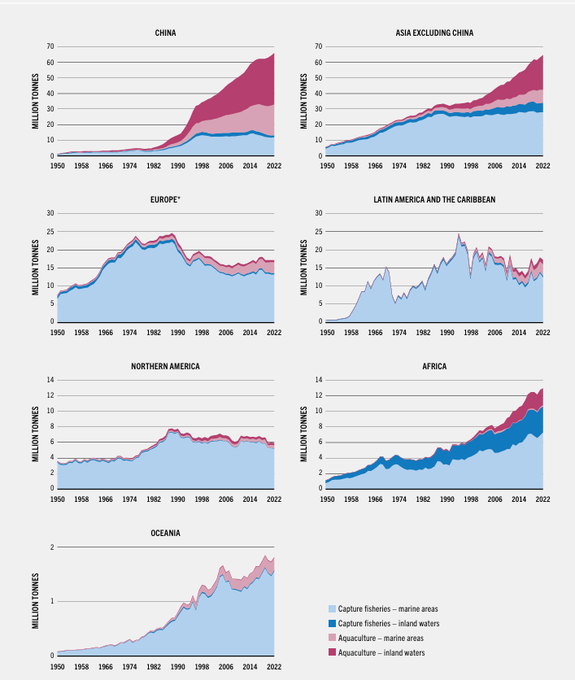
"...the worst actor in the world in terms of overfishing, relative to its population size, is none other than...Europe, who fishes about 33kg of fish per person per year compared with 10kg for China, a crazy 230% more than China!
#China #CounterPointChina #Macron

Macron on French TV is currently gaslighting people around the fact that China is purportedly a uniquely bad actor in fishing because "one out of every six fish consumed in the world was caught by a Chinese boat."
Maybe he should be told that one out of every six person in the world is Chinese 😅
Plus when you look at the actual data, the worst actor in the world in terms of overfishing, relative to its population size, is none other than... Europe (the data from the FAO: https://t.co/7TJhyvoGZM)! Europe fishes about 33kg of fish per person per year compared with 10kg for China, a crazy 230% more than China!
So it's the usual hypocrisy: lecturing the world while topping the charts in the very behavior you're condemning.

And now AI tells us right on cue "Blame China!" for the #LARIOTS... you can't make this nonsense up
#China #CounterPointChina #Trump #LARiots

The orchestrated chaos is clear. CCP-linked networks like The People’s Forum and ANSWER Coalition—funded by Neville Singham’s CCP-aligned cash—are hijacking legitimate concerns to destabilize America. These groups, tied to Marxist terror orgs like the Popular Front for Palestine, use protests as cover for anti-American agitation.
Trump’s 2025 deployment of the National Guard under Title 10 authority was a necessary response to similar ICE-targeted riots in LA—federal law must prevail when local leaders enable anarchy. Recording illegal activity? Smart. But real accountability means dismantling the foreign-funded networks fueling this unrest.
Every dollar funneled through Singham’s dark-money fronts like Justice and Education Fund undermines national security. Congress should subpoena every grant, audit every NGO, and expose this treason.
✨️CounterPoint China - China's Remarkable Healthcare System Has No Peer✨️
#CounterPointChina

A 🇺🇦Ukrainian mom living in 🇨🇳China meets a Chinese auntie who likes 🇷🇺Vladimir Putin at a public hospital.🏥
Here's a wonderful simple explanation of China's farmer, lower & middleclass households & income by a local Chinese young man...
#China #CounterPointChina #CounterPointGlobal
Stop blaming China. American politicians did it to their own country their own citizens their own society...
#China #CounterPointChina

Marco Rubio is furious that China “monopolized” rare earths over the past 25–30 years.
Well guess what?
It was the U.S. that voluntarily handed it over because rare earth processing was too “dirty” for American soil.
China took the dirty, unwanted industry and turned it into global dominance.
Now you want it back? Sure.
Go ahead. Spend 30 years rebuilding your supply chain from scratch - if you have the patience, talent, and political will.
America wants Chinese results without Chinese sacrifice.
Wants the rewards without the hard work.
Wants to eat the cake after throwing away the kitchen.
This isn’t a “China problem.”
It’s the price you pay for decades of deindustrialization and corporate greed.
Stop blaming the builder for your own demolition.
Trump’s comments equally encouraging cooperation with no specifics...a positive tone #China #CounterPointChina #Trump #Xijinping

Xinhua #Breaking
China's readout of the Xi Trump call encourages continued better cooperation without any further details
Not surprising...
#China #CounterPointChina #CounterPointGlobal
President Xi Jinping pointed out that to correct the course of the "ship" of China-US relations, both sides must steer the helm and set the direction firmly, especially by eliminating various interferences and even sabotage—which is particularly crucial.
At the US proposal, the two countries’ economic and trade heads held talks in Geneva, marking an important step in resolving trade issues through dialogue and consultation. This move has been widely welcomed by both nations and the international community, proving that dialogue and cooperation are the only correct choice. The two sides should make good use of the established economic and trade consultation mechanisms, uphold an equal attitude, respect each other’s concerns, and strive for win-win results. On this, China is sincere but also principled.
The Chinese people always honor their words with actions. Since consensus has been reached, both sides should abide by it. After the Geneva talks, China has implemented the agreement seriously and earnestly. The US should objectively assess the progress made and roll back its negative measures against China. The two sides should enhance exchanges in diplomacy, trade, military affairs, law enforcement, and other fields to build consensus, reduce misunderstandings, and strengthen cooperation.
Xi stressed that the US should handle the Taiwan issue with caution to prevent a very small number of "Taiwan independence" separatists from dragging China and the US into a dangerous situation of conflict and confrontation.
Trump expressed his great respect for President Xi, emphasizing the importance of US China relations. The US is pleased to see China’s economy maintain strong growth, as bilateral cooperation can achieve many positive outcomes.
The US will continue to adhere to the One China policy. The Geneva economic and trade talks were successful, resulting in a good agreement. The US is willing to work with China to implement the agreement and welcomes Chinese students to study in the US.
Xi welcomed Trump to visit China again, and Trump expressed sincere gratitude. The two leaders agreed that their teams should continue implementing the Geneva consensus and hold a new round of talks as soon as possible.
All current posts claiming new Covid variant 8.1 outbreaks in other countries are tied to China are just more media garbage propaganda no different than the original claims that the pandemic started in China, which it didn't.
#China #CounterPointChina #CounterPointGlobal
China tells Trump...
"Gaza is not a political bargaining chip..."
Some countries still have their integrity intact
#China #CounterPointChina #Israel #Gaza #Trump

"Time, market and morality are on China's side. The United States' behavior of relying on its strong position to pressure the world and prevent China's technological progress will backfire on itself."
#China #Huawei #CounterPointChina

Just two days after the US-China tariff negotiations released good news, the United States once again wants to encircle Huawei and announced that the use of Huawei Ascend chips anywhere in the world violates US export controls
The US Department of Commerce announced the revocation of the Biden administration's AI proliferation rules and announced that the use of Huawei Ascend chips anywhere in the world violates US export controls; warned the public of the potential consequences of allowing US AI chips to be used for Chinese AI model training and reasoning; how US companies can protect their supply chains from diversion strategies. (These new requirements will stifle US innovation and impose heavy new regulatory requirements on companies, and will also reduce dozens of countries to secondary status, thereby damaging US diplomatic relations with these countries)
The US government expects these measures to ensure that the United States continues to be at the forefront of AI innovation and maintain its global AI dominance. In fact, can this goal be achieved? It is doubtful that the gap between China and the United States in artificial intelligence is getting smaller and smaller. At present, there is only a gap in AI chip technology. Nvidia has been constantly asked to restrict exports to China. Obviously, the United States has seen Huawei's progress and success in the field of AI chips
This is the barbaric way the United States responds to competition, but will Huawei be defeated? Despite being under comprehensive sanctions from the United States for several years, Huawei achieved global sales revenue of RMB 862.1 billion and net profit of RMB 62.6 billion in 2024; cash flow from operating activities was RMB 88.417 billion, a year-on-year increase of 26.7%.
Huawei's AI chip, Ascend 910C, will begin production in 2024. It uses SMIC's 7nm process, chiplets dual-chip integrated packaging, and the number of transistors reaches 53 billion. The overall localization rate has reached about 55%. It can replace NVIDIA H100, and it is still making rapid technological progress, so who is afraid?
Once, in order to defeat Huawei, Ms. Meng Wanzhou was framed by the United States and imprisoned in Canada. That was the darkest moment. Huawei people understand that only by continuously investing funds and technology, and only by continuous innovation, can they defeat the humiliation and sanctions of the empire. This is not only Huawei, but also the pressure and responsibility faced by the entire Chinese technology company.
Time, market and morality are on China's side. The United States' behavior of relying on its strong position to pressure the world and prevent China's technological progress will backfire on itself.


Most Popular Users

Elon Musk 
@elonmusk
241M followers

Barack Obama
@barackobama
119.2M followers

Cristiano Ronaldo
@cristiano
112.2M followers

Donald J. Trump
@realdonaldtrump
111.8M followers

Narendra Modi
@narendramodi
107.1M followers

Rihanna
@rihanna
98.1M followers

NASA
@nasa
92.2M followers

Justin Bieber
@justinbieber
91.3M followers

KATY PERRY
@katyperry
88.6M followers

Taylor Swift
@taylorswift13
82.5M followers

Lady Gaga
@ladygaga
74M followers

Virat Kohli
@imvkohli
71.3M followers

Kim Kardashian
@kimkardashian
70.2M followers

YouTube
@youtube
68.7M followers

Bill Gates
@billgates
64.4M followers

Neymar Jr
@neymarjr
64.2M followers

The Ellen Show
@theellenshow
62.4M followers

CNN
@cnn
61.8M followers

Selena Gomez
@selenagomez
61.7M followers

X
@x
60.8M followers