

Top Tweets for #Decrypt

Galaxy Research has withdrawn its earlier call that Bitcoin's bear market is over (Decrypt), as CoinDesk notes spot Bitcoin ETFs continue seeing net outflows with little near-term relief expected from the Fed.
Macro liquidity and ETF flow pressure remain the main overhang heading into month-end. What levels are you watching on $BTC? #Bitcoin #BTC

encrypted math runs right inside smart contracts without decrypting

Something I find important about @primus_labs is its Data Verification and Computation architecture.
Verifying where information came from is only part of the process. Applications also need to perform calculations on that information without unnecessarily exposing sensitive inputs.
Primus approaches this through a combination of zkTLS and zkVM.
Here's the distinction:
• zkTLS authenticates information obtained from an external website.
• The verification program checks the attestation and validates the source data.
• A zkVM can execute the application's specific computation and generate a proof of the result.
• TEE technology provides a protected environment for handling sensitive information during the process.
Consider a simple example.
A user wants to demonstrate that their bank balance exceeds a particular threshold.
The application could verify the source of the balance information and run a program that checks whether the required condition is satisfied.
The result can be proven without making the entire financial record public.
This is where verified data and privacy preserving computation become particularly useful.
https://t.co/sgRODrZFQp


Access-control layer + logged decryption. Yeh sirf “privacy” nahi hai institutional compliance ke liye design hai. Public chains pe full transparency institutions ko problem deti hai; pure mixers regulatory friction create karte hain.

A balance on a public blockchain is more than a number.
It can reveal how much a fund holds,when it moves money,and where its strategy is heading
@primus_labs Labs is trying to change what that balance exposes.
With Fully Homomorphic Encryption,a wallet can hold an encrypted balance while transfers are calculated without revealing the underlying amounts
If a user sends funds,the computation updates the sender and receiver encrypted balances.
The network records the state,but observers cannot simply read the financial values.
Primus takes this further with its Confidential Vault on BNB Chain,where users can convert $U into encrypted $EU at a documented 1:1 ratio and access yield infrastructure connected to Unitas.
There is another important part controlled disclosure. An authorized party may need to verify a specific balance without making every financial detail public. Primus describes an access-control layer for this purpose.
The distinction matters for institutional finance.
Privacy should not mean removing accountability.
But encrypted balances alone do not prove institutional readiness.
Key management,computation infrastructure and independent security reviews still matter.
A balance used to reveal everything could become private by design.
The real test is who can access it,under what permission,and whether that access can be verified.
join now - https://t.co/mJ6nRSo8m0

Post-Quantum Cryptography: What Every Security Team Needs to Know | Read -•
https://t.co/IJzpPl1lin
- What Is Post-Quantum Cryptography?
- The Threat: Harvest Now, Decrypt Later
- The New Standards: ML-KEM, ML-DSA, SLH-DSA and More
- Deadlines and Regulation
- What Is Already Deployed
Step 1: Build a Cryptographic Inventory
Step 2: Prioritize With Mosca's Inequality, With Code
Step 3: Migrate With Crypto-Agility
- Performance and Compatibility Pitfalls
- Governance, Vendors and a Roadmap
- Frequently Asked Questions

Three fair questions, so three answers. Who can read a row: each encrypted value is bound to its owner, so the row on its own doesn't decrypt. How long it stays: the high-volume sync rows are deleted on a schedule. 7 days for the metric ones, 30 for calendar, task and node events. What delete removes: every row for the account, graph and connector secrets included. Only billing usage survives, with the user id nulled.

@subin_chella no, it's not end-to-end encrypted yet. Secrets are encrypted with AES-256 (one key per secret, one per organization), and those keys are locked by a master key kept on the server, separate from the database. So a stolen database alone reveals nothing, but the server can decrypt.

@Dipanjan1572003 Okay who holds the key to decrypt? Is it end to end encryption?

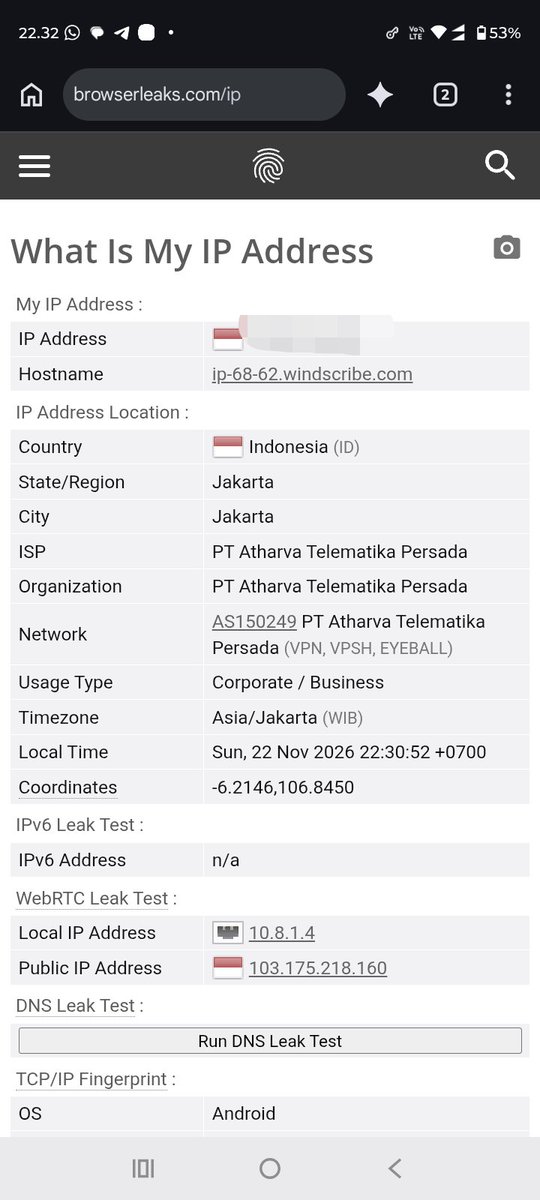
Kode QR protokol Wireguard.
Yang di profil protokol setan/anti-sensor XRAY.
Di ss ini sedang mood redirect ke server Indonesia Atharva, bawah adalah IP WebRTC.
Server xray ekstrak dahulu, lalu decrypt di MiXplorer. Gunakan saat butuh/seperlunya.
#zonauang #zonauangjajan


JUST IN: Bitcoin falls below $60,000 as the crypto fear index hits its worst level since February, Decrypt reports.


@zano_project Just tried the Address Decoder and Transaction Output Decryptor these are exactly the kind of practical tools that make privacy-chain development less of a headache.

@zano_project Excellent work
The Address Decoder, Transaction Decoder and Output Decryptor will be super useful for developers integrating Zano.
These are exactly the kind of tools that were missing.

gmic guys
Seismic Onchain Crypto 🔥
On Seismic, contracts can perform cryptographic operations directly within the EVM using 6 new precompiles:
➠ RNG (0x64) random numbers generated within the TEE
➠ ECDH (0x65) shared secret between keys
➠ AES-GCM Encrypt / Decrypt (0x66 / 0x67)
➠ HKDF (0x68) key derivation
➠ secp256k1 Sign (0x69)
📌 Regular Solidity contracts call them just like regular functions. Theres no need to include complex cryptographic operations in the bytecode📌
This makes it possible to encrypt data, generate keys, and sign transactions directly on-chain within the same environment where private transactions are executed 👍
@SeismicSys @xealistt @NoxxW3 @heathcliff_eth


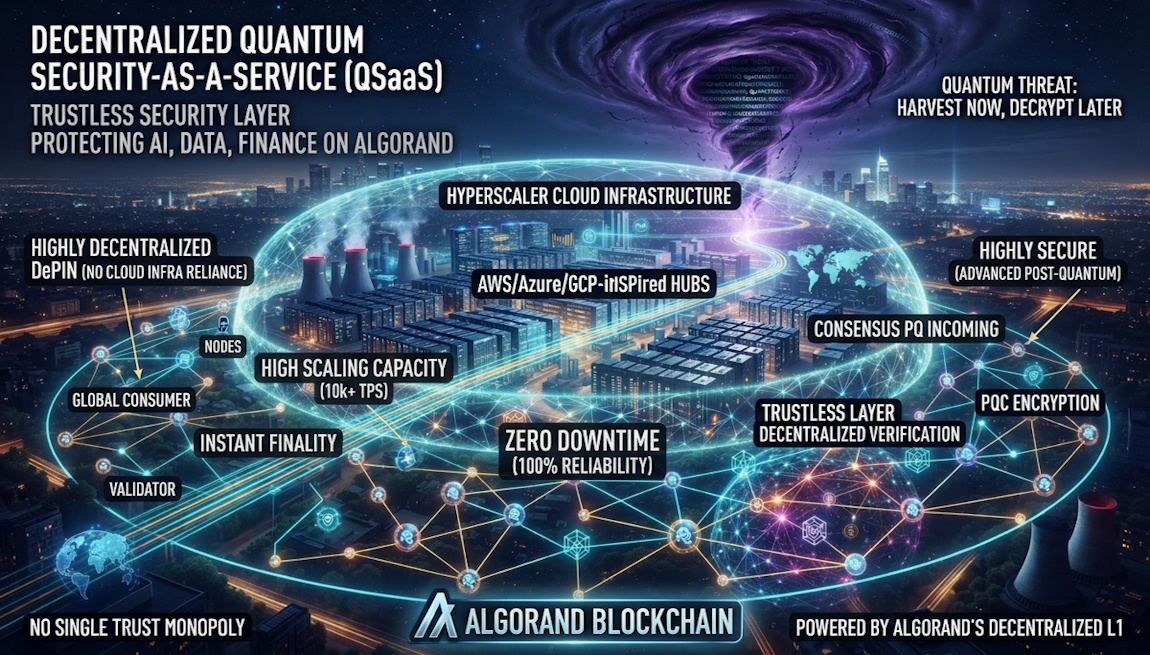
Quantum Security-as-a-Service (QSaaS) fits the hyperscaler narrative as a trustless security layer & DePIN hedge designed to protect data, AI workloads & financial rails from quantum decryption—without trusting a cloud monopoly with their cryptographic keys.
algorand:native

so you can see someone got paid, just not how much. the decrypted figures matched the original payroll file

what does confidential payroll look like onchain?
@primus_labs and AllScale tested it on BNB Chain. each salary amount was encrypted with Primus's FHETransform before it hit the smart contract, while wallets and timestamps stayed visible
so you can see someone got paid, just not how much. the decrypted figures matched the original payroll file
only four fictional employees and it was a technical test, not live payroll. real payroll cycles are the actual test. but the boundary is clear, and that's what makes it believable
if this kind of thing interests you, the Primus XP tasks are a decent way to get hands on. this link gets you in
https://t.co/SrtLfyP16x
JUST IN: 🇺🇸 CFTC approves crypto perpetual futures trading in the US, with Backpack the first exchange to launch them, according to Decrypt.

SOPS leaves the keys readable and encrypts only the values, so a git diff shows which setting changed.
That only holds if you change it with sops edit or sops set. Decrypt and encrypt the file again and every value gets a fresh IV, so the whole file shows as changed.

Just shipped Phantom Chat V2—an identity-less messaging terminal with a 3D WebGL UI and a native Node.js CLI.
Instead of accounts or server-side keys, peers derive symmetric keys locally from the URL hash and decrypt via a fresh 12-byte IV per message.
Link in reply 👇

@lovedsociety Spot on—we assume a clean client and scope strictly to zero-trust transport.
On peer join,the client extracts the URL fragment secret locally (or uses PBKDF2 with a passphrase) to init the symmetric key—no server handshake, so late joiners decrypt immediately via each 12-byte IV.

@gonzothabomba bcrypt works for the login password, but vault entries need decrypting later, so they're usually encrypted in the browser with a key from the master password (AES-GCM, key via Argon2 or PBKDF2). Then the server only stores ciphertext. Is that the plan

JUST IN: DTCC plans to bring tokenized stocks and Treasuries to the Solana blockchain in 2027, Decrypt reports.

git-crypt has no way to revoke a user. Everyone you ever added still holds the one repo key, and it decrypts new commits too.
File names and commit messages are never encrypted either.

@kian0x1 Computing on encrypted data without ever decrypting it changes everything for onchain finance, privacy without losing functionality is the real breakthrough

@kian0x1 Computing on encrypted data without decrypting it's genuinely wild.

@kian0x1 fhe lets you crunch numbers without decrypting.


Most Popular Users

Elon Musk 
@elonmusk
239.7M followers

Barack Obama
@barackobama
118.6M followers

Cristiano Ronaldo
@cristiano
114.3M followers

Donald J. Trump
@realdonaldtrump
111.7M followers

Narendra Modi
@narendramodi
106.9M followers

Rihanna
@rihanna
98.6M followers

NASA
@nasa
92.1M followers

Justin Bieber
@justinbieber
91.7M followers

KATY PERRY
@katyperry
89.9M followers

Taylor Swift
@taylorswift13
83.9M followers

Lady Gaga
@ladygaga
75.4M followers

Virat Kohli
@imvkohli
73.3M followers

Kim Kardashian
@kimkardashian
70.8M followers

YouTube
@youtube
68.6M followers

Neymar Jr
@neymarjr
66.3M followers

Bill Gates
@billgates
65.1M followers

Selena Gomez
@selenagomez
63M followers

The Ellen Show
@theellenshow
62.1M followers

CNN
@cnn
61.7M followers

X
@x
60.6M followers