

Top Tweets for #EntryPoint

OCTOBER 2026 for AAS
We started with 2,658 skill entrypoints. We ended with 2,877.
But growth was only part of the story.
→ 2,652 bundles covered by our full-catalog review
→ 2,042 bundles corrected
→ 23 Dependabot alerts addressed
→ 100 new SEO workflows added
→ Joined OpenAI's Codex for Open Source program
→ Shipped AAS 20.0, our biggest quality milestone yet
A month of contributions, fixes, and a lot of work behind the scenes.
Huge thanks to everyone who helped make this possible.
November, here we come.
https://t.co/MQE6Nj9IiO


AAS v20.1.0 is live!
2,872 total skill entrypoints.
This release brings:
→ 100 SEO workflows
→ New publishing & product launch tools
→ Better agent memory & handoffs
→ 13 PRs resolved
→ Maintenance and security queues cleared
One of our biggest catalog expansions yet.
https://t.co/Bani8Ewe9X


@mactsouk > In Zig every function that needs heap memory takes an allocator as a parameter and you decide which one to give it.
~True for the stdlib, but the language allows you to use a global allocator from any entrypoint.

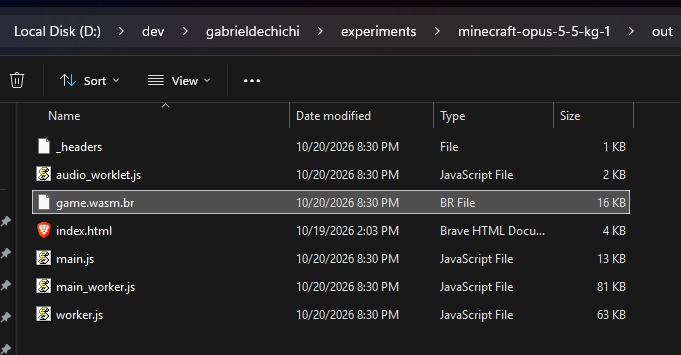
the equivalent of Kaigen's "hello world" empty project is just 16kB
the Javascript entrypoint is larger than the entire engine when stripped.

Day 88/100
✅ Learned:
• What ERC-4337 Bundlers are
• UserOperation flow
• Bundler validation
• EntryPoint interaction
• Smart Account execution
• Gas & transaction economics
• Paymaster interaction
• Security considerations
#Blockchain #Web3 #Ethereum #Solidity #ERC4337
Day 86/100
Today I
✅ Learned:
• UserOperation
• Sender, nonce & call data
• Signatures & authorization
• Bundlers
• EntryPoint
• Validation vs execution
• Gas handling & Paymasters
#Blockchain #Web3 #Ethereum #Solidity #SmartContracts #ERC4337 #AccountAbstraction
Day 85/100
Today I
✅ Learned:
• ERC-4337 & Account Abstraction
• UserOperations
• Bundlers
• EntryPoint
• Smart Accounts
• Paymasters & gas sponsorship
• Validation & execution
• Nonce and signature management
#Blockchain #Web3 #Ethereum #Solidity #SmartContracts #ERC

@BryceWeiner @telegraph_road did you encounter this by chance when starting the trader in the container: exec /app/docker/entrypoint.sh: no such file or directory

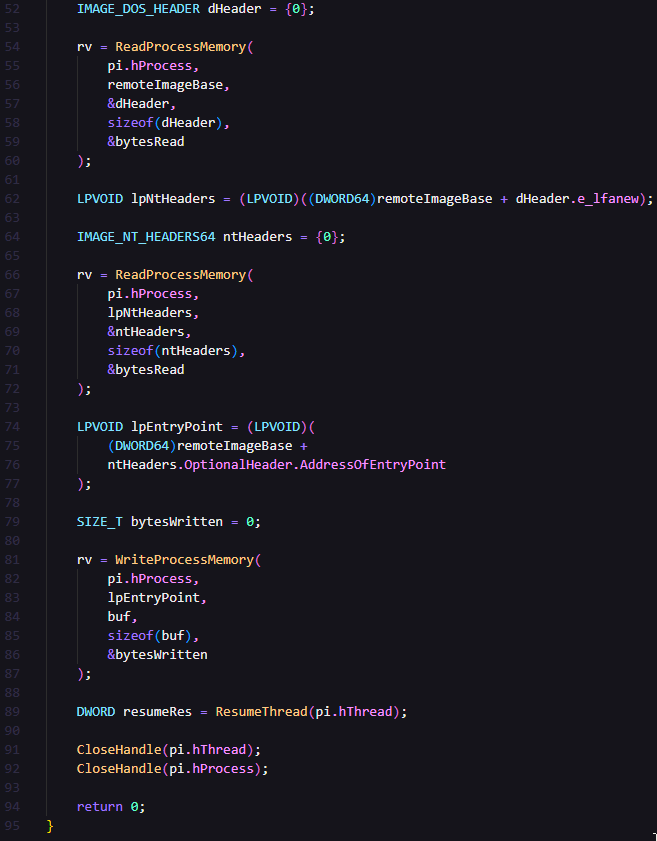
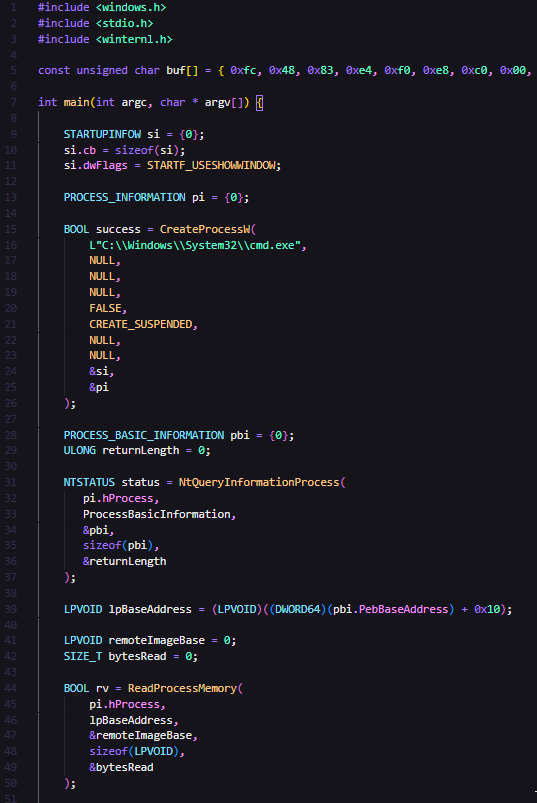
In Process Hollowing, to overwrite the entry point with shellcode, obtain the process entry point:
- PEB +0x10 → ImageBaseAddress
- DOS header → e_lfanew
- NT Optional Header → AddressOfEntryPoint
- ImageBaseAddress + EntryPoint RVA → entry point
Heavy on Windows Internals.
Process Hollowing via Entry Point Overwriting (C/C++)
1. Create suspended process (cmd.exe)
2. Get PEB address
3. Get ImageBaseAddress
4. Read DOS Header
5. Read NT Header
6. Calculate entry point
7. Overwrite with shellcode
8.Resume thread
9. Shellcode executes
#Malware

@Incentiv_net 6/6
Smart Wallets + EntryPoint validation + fee abstraction.
Together, these give autonomous agents a controlled runtime for things like AI agents, automated trading, and decentralized compute.
Automation without giving up sovereignty.
@Incentiv_net 4/6
Each agent action is packaged as a UserOperation and sent through the EntryPoint.
It checks authorization, verifies payment, then executes the operation atomically.
If the rules aren't met, the action reverts.

- UserOperations go through a native EntryPoint that validates, ensures payment, and runs things atomically (or reverts cleanly).
- Paymasters + built-in DEX let agents pay gas in USDC or other tokens... no more manual native-token top-ups.
(3/3)
- UserOperations go through a native EntryPoint that validates, ensures payment, and runs things atomically (or reverts cleanly).
- Paymasters + built-in DEX let agents pay gas in USDC or other tokens — no more manual native-token top-ups.
(3/3)

For autonomous economies to scale, we need smarter account infrastructure not just static private keys.
Incentiv is building toward this with Advanced Account Abstraction (AAA), EntryPoint, and Native DEX Paymaster.
@Incentiv_net @shinedush1

cheap guard for this: log the resolved entrypoint path on boot, so the process tells you whether it's running src or dist.
if the agent is on tsx you also lose typecheck at start, errors only surface when the file first gets imported.
does launchd pick up the new source on reload, or do you have to unload and load again?

@CripdoeCrypto 28 MCP tools in one config is useful; the next step is per-tool policy. code audit and wallet scoring should not share the same authority, spend cap, egress rights, or audit trail. the config is the entrypoint; the control plane is what keeps it safe.

@BeefButterBTC Congratulations! A beautiful entrypoint.

50 DevOps / SRE Topics - Simple to Complex
Perfect learning roadmap for 2026. Save this.
1. Linux basics + process model
2. Systemd, services, logs
3. SSH, tmux, basic hardening
4. Networking basics (TCP, DNS, HTTP)
5. Shell scripting + cron
6. Git + branching workflows
7. Package managers, artifacts
8. CI basics (GitHub Actions / GitLab CI)
9. Build pipelines (Docker images, caching)
10. Docker fundamentals (images, layers, entrypoint)
11. Container networking + volumes
12. Intro Kubernetes (Pods, Deployments, Services)
13. Ingress, LoadBalancers, basic traffic routing
14. Config & Secret management (K8s, SSM, Vault)
15. Observability basics (logs, metrics, traces)
16. Prometheus + Alertmanager
17. Grafana dashboards that don’t suck
18. Distributed logging (Loki/ELK/Fluentd)
19. Horizontal/vertical autoscaling
20. Canary + blue/green deployments
21. Zero-downtime migrations
22. Feature flags in infra
23. Terraform basics (state, modules)
24. Multi-env infra (dev/stage/prod) layout
25. VPC design, subnets, NAT, peering
26. API gateways + ingress controllers
27. DNS management (zones, records, failover)
28. TLS, cert rotation, mTLS
29. Reverse proxies (Nginx/Envoy/HAProxy)
30. Service meshes (Istio/Linkerd) foundations
31. Message queues & backpressure (Kafka/RabbitMQ)
32. Job runners (Celery/Argo Workflows)
33. Rate limiting + circuit breakers
34. Caching layers (Redis, CDN) in front of apps
35. Stateful workloads on K8s (PVCs, operators)
36. Chaos engineering basics
37. SLOs, SLIs, error budgets
38. Incident response + on-call hygiene
39. Runbooks, playbooks, postmortems
40. Cost optimization (requests, limits, rightsizing)
41. Multi-tenant clusters & noisy neighbor control
42. Supply chain security (SLSA-ish, SBOMs)
43. Secret lifecycle & KMS
44. Policy as code (OPA, Kyverno)
45. Multi-region deployment patterns
46. Disaster recovery, RPO/RTO design
47. Platform engineering (IDP, golden paths)
48. GitOps (ArgoCD/Flux)
49. Self-service infra APIs for devs
50. Platform reliability at org scale
What would you add more in this list?

When I started pulling apart how BLOK Capital's Smart Wallet Account actually works, the piece that caught my attention first was ERC-4337.
What is this?
The ERC-4337 is the Ethereum standard that makes programmable smart wallet accounts possible without requiring changes to the base protocol.
The efficiency it introduces is more significant than most people realize, that is, Instead of submitting a raw transaction to the Ethereum mempool, you submit a UserOperation.
What is a UserOperation?? It is a signed intent describing what you want to happen without requiring you to manage nonces, estimate gas, or sequence execution yourself.
Bundlers pick up UserOperations from a dedicated alt-mempool, simulate them against the current chain state to verify they will not fail, then submit them on-chain through a globally shared singleton called the EntryPoint contract.
The EntryPoint then validates the operation against your Smart Wallet Account and executes the calldata if validation passes.
While this in process, Gas is handled separately through a Paymaster, a contract that can absorb ETH costs entirely or accept ERC-20 tokens instead.
On BLOK Capital this means an investor can onboard without holding a single unit of ETH. The protocol sponsors gas at entry and ongoing transactions settle in BLOKC.
I found this significant as an access feature rather than a convenience feature honestly, because, removing the ETH requirement removes an invisible barrier that has filtered out entire categories of potential participants silently.
More details: BLOK Capital whitepaper §4.2.1 and EIP-4337 at https://t.co/Uzib3mYUbA.
So...Removing the gas barrier is step one. The seed phrase is still sitting there and it is a harder problem.
...


Goblintown’s repo suggests a system built around coordination: entrypoints, shared logic, task handling, and persisted state.
In plain English, it’s trying to keep the process visible instead of hiding everything inside one model response.


@STACCoverflow @MonkeySDF Claude: What's missing from the docs: an actual docker run line, the gossip entrypoint pubkey, and the genesis tarball location. You'd need to either pull from val-1 directly or ask the operator. --help plz

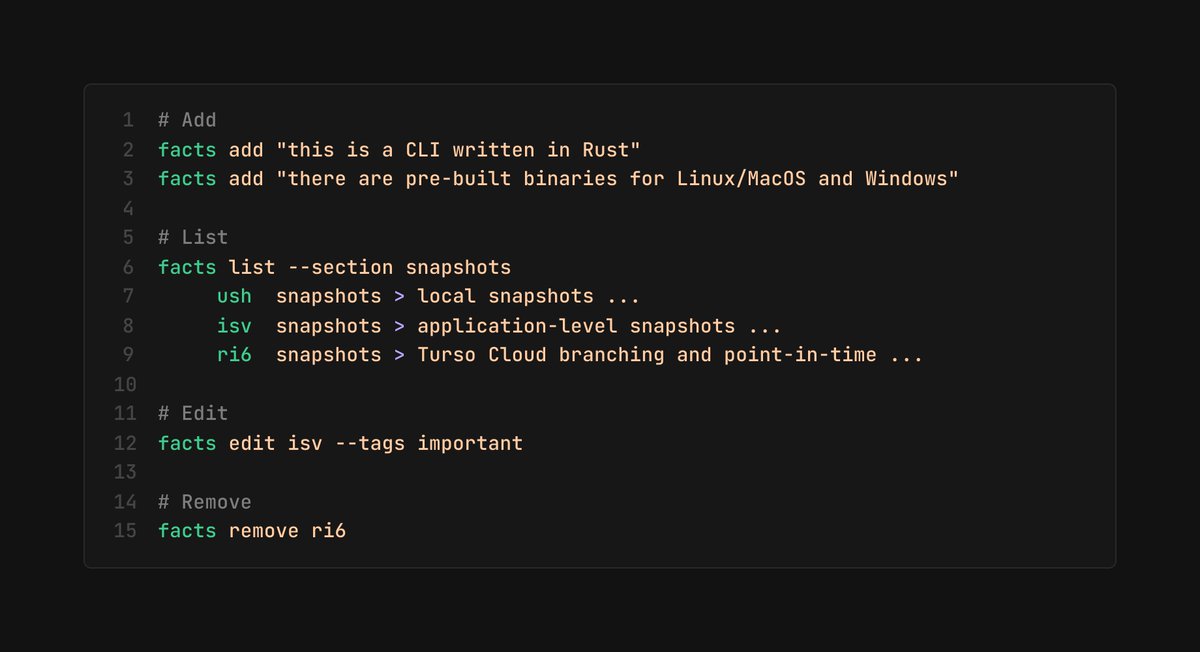
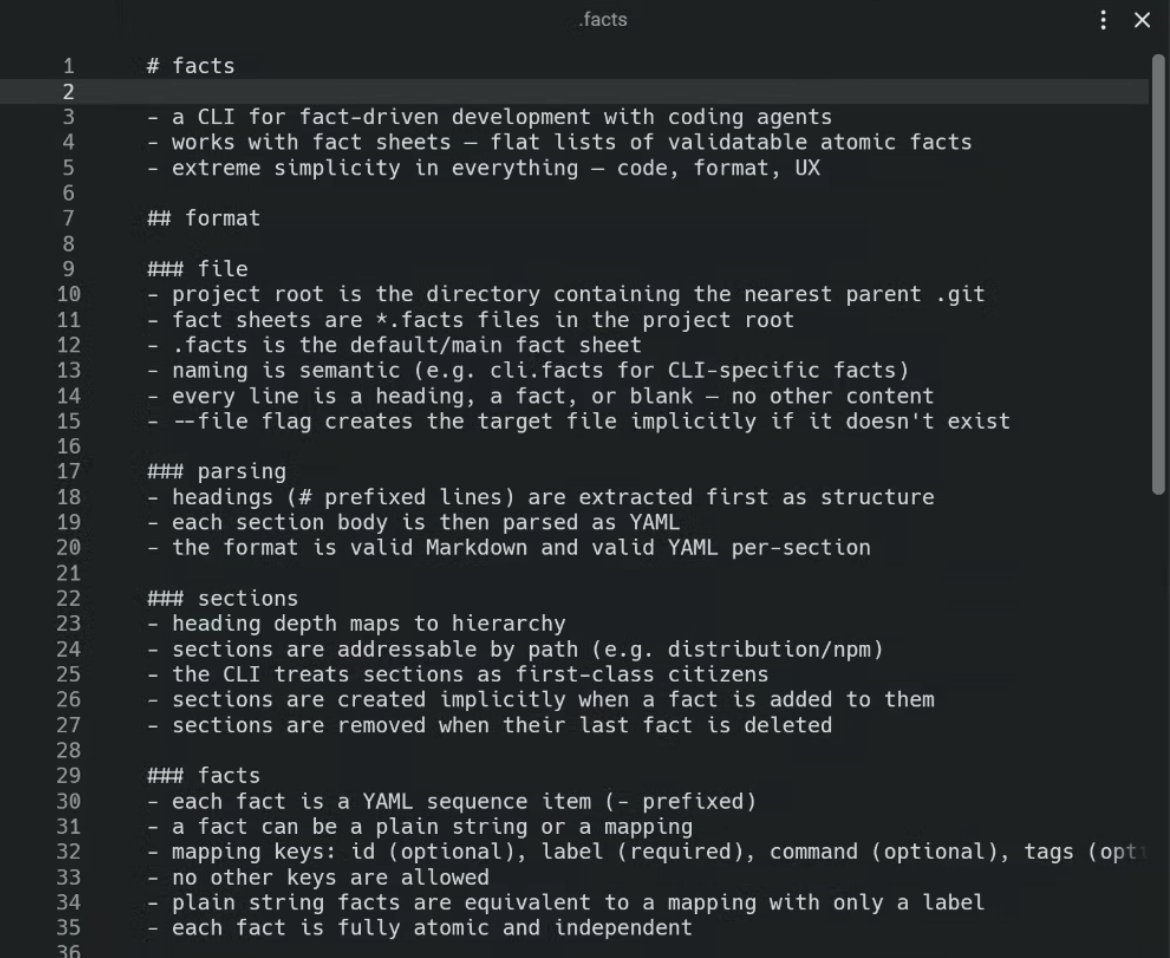
Continuing an experiment with fact-driven agentic coding.
I'm a bit tired of spending my time working on large specifications and making agent implement them deviating somewhere in the middle forcing rework loops, so I'm switching to a more basic primitive - facts.
Facts are just tiny assertions about the expected project state. They are much faster to read through compared to the specs. To formalise how agent works with them, I now also have a simple Rust CLI for an agent to discover and manage facts.
Now the agent has a convenient entrypoint to perform atomic operations without having to load entire fact sheet into the context window.
I'm now testing a more structured format for the spec-driven agentic coding that tries to avoid all of the issues:
1/ Specs have lots of fluff that is not really necessary for you or the agent
2/ It's expensive to validate spec implementation
3/ Specs can't track progress of completion or mark items in a specific way
Building a dedicated agent-friendly CLI and a set of skills to help with it.
Just facts.

Here is a summary of my commits, try giving it to Claude, it might one-shoot it 😂
Migrating Next.js to Cloudflare Workers (via OpenNext)
1. Install OpenNext for Cloudflare
- Add @opennextjs/cloudflare as a dev dependency
- Create open-next.config.ts — just call defineCloudflareConfig(), no custom config needed
2. Add wrangler.jsonc
- Set entrypoint to .open-next/worker.js
- Bind static assets to .open-next/assets
- Add nodejs_compat compatibility flag (needed for Node.js APIs)
- Configure your custom domain routing and image optimization binding
3. Set output to standalone in next.config.js
- Required for CF Workers — replaces the default serverless output
4. Handle the 25MB asset size limit
- Cloudflare caps assets at ~25MB per app
- If you have large content (blog posts, docs, etc.), write a post-build script that splits them into smaller per-locale JSON chunks under public/content/
- Exclude heavy directories like .velite/ from build tracing
5. Adapt your middleware for CF Workers
- Geo-detection: use cf-ipcountry header instead of Vercel's x-vercel-ip-country
- Cookie/session forwarding must be explicit — CF proxy doesn't auto-forward cookies like Vercel does
- Keep middleware thin: export a matcher that excludes static assets, API routes, and analytics endpoints
6. Set up static cache headers
- Add a public/_headers file with immutable caching for /_next/static/* (e.g. Cache-Control: public, max-age=31536000, immutable)
7. Fix instrumentation for Workers runtime
- Workers don't support the same instrumentation hooks as Node.js
- Move instrumentation to a shared lib, filter out noisy Next.js internal spans to stay within your observability quota
8. Validate environment variables at runtime
- Use something like t3-oss/env-nextjs with a schema validator
- NEXT_PUBLIC_NODE_ENV must match actual NODE_ENV — Workers don't inherit this automatically
9. Exclude client-side libraries from server bundle
- Workers have strict bundle size limits — mark browser-only libs (payment SDKs, analytics, etc.) as external in your Next config to keep the worker lean
10. Update analytics/tracking rewrites
- PostHog, analytics scripts, etc. can be proxied through Next.js rewrites to private endpoints — these still work on CF but verify the rewrite paths resolve correctly
11. HTTPS enforcement
- Add HTTP->HTTPS redirect in middleware — use 308 for POST/PUT (not 301) to preserve the request method
12. Deploy
- Build: npx open-next build
- Deploy: wrangler deploy
- No additional infrastructure needed — it's all codified in wrangler.jsonc
Most Popular Users

Elon Musk 
@elonmusk
240.1M followers

Barack Obama
@barackobama
118.6M followers

Cristiano Ronaldo
@cristiano
114.4M followers

Donald J. Trump
@realdonaldtrump
111.7M followers

Narendra Modi
@narendramodi
106.9M followers

Rihanna
@rihanna
98.6M followers

NASA
@nasa
92.1M followers

Justin Bieber
@justinbieber
91.7M followers

KATY PERRY
@katyperry
89.9M followers

Taylor Swift
@taylorswift13
83.9M followers

Lady Gaga
@ladygaga
75.4M followers

Virat Kohli
@imvkohli
73.3M followers

Kim Kardashian
@kimkardashian
70.8M followers

YouTube
@youtube
68.6M followers

Neymar Jr
@neymarjr
66.3M followers

Bill Gates
@billgates
65.2M followers

Selena Gomez
@selenagomez
63M followers

The Ellen Show
@theellenshow
62.1M followers

CNN
@cnn
61.7M followers

X
@x
60.6M followers